
MENU

Sections

  • Home
  • About
    • Contact Us
    • Editors and Writers
    • Join our Mailing List
    • Letters to Editor Policy
    • Advertising & Underwriting
    • Code of Ethics
    • Privacy
    • Talbot Spy Terms of Use
  • Art and Design
  • Culture and Local Life
  • Public Affairs
    • Ecosystem
    • Education
    • Health
    • Senior Life
  • Community Opinion
  • Sign up for Free Subscription
  • Donate to the Talbot Spy
  • Cambridge Spy

More

  • Support the Spy
  • About Spy Community Media
  • Advertising with the Spy
  • Subscribe
December 7, 2025

Talbot Spy

Nonpartisan Education-based News for Talbot County Community

  • Home
  • About
    • Contact Us
    • Editors and Writers
    • Join our Mailing List
    • Letters to Editor Policy
    • Advertising & Underwriting
    • Code of Ethics
    • Privacy
    • Talbot Spy Terms of Use
  • Art and Design
  • Culture and Local Life
  • Public Affairs
    • Ecosystem
    • Education
    • Health
    • Senior Life
  • Community Opinion
  • Sign up for Free Subscription
  • Donate to the Talbot Spy
  • Cambridge Spy
3 Top Story Point of View Al

Who Does Chaos Serve? By Al Sikes

September 28, 2025 by Al Sikes

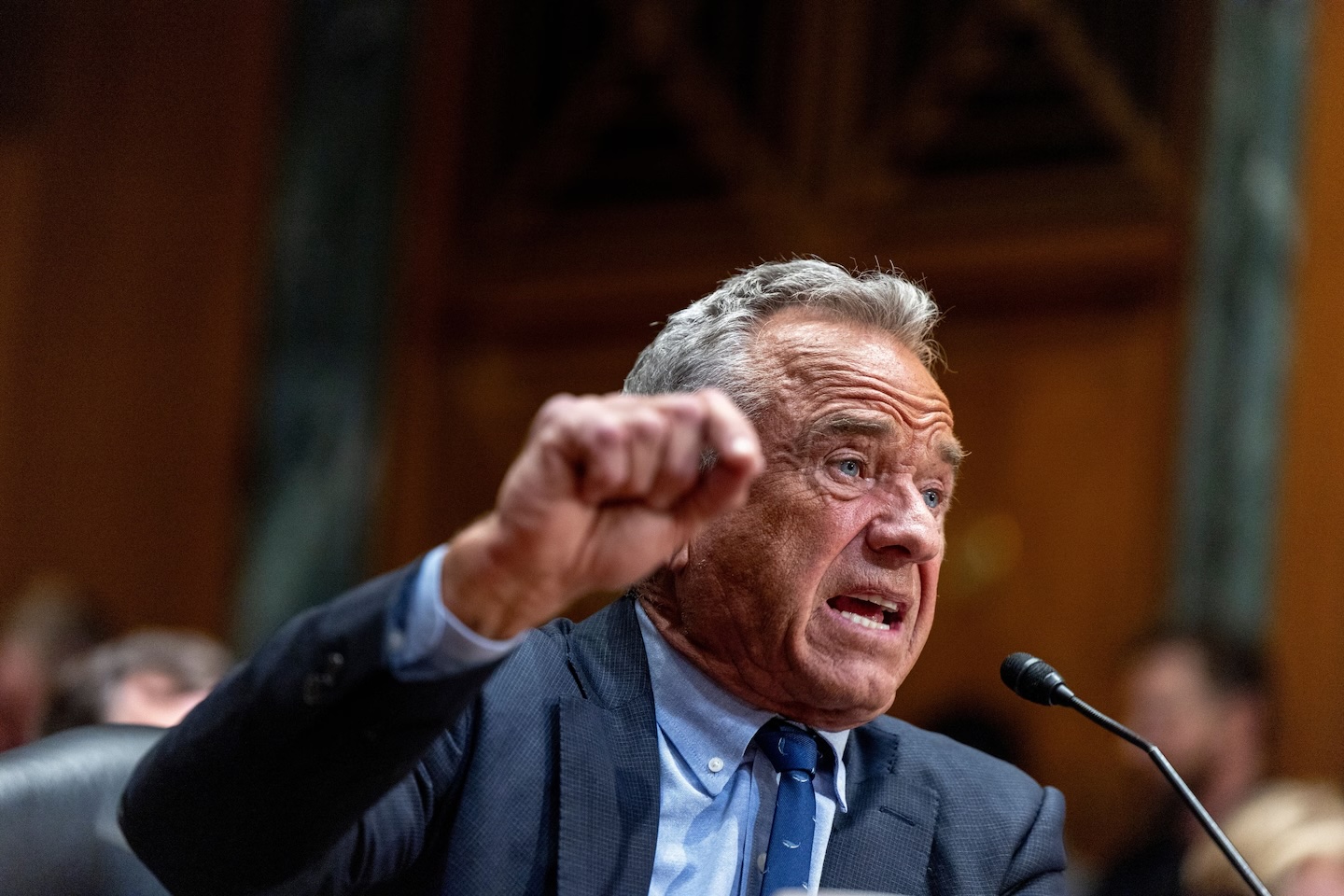
So, who do we call?  Our family doctor or the head of US health care, Robert F. Kennedy (RFK Jr.)? We know about our doctor; what about RFK Jr.?

In the health care field, Jr. has said vaccines cause autism, and his claims date back to 2005. He wrote an article for Rolling Stone that linked autism with the preservative, thimerosal. Back then he was simply a provocateur with no standing (no degrees in health care disciplines).

My answer on trust is easy; I trust my doctor.

There is, of course, a larger question because most doctors rely on Center for Disease Control (CDC) findings. CDC is now subservient to RFK Jr. and he just recently fired the incumbent advisors, supplanting them with his own.

The sweep of medical history helps guide us. And those who provide contrary analysis can also help. But the keyword is “analysis”; theories without proofs are worthless in medicine. We want to know how to best avoid getting sick. Or, if we get sick, what does history show to be the cure?

History will ultimately measure the RFK Jr. movement, Make Us Healthy Again (MAHA).The movement’s goals are backed by the President. Okay, to make this easy, I am going to shorthand the name of the decision-makers. They will be known as DTRFK (the President and Health Secretary).

The perverse thing about health care is when there is an absence of well tested advice we do things unknowingly and then history confirms our unknowingness. Today unknowingness is furthered by the chaos that DTRFK has caused. And in case there is any confusion about what is at stake revisit heart-wrenching stories about family tragedies.

Countervailing forces have emerged.  We now, for example, have an organization called Vaccine Integrity Project funded by Walmart heiress Christy Walton and led by Michael Osterholm (PHD, MPH). It shadows the CDC and its new advisors. In a field that should be radically nonpartisan,what do we think about the new CDC advisors? I repeat, vaccine analysis and advice should be radically nonpartisan.

The history of health care is influenced by trial and sometimes error. Simply stated groups of people acting in particular ways are studied for insights. I could get detailed here, but you get the point.

Theories are welcomed, but proof is essential. Before we begin to rule in or out some chemical formulation, tests are needed, a sufficient timeline is essential, and it is hard to overstate integrity.

The US is fortunate. We have produced enough wealth to allow ongoing and thorough data collection and analysis by the federal government.

Also, Not-For-Profit organizations do their own research and are numerous. They are often funded by wealthy families who have in their history heart-breaking health conditions and want to eradicate the threat for future generations.

And then we have businesses. Certainly it is easy to theorize a motive for corruption, but the health care businesses at the end of the day are nothing without a good reputation. Their rivals will certainly call them out if there is a lack of integrity. And, the central government has to approve new drugs.

All of this and more should give us confidence. Confidence is essential, but perfection is not possible.

There always seems to be a “but”. As noted, perfection eludes humanity. DTRFK have called into question much of what we rely on. RFK Jr. has a following and Donald Trump wanted them to vote for him. Is political ambition undermining the health of Americans?

I got Covid and flu shots last week. Will they do any good? Will people who go out of their way to avoid getting a shot do so this year?

Unfortunately poor handling of some Covid-related restrictions harmed the reputation of institutional health and now the suspicious are discounting the work of the CDC.

But much more importantly, what immunizations do we make sure our children get? Measles? Mumps? Rubella? Hepatitis A? Diphtheria? Tetanus? Pertussis? What are the risks?

DTRFK have questioned some of the recommendations and have said let the parents decide. Undoubtedly, there are childhood diseases that parents can decide not to worry about.  But, I know my wife and I were not equipped to pit our knowledge against careful professional analysis. Thankfully my parents made sure to protect me from polio.

There is nothing wrong with theories. But, theories need to be tested and a relatively long timeline is needed. And, theories should not be used as a weapon against what we know.

Let me wrap up. RFK Jr., when in campaign mode, was severely critical of the herbicide generally known as RoundUp. Now he is quiet. The farm community made sure. My guess is that aggressive use of herbicides and pesticides are not good. But especially in Red states the farm lobby is very strong.

Would that the parent and children’s health lobby was as strong. And, for sure, better that health care oversight enjoy integrity. We all and especially parents need confidence, not chaos.

Al Sikes is the former Chair of the Federal Communications Commission under George H.W. Bush. Al writes on themes from his book, Culture Leads Leaders Follow published by Koehler Books. 

The Spy Newspapers may periodically employ the assistance of artificial intelligence (AI) to enhance the clarity and accuracy of our content.

Filed Under: 3 Top Story, Al

Censorship by Al Sikes

September 22, 2025 by Al Sikes

“We can do this the easy way or the hard way”. The tone, noted the Wall Street Journal (WSJ) recalled a “New Jersey mob boss.” The tone—the voice if you prefer— was Brendan Carr, the Chairman of the Federal Communications Commission (FCC). Yes, the regulatory agency Chairman has been muscling companies that are either directly or indirectly subject to regulation by the FCC. Those who have displeased the President.

Essentially, Carr was saying to Disney/ABC, you are going to kneel, how do you want to do it? Voluntarily or involuntarily? Or, put it yet another way, “the President and I don’t like what Jimmy Kimmel said on his show so get rid of him”.

The words of both the President and his consigliere were both clear and clearly unconstitutional. The Federal Government is prohibited from suppressing free speech. Full stop. But of course, that might not be tested in the courts because media businesses are fearful that fighting for their rights will cause them to lose money.

But let me point to an even larger problem. The new media landscape features comfort zones. As I have earlier pointed out, many seek out voices that affirm their predisposition. It is a form of self-censorship. They, hard Right or hard Left, do not want to listen to contrary opinions.

The overarching question to those in echo chambers is “how do you know?” What other opinions have you heard? Which ones have you tested? Or maybe, as a practical test, which Republican Party do you follow: the one that supported free trade or the one that now supports tariffs on everybody and everything? The one that elected and revered Ronald Reagan or the one who is his opposite, Donald Trump?

Broadcasters are to be regulated by the FCC in what the law says is the “public interest”. Can it be argued that what the Chairman says is the “public interest”? Or, that the “public interest” is in free speech, a foundational provision in our Constitution?

But the issue at hand, the one with a siren tone is about Jimmy Kimmel and ABC (owned by Disney). I have never watched Jimmy Kimmel, but he is owed something from his employer, Disney, that he will never get—defense of his right to speak. The Mouse has rolled over without a whimper. Maybe, even if it is sub-rosa, Disney could help Kimmel raise money to assert his rights in a court of law. Carr, in his official capacity, has damaged Kimmel.

What I say to the insistent on what is said to be the political Right and their faux conservative leader: if you want to suppress free speech take off your flag pin—you dishonor America.

But let me close with thoughts about the trajectory—the trajectory of President Trump. Mr. President, you are a fan of the art of boxing. Surely you have captured somewhere in your memory that you can’t win by “punching down”. The fighters that are truly revered fought the best and won. If all your detractors are some version of scum, then what have you won? By your definition, you are fighting weaklings.

And regardless of polling demographics and testing, the vast majority of Americans have experienced in one way or another “punching down” in their lives. They didn’t like it and especially when the government was doing the punching. That is why you were elected and why you are on a downward trajectory today.

Generally late night hosts are cotton candy; tempting at times, sweet occasionally but little more. Jimmy Kimmel has the chance to make a bit of history—important history.

Al Sikes is the former Chair of the Federal Communications Commission under George H.W. Bush. Al writes on themes from his book, Culture Leads Leaders Follow published by Koehler Books. 

The Spy Newspapers may periodically employ the assistance of artificial intelligence (AI) to enhance the clarity and accuracy of our content.

Filed Under: 3 Top Story

What Is Missing in America? By Al Sikes

September 19, 2025 by Al Sikes

Reality: America can be and has been a tinderbox. In my lifetime a number of Presidents were either shot or shot at: Harry Truman, John F Kennedy, Gerald Ford, Ronald Reagan, and Donald Trump. Including my friend Jim Brady, Ronald Reagan’s Press Secretary.

Democracy is a seed bed for passion. And we are not necessarily a gentle people. So let me go back in my life and then forward highlighting a problem that makes America, indeed democracy in general, more volatile and vulnerable.

In 1978 I bought KLGT, a radio station in Breckenridge, Colorado. It was my first venture in broadcasting and experience with the “public interest” standard which was required of broadcasters by the1934 Communications Act.

The 1934 Act brought scientific order to the use of radio waves and for those fortunate enough to own a station, an obligation to broadcast in the “public interest”. In my case, that first station, was the only station in town—I was a monopolist in a small ski town. Stories about the evolving FCC interpretation of “public interest” and how they affected my ownership would quickly wear you out, so let me skip ahead a decade.

In 1989 I became Chairman of the FCC. The Commission I chaired became an accelerant in the transition from analog to digital communication leaving today’s FCC with little real work to do. We now stream most programing on our various devices. I live in Maryland, but can listen to the Colorado station.

We stream music from say Spotify, and listen to Podcasters who deliver the news we want bypassing what might make us uncomfortable. Real journalism, seeking the truth, is not the mission of Podcasters who characterize the news daily.

Today’s business model is clear, Podcasters with cleverly shaped and delivered points of view win. They are often charismatic and generally discard news that might challenge the hardcore message that attracts and holds their listeners. This is not an “eat your vegetables” medium. The best Podcasters are paid very well, don’t spend money on a news bureau, and large audiences result in very big pay checks.

And, as radio, TV and newspapers became prey to digital offerings, real journalists often became casualties. Real journalists challenge, with facts, prejudicial thinking on the Left and Right. We were a smarter people in 1978 when I bought KLGT—it was harder to hide from facts and viewpoints that made us think. This is not a salute to what on the Right is called  “legacy media”, but significant parts of its legacy practiced truth-searching. Truth-telling, well that is a damnably difficult job regardless of the medium or personalities.

Reflecting. Are we too dumb now to understand the implications of a $37 trillion debt? The last balanced federal budget was in 2001. How did we get here? Either journalism failed or people are incapable of computation.

What about toxic polarization fed by a continuous loop of invective? Tucker Carlson are you listening? Those whose business is shaped by preying on emotions formed a new fault line. And foreign intelligence agencies exploit this opening.

What about the White House cancelling the Congress? The framers that we honor insisted on a branch of government that could discipline authoritarianism. Their first Article created the legislative branch.

But now forces of brittle cowardliness in the Executive branch paired with feckless legislators have brought us low. The public is aware of this dysfunction. Pew Research Center finds that only 22% of Americans trust the government to do what is right. In 1964, 77% were said to trust.

Senator Patrick Moynihan, a Democrat who worked for a Republican President, argued repeatedly that when people withdraw trust and respect from government, government performance worsens which in turn deepens public contempt — a destructive cycle.

We, Americans, fought a civil war because a significant hunk of America could not see beyond its own prejudices and self-interest. What’s next for 21st Century America?  What about the fusion of power and money?

Maybe I was one of only a few offended when President Trump put the oligarchs of digital media front and center at his inauguration. Sitting in the celebrity row were: Elon Musk, Tesla and X (formerly Twitter); Jeff Bezos, Amazon; Mark Zuckerberg, Meta (Facebook and Instagram); Sundar Pichai, Google/Alphabet; Tim Cook, Apple. All, of course, billionaires many times over who now control much of the news and information we receive and how we receive it. And, generally their overarching interest is private not public.

The oligarchs of today have built their business models around clickbait that incentivizes predation. Click, click, click is the routine as we are bombarded with advertisements and our contact information and predilections are seized and stored for future exploitation.

I would suggest that one reaction to the oligarchs and their consenting President is Zohran Mamdani, the socialist who is leading in the race to become the next Mayor of New York City. When Americans get mad they push back. It’s our history. Donald Trump was a beneficiary of this anger.

Maybe the FCC should be given a 21st Century job. It certainly needs rescuing from its White House directed mission of harassing media the President does not like.

And us? We need to go beyond our comfort zones. We and only we can make democracy work. We need to get in the middle of the clash of ideas. Unquestioned affection for a political party or politician fails our country.

Al Sikes is the former Chair of the Federal Communications Commission under George H.W. Bush. Al writes on themes from his book, Culture Leads Leaders Follow published by Koehler Books. 

The Spy Newspapers may periodically employ the assistance of artificial intelligence (AI) to enhance the clarity and accuracy of our content.

Filed Under: 3 Top Story, Al

September 11, 2001 by Al Sikes

September 11, 2025 by Al Sikes

My wife and I were living in New York City on September 11, 2001. The attack on New York and targets in Washington and Pennsylvania were sobering. Sobering is a 2025 word; time has rounded the catastrophic edges of the day.

The day after the attack my wife and I joined a packed Church at 7 West 55th Street. Presiding were a Rabbi, a Christian pastor and an Iman. We held hands while singing together of reconciliation and peace—we went beyond the strictly human.

But as we flipped the page that night the more human response was already taking form—we had been shocked into a defensive crouch and the national conversation about better defensive tactics was soon to begin. And less than a month later we attacked Afghanistan. After all this coordinated attack included our nation’s Capitol.

Returning to the church service and the pleas for reconciliation and peace. Yes, I know, “divinely conceived” is for many arguable. Persons can even argue “reconciliation and peace” are simply informed by some universal creed. But if we throw out transcendence, the words “reconciliation” and “peace” are simply transitory fragments. They don’t bite and stick. Where is the precedent?

I am reminded of Steve Jobs, the founder of Apple whose life deteriorated in plain view. Jobs, as he reflected, mused: “I want to put a ding in the Universe.”

Two thousand years from now Jobs will be forgotten, actually much sooner. The real “ding” was the birth and life of Jesus. And here we were 2000 years later honoring his initial commandments:

“‘Love the Lord your God with all your heart and with all your soul and with all your mind.” and Love your neighbor as yourself.”

And for a time we seemed to understand. The most frequent question of one NY neighbor to another was “How are you doing?” Remarkably, it was often strangers asking strangers.

I have spent some time in high altitude politics; I walked away understanding that at best I was helping to secure a transient outcome. One that would be fragile as persons of differing points of view succeeded me.

All of us have insecurities—even the most accomplished, by earthly standards. And I would guess that most people struggle to look beyond the grave which turned out to be September 11th’s conclusion.

When my wife and I went to Mt. Sinai hospital on the afternoon of the 11th to give blood for the injured, we were told blood supply was not crucial—the attackers had killed not maimed. When we held hands in that church setting we were mourning the dead and hoping for the living.

September 11th was real and historic. People were not willing to just move on. So lacking the Internet scribes of today, men and women of the cloth struggled to both heal and explain. They reached back to holy men and women and philosophers.

Now as churches close and Internet podcasters proliferate, I think back to Tim Keller who led Redeemer Presbyterian in New York and a story he included in his sermon following 9/11.

Tim reflected: “Miroslav Volf is a Croatian Christian who has been through his share of suffering. It so happened that he was speaking at the United Nations prayer breakfast on September 11. Enormous problems happen, Volf says, when we exclude our enemy from the community of humans and when we exclude ourselves from the community of sinners, when we forget that our enemy is not a subhuman monster but a human being, when we forget that we are not the perfect good but also flawed persons. By remembering this, our hatred doesn’t kill us or absorb us, and we can actually go out and work for justice.”

September 11th is still vivid in my memory and the need for “peacekeepers” even more so. Peacemakers at home and abroad.

Al Sikes is the former Chair of the Federal Communications Commission under George H.W. Bush. Al writes on themes from his book, Culture Leads Leaders Follow published by Koehler Books. 

The Spy Newspapers may periodically employ the assistance of artificial intelligence (AI) to enhance the clarity and accuracy of our content.

Filed Under: 3 Top Story, Al

Killing Fields by Al Sikes

September 1, 2025 by Al Sikes

Pardon my going back a few years—I will come forward. Forward to the killing field at a church in Minneapolis—the Annunciation Catholic Church.

Going back a few years I recall being unpleasantly startled when an AdBot (automated software agent that displays advertisements) in what seemed to be fractions of a second, paired me with an Advertisement for something I had been researching. I can’t recall what I was sizing up so let me substitute my suspicion. Maybe a stove, as my wife and I were buying kitchen appliances for our new home.

Almost immediately I began getting Ads for stoves and other kitchen appliances. Everywhere I went on the Internet, the Ads followed me around.

This experience took me back to my venture capital days and the first years of the Internet. I was pitched for an investment in a company that had developed AdBot technology. I remember cringing as I thought about the intrusion. What was ingenious was also a breach of  privacy.

In recent days I have advocated the use of Artificial Intelligence (AI) using large language models (LLMs) to discover potential shooters before they take action. Several have suggested that would be a breach of privacy. Exactly, but that train left the station along time ago.

So rather than just selling things I would suggest that federal and/or state governments train LLMs to provide second by second monitoring of people who use violent words and imagery on the Internet. And if the evidence, synthesized, suggests they are a threat to instigate lethality on schools or churches or street corners or much else, that law enforcement quickly place them in protective custody.  And then counselors can work with them on their mental health.

In the aftermath of most shootings we learn within a few hours that the shooter had posted rants that signal his intentions hours or maybe just minutes before he sprays bullets at unsuspecting persons. Or, uses his car as a weapon. We need to turn the technology adapted for advertisements into applications to save lives.

Will this end the epidemic we now face? Almost certainly not. Will this tool in the hands of law enforcement lessen the killing; almost certainly.

Along with this technology-led initiative we will also learn about the current stance of the National Rifle Association (NRA). The organization that takes the lead should offer the NRA a chance to collaborate and in President Trump-like fashion give them a week to sign on. Indeed, this is a chance for President Trump to take the lead helped along by his friend Elon Musk a leader in deploying AI.

The Spy Newspapers may periodically employ the assistance of artificial intelligence (AI) to enhance the clarity and accuracy of our content.

Filed Under: 3 Top Story, Al

Where Has All The Silence Gone? By Al Sikes

August 29, 2025 by Al Sikes

Where has all the silence gone? Have we noticed its absence? Has its absence been filled with anything? That is anything we will miss? Perhaps a moment that will lead to thought? Maybe originality.

I suspect we have all noticed. Or has silence become unnoticed?

Some seek out the quietness of the deep woods. Or the quiet expressions of the gentle brook. Most don’t. Most are tempted by the noise—tempted to join in. The music is turned up, so too our voices. Cacophony! How can we listen? How can we create—either thought or deed?

Now we carry around a listening device at war with listening. We get stuff. Distraction. Listening—well we pretend.

And if not amplification, then the ever-present motors are barely muffled. Or, people talking loud enough to be heard. Is the thoughtful ever yelled?

Does this end up any place we want to go? Or, do we know? Silence is an incubator. What is noise?

Somehow we should reflect on silence. Honor thought. The Quakers did it and led our country out of slavery. Can our mind escape it as well? Are we missing the answer?

Al Sikes is the former Chair of the Federal Communications Commission under George H.W. Bush. Al writes on themes from his book, Culture Leads Leaders Follow published by Koehler Books. 

The Spy Newspapers may periodically employ the assistance of artificial intelligence (AI) to enhance the clarity and accuracy of our content.

Filed Under: 3 Top Story, Al

Trump and Prejudice by Al Sikes

August 19, 2025 by Al Sikes

Is it possible to get a word or two in on what historians will say in 2050 about the second term presidency of Donald J Trump? Perhaps I am wrong but I am going to attempt a long-range projection.

I write as an Independent (worn down by political party nausea) wary of the polarized world in which we live. So let me get started.

You can’t be President unless you win more electoral votes than the other candidates. Trump did.

You can’t be President unless the electoral votes are certified by Congress. They were.

You cannot be a consequential President unless your Party controls the Congress. Republicans do.

It is hard to be an effective President if each of your priorities result in a death struggle. This point requires a bit of elaboration.

If, as President, you challenge existing law or funding priorities as they exist, you encounter heavy seas. The fourth branch of government is the status quo. Unofficial Washington is organized to maintain it or enrich it. The President used a new initiative, the Department of Government Efficiency (DOGE), to challenge it and deflect the fire. Elon Musk became the fire shield.

And Trump, notwithstanding denials, came into office with a Plan. Russell Vought, a self-described “radical constitutionalist” strategist and longtime Trump ally, played an influential role in crafting Project 2025—a 920-page Heritage Foundation blueprint for a possible second Trump term.

Vought argues that America’s constitutional structure has been corrupted by a technocratic bureaucracy. He believes the presidency must dramatically reclaim power—even at the expense of legal precedent, institutional restraint, or congressional and judicial checks.

The Plan was comprehensive and took on official Washington. But without Trump’s hardcore support and tactical leadership, the playbook would have been cobwebbed. Even though Trump denied the plans centrality, Vought  heads the Office of Management and Budget, as he did in Trump’s first term. My experience: this is the hub of operational Washington.

Trump, or at least I will give him credit, took on the tactical leadership. Many call his leadership style transactional.  Regardless, he used a “flood the zone” strategy. Each day, or so it seems, featured a new headline lead. Little gained real traction.

It is also clear that there was and continues to be an intent to exploit prejudice. For example, most recently Trump took over District Of Columbia policing calling the District a crime-infested disgrace. The vast majority of Trump’s base reflexively believes that. And when you take on California or New York, again almost regardless of the subject, Trump’s Red State base salutes.

My Midwest friends were unbelieving when my wife and I moved to New York City. Their view of the City was most likely formed by all the crime dramas on TV with New York as the venue. And almost nobody outside New York likes the Yankees.

Prejudice is a fact. My grandmother’s pot roast was the best in the world. My State or baseball team or University—well they are the best. When prejudice exacts public harm and is clearly immoral we legislate against it. When it is simply human and arguably un-harmful we identify it through polls and react to it in our daily lives.

Politics is one of those daily lives phenomena. Trump himself mused about how protective it can be. “I could stand in the middle of 5th Avenue and shoot somebody and I wouldn’t lose voters.” We might not like that level of prejudicial support and I certainly don’t, but it is not punishable. In fact, for Trump’s style of leadership it is foundational.

Even after the Trump supporting mob attacked the Capitol in January of 2021, the low point of Trump’s popularity, he still had an overall approval level of approximately 30% and 78% of Republicans continued to approve of him. As his opponents, Nicki Haley and Ron DeSantis learned, Trump’s support was quite solid.

Of course, as Trump takes advantage of pre-existing prejudices, a Democrat can do the same thing. But right now the pre-existing prejudice most noticeable in day-to-day news is the Far-Left’s disapproval of capitalism. Not a winning prejudice outside of left-leaning big cities with a demographic mix unlike much of the rest of the United States.

Trump meanwhile floods the zone. He just met with Putin, Zelensky and a number of world leaders.  Several days before, he took over DC policing; one more move in continually reinforcing his base.

And he has chosen to be the most transparent President in modern history. He loves the spotlight and even though most of the Press doesn’t like him, he uses their barely disguised disdain to reinforce his base who share his distaste.

Trump also knows that the two constitutional entities with which he is supposed to share power are by comparison virtually powerless in the face of his aggression. Congress is populated with people who cannot imagine what they would do if they lost their next election. And most Republicans know one thing for sure—the Trump base seems essential to winning the primary.

The Courts structure and history is procedural, appealable and mostly slow. For example, the Constitution gives tariff power to the Congress except in emergencies. Trump, having declared an emergency, has upended laws, treaties, and customs to remake the world of international trade. By the time the most important challenge to the use of this power reaches the final days of a Supreme Court review/decision, the world system of trade will be wholly different. And will persist, at least in part, until the Congress actually acts.

Back to the Democrats. The so-called Center of the Party lacks a widely regarded leader. The Far-Left has two—Senator Bernie Sanders and Representative Alexandria Ocasio Cortez. They are both quite able in asserting their prejudices and ambitions.

And, leading today’s most recognizable political campaign is Zohran Mamdani, who is the Democrat running for Mayor of New York. He is an unapologetic socialist and has supported a “global intifada”, certainly not popular with an important constituency—Jewish voters. Mamdani’s positions trip a number of prejudicial wires.

Politics is often an appearance contest. Votes in elections and Congress are influenced by prejudices regardless of rationality. Trump has mastered the art of prejudicial politics. My view is historians will agree.

Al Sikes is the former Chair of the Federal Communications Commission under George H.W. Bush. Al writes on themes from his book, Culture Leads Leaders Follow published by Koehler Books. 

The Spy Newspapers may periodically employ the assistance of artificial intelligence (AI) to enhance the clarity and accuracy of our content.

Filed Under: 3 Top Story, Al

Does Anybody Know What Is Going On? By Al Sikes

August 13, 2025 by Al Sikes

Does Anybody Know What Is Going On?

“Do we have anybody in the newsroom who knows anything about tariffs?” The Senior Editors at most frequently read publications know the answer. It is no.

I laughed. Bill Maher, on his TV show, asked George Will, the conservative commentator, about tariff authority and related issues. This is a part of the exchange:

Bill Maher: “The tariffs, that’s not really something the president is allowed to do unilaterally.”

George Will: “No. A constitutionally enumerated power of Congress is to regulate trade with foreign nations. Congress, in its absent minded way, has now become a spectator of government… I have a chronic, incurable trade deficit with my barber. I buy a haircut from her, she buys nothing from me.”

Will enlarged the exchange to include the President’s claim that trade between countries should reflect something close to an even exchange. Markets don’t work that way—supply and demand defy the number pushers in the Office of Management and Budget (OMB). Or, the political hacks that want nothing more than the leader’s approval.

In the Spring of 1987, I went to the White House with then Secretary of Commerce Malcom Baldrige. Ronald Reagan was the President, and George Shultz was the Secretary of State.

Baldrige and I were advocates for what was pejoratively called “industrial policy”. We argued that a number of countries, and at the time, particularly Japan, were denying market access to US semiconductor companies, stealing their intellectual property, and supporting their leading companies with massive subsidies.

I remember a lively debate among those in the Reagan Cabinet about how we should fight back with our own market intervention. George Shultz was the most formidable advocate for a competitive market unhindered by government interference.

Shultz was the one most likely to argue that the semiconductor industry would be better off without active government support and that, to the extent governments (especially Japan) were subsidizing chips, they were indirectly subsidizing a range of US industries that used them. And he argued, it is a good thing when countries with much less market power do better—democracy is advanced by international well-being.

Baldrige and I argued that the semiconductor industry was so strategic we had no choice but to intervene. Intel, at the time, was our leading semiconductor company and, of course, led the lobbying effort to gain government support.

Bottom line: a chip consortium, Sematech (Semiconductor Manufacturing Technology) was formed in 1987 as a public-private consortium. It was co-funded by the U.S. Department of Defense and leading US semiconductor companies (Intel led the charge).

The initiative was meant to coordinate research and development (R&D), improve manufacturing, and secure America’s leadership in chip technology.

Today a list of leading companies in what is called the “chip industry” is quite different. Nvidia leads the list. According to Gartner (a leading consulting business) in 2024 Nvidia’s sales were $76.7 billion while Intel’s sales were $49.8. Year-over-year growth for Nvidia was 120.1%; Intel, 0.8%.

Nvidia did not exist in 1987; it was founded in 1993.

George Shultz would have a “I told you so” grin.

Tariffs distort markets. President Trump wants to use them to raise money, not build companies. And, today they are often a part of foreign policy, not staging for improved market dynamics.

If tariffs are to be helpful to future US economic outcomes, they must be used sparingly, and a case should be made to Congress, which has under our Constitution the power to levy them. Congressional action follows debate, we need real debate on the use of tariffs.

Relatedly

Multiple lawsuits are pending that challenge the President’s authority to impose tariffs under the International Emergency Economic Powers Act (IEEPA). Regardless of the reasons for imposing tariffs the authority should be clear. The Supreme Court should fast track a case that offers the opportunity for a precedent setting decision.

Al Sikes is the former Chair of the Federal Communications Commission under George H.W. Bush. Al writes on themes from his book, Culture Leads Leaders Follow published by Koehler Books. 

The Spy Newspapers may periodically employ the assistance of artificial intelligence (AI) to enhance the clarity and accuracy of our content.

Filed Under: 3 Top Story, Al, Spy Journal

Inconvenient Facts by Al Sikes

August 8, 2025 by Al Sikes

Economic Ups and Downs are embedded with threats. Threats to ideas, policies and ultimately power. Up or down reports say theories be damned this is how it is. These are the facts.

Because up and down is important—essential—we try to measure it. Measurements are sometimes irritants. We search for the words to explain them, no explain them away unless they are our allies. Politicians in particular want their own facts.

Populist programs don’t go broke, for example. If it is popular it is right. Populist dynamics lead the most effective populists to specialize in performance. Theatrics as attraction or distraction—emotion as a weapon.

And what about Progressives?  If you are a Progressive you simply find the money you need to fund your utopian theories and when the theories are disproven you make up new ones. Capitalism fails is foundational. And, you certainly don’t spend much time worrying about more government debt, capitalists will fund it.

In fact, and it is proven in today’s politics, neither Populists or Progressives spend any unforced time talking about debt.

Populists and Progressives also don’t spend any unforced time on numbers, period. Statistics are often irritants. So when President Donald Trump woke up to bad labor numbers, ones that disputed his many claims, he fired the messenger. The firing got everybody’s attention, which is to say those who pay much attention to public affairs.

This act made the Jeffrey Epstein affair go away for several news cycles. Of course, prurient stuff never really goes away. Goodness knows how many books are being written right now about the Epstein affair.

Trump must secretly revel in the tools of the Presidency. When his casino and hotel businesses in Atlantic City did not generate enough cash flow to service the debt, he used bankruptcy laws as leverage. He exclaimed to Newsweek in 2011, “I do play with the bankruptcy laws—they’re very good for me.”

In Washington Trump has supported raising the debt ceiling so that Treasury Notes can fund massive shortfalls between what is collected and spent. Isn’t this marvelous? “I have a printing machine.” No, those are not his words, but mine.

Maybe we won’t have to worry in the short term about inconvenient facts. Maybe the White House press operation will take on a new job—filtering government agency statistics and findings. Wonder about health statistics or crime data or gross national product or whatever, well White House minions will tell you what you need to know. Are there any real statisticians that will put up with that?

Yep, I know, I am being polemical. I must admit to being allergic to true believers. My faith in humankind does not stretch that far. I want the facts and I say that, knowing that it is damnably hard to get them straight. The statisticians and processes have to be scrubbed and re-scrubbed by scrupulous people. It is time for Congress to act to design just such a process and protections. There are a few patriots left; they should get together.

Al Sikes is the former Chair of the Federal Communications Commission under George H.W. Bush. Al writes on themes from his book, Culture Leads Leaders Follow published by Koehler Books. 

The Spy Newspapers may periodically employ the assistance of artificial intelligence (AI) to enhance the clarity and accuracy of our content.

Filed Under: 3 Top Story, Al

Maybe Happy Ending by Al Sikes

July 25, 2025 by Al Sikes

“May you live in interesting times” is an English expression that is claimed to be a translation of a traditional Chinese curse. The expression is ironic: “interesting” times are usually times of trouble. Wikipedia

Interesting indeed. Is artificial intelligence (AI) a promising new technology or is it an explosive algorithmic invention newly embedded in both culture and business? And yes, the arts.

My wife and I, with friends, walked out of the Broadway show “Maybe Happy Ending” having been bedazzled. We knew it won the Tony Award (highest recognition) and anticipated an entertaining experience. What we got was way more than we expected. Its story, infused with extraordinary writing, tuneful music, and ingenious staging, was a brilliant fusion of the past with the robotic future. We got to look on as generative robotics led to human aspirations and wistful romance.

Later I decided to see what the critics had said about Maybe Happy Ending—to see if they could add a few more minutes to my curiosity. Predictably, they could not because what bedazzled me could not be expressed in words. Not their words or mine. Although in a sense, the show’s magnetism shone as we had to queue around two blocks of New York’s theater district to await the Belasco Theater’s opening. Playgoers were excited.

My meager research for interesting reviews took me to ChapGPT, the artificial intelligence Bot; after all the show’s essence is portrayed by two late in life robots whose budding love affair is attenuated by their artificial existence. I would ask my robot what it thought.

I asked: “Should I go see Maybe Happy Ending?” I was trying to avoid any telltale emotion.

The response recited what I knew and yes I should go see it. I then revealed that I had seen the musical and called it “brilliant”. Its response: “That’s fantastic to hear—brilliant is high praise! It’s a special kind of show that sneaks up on you emotionally, isn’t it? Was there a moment, performance, or song that especially stood out to you?”

The conversation went on for another question/answer or two. I was intrigued—suddenly I was talking to a robot about a show about robots. And I was adding to the Large Language Model (LLM) that informs the resourceful Bot. The Bot was programmed to be generative—extend its data base by using the new data.

So yes, I thought the show was brilliant. I enthusiastically recommend you see it. And my post-show experience was telling; I went beyond using AI just as a research tool.  Would I want to drop ChatGPT in favor of another Bot now that ChatGPT has a part of me in its database? Looks to me like a first mover advantage.

Could AI have conceived and produced the show? No! But as we reveal to chatbots more and more of our emotions, and we will, don’t bet against AI becoming a challenging competitor. The capital invested in AI-related companies assures its intense use anywhere a return on that investment is possible.

The future is ours, but it will be a different future. Interesting times for sure.

Past As Prologue

“Past is prologue”, philosophers proclaim. Barely recallable, the years that preceded Donald Trump’s first election paved the way. And now, as the President is forced to defend his past, his belittling techniques have become especially toxic. Biden, he barks, was not sentient, Hillary and Barack were criminals and on and on. How will this modus operandi inform America’s future?

First, the present is a mess. It features vengeful politics, aggressive polarization and an infantile reaction by the majority of Members in our most important constitutional branch of government, the Congress. Most Members who voted for the “big beautiful bill” barely knew what was in it.

Soon enough, candidates competing to be sworn in as the 48th President of the United States will begin campaigning to succeed Trump. It might well be the most important election in the 21st Century. The next President, regardless of political Party, needs to put United back as a predicate to States—The United States of America. While our large and diverse nation will continue to invite debate, we need to resurrect respect.

Al Sikes is the former Chair of the Federal Communications Commission under George H.W. Bush. Al writes on themes from his book, Culture Leads Leaders Follow published by Koehler Books. 

The Spy Newspapers may periodically employ the assistance of artificial intelligence (AI) to enhance the clarity and accuracy of our content.

Filed Under: 3 Top Story, Al

« Previous Page
Next Page »

Copyright © 2025

Affiliated News

  • The Chestertown Spy
  • The Talbot Spy

Sections

  • Arts
  • Culture
  • Ecosystem
  • Education
  • Mid-Shore Health
  • Culture and Local Life
  • Shore Recovery
  • Spy Senior Nation

Spy Community Media

  • Subscribe
  • Contact Us
  • Advertising & Underwriting

Copyright © 2025 · Spy Community Media Child Theme on Genesis Framework · WordPress · Log in