
MENU

Sections

  • Home
  • About
    • Contact Us
    • Editors and Writers
    • Join our Mailing List
    • Letters to Editor Policy
    • Advertising & Underwriting
    • Code of Ethics
    • Privacy
    • Talbot Spy Terms of Use
  • Art and Design
  • Culture and Local Life
  • Public Affairs
    • Ecosystem
    • Education
    • Health
    • Senior Life
  • Community Opinion
  • Sign up for Free Subscription
  • Donate to the Talbot Spy
  • Cambridge Spy

More

  • Support the Spy
  • About Spy Community Media
  • Advertising with the Spy
  • Subscribe
February 7, 2026

Talbot Spy

Nonpartisan Education-based News for Talbot County Community

  • Home
  • About
    • Contact Us
    • Editors and Writers
    • Join our Mailing List
    • Letters to Editor Policy
    • Advertising & Underwriting
    • Code of Ethics
    • Privacy
    • Talbot Spy Terms of Use
  • Art and Design
  • Culture and Local Life
  • Public Affairs
    • Ecosystem
    • Education
    • Health
    • Senior Life
  • Community Opinion
  • Sign up for Free Subscription
  • Donate to the Talbot Spy
  • Cambridge Spy
Archives

May Gardening Tips

May 3, 2020 by University of Maryland Extension

Warm weather is just around the corner, which means it is time get your garden ready for summer flowers and tasty home grown vegetables. Here are some helpful tips to get you started this month.

Outdoor Garden and Yard Tips
• If your azaleas, rhododendrons and other spring flowering shrubs are growing too large prune them after they bloom.
• Thin out interior boxwood branches to improve air circulation and reduce disease problems such as volutella canker. Also, look out for boxwood blight. Watch How to Prune Your Boxwoods.
• Older leaves of holly and magnolia may begin to yellow and drop. This is a natural process of regeneration and does not indicate a problem with the trees.
• Lace bug feeding may be seen on rhododendrons, azaleas, andromeda (Pieris japonica), and mountain laurel. Look for small white or yellow spots on the upper sides of leaves. On the underside of leaves, you may notice small black fecal spots, nymphs, and adults. Damage on new growth indicates overwintering eggs have hatched and the new generation has started to feed. There are multiple generations per growing season. Lace bugs are more of a problem on stressed plants growing on exposed, hot, and sunny sites.
• Rose Rosette, a relatively new disease of roses caused by a systemic virus and spread by small eriophyid mites, can kill landscape roses. Including the more disease resistant roses such as the Knockout cultivars.
• Summer annual bulbs like gladiolus, tuberous begonias, cannas, caladium, and dahlias can be planted now.
• Attract pollinators and natural enemies to your landscape by planting a wide variety of flowering annuals and perennials, including native plants that will bloom over the entire growing season.
• Begin setting out transplants of warm season crops like squash, pepper, eggplant, and tomato. There is still a small possibility of late frosts. Be prepared to cover plants with a tarp or light blanket if frost is expected.
• Pinch the blooms from flower and vegetable transplants before you set them out. This will help direct the plants’ energies to root development and will result in plants that are more productive. Gently break up the roots of root-bound transplants before planting.
• Did weeds overtake your garden last year? Start spreading mulch around plants and between rows. Use dried grass clippings, leaves collected from last fall, sections of newspaper covered with straw, black landscape fabric.
• Cover strawberry plants with bird netting, tulle (found in fabric stores), or floating row cover before the berries become ripe to exclude birds, squirrels, and other hungry critters.
• Leave grass clippings where they lay. Grasscycling eliminates bagging labor and costs, adds organic matter and nitrogen to your soil and does not contribute to thatch build-up.
• Carpenter bees cause concern at this time of year. They make clean, round holes about a ½ inch in diameter but usually will not bother wood that is freshly painted or stained.
• Ticks are active when the temperature is above freezing. Wear light-colored clothing and get in the habit of checking yourself, your loved ones, and pets closely for ticks after spending time outdoors. Repellents are also an effective tool to keep ticks away.

Vegetable Garden
• Pinch the blooms off tomato, pepper and other plants before setting them out in the garden; this will encourage root and stem growth. Continue to pinch off pepper blossoms for 2-3 weeks to establish a stronger, higher yielding plant.
• Keep cutworms away from cabbage, broccoli and other susceptible plants by putting a cardboard or plastic collar around each plant, or sprinkle ground up oyster shells, cat litter, sharp sand, or other gritty material around each one.
• Keep weeding and thinning plants. To keep down weeds, mulch plants with dried grass clippings, sections of newspaper covered with straw, black landscape fabric or black plastic. Do not mulch with wood chips or bark, which takes nitrogen out of the soil as it decomposes.
• As peas ripen, pick pods when tender, to keep plants producing.
• Don’t let transplants or young seedlings dry out. Use a drip irrigation system, soaker hose, sprinkler, or hand-held hose with a water breaker (shower head), to keep beds evenly moist, but not too wet.
• Plant warm-season crops like tomatoes and peppers, only after danger of frost is past. Mix ½ cup of ground lime with soil in the planting hole to prevent blossom-end rot. Water each transplant with a soluble fertilizer, like compost tea or kelp extract to get them off to a good start.
• Pound in stakes or install tomato cages, at planting time, to prevent plant damage later.
• Set out herbs in pots or plant in garden beds.
• Inspect plants daily for cucumber beetles, cabbageworms, vine borers and flea beetles, which can be excluded with row covers. For plants requiring cross-pollination—cucumber, squash, melon, pumpkin—take covers off when plants are flowering, to let in pollinators.
• Hand pick cabbage worms from broccoli and other members of the cabbage family, or spray with Bt(Bacillus thuringiensis). Bt may injure non-pest butterfly larvae, though, so use judiciously.

Indoor Plants and Insect Tips
• Move houseplants outdoors after the danger of frost has passed. To avoid sunscald first place them in a shady location and over a period of two weeks or so gradually introduce them to more sunlight.
• Fleas are sometimes observed in homes where there are no pets. The most likely source is a wild animal such as a raccoon living in the attic, crawl space, chimney or some other sheltered area connected to the inside of the home. If you have pets that have a flea problem, contact your veterinarian for the safest and most effective flea control products.
• Clover mites are usually most noticeable in the spring when temperatures are between 45° and 80°F and the humidity is high. On warm days they cross the grass and crawl up the sunny sides of buildings and will possibly enter into homes.

For further information, please visit https://extension.umd.edu/queen-annes-county/master-gardener-home-gardening or see us on Facebook @ https://www.facebook.com/QueenAnnesCountyMasterGardeners. For more information contact: Rachel J. Rhodes, Master Gardener Coordinator at (410) 758-0166 or by email at [email protected].

University of Maryland Extension programs are open to all people and will not discriminate against anyone because of race, age, sex, color, sexual orientation, physical or mental disability, religion, ancestry, or national origin, marital status, genetic information, or political affiliation, or gender identity and expression.

Don’t miss the latest! You can subscribe to The Talbot Spy‘s free Daily Intelligence Report here

The Spy Newspapers may periodically employ the assistance of artificial intelligence (AI) to enhance the clarity and accuracy of our content.

Filed Under: Archives Tagged With: Gardening, local news, The Talbot Spy

The Garden Hoes Podcast-Gardening with Children

April 29, 2020 by University of Maryland Extension

If you are teleworking like we are, keeping the little ones entertained while getting everything checked off on your weekly “to do” list can seem impossible. In this special edition, we explore all the fun ways you can include your little ones in your gardening activities.

Gardening with Children is easy and fun. Photo credit: Rachel Rhodes

For parents struggling to find engaging ways to keep children busy and entertained gardening is a great activity to introduce to your kids while you are home. Gardening does not require advanced skill, the perfect raised bed, or a sprawling backyard. Gardening with kids can be as simple as planting seeds in a container (or starting seeds inside) or by reading them a garden-themed children’s book. There countless garden-themed children’s books that work for children of all ages. We discussed some of our all-time favorite books and fun activities to go along with them. The wonder of planting a garden and watching it grow can spark endless questions from your kids. Questions like: Why do plants need the sun to grow? Why are worms in the garden? How do plants “drink” water? Before you know it, you will be talking about soil, compost, and photosynthesis!

We also discussed the Callery pear (Pyruscalleryana) and its invasive tendencies. You will hear the name Callery and Bradford used interchangeably, however, ‘Bradford’ was the name of the first cultivar of Callery pear but is often used to refer to the species. Many beautiful native alternatives benefit our birds and butterflies. Visit the UME-Home and Garden Information Center if you would like more information about the Bradford Pear. For more information about Maryland Invasive Plants Prevention and Control visit the Maryland Department of Agriculture.

Safety in the garden is a top priority. Photo credit: Mikaela Boley

Garden Themed Children’s Books:
The Bad Seed, by Jory John
Monsters don’t eat broccoli by Barbara Jean Hick
Tops & Bottoms by Janet Stevens
From Seed to Plant by Gail Gibbons
Up Down & Around by Katherine Ayres
I will never not ever eat a tomato by Lauren Child
Wiggly Worms at Work by Wendy Pfeffer
Velma Gratch and the way cool butterfly by Alan Madison and Kevin Hawkes
Gardening With Children, Brooklyn Botanic Garden Guide (for activities)
Tree, by Britta Teckentrup (a Fletcher favorite)

To listen to our episode on Gardening with Kids
The Garden in a Glove activity can be found here.
Callery Pear: (~21:15)
Native Plant of the Month: “Pinxterbloom Azalea”, or Rhododendron periclymenoides (~25:45)
Bug of the Month: Eastern tent caterpillars (~29:45)

If you have a garden question or topic, you like us to talk about you can email us at [email protected]

Pinxterbloom Azalea. Photo credit: Mikaela Boley

For more information about University of Maryland Extension and these topics, please check out the Home and Garden Information Center website at https://extension.umd.edu/hgic

The Garden Hoes Podcast is brought to you by the University of Maryland Extension. Mikaela Boley- Senior Agent Assoc. (Talbot Co.) for Horticulture, Rachel Rhodes- Agent Assoc. for Horticulture (QA Co), and Emily Zobel- Agriculture Agent (Dorchester Co.). University of Maryland Extension programs are open to all.

University of Maryland Extension programs are open to all people and will not discriminate against anyone because of race, age, sex, color, sexual orientation, physical or mental disability, religion, ancestry, or national origin, marital status, genetic information, or political affiliation, or gender identity and expression.

Don’t miss the latest! You can subscribe to The Talbot Spy‘s free Daily Intelligence Report here

The Spy Newspapers may periodically employ the assistance of artificial intelligence (AI) to enhance the clarity and accuracy of our content.

Filed Under: Archives Tagged With: Gardening, local news, The Talbot Spy

April Gardening Tips

April 10, 2020 by University of Maryland Extension

It is officially spring, which means it is time to brush off the winter dust and get outside. Here are some helpful tips to get you started this season.

Outdoor Garden and Yard Tips

• Cedar-apple rust disease forms its galls on Virginia cedar (Juniperusvirginiana) in April. The odd-looking galls are at first bright orange gelatinous balls with long “horns” or projections; they later turn brown and become hard. They are the alternate host structure for a disease that does very little harm to the junipers but can be quite destructive to apple trees, hawthorns, and quince.
• Continue planting and transplanting trees and shrubs. Choose quality trees: shade trees should have a single, straight trunk. Planting and transplanting should be completed before the end of June.
• Viburnum leaf beetle is a serious pest of native arrowhead viburnum, cranberry bush, and many others. Look for feeding damage on viburnum and yellow larvae. Control them promptly since they can defoliate plants. Repeated defoliation can result in the death of native viburnums.
• Spotted lanternfly eggs will start hatching late April or early May depending on the weather.
• Plant a butterfly garden – Butterflies add beauty and help pollinate flowering plants. A variety of nectar plants for adult butterflies and host plants (food) for the caterpillars will attract them. Milkweed species is a popular nectar and host plant for the Monarch butterfly.
• Eastern box turtles and various species of snakes are coming out of hibernation and may visit your yard. Box turtles are becoming scarce through much of Maryland because of road mortality and habitat destruction. Observe it but leave it in the wild.
• Many spring bulbs have fully emerged and are flowering. Remove spent flowers but leave the green bulb foliage alone until it yellows and dies back naturally.
• Lawn mowing season begins in April. The height and how frequently you mow your lawn is very important. Cool season grasses such as tall fescue and bluegrass should be maintained between 3 – 4 inches for most of the growing season and no more than 1/3rd of the leaf blade should be removed at each mowing. Always make sure to sharpen your mower blades at the beginning of the season.

Butterflies add beauty and help pollinate flowering plants. Photo taken by Rachel Rhodes.

Vegetable Garden

• Continue to sow lettuce, spinach, Swiss chard, beets and other favorite salad vegetables.
• Thin seedlings of leafy greens, to a few inches apart and eat the ones you pull. Check planting chart for final spacing between mature plants.
• Plant seeds of carrots, turnips and parsnips in deeply worked, well-draining soil.
• Don’t jump the gun with warm season crops; plant outside only after all danger of frost is past. (Night temperatures below 45º F. can damage plants and later fruiting.) Optional: lay down black plastic mulch to warm the soil, two to three weeks before planting warm season crops, like tomato, pepper, eggplant, and melon. Plastic mulch also keeps down weeds. (Biodegradable non-plastic mulch, made out of corn, is now available; www.highmowingseeds.com is one source.)
• Sow beans and corn outdoors late this month or early May, when soil temperatures are above 50º F. (Or pre-start them indoors to get them off to a faster start.)
• Start squash, melon and cucumbers indoors to be transplanted in the garden, in two to three weeks. (These plants also benefit from black plastic or biodegradable mulch.) Or, plant them directly in the garden, in late May through mid-June.
• Start seeds of herbs, including rosemary, thyme, lavender, sage, basil and tarragon. Make cuttings of fresh mint, tarragon and rosemary from potted plants or from stems purchased in food markets. Root the cuttings in soil-less mix, under lights.

Peas are a great easy to grow cool season crop, they perform best with early spring plantings. Photo taken by Rachel Rhodes.

Indoor Plants and Insect Tips

• Groom houseplants by removing dead and diseased foliage or spent flowers; this reduces insect and disease problems and improves their appearance. Gently dust the leaves with a soft rag. If possible, periodically place your plants in the shower to remove dust and to give them a good drink of water. This can revive a tired houseplant and helps to leach soluble salts (from fertilizers) from the soil.
• Fungus gnats are small, harmless black flies that hover around, breed in and feed on moist growing media. Be careful not to over-water houseplants. Growing media should be allowed to dry out before watering again.
• Different types of foraging ants may appear in your home. Try using bait stations to control minor infestations. Liquid and gel formulations are usually quite effective.

For further information, please visit https://extension.umd.edu/queen-annes-county/master-gardener-home-gardening or see us on Facebook @ https://www.facebook.com/QueenAnnesCountyMasterGardeners For more information contact: Rachel J. Rhodes, Master Gardener Coordinator at (410) 758-0166 or by email at [email protected].

University of Maryland Extension programs are open to all people and will not discriminate against anyone because of race, age, sex, color, sexual orientation, physical or mental disability, religion, ancestry, or national origin, marital status, genetic information, or political affiliation, or gender identity and expression.

Don’t miss the latest! You can subscribe to The Talbot Spy‘s free Daily Intelligence Report here

The Spy Newspapers may periodically employ the assistance of artificial intelligence (AI) to enhance the clarity and accuracy of our content.

Filed Under: Archives Tagged With: Gardening, local news, The Talbot Spy

Delightful Daffodils

March 21, 2020 by University of Maryland Extension

The signs of spring are everywhere from the sounds of spring peepers in the woods to the red hues of maple buds to the yellow blooms of daffodils. The tidbits of spring trickle in like the mist of early morning fog slowly then all at once. As if waking up from a long winter’s nap, you see buds on trees swell or the tiny green stems of bulbs that gently peak through the mulch. The next day, you hear the sounds of spring peepers. Then, all at once, the baby pink blooms of cherry trees are floating like confetti in a ticker-tape parade while crocus shine like amethyst and daffodils glitter like drops of gold in flowerbeds and all of a sudden, spring is here.

Photo credit: Rachel Rhodes

As the daffodils I planted last fall leisurely woke from their long winter’s nap, I began to think about how beautiful they would be in a few weeks with their golden yellow cups and their egg yolk petals, my mind wandered to their name “Daffodil.” When I became a mother, names and the meanings behind them captivated me. As a parent, when you name your child you, research everything, the meaning behind a name, where it originated from, the many spellings, and so forth. When the time came to hold my sons for the first time, I was completely and utterly prepared with names that would suit them. The names that would help define them and would help guide them as they traversed through our uncertain world. Did I put too much weight on a name? Maybe.

As Juliet said to Romeo, “What’s in a name? That which we call a rose by any other name would smell as sweet.” There is a great name debate between Daffodils, Narcissus, and Jonquil. Daffodil refers to the common name for the spring-flowering bulbs in the genus Narcissus. Jonquil is the common name for Narcissus jonquilla within the Narcissus genus. To avoid any ambiguity, you can never go wrong by calling these flowers by their genus name Narcissus. 

Photo credit: Rachel Rhodes

According to the American Daffodil Society, there are between “40 to 200 different daffodil species, subspecies or varieties of species and over 32,000 registered cultivars (named hybrids) divided among the thirteen divisions of the official classification system.” Daffodils range from the tried and true yellow trumpet to ones with double flowers and clustered flowers, to small cups, and ones with open cups. Flower colors come in an array of white to yellow to orange. There are even some with splashes of pink.

Daffodils are hardy spring-flowering perennial blubs that should return year after year.During blooming, they require generous amounts of water. After blooming, always deadhead the spent flowers. Even though daffodil foliage can get unruly, allow the leaves to remain for at least six weeks. You will see people braid or tie the leaves together with rubber bands. This timely endeavor results in the leaves manufacturing smaller amounts of food for the bulb, which in turn results in smaller blooms the following year. After the allotted six weeks have passed, you may remove the leaves.

Narcissus ‘Dutch Master’ are one of the most popular cultivars. (Photo credit: Rachel Rhodes)

For Maryland’s hardiness zone, plant daffodils in the fall (from late September to late November). The soil needs to be cool but the ground should still be workable and not frozen. Picking out bulbs is just like picking out the perfect apple. You want a bulb that is firm without blemishes. Bulbs should never be soft, damaged or moldy.

Daffodils are an easy dependable flower that is ideal for the beginning gardener. Don’t forget to pick some up in the fall for your garden!

For further information, please visit https://extension.umd.edu/queen-annes-county/master-gardener-home-gardening or see us on Facebook @ https://www.facebook.com/QueenAnnesCountyMasterGardeners For more information contact: Rachel J. Rhodes, Master Gardener Coordinator at (410) 758-0166 or by email at [email protected].

University of Maryland Extension programs are open to all people and will not discriminate against anyone because of race, age, sex, color, sexual orientation, physical or mental disability, religion, ancestry, or national origin, marital status, genetic information, or political affiliation, or gender identity and expression.

Don’t miss the latest! You can subscribe to The Talbot Spy‘s free Daily Intelligence Report here

The Spy Newspapers may periodically employ the assistance of artificial intelligence (AI) to enhance the clarity and accuracy of our content.

Filed Under: Archives Tagged With: gardens, local news, The Talbot Spy

What Is Good to Know about Orchid Care

March 14, 2020 by University of Maryland Extension

Creating an environment that mimics an orchid’s native habitat will ensure plentiful blooms. To thrive, each orchid needs the right spot. Check your orchid’s individual profile. (Photo Credit: Rachel Rhodes)

My love affair with orchids began in college. It was the winter of 2007 while in Belize for a winter semester class “Tropical Agriculture, Conservation, and Ecosystems.” Sitting along the tranquil headwaters of the Bladen River, our guide detailed the dynamic relationship of the ecosystem that surrounded us. In the heart of the rainforest, the delicate balance of our environment beats like a drum. As our guide described the four layers of the rainforest from the emergent layer, to the canopy layer, to the understory, and the forest floor, birds chirped and vivid blue morpho butterflies fluttered around. Our guide pointed above us to the most beautiful mesmerizing orchid I had ever seen; the black orchid. The black orchid gently dangled off the leaning tree beside us, its greenish-yellow petals and sepals had the most beautiful purple blotches near the base. While the “lip” was shaped like the valve of a clamshell, it was deep purple to black and radiated with purple veins. I had never encountered such a fascinating flower. After the class ended, I dove headfirst into all things orchids absorbing as much as I could. The orchid family boasts some of the most extraordinary and diverse flowers in the plant kingdom, with around 30,000 species and 120,000 hybrids. Generally, orchids are divided into two groups; epiphytic and terrestrial. Epiphytic orchids are usually the orchid we most frequently see (Phalaenopis and Cattleya). Epiphytic orchids use their tough roots to anchor themselves to trees. They receive nutrients from rainwater and leaf debris and they absorb moisture from the air. Terrestrial orchids grow with their roots in the ground. They are most commonly found in grasslands or boggy areas. Understanding the type of orchid you have, their growing conditions, light requirements and flowering season is integral in ensuring your success.

Glazed pottery and ceramic orchid pots are the next best thing when growing orchids. These decorative pots come in varying hues, shapes, and sizes. It is hard to resist buying a multitude. Decorative pots are fun but make sure to keep orchids in their plastic containers and place it in the decorative pot. If you take it out of it’s plastic container too much air will get to the roots and the orchid will dry out faster. (Photo Credit: Rachel Rhodes)

After much trial and error, I have learned a few things. With orchids, consistency is key. A majority of our orchids such as phalaenopsis only bloom once a year in late winter through early spring (January to March). Getting them to rebloom is the ultimate prize as a gardener. The best way to encourage flowering is make sure that you have the proper lightening, ample water, and the right amount of food. 

First, getting the light right is one of the most important factors. Phalaenopsis and Paphiopedilum like morning light from an east-facing window. This provides an orchid with a few hours of direct sunlight without hurting the plant. The sun can be very damaging to the leaves of an orchid, so the right placement is key. If you do not have an east-facing window, you can make other spots work by following these principals. North facing windows simply do not provide enough light to sustain the healthy growth of an orchid. If this is your only option, you will need a grow light to give your orchid the boost of light it needs. If your orchid is in a west-facing window put up a sheer curtain to protect it from the heat of the summer sun. Furthermore, if using a south facing window a sheer curtain is advisable year round. Unlike Phalaenopsis and Paphiopedilum, Cattleya like bright light from a south or west facing window. Just as getting the right lighting is crucial so is watering. When watering your orchids always water in the morning this guarantees that the moisture has time to evaporate. If you water at night, it allows water to settle in the nooks of the bark, which promotes fungal growth. Avoid watering or misting the leaves. Misting tricks the guard cells on the leaves to think that the humidity is higher than it actually is. This can cause your orchid to dry out faster. Additionally it can lead to crown rot if water settles in the nooks of the leaves. Orchids love humidity, to increase humidity you can use a humidifier set at 40-50% or use a humidity tray. 


All plants require nutrients to grow and thrive. Epiphytic orchids like Phalaenopsis live in trees, where they receive nutrients from rainwater and leaf debris. Pot grown orchids depend on feedings to produce healthy leaves and beautiful blooms. With proper feedings, a well-fertilized orchid will keep their leaves longer and will produce more flowers. When feeding, it’s best to use orchid specific fertilizers. Orchids also thrive from “weakly weekly” feedings when blooming by diluting fertilizer to ¼ strength rather than a full dose once a month. 


Mealybugs are a common orchid pest, especially on moth orchids (Phalaenopsis). They are little white fluffy insects that are closely related to scale insects. They love new growth and flowers. Unlike scales, mealybugs wander in search of feeding places. They damage the overall vigor of the plant, weakening it and causing the loss of leaves, buds and flowers. (Photo Credit: Rachel Rhodes)

Water your orchid once a week. Make sure that you take it out of its decorative pot, leaving it in its plastic container. Run water over the roots for a few minutes avoiding the leaves. Allow the plant to air out for a while before putting it back into its decorative container. (Photo Credit: Rachel Rhodes)


For further information, please visit https://extension.umd.edu/queen-annes-county/master-gardener-home-gardening  or see us on Facebook @ https://www.facebook.com/QueenAnnesCountyMasterGardeners For more information contact: Rachel J. Rhodes, Master Gardener Coordinator at (410) 758-0166 or by email at [email protected].

University of Maryland Extension programs are open to all people and will not discriminate against anyone because of race, age, sex, color, sexual orientation, physical or mental disability, religion, ancestry, or national origin, marital status, genetic information, or political affiliation, or gender identity and expression.

Don’t miss the latest! You can subscribe to The Talbot Spy‘s free Daily Intelligence Report here

The Spy Newspapers may periodically employ the assistance of artificial intelligence (AI) to enhance the clarity and accuracy of our content.

Filed Under: Archives Tagged With: gardens, local news, The Talbot Spy

4-H January Events

January 10, 2019 by University of Maryland Extension

Volunteers needed in 4-H:  Looking for volunteers as Kent County Fair 4-H Division chairpersons, judges and much more!  Call the Extension Office if interested, 410-778-1661.  The University of Maryland, College of Agriculture and Natural Resources programs are open to all and will not discriminate against anyone because of race, age, sex, color, sexual orientation, physical or mental disability, religion, ancestry, or national origin, marital status, genetic information, or political affiliation, or gender identity and expression.

January 2019

Mon. 1/7 – 4-H Nature Afterschool Club, 4-5 pm, Kent Co. Library.
Tues. 1/8 – Puppy Pals Club Mtg, 6:30 pm, Running W
Wed. 1/9 – Kent Clover Calf Mtg., 7:00 pm, Kennedyville United Methodist Church
Sat. 1/12 – 4-H Market Beef and Dairy Steer Weighing & Tagging, 10 am, Kent Ag Center. Please contact office with # and type of steer asap. Animal must be present. (Snow date 1/19)
Sun. 1/13 – Triple Shots Shotgun Practice, Kent Gun Club
Tues. 1/15 – Senior Portfolios for Out-of-State Trips due to MD State 4-H Office.
Wed. 1/16 – Toy Drive Wrap-up & Thank You Writing, 6-7 pm, Ext. Office
Wed. 1/16 – Jr. Leadership Council (JLC), 7 pm, Ext. Office
Thurs. 1/17 – Ag Center Board Mtg, 7 pm, Ext. Office
Thurs. 1/17 – UME 4-H Online Volunteer Training Webinar, 6:30 – 8:30 pm. For all new 4-H volunteers. Must register in Kent Office 3-5 days prior.
DEADLINE: Kent 4-H Gala Basket Items due by end of day. Please support our donation to help raise funds at the MD 4-H Gala. Items can be anything that fits our theme of “4-H Family Fun Night”
Sun. 1/20 – Triple Shots Archery Practice, Cypress Creek
Sun. 1/20 – MD 4-H Gala, 3-6 pm, Martin’s West, Baltimore. 7 4-H’ers will be recognized with awards or scholarships and Kent 4-H & Triple Shots will receive grants.
Mon. 1/21 – Martin Luther King, Jr. Holiday – Ext. Office Closed
Tues. 1/22 – DEADLINE: All 4-H Record Books and Clover Memory Books are due by 4:30 pm or after hours from 5:15 – 6:00 pm in the Extension Office.
Tues. 1/22 – DEADLINE: 4-H Achievement Award Nominations due to Ext. Office or electronically.
Wed. 1/23 – 4H Online Re-enrollment Help Session, 6:30 – 7:30 pm, Ext. Office. Must register.
Fri. 1/25 – Record Book Judging Night (all volunteers welcome!!!), 6:00 pm Pizza and Judging training, 6:30 pm – Judging begins.
Sat. 1/26 – Record Book Judging, 10:00 am – until, Ext. Office.
Sat. 1/26 – 4H Online Re-enrollment Help Session, 11 am – 12 pm, Ext. Office. Must register.
Sun. 1/27 – Kent Clover Kids (Marshmallow Science & Fun!), 1-3 pm, Ext. Office
Mon. 1/28 – Fuzzy Tails club Mtg., 6:30 pm, Greenscapes
Tues. 1/29 – Leaders Council, 7:00 pm, Ext. Office – Award Voting!
Wed. 1/30 – DEADLINE: 4-H Club Charter Renewal Packets Due to Extension Office. Uploaded to State Office by 1/31.
Wed. 1/30 – Interview Skills for seniors, 7:00 pm, Ext. Office. Interview How to workshop but especially for seniors interviewing for out-of-state trips on 2/2.
Thurs. 1/31 – Code Your World 4-H Science Experiment, 6:30 – 8:30 pm, Ext. Office.

KENT COUNTY 4-H CLUB MEETING DATES

Bits and Bridles Horse Club – Meets 1st Monday business meeting: Feb., Apr., June, Aug., Oct., Dec. Activity on all other months 6:00pm, Kennedyville United Methodist Church.

Kent 4-H Triple Shots Shooting Sports – Shotgun – Meets 2nd Sunday, Noon, Kent County Gun Club, 4th Sunday, Noon, Sudlersville Skeet Club, Archery, 1st and 3rd Sundays, 2pm, Cypress Creek Archery, Millington, Summer: Kent Ag Center, Rifle, 2nd and 4th Sundays, 2-4pm, Kent Ag Center Rifle Range, Tolchester. Business meeting held the 1st Wednesday of every month, 6:30pm, Kent Co. Public Works Complex

Junior Dairy Associates – Meets 3rd Friday monthly, 7pm, Kennedyville United Methodist Church

Kent Clover Calf – Meets2nd Wednesday, 7pm, Kennedyville United Methodist Church

Kent Fuzzy Tails & Shiny Scales– 4th Monday monthly, 6:30pm, Greenscapes Land Care, Kennedyville

Kent Puppy Pals 4-H Dog Club – Practice 3rd and 4th Wednesdays, 6:30pm, winter: Radcliffe Creek School, summer:  Running W Kennels, Worton. Monthly business meeting, 2nd Tuesday, Running W Kennels, 6:30pm

The University of Maryland, College of Agriculture and Natural Resources programs are open to all and will not discriminate against anyone because of race, age, sex, color, sexual orientation, physical or mental disability, religion, ancestry, or national origin, marital status,genetic information, or political affiliation, or gender identity and expression.

The Spy Newspapers may periodically employ the assistance of artificial intelligence (AI) to enhance the clarity and accuracy of our content.

Filed Under: Archives

2nd Annual Mid-Shore STEM Festival

October 26, 2018 by University of Maryland Extension

The 2nd Annual Mid-Shore STEM Festival will be held on Saturday, November 10th at the Eastern Shore Higher Education Center, on the Chesapeake College campus in Wye Mills. The event will be held rain or shine from 10 am – 2 pm and is free and open to the public.

The Mid-Shore STEM Festival is being hosted by the University of Maryland Extension 4-H Program and is focused on providing hands-on science, technology, engineering, and math learning for youth of all ages and their families. Activities will include: interactive displays and stations, tours, and demonstrations. Youth can learn about forensic science, recycling and environmental topics, entomology, wildlife ecology, art, electricity and circuits, insects, GIS/computer mapping, and much more. Also, there will be tours of Chesapeake College including an experience with some of the health care simulation technologies and equipment.This is a great event to make career connections and learn about the future of science and science related careers and opportunities.

New features for 2018 include STEM activities for younger audiences (pre-school and early elementary age) provided by the early childhood education department from 10-12 and demonstrations from the Mason Dixon Search Dogs, Inc. (time TBD).

Bring your kids to participate during the Maryland Science Festival here on the mid-shore on November 10th for a fun science-filled day! We will have lunch and refreshments for sale. Remember, the event is FREE and open to all!

For more information, please contact Navonne Owen, UME Caroline County 4-H, at [email protected] or (410) 479-4030. This is an equal opportunity and equal access program.

The Spy Newspapers may periodically employ the assistance of artificial intelligence (AI) to enhance the clarity and accuracy of our content.

Filed Under: 7 Ed Notes

4-H Coming Events in October

October 18, 2018 by University of Maryland Extension

Volunteers needed in 4-H: Looking for volunteers as Kent County Fair 4-H Division chairpersons, judges and much more! Call the Extension Office if interested, 410-778-1661. The University of Maryland, College of Agriculture and Natural Resources programs are open to all and will not discriminate against anyone because of race, age, sex, color, sexual orientation, physical or mental disability, religion, ancestry, or national origin, marital status, genetic information, or political affiliation, or gender identity and expression.

October 2018

17 – 4-H Toy Drive 1st Planning Mtg. 6:00 – 7:00 pm, Ext. Office
Jr. Leadership Council (JLC) Mtg., rescheduled from 9/10, 7:00 pm, Ext. Office. Immediately following Toy Drive
18 – Ag Center Board of Directors Meeting, 7:00 pm, Ext. Office
20 – Kent Clover Kids: Corn & Tortillas Program, 9 – 11 am, Kent Ext. Office. For youth ages 5-7 yrs. with an adult.
22-24 – 4-H Educator out of office for 4-H Professional Development, Howard County
27 – Kent 4-H Clover Kids Program, 9:00 – 11:00 am, Location TBD. Topic: Pumpkins, Gourds and Squashes!
State 4-H Shotgun Match, Prince George’s Trap & Skeet Club, All Day. Good Luck Kent 4-Hers!
28 – MD 4-H Dog Bowl Contest, College Park
30 – “Code Your World” National 4-H Science Experiment for youth ages 8-14 years, 6:30 pm, Extension Office.
Must register by Friday 10/26

KENT COUNTY 4-H CLUB MEETING DATES

Bits and Bridles Horse Club – Meets 1st Monday business meeting: Feb., Apr., June, Aug., Oct., Dec. Activity on all other months 6:00pm, Kennedyville United Methodist Church.
Kent 4-H Triple Shots Shooting Sports – Shotgun – Meets 2nd Sunday, Noon, Kent County Gun Club, 4th Sunday, Noon, Sudlersville Skeet Club, Archery, 1st and 3rd Sundays, 2pm, Cypress Creek Archery, Millington, Summer: Kent Ag Center, Rifle, 2nd and 4th Sundays, 2-4pm, Kent Ag Center Rifle Range, Tolchester. Business meeting held the 1st Wednesday of every month, 6:30pm, Kent Co. Public Works Complex
Junior Dairy Associates – Meets 3rd Friday monthly, 7pm, Kennedyville United Methodist Church
Kent Clover Calf – Meets 2nd Wednesday, 7pm, Kennedyville United Methodist Church
Kent Fuzzy Tails & Shiny Scales – 4th Monday monthly, 6:30pm, Greenscapes Land Care, Kennedyville
Kent Puppy Pals 4-H Dog Club – Practice 3rd and 4th Wednesdays, 6:30pm, winter: Radcliffe Creek School, summer: Running W Kennels, Worton. Monthly business meeting, 2nd Tuesday, Running W Kennels, 6:30pm

The University of Maryland, College of Agriculture and Natural Resources programs are open to all and will not discriminate against anyone because of race, age, sex, color, sexual orientation, physical or mental disability, religion, ancestry, or national origin, marital status, genetic information, or political affiliation, or gender identity and expression.
The Spy Newspapers may periodically employ the assistance of artificial intelligence (AI) to enhance the clarity and accuracy of our content.

Filed Under: 5 News Notes

Queen Anne’s County Bay-Wise Master Gardeners Offer Summer Tips

July 6, 2018 by University of Maryland Extension

Summer’s here and mid-shore gardeners are bracing for plenty of dry hot days that can stress gardens and landscaping—and gardeners as well. The Queen Anne’s County Master Gardeners’ Bay-Wise committee, which regularly consults with homeowners about their gardening practices, has come up with 10 guidelines to help gardeners keep plants and lawns healthy, and protect often substantial investments of time, effort, and money.

Yet the ultimate reason for the Bay-Wise guidelines is protecting the Bay from further pollution. According to the University of Maryland Extension, which trains and sponsors Master Gardeners, most homes in Queen Anne’s and Kent Counties are within a half-mile of a stream or other waterway flowing into the Chesapeake Bay. What we do in our yards rapidly impacts, drains, or runs into the Bay waters. It’s important we all get it right and not rely insecticides, weed killers, and fertilizers to get us through summer.

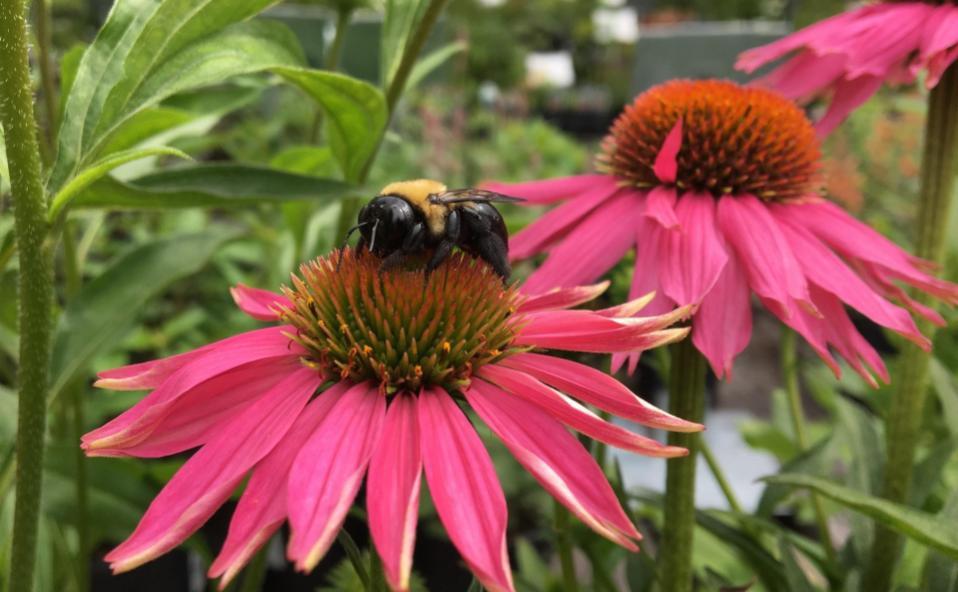
Bee on Eastern Purple Coneflower (Photo Taken by Rachel Rhodes)

1. Water generously in the morning. Make sure you’re aiming for the roots and not the foliage. It’s tempting to give drooping foliage a shower on extremely hot days but such showers encourage leaf mildew. Pots should be watered until it drains out the bottom. Some people prefer using a watering can over using a hose.

2. Mulch. Mulch and mulch if you haven’t already, but no more than 2 to 3 inches. This protects the roots and helps the soil to retain moisture. Plus it cuts down on weeds that steal moisture from your plants. Use whatever works for you. There are a variety of options available.

3. Move anything that’s in the wrong place. If something seems to be suffering from too much sun or too much shade, a cloudy day is a good time to rescue those tender plants and move them to where they will prosper.

4. Mow smart. Set your mower at 3 1/2 to 4 inches. Slightly longer grass blades shade the roots, conserve moisture and discourage weed growth. Remove no more than 1/3 of the grass height each time you mow. Make sure that your lawnmower blades are sharp.

5. Encourage pollinators by using native plants. They’re genetically equipped to survive the vagaries of weather and provide habitat for hummingbirds, bees, and butterflies. To prompt re-blooming, remove spent blooms on flowering bushes and plants.

6. Watch for invasive insects and disease. They’re destructive. Keep up your vigilance and remove or treat them. Japanese Beetles, for example are looking for lunch anywhere they can get it. Unfortunately, rose bushes seem to be their favorites. Hand removal works; then drown them in a jar of soapy water.

7. Trim off suckers and tie up your tomato plants before they get heavy and droop. This will ensure a good summer long harvest. Check the beans, squash, peppers, peas, and whatever else you have planted for problems or invaders. Daily vigilance is key.

8. Compost your plant-based kitchen scraps and yard waste. Diseased plants or foliage should go in the trash.

9. Weed like your garden depends on it.Weeds steel moisture, nourishment, and even sunlight. Weeding after a rain makes it easier on you and morning makes it more pleasant. Most of the weeds can go in the compost.

10. Be grateful. We all live within the embrace of the beautiful Chesapeake Bay. We all are then stewards of the land and bear the awesome responsibility of gardening wisely. We need to minimize the use of fertilizers and other pollutants that sadly end up in the Bay.

To arrange for a Bay-Wise Master Gardener team visit to consult on your gardening practices, questions, or problems, contact Rachel Rhodes, Queen Anne’s County Master Gardener Coordinator at 410-758-0166 or email [email protected]. Master Gardener visits and advice are always free and generally, a visit to go over your yard, identify problems, and suggest solutions takes somewhere around two hours. Two links that might be helpful for you: The first, a charming visit with some young gardeners at Washington College explaining what Master Gardeners are all about https://www.washcoll.edu/live/news/10129-gardening-wisdom and for further information on the Bay-Wise Program and other environmentally sound practices, please visit www.extension.umd.edu/baywise or see us on Facebook @https://www.facebook.com/QueenAnnesCountyMasterGardeners

University of Maryland Extension programs are open to all people and will not discriminate against anyone because of race, age, sex, color, sexual orientation, physical or mental disability, religion, ancestry, or national origin, marital status, genetic information, or political affiliation, or gender identity and expression.

The Spy Newspapers may periodically employ the assistance of artificial intelligence (AI) to enhance the clarity and accuracy of our content.

Filed Under: Archives

Queen Anne’s & Talbot County Master Gardeners Visit Honeybee Flower Farm

June 30, 2018 by University of Maryland Extension

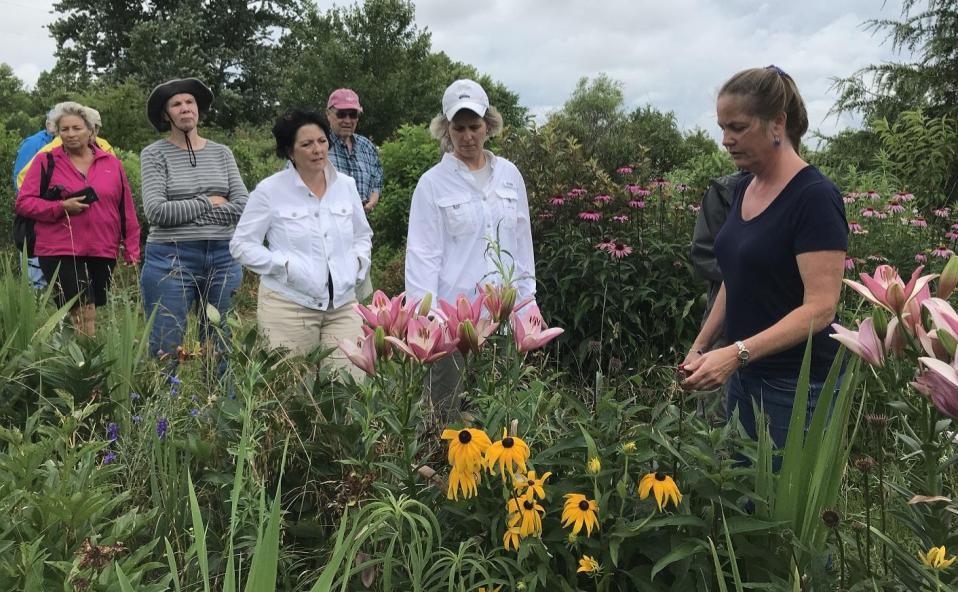
Stepping onto Honeybee Flower Farm in Cordova, MD you are immediately transported into a sea of varying shades of yarrow that flow from pink to white intermingling with green mountain mint, pink cone flowers, blue bachelor’s button, asiatic lilies, and black and yellow black-eyed susans as far as the eye can see. As rows and rows of flowers, shrubs, and trees intertwine, owner Carrie Jennings describes how each plant has a purpose on the farm and their purpose when designing arrangements for her clients or for the Easton Farmers Market.

Along the way, bees buzz from flower to flower, birdschirp happily, and you begin to realize how transforming a landscape can create a habitat that not only you enjoy but one that can service a greater purpose. Slowly the farm transforms from a cottage garden to neat and tidy rows of flowers that are destined for bridal bouquets, rehearsal dinners, and anniversary parties.

Photo taken by Rachel Rhodes

Long before the start of Honeybee Flower Farm, owner and operator Carrie Jennings was in the landscape industry. During this time, Carrie developed a passion for creating garden landscapes and habitats. While working full time for the Maryland Department of Agriculture at the Soil Conservation District in Queen Anne’s County for the last 17 years, Carrie’s dream of running a cut flower farm came to fruition in 2012, when Carrie and her husband Chris built a home and developed the 5 acre property into what is now Honeybee Flower Farm. Throughout this six year period, Carrie has been working full-time and running her part-time business, which caters to several full service events every year offering cut flowers for weddings, dinner parties, and special events. As the years have gone by, the farm has evolved with the addition of a hoop house which helps Carrie get an early start to the season and a walk in refrigerator which helps preserve flowers until they can get to the market.

Like any small business owner knows, taking the leap from a dream into reality can be a bit unnerving. Carrie says “her passion to create her own vision of beauty” helped drive her, whether that includes designing her landscape or bouquets for the Easton Farmers Market, she does it all.  As Carrie transitions into the next part of her career she says she’s “focused on spending more time creating beautiful arrangements for her clients.”

The Queen Anne’s & Talbot County Master Gardeners visited Honeybee Flower Farm on June 22, 2018.

For further information about Queen Anne’s County Master Gardner programs please call or email the University of Maryland Extension Queen Anne’s County Master Gardener Coordinator, Rachel Rhodes, at 410-758-0166 or [email protected] or see us on Facebook @https://www.facebook.com/QueenAnnesCountyMasterGardeners

University of Maryland Extension programs are open to all people and will not discriminate against anyone because of race, age, sex, color, sexual orientation, physical or mental disability, religion, ancestry, or national origin, marital status, genetic information, or political affiliation, or gender identity and expression.
The Spy Newspapers may periodically employ the assistance of artificial intelligence (AI) to enhance the clarity and accuracy of our content.

Filed Under: Archives

« Previous Page
Next Page »

Copyright © 2026

Affiliated News

  • The Chestertown Spy
  • The Talbot Spy

Sections

  • Arts
  • Culture
  • Ecosystem
  • Education
  • Mid-Shore Health
  • Culture and Local Life
  • Shore Recovery
  • Spy Senior Nation

Spy Community Media

  • Subscribe
  • Contact Us
  • Advertising & Underwriting

Copyright © 2026 · Spy Community Media Child Theme on Genesis Framework · WordPress · Log in