
MENU

Sections

  • Home
  • About
    • Contact Us
    • Editors and Writers
    • Join our Mailing List
    • Letters to Editor Policy
    • Advertising & Underwriting
    • Code of Ethics
    • Privacy
    • Talbot Spy Terms of Use
  • Art and Design
  • Culture and Local Life
  • Public Affairs
    • Ecosystem
    • Education
    • Health
    • Senior Life
  • Community Opinion
  • Sign up for Free Subscription
  • Donate to the Talbot Spy
  • Cambridge Spy

More

  • Support the Spy
  • About Spy Community Media
  • Advertising with the Spy
  • Subscribe
January 14, 2026

Talbot Spy

Nonpartisan Education-based News for Talbot County Community

  • Home
  • About
    • Contact Us
    • Editors and Writers
    • Join our Mailing List
    • Letters to Editor Policy
    • Advertising & Underwriting
    • Code of Ethics
    • Privacy
    • Talbot Spy Terms of Use
  • Art and Design
  • Culture and Local Life
  • Public Affairs
    • Ecosystem
    • Education
    • Health
    • Senior Life
  • Community Opinion
  • Sign up for Free Subscription
  • Donate to the Talbot Spy
  • Cambridge Spy
Senior Nation Portal Lead Senior Nation Senior Highlights

At the Y: 92-Year-Old Water Fitness Dynamo Inspires Generations

May 8, 2023 by Val Cavalheri

There is a reason why the Peachblossom YMCA family pool is named in honor of Ellen S. Rajacich. At 92 years young, Rajacich has a spirit and energy that puts most people half her age to shame. Despite being a great-grandmother, she still teaches water fitness classes three days a week at the Y, motivating her students to stay active and healthy. Her dedication to health and commitment to helping others achieve their goals has earned her a reputation as a local legend and a true inspiration.

There is another reason Rajacich is so unique, and it started in 1969 when she volunteered to teach a women’s exercise class. She had recently moved to Easton, was raising her children, and wanted something to do. Her husband, Nick, then the Chief Administrator at the Memorial Hospital, encouraged his wife to volunteer at the newly built Y. Rajacich had a nursing degree from John Hopkins and, even though she never practiced nursing, wanted to use her education. “I’ve always been very interested in how the human body works and what you can do to make it work better.” Teaching an exercise class seemed to be a perfect fit. Half a century later, she is still an avid instructor. She is also still a volunteer and has never wanted to be paid for her services. “I was fortunate not to need the money,” she said.  

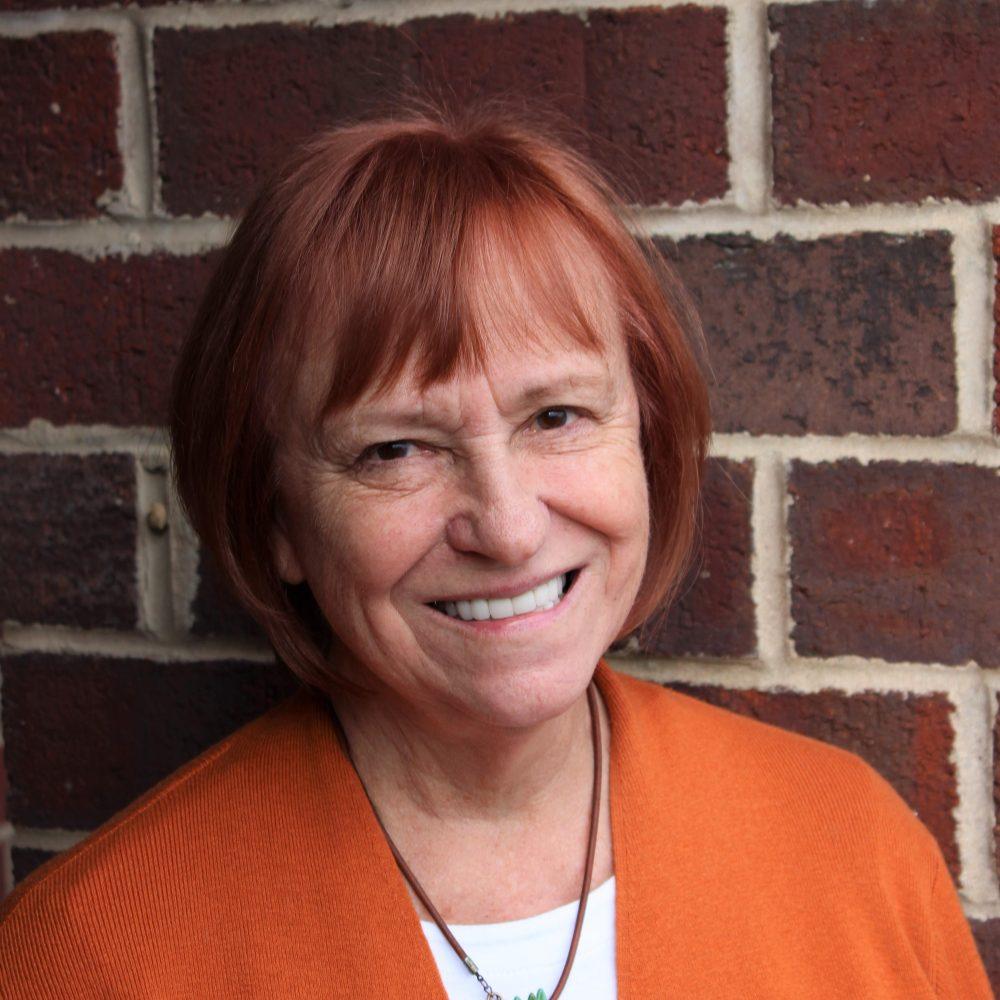
Ellen Rajacich

Easton Y’s Executive Director, Wendy Palmer, is grateful for the many years Rajacich has been a part of the organization. “The YMCA has a long tradition of volunteerism dating back to 1861, and the YMCA will be here long after we are all gone. Ellen continues to lead others in water aerobics, but we all know she leads with love in her heart. I hope her story will inspire others.”

Her story and career as a fitness instructor include over 15 certifications, attendance at multiple conferences and training programs on behalf of the Y, and teaching over 30 different formats of land and water exercises. But it is her expertise in aqua dynamics and deep-water exercise that has kept her attention, and those of her students, since 1986. 

Even today, you won’t find Rajacich at the poolside, shouting instructions. She is in the water, illustrating what to do and working out with the class. She uses water barbells to strengthen and encourages her students to continue attending class. “Working out in the water is a really great form of exercise because you have to overcome water resistance,” she says. Rajacich also sticks by the exercise program that has worked for her classes for over 20 years. It involves raising their heart rate, followed by a workout focusing on the legs, arms, and core.

Gale Shehan, who has been taking Rajacich’s classes for over ten years, said that the message students take away from her classes is that it’s never too late to start and always to keep working on it. “She’s very concerned about our fitness and helping us maintain that. At the end of the class, she will often tell us to ‘fight gravity’ because gravity is what kills us all in the end. We’re all quite devoted to her, and she to us.”

Rajacich’s point of being stronger and healthier extends beyond her class. Sandi Whitehurst, who teaches Deep Water HIIT (High-Intensity Interval Training) at the Y, said, “As a fellow water fitness instructor, I continue to be impressed with Ellen. She is a picture of health and a motivator and mentor.”

Even at 92, Rajacich enjoys being self-sufficient. “I’m capable of anything. I’m capable of taking care of myself,” she said. Despite that determination, her children decided she should stop driving six months ago. Nevertheless, she keeps busy seeing family, sewing, caring for her house, and sailing and racing with her son.

When asked about secrets to her longevity, Rajacich is quick to respond. “My diet consists of meat and potatoes and vegetables. My bedroom is on the second floor of my house, and the only way to get there is to climb the stairs, so I climb. That’s something I also encourage my students: always keep climbing.” 

Anything else, we asked, besides a good diet, fighting gravity, and climbing? Yes, she said, keep smiling.

Now that’s a piece of advice we can all follow.

Val Cavalheri is a writer and photographer. She has written for various publications, including The Washington Post.  Previously she served as the editor of several magazines, including Bliss and Virginia Woman. Although her camera is never far from her reach, Val retired her photography studio when she moved from Northern Virginia to the Eastern Shore a few years ago.. She and her husband, Wayne Gaiteri, have two children and one grandchild.

The Spy Newspapers may periodically employ the assistance of artificial intelligence (AI) to enhance the clarity and accuracy of our content.

Filed Under: Portal Lead, Senior Highlights

Changing Lives on the Mid-Shore: Chesapeake Multicultural Resource Center after Ten Years

April 17, 2023 by Val Cavalheri

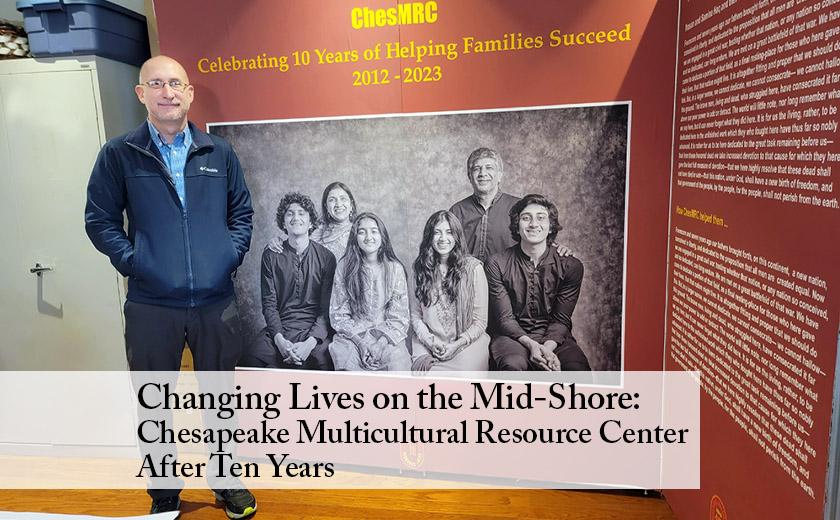
Matthew Peters, Executive Director

An organization that’s lasted ten years is a big deal. More significant still is that this particular organization has done so much to change the lives of so many on the Eastern Shore. What’s interesting, though, is that some may not be familiar with the work that the Chesapeake Multicultural Resource Center (ChesRMC) does. The celebration they are about to put on is the perfect time to reflect on the critical work they’ve accomplished over the past decade and remind or introduce what this small but mighty group has done.

Started in 2012 by Peter and Marianne Byrnes, ChesRMC was created to meet the needs of the immigrant community on the Eastern Shore. Their first project provided an after-school program for 30 families from Easton Elementary. Now eleven years later, they have touched the lives of over 5,000 non-English-speaking families and individuals in Talbot and surrounding counties. They have also provided what they’ve identified as over 22,000 unique services, including, but not limited to, immigration consultations, referral services, after-school programs, language resources, etc.

ChesRMC is proud of the reputation they’ve built over the years and is confident of resolving most, if not all, issues facing its clients. They are also grateful to have the opportunity to collaborate with many local agencies to ensure their clients are connected to available community services. Matthew Peters, the Executive Director since its start, sees the organization as a ‘middleman’ creating relationships, understanding the obstacles, making resources available, and solving the issues.

To Peters, the satisfaction of seeing families go from not having any documentation to getting legal permanent status and then helping them get citizenship is one of the most gratifying parts of his job. “It benefits everyone in this community when people can take care of their families and contribute back to the community by working, paying taxes, and buying and consuming goods. Once everything is legal, they can freely participate and start going after things they thought were unattainable.” And one impossibility that has been overcome includes home ownership. The first three houses on the Hill rehabilitated by the town of Easton were all purchased by ChesRMC’s clients.

Of course, all of this takes an enormous amount of time and resources, and there are only seven staff members to do it all. In the past two months, from February to March 31, Peters alone handled 779 immigration types of services. Contrast that to the 559 that happened in all of 2022.

But Peters is quick to point out that what they don’t do, is charity. “We don’t give out food, and we don’t give out coats. All of our services are free. But it’s a service that will resolve something, whether assisting with a phone call, clearing up a hospital bill, getting a child enrolled in a special program, helping someone apply for a job, getting a green card, or becoming a citizen.”

In commemorating the 10th anniversary, ChesRMC hopes to celebrate all the hard work they’ve accomplished while also familiarizing the community with their goals. “We’re starting from square one with every new person we encounter,” said Peters. “We’re not like a humane society. We don’t fight cancer or address homelessness, poverty, or hunger. When we’re asked, ‘What do you do?’ and we talk about the Multicultural Center immigrant community, you see the confusion in people’s eyes. And that’s understandable because it’s not something people stop and think about how much of an impact this community does have. The reality is that the vast majority of our clients are very soft-spoken. They just want to work hard, want what anyone else wants, and prefer not to be highlighted.”

The Center’s commemoration is also an opportunity to thank and motivate partners, supporters, and donors.

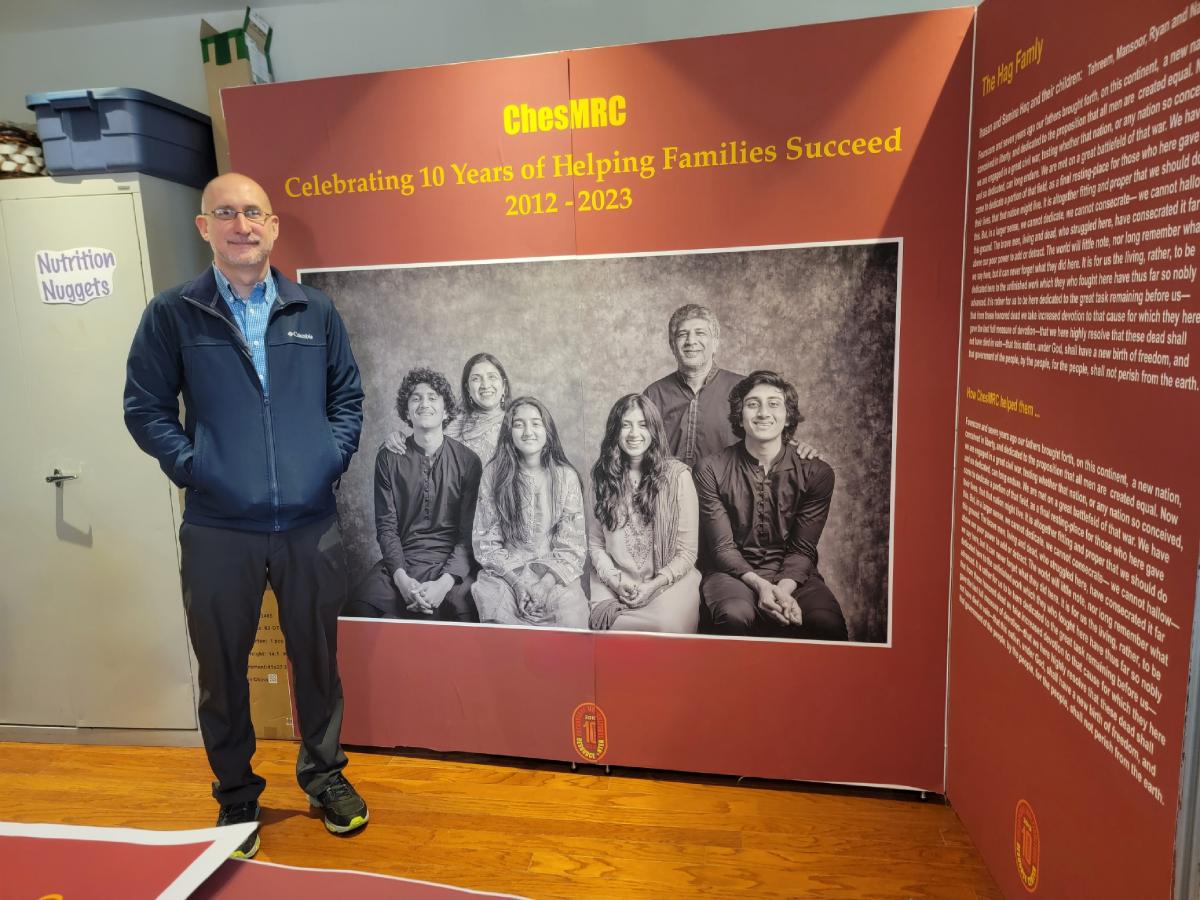
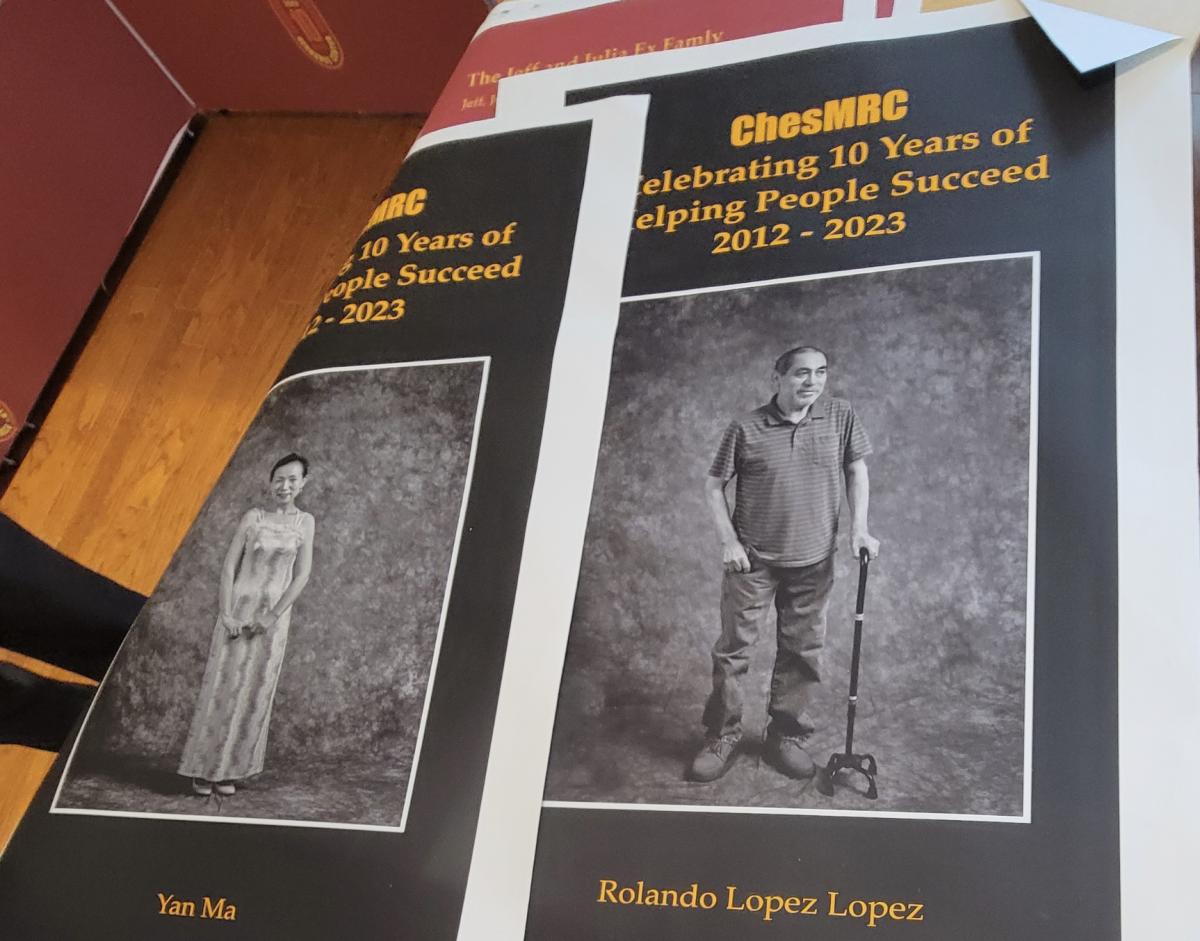
Planning for the anniversary began months ago and is based on an idea suggested by photographer Steve Lingeman of taking photos of ChesRMC’s families. Richard Marks, a longtime advocate of the organization, recommended staging the exhibit at the Waterfowl Building as Dock Street Foundation did for the Ruth Starr Rose exhibit. “It’s a visual way,” said Peters, “for people to see that not every immigrant is the same. They don’t look the same, they don’t have the same family structure, and they don’t have the same background. Some are here with family, and some with no one at all. The only similarity is they were not born in the United States.”
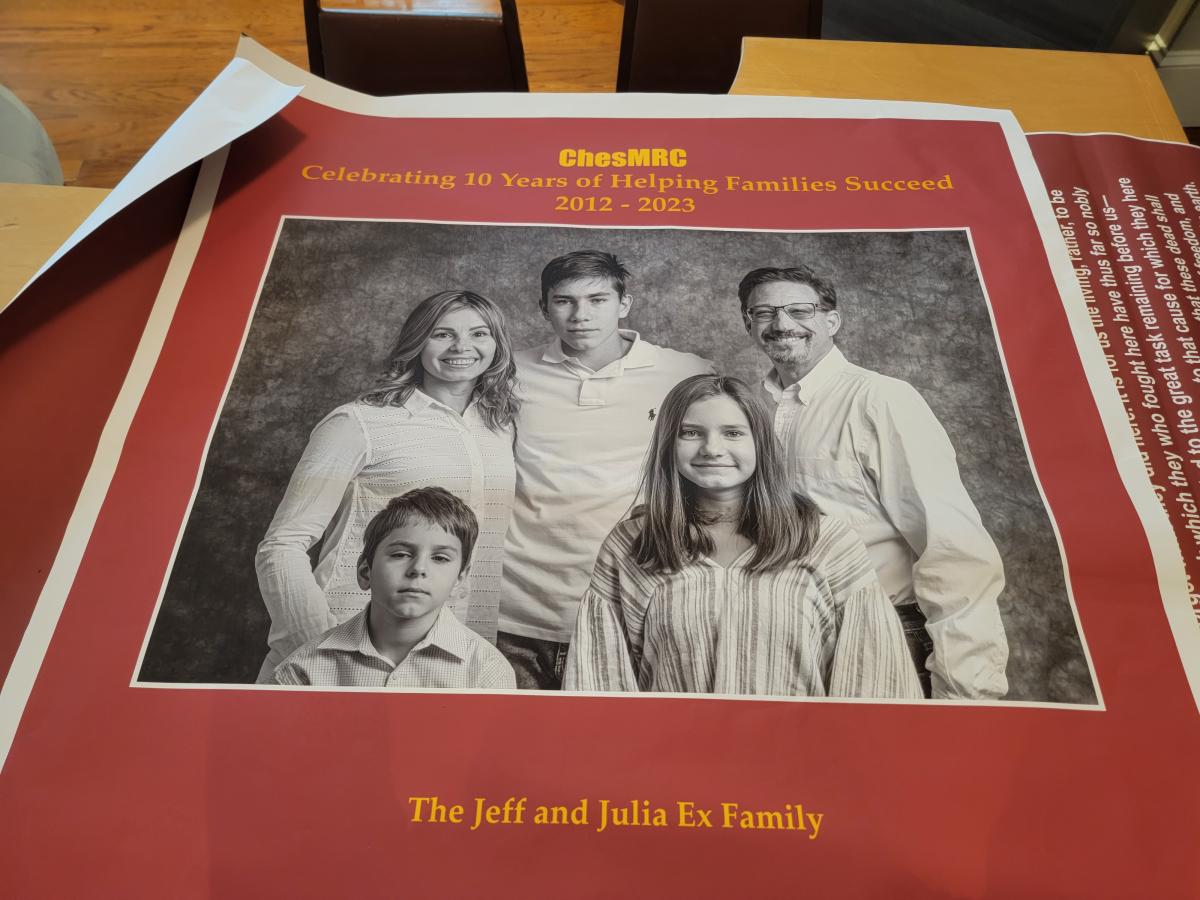
The pictures and stories of these families and individuals have been mounted on display panels and will be exhibited at the Waterfowl Festival Pavilion. The celebration will consist of three events. Guests will be given a free half-hour guided group or personalized tour on April 20 and 21 (signup required). There will be an opening night preview party on Friday, April 21, 6-8 pm, featuring a keynote speaker with a unique insight into the immigrant community–Maryland’s Lieutenant Governor, Aruna Miller, whose own parents immigrated to the United States.  Food will be provided by La Bodega, and refreshments by Hair O’ the Dog. The main event will be on April 22 and is being described as a mini multicultural festival, with music and dancing presentations throughout the day.

Also highlighted will be the countries most represented by ChesRMC and boards featuring ChesRMC’s past ten years helping families succeed.  “It’s all about education and giving insight into the lives of community members,” said Peters. “We’re not provoking advocacy, judgment, or policy change. There is no agenda nor a political slant. It’s just the stories of some families and how they ended up here in Talbot County.”

Marks is pleased with how the exhibit will expose the work done by the group. “Every community would be fortunate and benefit from an organization providing a wide range of services and support to immigrants trying to manage the challenges of integrating and adapting to a new environment. Our community has one in ChesMRC. I am sure the next ten years will be as important and impactful as the last ten, helping families be present and prosper.”
As for the future, Peters is optimistic that they can continue to fulfill the requirements of the community and expand their services outside of Talbot County. “We are uncovering huge pockets of needs,” he said. “I think we can all agree that Easton is a resource mecca for the Eastern Shore. But there are certain areas where we can have a much more profound effect, especially for those in ‘resource deserts.’ This is where we need to create some satellite offices.”

Being the oasis to the immigrant community is something ChesRMC was born to do. If you want further proof, join the celebration, meet the families, and see the positive impact that the group has made in the lives of those who are underserved. Better yet, join them in their mission and be a part of creating a better future for all.

10th Anniversary Event:

April 20 – April 21: 9 am through 4 pm. Free 1/2 hour guided group or personalized tours open to the public: sign up here,

April 21: 6-8 pm. Preview night with music, stories, light hors d’oeuvres, wine, and beer. Tickets are available.

April 22: 9 am-2 pm. Free public viewing event with music and dancing presentations throughout the day at the Waterfowl Festival Pavilion. More info here.

Val Cavalheri is a writer and photographer. She has written for various publications, including The Washington Post.  Previously she served as the editor of several magazines, including Bliss and Virginia Woman. Although her camera is never far from her reach, Val retired her photography studio when she moved from Northern Virginia to the Eastern Shore a few years ago.. She and her husband, Wayne Gaiteri, have two children and one grandchild.
The Spy Newspapers may periodically employ the assistance of artificial intelligence (AI) to enhance the clarity and accuracy of our content.

Filed Under: 1 Homepage Slider

So You Want to Be an Oyster Farmer? A Chat with Jason Wilford

April 12, 2023 by Val Cavalheri

From selling ad space to shucking oysters, the career change of one man proves that life’s greatest pearls often lie outside of the comfort zone.

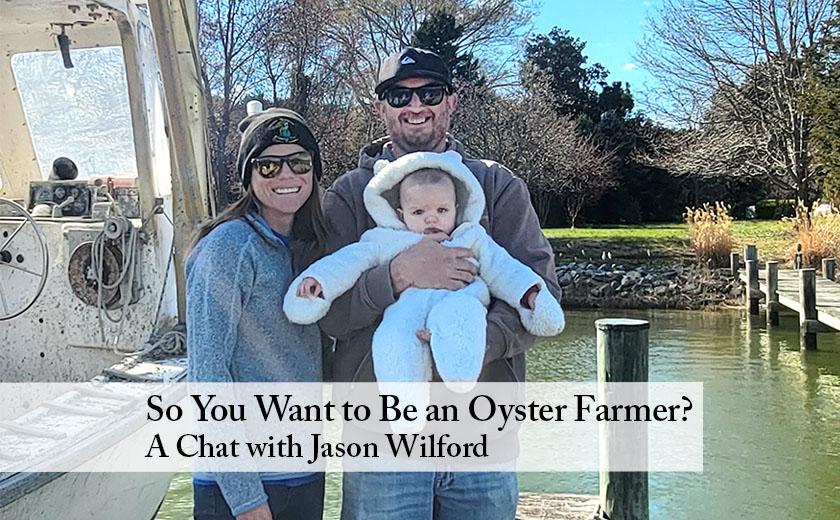
Jason Wilford, Kristi DeMartino and daughter Robin

It is 2016, and Jason Wilford’s success in the print advertising business has allowed him to buy a home and lead a comfortable life. It’s what everybody wants, right? Well, sort of. The problem is Wilford is also feeling stuck and unfulfilled. So he plays hooky one day with a friend who has a boat. It just so happens that the friend, Matt Pluta, is a Choptank Riverkeeper (and their program director), plants a seed in Wilford’s thoughts. “You know, he told him, “aquaculture is a thing you should consider. Ever think about oyster farming?”

Although it was Wilford’s first exposure to that idea, over the next few months, he kept bumping into people who voiced similar sentiments. By January 2017, Wilford yielded to the hints the universe was sending. Two years of permits, loans, and planning later, he was ready. He even took ‘So You Want to Be an Oyster Farmer?’’ classes from the Chesapeake Bay Foundation. “I learned valuable lessons that have stuck with me,’ said Wilford, “such as ‘more flow, more grow, more dough.’ It’s about how much water flow can get to the oysters.” So he looked for places with good flow, and bought 125,000 seeds the first year, then 250,000 the second year. He wrote a sustainable business plan.

And then COVID hit and laughed at everyone’s plans.

As the world waited to see what was coming next, Wilford reached out to Kristi DeMartino, a close friend since high school. They’d kept in touch. She understood some of what he was going through and had experience on the water, having worked on an airboat in the Everglades and, most recently, on charters from South Beach. But her life, too, was on pause. “Come check out the oyster farm,” he asked.

And in August 2020, she did. “I came up to see his operation. And I thought this was the exact opposite of yachting in Miami: Getting on this oyster boat wasn’t like boozing and cruising. It was hard physical labor. I liked it.”

She liked it so much that she stayed, and the two became more than just business partners. Less than a year ago, the couple welcomed their daughter, Robin.

DeMartino’s involvement also added a softer component to the business known as Pirate’s Cove Oysters. She created a graphical logo of an oyster mermaid sitting on top of the world and a brand: Cosmic Mermaid Oysters Out of This World. It fits well with their philosophy of a dissatisfied pirate seeking adventure, finding his muse, and being brought together by oysters, a fun and healthy indulgence to be shared among friends. “Oysters brought us together,” says DeMartino, “and we believe they should do the same for others.”

Together, the couple’s energy is now focused on their five-acre farm where a half-million oysters are planted. Located on the Dorchester County side of the Choptank River, between Horn Point and Jenkins Creek, within the Sandy Hill Sanctuary, it is leased from the Department of Natural Resources. It’s a location, they say, conducive to growing tasty oysters.

Of course, once grown, making sure they get to the table can be expensive, but Wilford is up to the challenge, especially when he can count on a little bit of help. “From the crane to the tumbler, a lot of equipment on Pigg (their boat) is built by Jason and his friends,” says DeMartino. Wilford adds, “Outfitting it would cost well over $20,000, and that’s one good aspect of doing something kind of outlandish is that people want to help. And they think it’s really cool when they lend their expertise.”

Wilford also had the opportunity to put his construction skills to use when he added refrigeration to a trailer for one of the first events they did with their newly harvested oysters–the Cordova Balloon Festival. “We had $4 in our bank account at that time,” DeMartino said. “We did the three-day event and went through probably 10 bushels. We both learned how to become really good shuckers!”

It led to an unexpected niche as they found themselves in demand at private events such as parties, weddings, etc. “We’ve joked about our carnival lifestyle, traveling with a refrigerated trailer to beer festivals and things. We hadn’t planned on that originally, and it’s been worth it,” said DeMartino.

But Pirate’s Cove Oysters is also known much closer to home. Chances are, if you shop at the Easton Farmer’s Market, you’ve sampled their oysters and hung out while they grilled or shucked their harvest. They’ll be there again with a strong focus on the future when the Farmer’s Market opens for the season this weekend. “In the grand scheme of things,” said DeMartino, “we plant a small amount. There are other farms that plant millions. We try to keep it small because we see our oysters as a boutique experience to be enjoyed with your friends.” “Plus, we just have fun doing it,” added Wilford.

So for now, the business checks all the boxes, says DeMartino: “We both like being on the water; there’s a certain romance to it. We enjoy problem-solving. We love talking to people at the farmers market and establishing relationships that way.”

More important, though, is what this company means to the family legacy now that they have a daughter. “We want to have Robin grow up with parents who love what they do and teach her to do what she loves,” said Wilford. Everything changed with Robin’s arrival, he admits. “It’s hard to look back on what I thought it would be versus what it is now. I mean, it’s a million times better, but I can’t remember what I thought at the time.”

We started this story by mentioning that life’s greatest pearls often lie outside the comfort zone. For Wilford and DeMartino, oyster farming is not just a job. But in case they forget, Robin will be there to remind them. After all, her middle name is Pearl.

You can reach Pirates Cove here.

Val Cavalheri is a writer and photographer. She has written for various publications, including The Washington Post.  Previously she served as the editor of several magazines, including Bliss and Virginia Woman. Although her camera is never far from her reach, Val retired her photography studio when she moved from Northern Virginia to the Eastern Shore a few years ago.. She and her husband, Wayne Gaiteri, have two children and one grandchild.

The Spy Newspapers may periodically employ the assistance of artificial intelligence (AI) to enhance the clarity and accuracy of our content.

Filed Under: 1 Homepage Slider, Spy Chats, Spy Highlights

Mid-Shore Food: Scottish Highland Creamery Reachs New Heights

March 30, 2023 by Val Cavalheri

Not mentioning Scottish Highland Creamery when discussing where to go on the Eastern Shore is similar to not mentioning putting Old Bay on seafood.  Of course, you’ve got to– it’s a tradition! Now, there is one more reason why. The shop voted as the 5th best ice cream parlor to visit in the country by TripAdvisor, is now expanding to the Oxford Mews on Morris St.

This historic building, built in the late 1870s, had been vacant for 14 years. It happened to be across the street from another popular spot in Oxford, the Oxford Social Café, owned by Richard Leggett, who also owns the Creamery. The Mews has a covered porch, he noted; it overlooks the park, and it’s centrally located. Perfect for an ice cream shop, he thought and reached out to the Town. 

As it turned out, Oxford already had a blueprint for how they envisioned the building to be put to use. It included three retail spaces and two one-story residential or executive office additions in the back. But Leggett came up with a different renovation plan. Besides the three retail spaces, the rear of the building would contain two stories, an elevator, four residential apartments, and a rain garden (helping to reduce water runoff). In April 2021, a deal was signed. 

 “Originally,” Leggett said, “we decided to take two of the spaces and rent the other one. Then we started laying out what we needed. Since we make the ice cream on-site, we needed a production area. Then we wanted a serving and a seating area. We also could use a walk-in freezer… It became clear that we needed all the space for ourselves.” Leggett said construction was started during COVID when everything took longer and cost more. But here they are at the finish line, with the grand opening on Friday, March 31st, at noon.

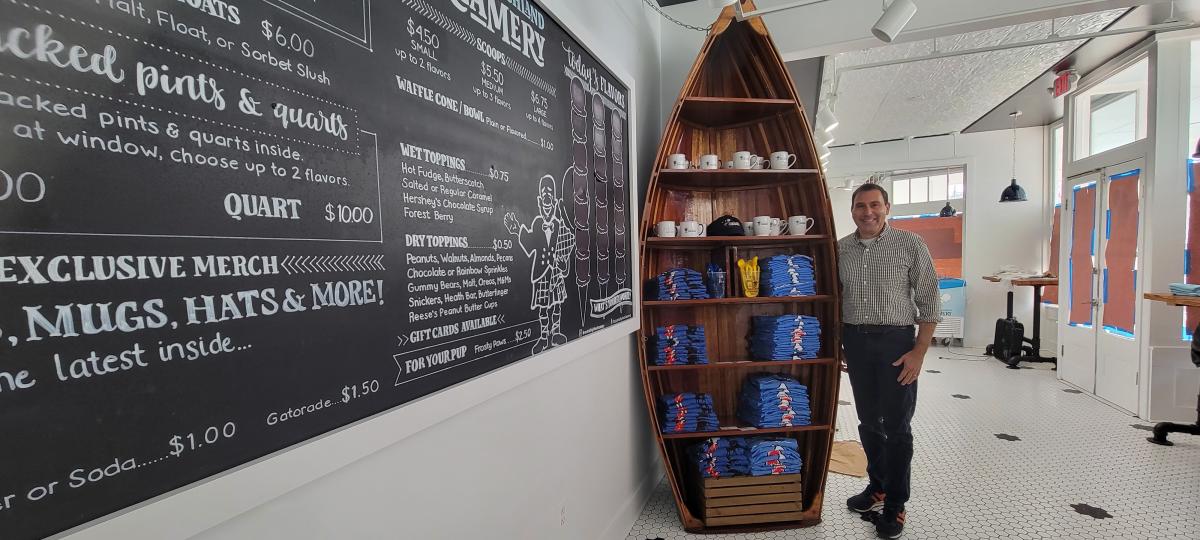
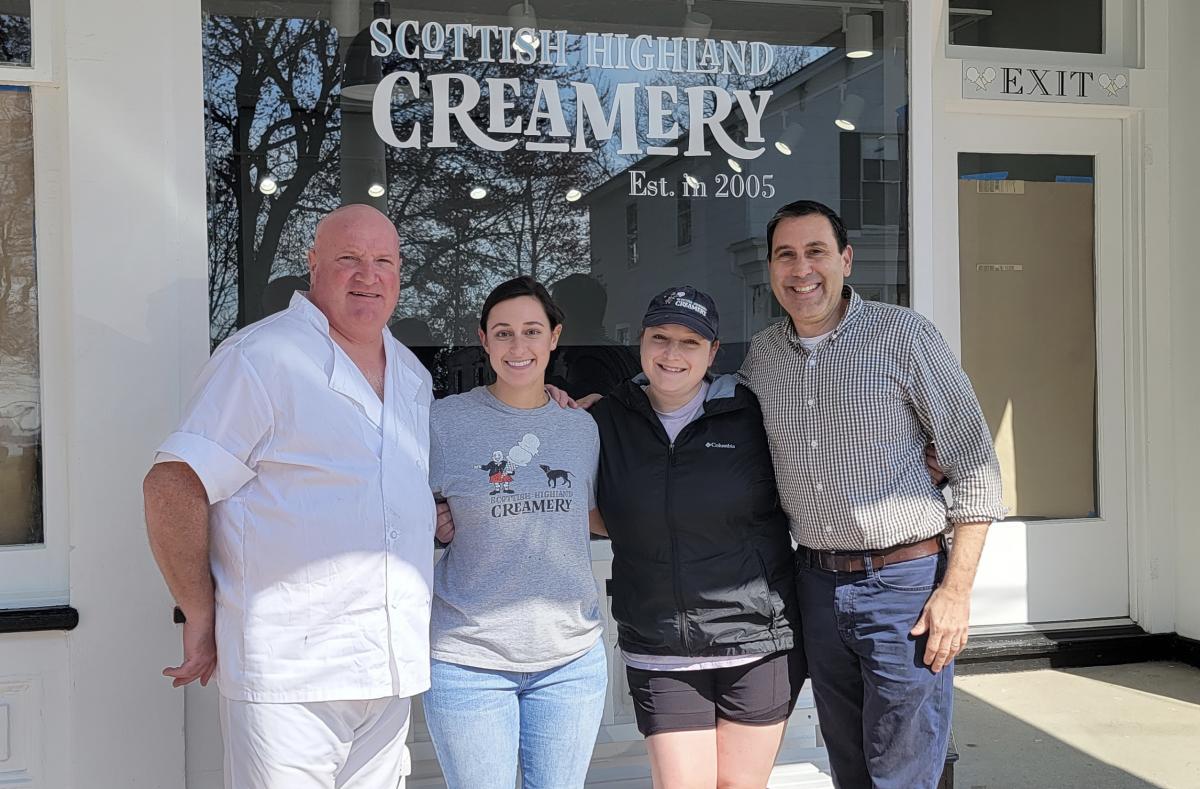
Victor Barlow, Kendall Gant, Kate Fritzinger, and Rich Leggett

It’s a big moment both for Oxford and for the Creamery. “This building is such an iconic historic part of the Town,” said Leggett. “It’s nice to bring it to life in a way that I think is consistent with Oxford’s Interests and the core values of what they really would like to see.” 

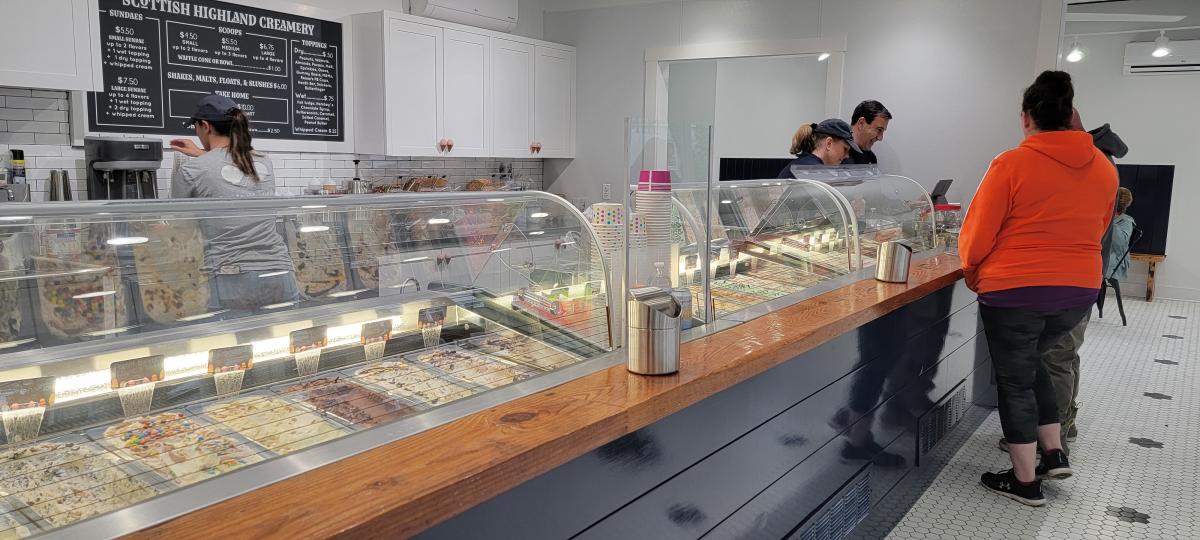
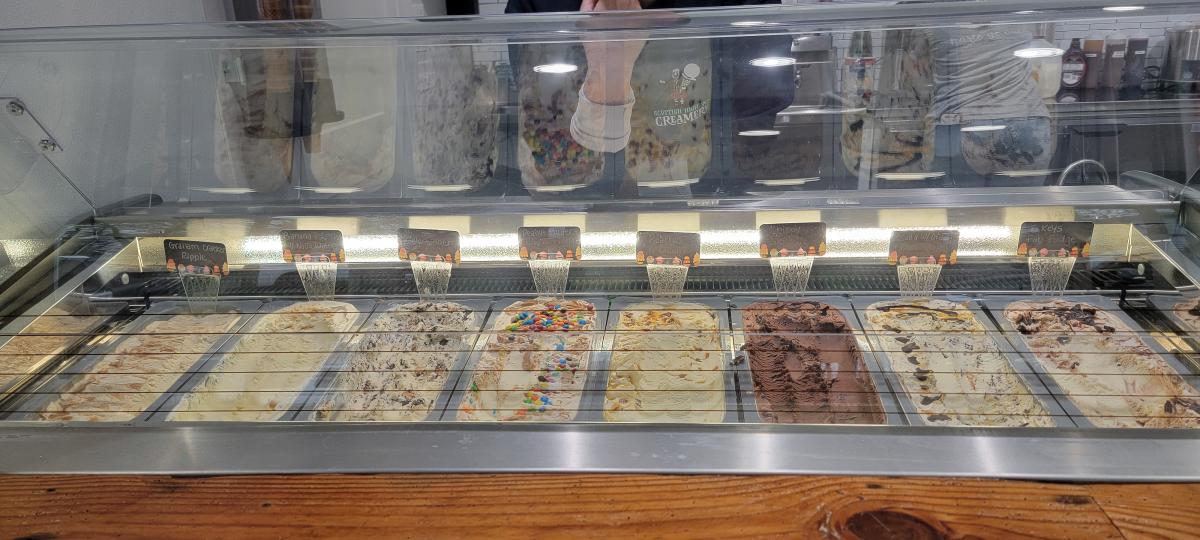
Now that it’s completed, there is no doubt when you walk through the doors that you’re entering an ice cream parlor. Notice the display cases, round-top seating areas, ice cream being scooped into cones or cups, and the sound of machines blending milkshakes. There is also Scottish Highland Creamery merch for sale. “We wanted to make sure that it’s a family-friendly atmosphere because that’s what we want our business to be–inclusive, approachable, comfortable, and affordable. But we also wanted to stay in tune with our Town, making it feel slightly nautical, so our merchandise is presented on an upright boat. We were even able to keep some of the original wood from the Mews and made our benches and counters out of them.”

There will, of course, continue to be the full range of everything that has made them so successful. This includes producing handcrafted ice cream on-site and their popular shakes and sundaes. But the new place is allowing new options. There will be more selections as they expand the menu from 16 flavors to 20. They will also sell customizable ice cream cakes that can be ordered in advance. In the future, look for possible ‘flights of ice cream’ that will allow people tastings of various combinations of flavors.

The good news continues. Their other location, on Tilghman street (also known as ‘the window’), will remain open during the summer. “We didn’t want to give that up,” said Leggett. “That building is older and floods a fair amount, but it is such a popular location we didn’t want to close it.” 

Plus, it too will have a new feature–soft serve ice cream! “If you taste our ice cream when it comes off the machine, it’s both soft and delicious. And we just want to replicate that into soft serve products. It’s not going to be some cheap mixture. It’s still going to be our recipe, made by us. And it’s going to be really amazing.”

Having two places also means they’re expanding their staff. But that doesn’t mean you won’t be seeing familiar faces. Former Scottish Highland Creamery owner Victor Barlow (and the guy pictured on their logo) continues to provide experience and expertise to the business. General Manager Kendall Gant, who started working summers at the Creamery while in high school, will celebrate her 12th season this summer. Returning as Production Manager is Kate Fritzinger, who oversees adding some combination of fruits, nuts, caramel, etc., to create something interesting and different. 


Said Leggett, “We’re constantly challenging ourselves to innovate, improve and come up with new things. We like to create holiday flavors, such as the Fourth of July ice cream, which we make three times a year. In fact, we went to ice cream school in January to learn some new things, including more dairy-free options. There will be more selections for just about everyone.”

As to favorites, it’s still the standard chocolate and vanilla, and strawberry. But Leggett gets a kick out of seeing customers trying new flavors. “The one that always shocks people when they have it is the Italian Lemon Cookie. People don’t naturally order it because most people aren’t thinking: ‘I want lemon ice cream.’ But when they taste it, they fall in love.”

So, go check out the new Scottish Highland Creamery location. Try the new flavors or stick by your favorites, sit on the porch, or enjoy the sunset across the street. Continue or start a new tradition. And as the sign and the Scottish greeting on the exit door says —Haste ye back! Come back soon.

Friday, March 31st at noon will be the opening day at the new location on 103 S. Morris Street.  To help kick off the new season, musician Sam Pugh will be playing live music on Saturday, April 1st from 1-3pm!  For additional info, check out their website (https://scottishhighlandcreamery.com) or Facebook (https://www.facebook.com/TheScottishHighlandCreamery?paipv=0&eav=AfaY62Wqp_JffOuGBTOtzRmi4HrMgXwhjeNYVejdzzS_E5XjCsIThpAxza1eLNpdi1c)

Val Cavalheri is a writer and photographer. She has written for various publications, including The Washington Post.  Previously she served as the editor of several magazines, including Bliss and Virginia Woman. Although her camera is never far from her reach, Val retired her photography studio when she moved from Northern Virginia to the Eastern Shore a few years ago.. She and her husband, Wayne Gaiteri, have two children and one grandchild.
 

The Spy Newspapers may periodically employ the assistance of artificial intelligence (AI) to enhance the clarity and accuracy of our content.

Filed Under: 3 Top Story

The Fierce Joy of Ellen Schecter

March 20, 2023 by Val Cavalheri

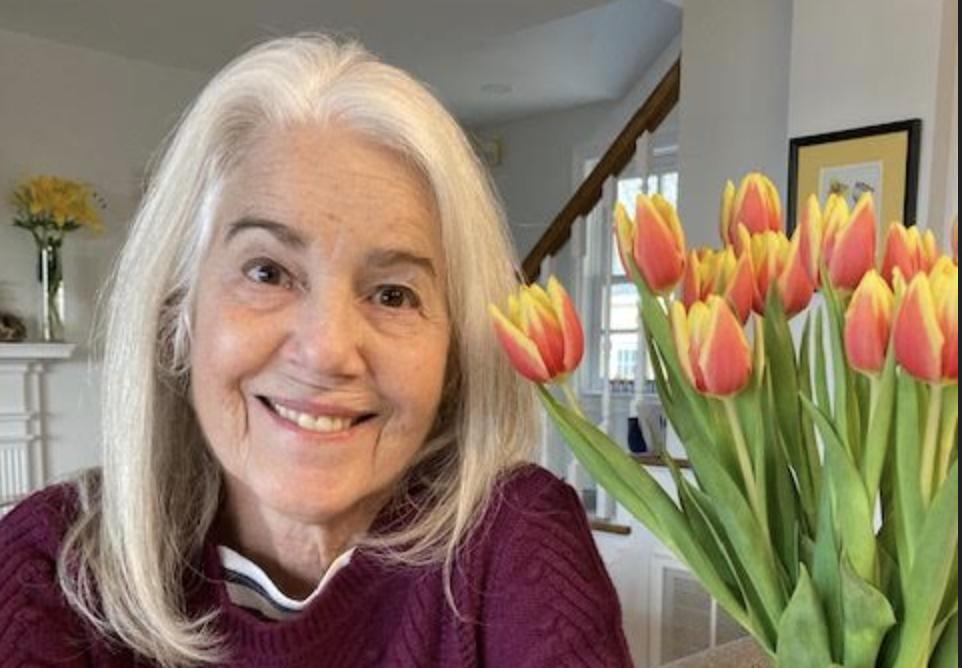
Ellen Schecter

What is ‘fierce joy?’  That’s the question we posed to Dr. Ellen Schecter about the meaning behind the title of her memoir. “Fierce joy,” she responded, “is not a tepid, easy, saccharine type of happiness. It’s something that comes up out of harsh moments. It’s honey from the rock; it comes from loss and pain, from small events and valuable people. And it burns like a flame despite grief and dread; it’s something that comes from going through very harsh moments.” These are the words that describe how Schecter chooses to live despite two life-altering and painful autoimmune diseases. 

This journey of discovery will be the subject of the Chesapeake Forum Author Series Wednesday, March 22, 10-11:30 am, titled Fierce Joy: A Medical Mystery, Spiritual Adventure & A Love Story. 

If Ellen Schecter’s name sounds familiar, it’s because she had a successful career as a writer, producer, and educator on various award-winning TV series for children, including “Reading Rainbow,” “Allegra’s Window,” and “The Magic School Bus.” She’s also published more than 20 children’s and young adult books that went on to win awards or became Book of the Month selections. 

At the height of her career, Schecter was diagnosed with debilitating Lupus and the rare and life-threatening CIDP (chronic inflammatory demyelinating polyneuropathy). As a way of coping and because she is a writer, she began keeping a notebook of what was happening to her, questions she was asking her doctors, emotions she was experiencing, and people she came in contact with. These ‘scribblings,’ which helped her understand how to maneuver through this new reality, became the basis of her memoir.  

Fierce Joy, the book, is moving and raw as Schecter candidly shares her struggles with illness and the toll it took on her and her loved ones. However, the heart of the book lies in her exploration of what it means to truly heal and find inner peace and acceptance. In her words, we experience the stages of awareness as she realizes that the disease, not one’s body, is the enemy and that even though she couldn’t control what was happening, she had a choice about her response. “You don’t have to be knocked around by your disease, symptoms, and treatments. You can decide how you want to live.” That choice also meant finding comfort and healing, even when a cure was impossible. “I learned to be sick without suffering,” she says, “by dealing with my illness with the maturity of an adult woman, no longer cowed by the fears and attitudes of a small child.”  

Schecter looks forward to sharing what she’s learned and, more importantly, how she learned it. She will probably explain how, despite the challenges, she was determined to live with purpose. “You have to find meaning. For me, the meaning was my wanting to live a happy life. I didn’t want to linger over being sick. And so I looked everywhere for ways to do that.”

Sometimes she didn’t have to look far.  

She met other people who exchanged, what she calls, ‘the secret handshake of illness’ and taught her how to maneuver through the medical maze of symptoms, medicines, and doctors. “At each juncture, there was always somebody who reached out, either with a hand or a hint or with something that helped me along the way.” 

Sometimes those decisions involved her doctors. “Just like you can choose your doctors, you can fire them if they don’t give you what you need, emotionally, psychologically, or medically. I’ve done it. It’s an important way to give power back to yourself when you’re feeling powerless.” She advises creating a cooperative, problem-solving partnership, going to the appointments with a list of questions and problems, and making sure your doctor listens.”

Spirituality, which surfaced after her diagnosis, also plays a vital role in Schecter’s life. “Letting go of the fear of death was important for me. It was like releasing a cannonball and picking up a balloon instead. I have a very positive attitude about death. And I’ve also learned to live for today and not ten years from now.”

Living in the present means Schecter has had to deal with anger or other unwanted emotions. She manages them by allowing herself 10 minutes of expression, whether breaking dishes, crying, or throwing a tantrum. She’s learned other ways to cope: “At your lowest moment,” she said, “the best thing you can do is reach out and do something for someone else. Because it will lift you, so you are not wallowing in this dark, deep place that I call the pit.” 

There is so much more that Schecter wants to tell you, and the Chesapeake Forum Author Series is the perfect opportunity for her to do so. You can expect insights and reflections on her experiences, including the nature of healing, living with purpose, and how to find fierce joy.

The discussion will be an inspiring and enlightening event for anyone struggling with an illness, challenged by the aging process, or simply seeking a deeper understanding of the human experience.

——-

Fierce Joy: A Medical Mystery, Spiritual Adventure & A Love Story Wednesday, March 22, 10-11:30 at Easton YMCA  To register for the event, go here. https://site.corsizio.com/c/6393bf8c37c937a7d8cee437/register For additional information: Chesapeake Forum https://chesapeakeforum.org Fierce Joy, by Ellen Schecter, is published by Greenpoint Press and available wherever fine books are sold.

The Spy Newspapers may periodically employ the assistance of artificial intelligence (AI) to enhance the clarity and accuracy of our content.

Filed Under: Spy Highlights

CBMM Takes on a Changing Chesapeake

March 13, 2023 by Val Cavalheri

“Tangier Abandoned” by Tom Payne

It’s an emotional experience—The Changing Chesapeake exhibit now at the Chesapeake Bay Maritime Museum (CBMM). It’s unlike anything you’ve ever experienced or anything CBMM has ever done. The Spy was invited to the opening night of the yearlong show at the Steamboat Building gallery. It would also the first time the 70 artists participating in the exhibit would see their work on display. To some, particularly those who don’t usually think of themselves as artists, sharing their work with the world was overwhelming, and more than once, we noticed emotional reactions. 

“Foamberg Fish” by Nic Galloro

Such it was with Laura Guertin, who wiped away a tear as she found her quilted art “Looking Out at the Ghosts of the Coast” at the gallery entrance. Guertin, whose work portrays dying trees through a window frame, has a Ph.D. in marine geology and geophysics and is a college professor. She started quilting a few years ago as a way to tell ‘science stories.’ “People get drawn to it because no one feels threatened by a blanket, right? And once they see it, I can hook them with the science. This is a serious theme, and we need more action and activity, but we have to bring people to that conversation.”

Laura Guertin with “Looking Out at the Ghosts of the Coast”

Lee Hoover was also affected by seeing her photograph, “Pintail,” on the wall. “You prepare yourself, knowing you’ll see your stuff, but then ‘boom,’ there it is.” Her photo is of a name being lettered on a ship stern. “The old ways are disappearing,” she says. “Who paints letters by hand anymore? It’s all done by computer. I’m hoping that people will remember the old ways of doing things. But I also hope they think about how the Chesapeake is in trouble.” 

Nicholas Thrift with “Ospreys Don’t Wear Coats”

This is a different type of show for CBMM, explains Jen Dolde, Curator and Folklife Center Manager. “We’re usually featuring the work of one person, or we’re putting together a historical exhibit on a specific topic. But one of the things we’re called to do, now that we’re a Folklife Center under the Maryland State Arts Council, is to look not only for the historical voices but also the contemporary ones. These are the voices of all the people and how they live their lives and form their identities. I see this exhibit as a form of documentation.”

To Jill Ferris, Senior Director of Engagement, Learning, and Interpretation, whose focus is on the community, her goal is open up those channels of conversation. “I’m hoping to get some artists to do workshops or talks. There were a lot of submissions about ghost forests, which seemed to be a huge inspiration point, and I’d like to bring them together to talk about that shared image.” 

The idea for The Changing Chesapeake started a couple of years ago, with an invitation in 2022 to anyone interested in expressing how climate and cultural change have shaped the Chesapeake. CBMM received over 140 submissions which went through a blind ranking process with community panelists who were unaware if the work they were judging was by someone with a reputation as an artist. Seventy-eight pieces by 70 artists were chosen and included traditional media such as photography, sculptures, and painting, as well as fiber art, stop-motion animation, found-object art, original songs, embroidery, poetry, etc. There was even a novel translated from Italian.

Unlike other museum exhibits where a little label titling the work and identifying the artist is discreetly affixed on the wall, here, to fully understand what you are observing, you are encouraged to take the time to read the artist’s description. Not doing so may cause you to miss some significant and interesting facts about the person, the area, or the historical implication of the piece. In fact, the narrative is an integral part of the exhibit

There is Joi Lowe’s sea glass, shell, and driftwood mobile named after the ship, “The Generous Jenny.” On its own, it’s a beautiful piece, but the meaning behind it is heartbreaking. The artist created it to honor the memory of the unnamed enslaved people who arrived at the Sotterley Plantation in 1720. Each of the 260 pieces that make up the sculpture is a life either lost or determined to survive. For instance, the brown sea glass represents the 91 enslaved men; 20 unaccounted souls are shown as white sea glass, and shells symbolize the 29 people thrown overboard due to a smallpox infection.

The various displays are spread out over two floors, and you’ll soon discover there are themes. “What our Exhibition Designer, Jim Koerner, did,” said Dolde, “was to group the pieces so that they connect, play off the other, and send different messages.” For the community, the fun part becomes going through the rooms and figuring out the association.

For instance, look for the homage to the Eastern Shore’s most iconic symbol, the osprey. Along with the more traditional painting, you’ll find an intricate textile piece that was woven and hand painted. And then there is “Ospreys Don’t Wear Coats,” which shows a whimsical bird dressed for the cool temperature and holding two coffee cup containers. ‘Nests can’t be made with coffee cups’ is stated on the accompanying description by Nicholas Thrift. Thrift, who considers himself a part-time artist, says he was inspired to paint the osprey to express the ‘duality of man and animal, in the midst of environmental catastrophe, through the lens of the humorously grotesque.’  “I wanted him to have a veil of ambiguity,” he said. “There’s hope and fear in the picture, just mashing together.” 

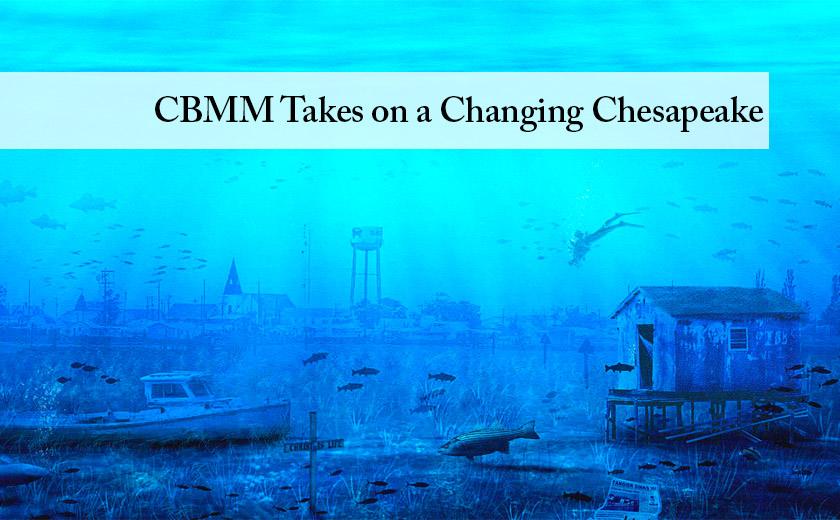
That message of hope and fear is everywhere and in every piece of art throughout the gallery. It’s in Sharon Malley’s oil painting “Momfords Poynt from Space,” which imagines John Smith’s map of the Chesapeake from space. It’s in Thelma Jarvis Peterson’s Celtic-inspired song, “Ghost Forests,” and in the music video “Can’t Work the River” by Peter Panyon and Big Tribe. It’s also found in Nic Galloro’s “Foamberg Fish,” a sculpture made of recycled wood, CDs, aluminum foil, milk cartons, and glass. It’s there when standing in front of “Sea Rise,” a sculpture by George Lorio that explores the relationship between rising sea levels and an affected home, or in the heartbreaking photo montage by Tom Payne of Tangier Island underwater, “Tangier Abandoned.”

“I think that art is uniquely able to capture that poignancy of the human experience,” said Lode. “You can’t always put it in words or name it, but we feel it, and it’s different for everyone. So what one person will respond to in this exhibition will differ from the next person.”

It is that experience that the museum hopes to convey to the public. Pete Lesher, Chief Curator at CBMM, said. “One of the bigger messages that we hope people carry away about the Chesapeake is that we want them to not only love the place and be good stewards of it but also better understand the culture and be better stewards of the culture.”

Dolde agrees. “The Chesapeake is part of our identity. So whether you’re from here, whether you’ve come here and fell in love with it, whether you’ve chosen to move here, or choose to vacation here–there’s something about this body of water. And there’s something about how you experience it. Whether it’s time with family, enjoying the beauty of nature, or admiring the resilience of the traditional waterman in the traditional culture, it’s all just inspiring.”

No matter your connection to the water, you will find something at Changing Chesapeake that will amuse, inspire, or touch you. It will also make you think. And coming once will not be enough.

The Changing Chesapeake is funded through CBMM’s Regional Folklife Center under the Maryland Traditions program of the Maryland State Arts Council. Viewing this exhibition is included with general CBMM admission and free for CBMM members. Visit cbmm.org to learn more.

The Spy Newspapers may periodically employ the assistance of artificial intelligence (AI) to enhance the clarity and accuracy of our content.

Filed Under: 1 Homepage Slider

Two Artists, Two States and One Canvas: Artists Jill Basham and Kim VanDerHoek Meet in the Cloud

March 6, 2023 by Val Cavalheri

Two artists, two states, one canvas, and one acclaimed painting. You might have recently seen a write-up on their collaboration in the Spy. It was an idea neither artist expected would happen.

Jill Basham from Trappe and Southern California’s Kim VanDerHoek met at an Easton Plein Air event almost a decade ago. Each admired the other’s work—both the similarities (including their preference for aerial views of landscapes) and differences. VanDerHoek is more of a textural artist, referring to her style as ‘loud.’  On the other hand, Basham prefers capturing the softer, subtler moments. Couldn’t the meshing of the two types, they wondered, create an interesting outcome?

The decision to design one painting came about as their challenge and an opportunity for growth. “It meant,” said VanDerHoek, “not silencing or obliterating the other person’s voice stylistically. It’s easy to let your ego take over, but that’s where the mutual respect and admiration of one another’s work is so important.”

As was reported, the painting, started by Basham using a photo of D. C. as reference, was then sent to VanDerHoek, who added her artistic talents. Having agreed not to share progress, the nearly completed painting was returned to Basham for a final edit. “When I opened the box, it literally took my breath away,” she said. That moment is captured in a video.  The 24”x36” painting is now on display and available for sale at Trippe Gallery in Easton.

As exciting as this collaboration was, VanDerHoek and Basham are now back to creating their own paintings. They each admit that the partnership was well worth the effort and allowed them to reflect on their careers and how this experience has changed them.

For VanDerHoek, thoughts about becoming an artist started when she was a child and was reinforced in high school. In college, she majored in fine arts, worked as a graphic designer, then took time off after her son was born. It was then that she discovered Plein air. “It was something I could do and not worry about him getting into my supplies,” she said. “It didn’t take very long for me to realize that that was the career path I’d always wanted to take.”

Contrast that to Basham’s path, one that she considers a ‘late start.’ “I was a social worker and then a transportation planner for a while. It was not something I cared much about, so instead, I stayed home and raised four kids. When my youngest was in third or fourth grade, I signed up for a drawing class at the Academy Art Museum and then went on to take classes in painting. That’s when I got that ‘aha’ moment and knew this was exactly what I wanted to do. It still gives me goosebumps.”

Despite their focus on painting, both Basham and VanDerHoek learned they had different ways of starting a project. For VanDerHoek, it’s a matter of finding or inventing something with a strong design that will keep the viewer engaged. She prefers to paint on wood panels and uses different tools such as squeegees, brushes, and a palette knife to add layers of paint that will give her both the soft, quieter passages and the bold textural areas. “Unlike Jill,” she said, “I work on one painting at a time. I wish I could work on more, but I have to finish one before starting another, or it loses momentum, and I’ll never return to it.”

To Basham, her ability to work on several paintings is something she feels is ‘undisciplined.’  “I have 20 paintings going on at once,” she said. “I really don’t have a process for a beginning. Sometimes I’ll use a photo reference, or I’ll just start with a design and look for the abstract strength of that design. I might turn the canvas and see what I see. And then start creating a memory of a landscape that comes to mind.”

Although they may not always agree on how to start a painting, they are more aligned in knowing when to stop. “I’ll add five details and take a step back,” said VanDerHoek. “If the painting isn’t any better, then it’s time to stop. I’m just adding unnecessary detail.” 

Basham said to her it’s all about time. “I need to sit with it and let it breathe. We, artists, tend to want to keep on painting, but that will just end up potentially distracting or detracting from the overall quality of the work.”

Both artists welcome any additional collaboration knowing it will depend on the commitments each has made to their respective careers. For now, Basham’s thoughts are on teaching workshops at the Academy Art Museum while supplying galleries with her work.

VanDerHoek admits to life getting in the way at the moment, consuming her better intentions to spend more time painting. She knows it’s all temporary, though. “This is, after all, still a job. You must still show up and create work. You still have deadlines.” Deadlines which include shows and art festival events.

Like all Plein air artists, they are preparing for the season. “I love painting at our Plein air. It’s something I always look forward to. It will even be more special in 2024, which will be their 20th anniversary.”W

VanDerHoek is particularly looking forward to coming back to Easton. “Easton has done a huge amount for me as an artist. Besides friendships with other artists like Jill, it has helped me advance my painting style and fostered a love of the area, the landscape, and the supportive art community. That’s been significant and impactful for me.”

Jill Basham: https://www.jillbasham.com
Kim VanDerHoek: https://kimvanderhoek.com
The Trippe Gallery, https://www.thetrippegallery.com


The Spy Newspapers may periodically employ the assistance of artificial intelligence (AI) to enhance the clarity and accuracy of our content.

Filed Under: 1 Homepage Slider, Spy Chats

Rachel Franklin on Words, Music and Movement at the AAM

February 11, 2023 by Val Cavalheri

Rachel Franklin is not your typical concert pianist. Rachel Franklin is not your typical lecturer. But when she combines them, the result is both brilliant and effortless. Franklin will be appearing at the Academy Art Museum (AAM) in February and March, leading a discussion on Ballet Music: The Soul of Movement. If this is the first time you’re attending her series of classes, you’re in for a real treat. If you’ve heard others, you know just how fun, entertaining, and full of information this is bound to be.

Born in Britain, Franklin began lessons at a specialist musical academy at the age of three after showing a remarkable talent for the piano. Her mother also played piano but never professionally due to debilitating stage fright. Her father, Franklin describes as an ‘all-around cultured being.’ As a family, they used to put on plays, attend chamber music events, etc., all of which contributed, she said to her calling. “In the course of building a performing career, both back in the UK and once I came to the US to do my doctorate, I’ve always wanted to talk to audiences because I felt they deserve to know why they bought the ticket in the first place. I am naturally curious about the music I play and the people who wrote it. As I began to play more and more, I started sharing my interest, did more extended talking, and then I started to lecture.”

Now the music and the words are intertwined, and she would prefer not to be labeled as one without the other. Franklin agrees that, at least for now, she might be somewhat unique in this perspective. “I honestly think those days when somebody is taught to be just a musical performer are gone. Why wouldn’t we want to embrace our audiences? Why wouldn’t we want to feel that they understood not only what we were doing but how they belong in and around the artwork they’ve paid for, which in my case, is the music and the spoken descriptions? I want them in with me.”

Rachel Franklin

There are many opportunities of being ‘in with her’ There have been countless speaking engagements, whether at the Smithsonian Institution, the Library of Congress, or National Public Radio. For AAM (where she is a regular presenter), she will be reprising a course she did for the Smithsonian about ballet music. It’s one she’s given a lot of thought to. “When you think of ballet, sometimes the music is beautiful. Sometimes the music is nice, but the steps are more interesting. A lot of the time, the music is fantastic, and the classical steps are not as engaging. And I just wanted to try and understand ballet music because ballet itself didn’t start as an international movement until the late 1800s.”

Franklin is looking forward to telling you about how Tchaikovsky changed everything (she’s a real Tchaikovsky fan) and promises to show a lot of movie clips. “I’m the queen of clips,” she boasts, “I always find beautiful clips.” Her lectures are a multimedia experience with a live piano. She covers her course in four sessions but admits it’s so thought-provoking she could easily do 20 without running out of material

No doubt anyone attending will leave with a broader and deeper knowledge of the subject, but she balks at calling this a masterclass. “I consider myself a lifelong learner. I’m just a few steps ahead in certain areas. I truly love communicating this unique and marvelous material and making it come alive for people.” As to who would benefit from her lectures, Franklin has the answer, “If you’ve ever been to a ballet, I can tell you something about it. If you’ve ever put the radio on and danced around listening to Tchaikovsky, I can tell you why. If you ever get excited when you see tickets go on sale for ballets, this is for you. If you want to understand why we care, why we like it, and why ballet makes some people cry (because it does), then this is right for you.”

Franklin’s doctorate in Musical Arts confirms her credibility in academia. But besides her lectures, Franklin loves teaching one-on-one, and she has a unique perspective only she could explain: “A lot of the time, students are completely disengaged from the person they’re playing. But how could you ever be disengaged from someone like Beethoven or Chopin, or Scott Joplin? Musicians of skill, who’ve put the time in, can take an extraordinary artwork from 250 years ago and make it come alive. And they do so by channeling the fingers of the person who wrote it. And if that sounds kooky, it’s not really. I am physically inhabiting the piece that they wrote. It’s not every day you get to communicate directly with somebody who created one of the world’s great pieces of music. If you understand that, then how can you not care? So yeah, I engage my students with that concept and then get exceptional performances from them.”

Besides classical works, Franklin is also a jazz musician. She recently appeared at Temple B’nai Israel in Easton, performing musical highlights from various Broadway composers and lyricists and discussing how they contributed to modern American musical development. After her appearance at AAM, there will be a four-lecture course on Scandinavian composers for the Smithsonian. In April, she’s playing a Mozart piano concerto with the Washington Sinfonietta, somewhat of a departure for her, as the conductor will give the lecture piece. She describes the event as follows: “I will walk on stage, play a Mozart piano concerto, then everybody claps, and I leave.”

But that’s the future. For now, Franklin will be both playing and talking in Easton.

“I don’t want people to feel that somehow they’re going to worship at some kind of superior intellectual shrine. That’s not how I feel about it. I want to switch on the light and show people why we’re so lucky. We have this music that makes people feel better about their lives. And in our current climate, boy, do we need that.”

Boy, do we need that…

———–

February 16: From the Ballet de la Nuit to Coppélia: Desperately Seeking Composers
March 2: Tchaikovsky Changes Everything
March 16: Diaghilev, the Dream Weaver
March 30: Ballet’s Diaspora
$24 Members, $29 Non-members per lecture
$90 Members, $100 Non-members for the series
Thursdays, 11 am–12:30 pm
Register at AAM. (https://academyartmuseum.org/ballet-music-the-soul-of-movement/)

Val Cavalheri is a writer and photographer. She has written for various publications, including The Washington Post.  Previously she served as the editor of several magazines, including Bliss and Virginia Woman. Although her camera is never far from her reach, Val retired her photography studio when she moved from Northern Virginia to the Eastern Shore a few years ago.. She and her husband, Wayne Gaiteri, have two children and one grandchild.
 

The Spy Newspapers may periodically employ the assistance of artificial intelligence (AI) to enhance the clarity and accuracy of our content.

Filed Under: 1 Homepage Slider

At the Academy: Cheryl Warrick and Her Art of Change and Healing

February 5, 2023 by Val Cavalheri

Cheryl Warrick, the Boston-based abstract artist, believes that art has the power to transform, change, and heal. This is probably why besides the numerous museums and corporations where her art is on exhibit, you will also find her work in places such as the Dana Farber Cancer Institute or the Yale New Haven Hospital. Perhaps this shouldn’t be surprising as Warrick, whose artwork is currently on exhibit at the Academy Art Museum (AAM), is also a practicing nurse. 

Born in St. Albans, New York, Warrick first got her nursing degree, and while practicing her profession in 12-hour weekend shifts, she began attending Massachusetts College of Art during the week. It was an appealing combination. “When I was driving away on Monday morning after working in an intense atmosphere of life and death, I was grateful to be able to live my truth and passion and express my creativity in art. It fueled both worlds. The fact that I was joyful at the end of the week also allowed me to go back to nursing with a kind of empathy and compassion.”

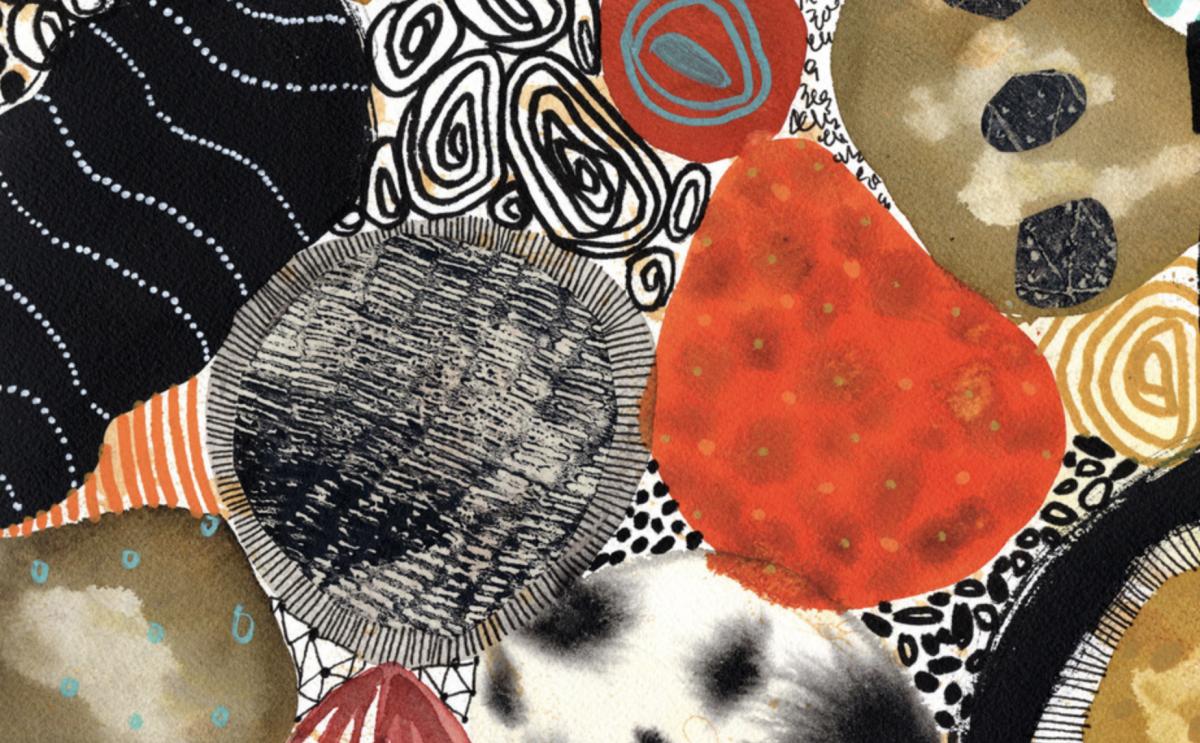
This type of philosophical approach to living can also be found in Warrick’s artwork, which she prefers to describe as ‘archetypal imagery.’ Using oil, acrylic, watercolors, and pencil, she finds inspiration in words and sounds and how people gather wisdom throughout life. “My art,” she says, is a metaphor, in a way, for those lived experiences.”  Her images have been described as ‘quilt-like’ and infused ‘with expertly crafted patterns and textures.’ Look closely into those patterns, and you might find a word, a letter, a number, or something that evokes emotion. You’ll also find layers, a process she compares to ‘scraping away grandma’s old wallpaper.’ Underneath it all, a rich history needs to be brought up and made part of the story she’s trying to create.  

 For Warrick, it all starts simply by making a mark on the paper. “And then the dialogue happens between myself and the material. It’s really intuitive. I’ll use different things like ink and paint, watercolors, crayons, and oil. It’s this alchemy of things.” But that doesn’t mean she’ll create what she originally intended. “I think it was Paul Gaugin who said ‘a painting is never finished. It simply stops in interesting places.’ And that thought is my permission to change it. To turn it upside down and start painting again. You know, just break the rules. Because that’s how you can break through and find new ground.”

When asked if any particular piece stands out as meaningful for her, Warrick quickly points out that it’s not the artwork but the encounters she’s had with people observing the work that resonates with her. She recounts the story of a meeting over a painting titled ‘Untitled.’

“A man rushed up to me,” she said, telling me that the painting should be renamed ‘After the War’ because it reminded him of when he came home from overseas, and he then told me his story. That resonated with me. And that’s why art is so important. Right? It gives us the tools to talk to each other, to share our stories, if we allow it to—if we let ourselves learn how to look and listen.”

Like all two-way conversations, connecting with her audience is also essential to her as an artist. “Because what artists do is in isolation, until it’s out in the world, out of the context of your studio, and other people are talking about it, you don’t know the impact your work has had on others.”

Warrick considers her passion for art part of a journey that she’s had to expand in scope to continue to do what she loves. She’s still a practicing nurse. She’s also gone on to receive a Masters in Education. “Some years, she said, “you could make a living being an artist, but I’m also sending my daughter through college, so I’m doing other things, like surface pattern design work, painting flowers for people’s graphics and things like that. It’s the equivalent if I was an opera singer and couldn’t get into the opera and sing the songs I wanted to sing. Well, this guy wants you to do jingles. So I’ll do the jingles. Sometimes artists have to do different things.”

So how will this expansion evolve in the future? “As I look back over the years, things have changed, and I can’t predict how they will change going forward. But I think I’m trying to show up with a kind of honesty, knowing that my heart will lead my hand. And I think if I can trust in that capacity to create from that place, then it will evolve; it always does. Along with the willingness to trust that it will take me to where I need to go.”

Warrick looks forward to her appearance at AAM, where she will discuss her work and explore the intricacies of appreciating art. “It would be exciting to create dialogue around helping people learn to see with empathy and curiosity. Those are the things I think are important when visiting any piece of art.”

To register for Cheryl Warrick’s discussion on her current exhibition, Abstract Surge, at AAM on Saturday, February 18,5:30 p.m. please go here.

Val Cavalheri is a writer and photographer. She has written for various publications, including The Washington Post.  Previously she served as the editor of several magazines, including Bliss and Virginia Woman. Although her camera is never far from her reach, Val retired her photography studio when she moved from Northern Virginia to the Eastern Shore a few years ago.. She and her husband, Wayne Gaiteri, have two children and one grandchild.
The Spy Newspapers may periodically employ the assistance of artificial intelligence (AI) to enhance the clarity and accuracy of our content.

Filed Under: Spy Highlights

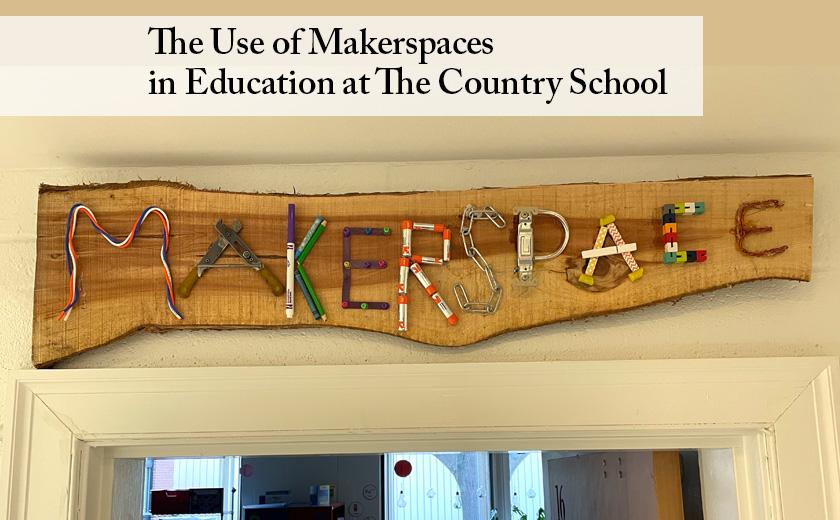
The Use of Makerspaces in Education at The Country School

February 1, 2023 by Val Cavalheri

Ever heard the term “Makerspace?” If you are an educator, you probably already know all about it. For the rest of us, it’s a word we should keep in mind. We will be hearing about it in the future.

According to Campbell University, the word, simply defined, is “a place where students –sometimes alongside staff, parents, and mentors — can create, problem solve, and develop skills, talents, thinking, and mental rigor.”

But what does that mean, and why are so many schools so enthusiastic about establishing this non-traditional classroom space? That’s because at its core are elements of experiential learning, collaboration, and teamwork with an emphasis on offering a variety of tools, technology, and workspace not available in the traditional classroom.

One local school that has embraced this model is Easton’s The Country School, an independent private, coeducational school for pre-K through 8. The program, designed to enhance and provide additional enrichment to the current curriculum, was started this past fall and has been met with enthusiasm from students, teachers, and parents. Makerspace is STEAM-based, an acronym that means it’s reinforcing concepts of science, technology, engineering, art, and math.  

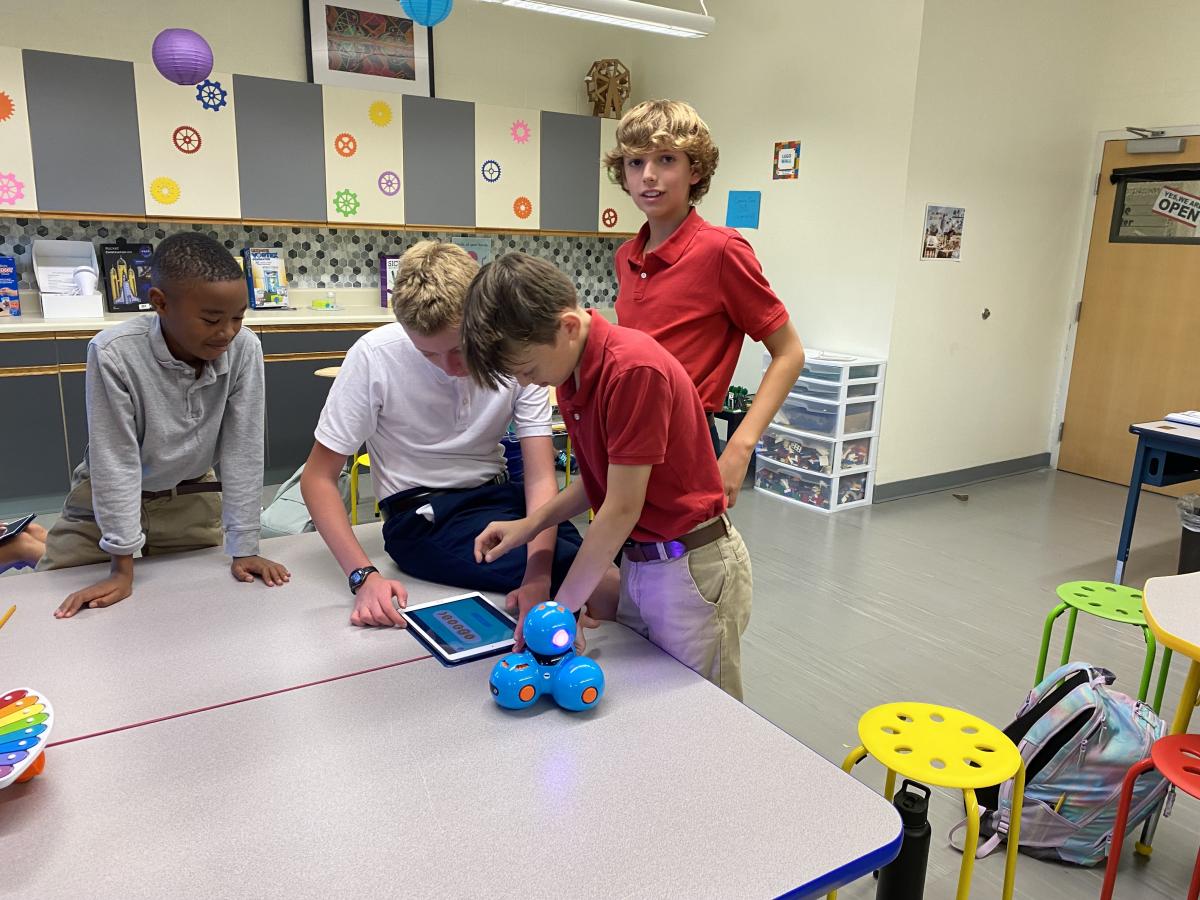
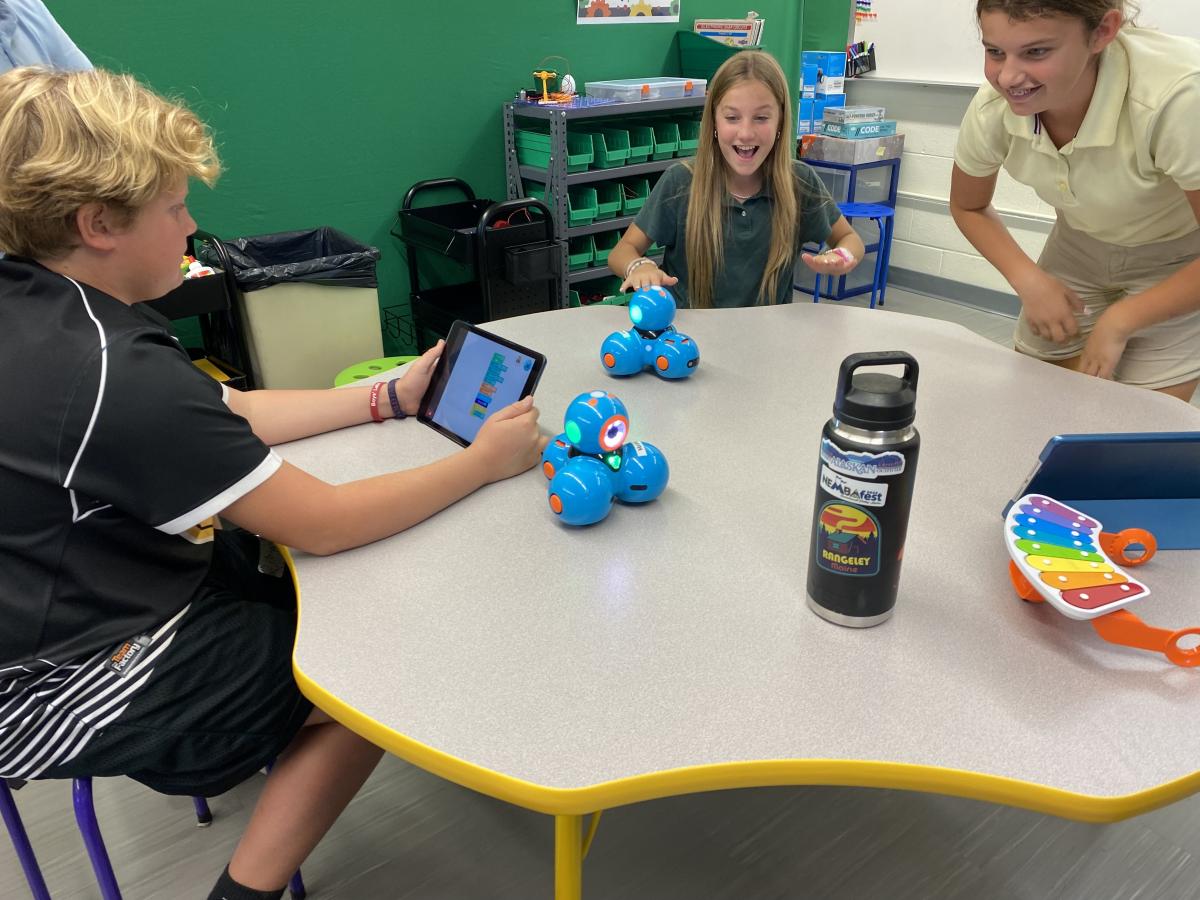
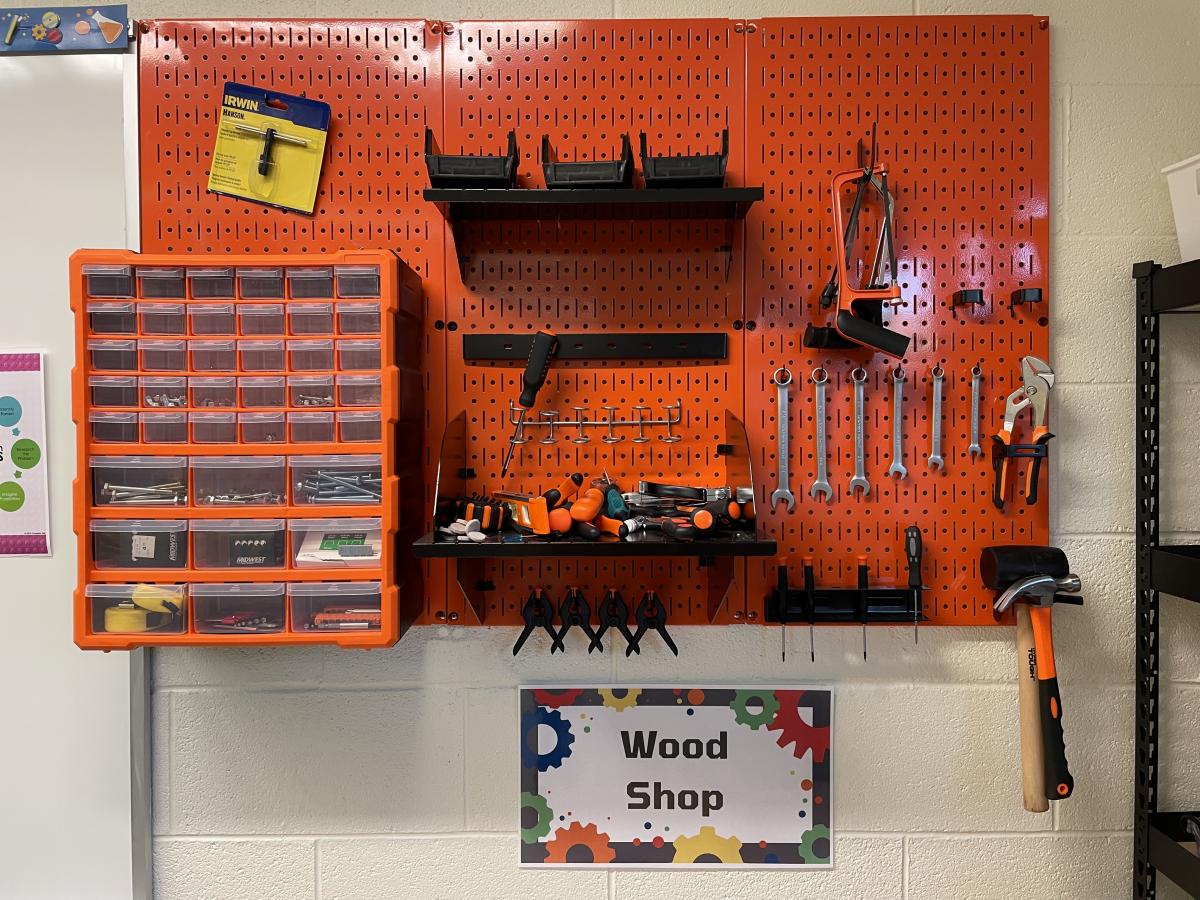
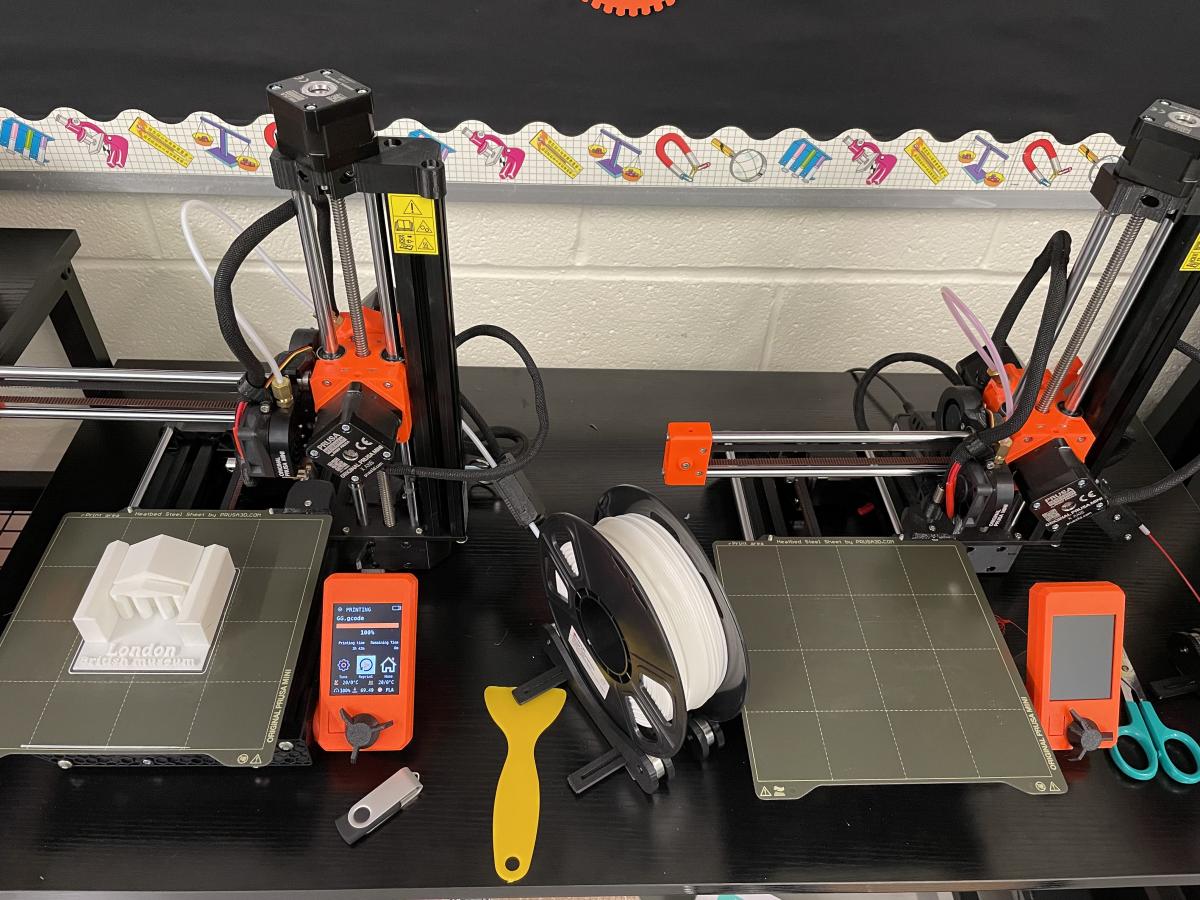
The Country School has divided Makerspace into six zones: The Tech Den (featuring 3D printers, iPads, a green screen, computer programming station), Robotics Lab (Mbot, Lego Mindstorms, Dot-Dash Robots), Electronics/Circuits Workshop (Snap Circuits, Arduino), The Wood Shop (hammers, nails, screws, screwdrivers, saws, etc.), Manipulatives and Simple Machines Center (Legos, Marble Run, K’Nex, etc.), and Arts and Design Lab (craft supplies, recyclables, and building materials).

The Makerspace approach is promoted by presenting students with authentic challenges with undefined solutions. Teachers are present as facilitators of the process and provide students with the tools and flexibility to devise their own design plans, allowing them to learn the value of persistence and realize that real-world problems rarely have known solutions.

Annie Hasselgren, Director of Admissions, reports that the students get weekly exposure and hands-on experience that supplement their standard classroom curriculum. Hasselgren explains how it covers all components of the STEAM acronym, “The technology part in this is self-explanatory, as students interact with each of the zones,” she said, “In terms of engineering, they’re learning creative ways to build something, for instance, a bridge, making sure to plan a design that will actually work and will stay upright. Obviously, there’s a lot of math in engineering and science and just ensuring that things will work the way you plan them. This also requires artistic creativity because if you’re doing anything, from building a bridge to designing a basic video game, you want it to be visually attractive to users.”

All of these new study concepts have generated more engagement and interest from the students. “Even though it’s structured,” Hasselgren said, “instead of sitting at desks, they’re able to do more group work with their peers. They’re having conversations about their projects and have a slightly different level of freedom and purpose.” The process allows students to make and learn from mistakes and, once they succeed, to retain the knowledge for future endeavors. The program also addresses the diverse learning needs of students by promoting various styles of acquiring information, whether visual, auditory, or kinesthetic.

Makerspace is available to all students at The Country School, but eighth graders were the first to use the designated area for an experiment. They were challenged to design a package to “Ship a Chip” (a Pringle potato chip) across the country using only a flat sheet of cardboard and a few basic supplies, such as a cotton ball, string, tape, and a plastic bag. It was sent to various locations around the U.S., where recipients were asked to unwrap and reveal the effectiveness of the packaging. But regardless of the outcome, students learned the value of research. 

Currently, seventh graders are programming robots, and kindergarteners will be working with 8th graders on a stEMPATHY project: creating a model city that embraces diversity and meets the needs of people of all abilities. All of these projects have been designed to encourage 21st-century skills that go beyond critical thinking and problem-solving. Flexibility, teamwork, adaptation, technology literacy, productivity, social skills, leadership, and other soft skills can be learned through tinkering and creation.

If there have been any challenges while implementing the program, The Country School sees it as a teachable moment rather than an obstacle. “Sometimes it gets a little noisy when students are doing group work,” Hasselgren said, “and sometimes they don’t agree on how to move forward with a certain stage of the process. But that’s how you learn life skills of cooperation and understanding the perspectives of others. And if you’re in a group, you’ll have to figure out a way to work together, even if that seems difficult at the time.”

The actual space for Makerspace was part of a resourceful effort on the part of the school when it turned a former teacher’s lounge into a place that would be used for the program. The funding came next. “We had a major donor who wanted to ensure that Makerspace was created and gave us the funds to make it happen. But it’s not just a one-and-done expense. Since it’s now a part of school life here, it will need to be accounted for in future budgets.” 

Volunteers have also stepped up in other ways. Hasselgren said, “we have a parent who is a professor of robotics at Salisbury University, who will be holding after-school camps for kids. Other parents with expertise in some of these STEAM-related areas have volunteered their time to offer after-school opportunities for the kids.”

Of course, the support of teachers is a primary reason this has been such a success.  According to Hasselgren, the two science teachers who were enthusiastic about it ‘took the baton and ran with it.’

“Guiding students through the engineering and design process, then witnessing their projects come to fruition is an incredibly rewarding experience,” said Melissa Grant, Lower School science teacher.  “From 3D printing to robotics to woodworking, our students are gaining invaluable skills that prepare them for careers in our modern world and help them learn how to work through challenges with resilience.”

Upper School Science teacher, Kylie Schappeler, sums it up best. “It’s exciting to teach at a school that is so supportive of advancing its science and STEAM programs. We’re also extremely fortunate to have received donations of supplies such as science kits and robots, as well as time and talents from various families in our community as we build our Makerspace together. The absolute best part of the space, though, is the joy happening there when kids create, build, experiment, and ultimately grow through their experiences. It’s a happy place.” 

Val Cavalheri is a writer and photographer. She has written for various publications, including The Washington Post.  Previously she served as the editor of several magazines, including Bliss and Virginia Woman. Although her camera is never far from her reach, Val retired her photography studio when she moved from Northern Virginia to the Eastern Shore a few years ago.. She and her husband, Wayne Gaiteri, have two children and one grandchild.
The Spy Newspapers may periodically employ the assistance of artificial intelligence (AI) to enhance the clarity and accuracy of our content.

Filed Under: 1 Homepage Slider

« Previous Page
Next Page »

Copyright © 2026

Affiliated News

  • The Chestertown Spy
  • The Talbot Spy

Sections

  • Arts
  • Culture
  • Ecosystem
  • Education
  • Mid-Shore Health
  • Culture and Local Life
  • Shore Recovery
  • Spy Senior Nation

Spy Community Media

  • Subscribe
  • Contact Us
  • Advertising & Underwriting

Copyright © 2026 · Spy Community Media Child Theme on Genesis Framework · WordPress · Log in