
MENU

Sections

  • Home
  • About
    • Contact Us
    • Editors and Writers
    • Join our Mailing List
    • Letters to Editor Policy
    • Advertising & Underwriting
    • Code of Ethics
    • Privacy
    • Talbot Spy Terms of Use
  • Art and Design
  • Culture and Local Life
  • Public Affairs
    • Ecosystem
    • Education
    • Health
    • Senior Life
  • Community Opinion
  • Sign up for Free Subscription
  • Donate to the Talbot Spy
  • Cambridge Spy

More

  • Support the Spy
  • About Spy Community Media
  • Advertising with the Spy
  • Subscribe
November 17, 2025

Talbot Spy

Nonpartisan Education-based News for Talbot County Community

  • Home
  • About
    • Contact Us
    • Editors and Writers
    • Join our Mailing List
    • Letters to Editor Policy
    • Advertising & Underwriting
    • Code of Ethics
    • Privacy
    • Talbot Spy Terms of Use
  • Art and Design
  • Culture and Local Life
  • Public Affairs
    • Ecosystem
    • Education
    • Health
    • Senior Life
  • Community Opinion
  • Sign up for Free Subscription
  • Donate to the Talbot Spy
  • Cambridge Spy
1 Homepage Slider Spy Highlights

The Art of Giving Back Locally Even if You’ve Left Town

January 30, 2023 by Val Cavalheri

It’s usually bittersweet–that time when someone retires. They wave goodbye to their friends, home, and job to begin a new life elsewhere, surrounded by sunshine, grandchildren, hobbies, and other leisure activities.

But for some, and it seems a growing number of adults, retirement is just the beginning of a new life cycle that sometimes involves the continuation of what they were doing before they retired, within the community they left.

Howard Freedlander

Take Howard Freedlander, former MD Deputy State Treasurer and current Spy essayist. Since he writes about the goings on in Talbot County, you probably think the Out and About (Sort of) columnist lived here. Well, he used to. Since 2020, Freedlander has been an Annapolis resident. But after 44 years in Easton, the roots are deep. “I cannot sever my ties to Talbot County,” he has said. 

But does he have to?

For Freedlander, who is involved as a committee chair for BAAM (Building African American Minds) and still sits on local boards, that answer is a resounding ‘no.’ “It’s been great to be able to continue to serve Talbot County. And, every week when I write a column for the Spy, I feel as if I’m continuing to cultivate my roots.”

Because of those roots, people know him and seek him out even though he’s no longer a resident. Just in time for last year’s election, he was asked to host a Talbot County Council candidate forum. “When I was emceeing, both the candidates and the audience, which contained many people whom I knew, granted me a degree of credibility because I lived on the shore for so long and still love it.”

Despite how busy he’s kept on this side of the bridge, he’s also becoming well-known in his new home city. That’s not a surprise for someone who is used to being busy. “I’m on the board of Historic Annapolis and on the Advisory Council of the Anne Arundel Medical Center Foundation. I also serve on the finance committee where we live. And then I’ve been involved in a project that gives me a lot of personal satisfaction.” That project was a five-acre piece of land that had been earmarked as a site for 43 townhomes. With Freedlander’s intervention, $6.5 million was secured, and the property was purchased and turned into a passive park focused on the heritage of the historic port of Annapolis. “I was able to work effectively on this,” he said, “because of my experience with the Eastern Shore Land Conservancy, my time as Deputy Treasurer for the State of Maryland, and my firm belief in preservation.”

Not that he hasn’t experienced some changes. “I’ve left a place I loved, Freedlander said, “and moved to a far more populated area, with more traffic lights and longer waits.” There is also the transition to a retirement community. “We’re living in a wonderful retirement community where we own our unit but live by rules set by others, as opposed to living in your own home making your own rules. We had to get accustomed to that.”

Yet life in Annapolis has given him a deeper understanding and appreciation for the Eastern Shore and its people. “It seems that issues such as the Talbot boys and Lakeside have awakened Talbot County citizens. When I looked down on that audience during the forum, I saw people I knew and those I didn’t know. And every seat was occupied. I thought, well, this is really terrific; people in Talbot County are paying attention to a local election.”

Lani Seikaly

Another retiree has perhaps found a solution to continuing local involvement. Just ask Lani Seikaly where she lives, and she’ll tell you, “I live in Chestertown and McLean (Virginia).”  

Until 2010, Seikaly lived on the Western Shore. She had worked as a principal through the Maryland State Department of Education and then spent years providing technical assistance and professional development to schools. When close to retirement age, she and her husband moved to Chestertown, a place where she was born but not raised. “Once there, I started getting involved in activities. I was looking for work that I thought had some meaning.” Seikaly created programs, sat on various boards, and got interested in the field of home insecurity. It was through this interest that she founded the Kent Attainable Housing (KAH), an organization dedicated to moving families out of poverty through the asset of homeownership. “We build affordable homes and have a financial literacy support program that helps families get their credit scores in a place where they could get a loan, and we could sell them a house.” 

But here is the thing: when she started KAH a little over three years ago, she wasn’t entirely living on the Eastern Shore full-time. Like Freedlander, Seikaly wanted to be near her children. Eventually. But eventually came sooner than they expected when their Chestertown home sold quickly. Since they weren’t quite ready to move away full-time, Seikaly and her husband now have a house in McLean but rent in Chestertown–sort of. Seikaly explains, “We rent flexible nights per month from two different homeowners. One is the home of friends who are only here part-time, and the other is a cottage next to a home of a woman who uses the cottage for her family on occasion. That’s our Chestertown existence.” 

Seikaly continues to be very involved in KAH. She feels there is a need here for this type of program. “It was easier to get that going here. I already love this place, and I already have roots in this place.” Yet, Chestertown is a little too far away from her family. “My decision is to be as involved here as possible. And it has its downside because it keeps me from being involved in the area where I now have a home.” 

The Chestertown pull continues to be strong, however. She got involved in a project to document and record Chestertown’s black entrepreneurs from the 1960s and 70s. “I love giving voice to folks whose voices are not being heard. I was also involved with Chestertown River Arts and made an exhibit of about seven of these oral histories, where I took photos and used quotes from the interviews. It was gratifying work, and the one time we had more African American presence in the gallery than we did at any other time.”

Seikaly feels there is a difference in living on the Eastern Shore that is hard to find anywhere else, and it comes down to the people. “So often, I won’t know the full history of somebody’s work experience until I read an obituary. In McLean, if I went to a cocktail party, the chief question you get is, what do you do? That’s not how it is in Chestertown, where that’s usually only a curiosity question because what you do is not who you are. And so, I value that too.”

Yet Seikaly is also mindful of another difference. “I feel I’m unlike some of my friends. Some people here think retirement is just for enjoying the great environment, the water, the golf course, etc. I like all those things too, but that’s not what will make my life meaningful.”

Robert “Bob” Grill

Robert “Bob” Grill has also found a meaningful life he cannot entirely move away from. In 2010, he co founded a relief charity called Disaster Aid USA (DAUSA). What started as a Rotary Club project became a worldwide highly successful organization whose mission is to provide humanitarian relief to victims when disaster strikes. 

Grill was Chairman of the Board and stepped down four years ago and took on the position of President and CEO of DAUSA. At the time, he and his wife lived in Davidsonville in Anne Arundel County. In 2019, faced with a bigger house than they needed, Grill and his wife moved to Easton.

Like Freedlander and Seikaly, Grill cannot ‘retire’ from the job he enjoys. Lucky for him, he doesn’t have to. At 85 years of age, he no longer goes to help at different disaster sites, but he does whatever he can and continues being involved in what he loves. 

Originally from Pennsylvania, Grill started his own construction company and remains somewhat active in this business, loaning out his construction yard as storage space to DAUSA. He’s still a Rotarian, although not as active as he used to be. But that’s because DAUSA keeps him pretty busy every day. “I can’t stay away,” he says. I do the bulk mailings, banking, and bookkeeping. I send out all the thank yous, make up all the mailings, do the brochures and stuff like that.”

As for his move to Easton, Grill is happy with the decision. “There are a lot of clubs here,” he says, “and all through the Eastern Shore that are very supportive of Disaster Aid USA. When there’s a disaster, they’ve always provided funds for us to go out and to do the work.”

Freedlander, Seikaly, and Grill are just three examples of a new breed of retirees who have redefined the word as they continue to do crucial and meaningful work despite their geographical location. After all, if you’re doing good work, does it matter where it’s being done and what you call it? 

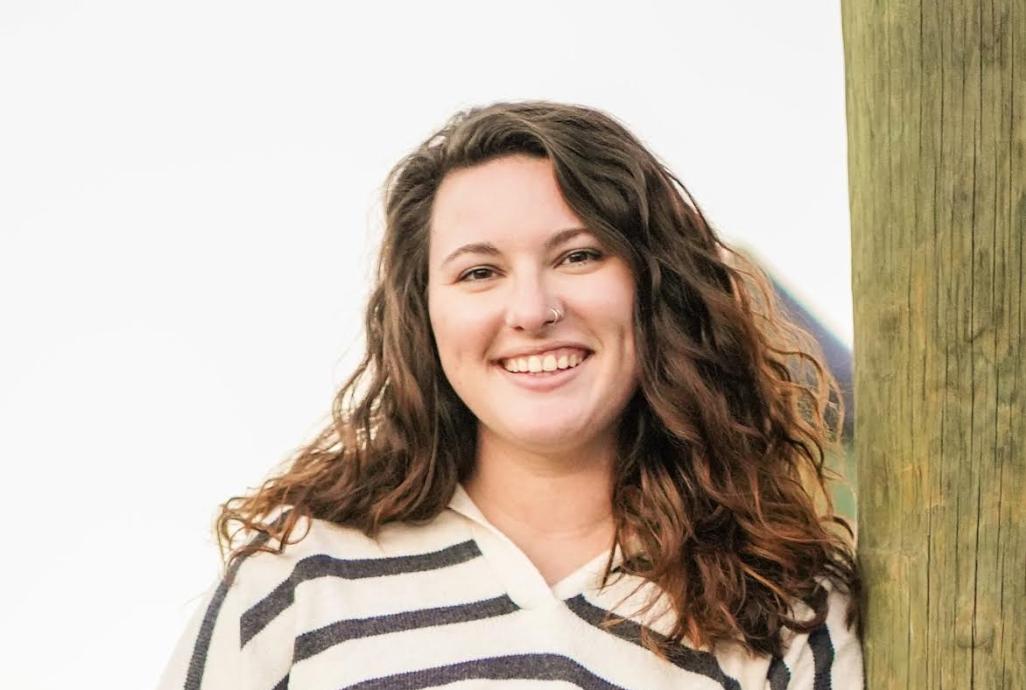
Val Cavalheri is a writer and photographer. She has written for various publications, including The Washington Post.  Previously she served as the editor of several magazines, including Bliss and Virginia Woman. Although her camera is never far from her reach, Val retired her photography studio when she moved from Northern Virginia to the Eastern Shore a few years ago.. She and her husband, Wayne Gaiteri, have two children and one grandchild.


The Spy Newspapers may periodically employ the assistance of artificial intelligence (AI) to enhance the clarity and accuracy of our content.

Filed Under: 1 Homepage Slider, Spy Highlights

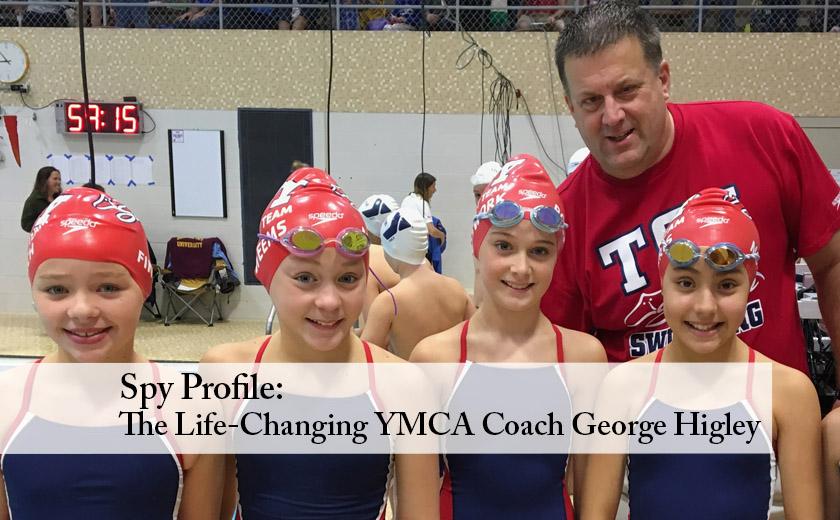
Spy Profile: The Life-Changing YMCA Coach George Higley

January 27, 2023 by Val Cavalheri

John Wooden, considered the greatest NCAA basketball head coach of all time, once said, “A good coach can change a game; a great coach can change a life.” Wooden’s name may not crop up around town, but the name George Higley does. Higley, the Talbot County YMCA (TCY) swim coach, has been credited with significantly impacting the lives he’s touched.

Higley grew up in a swim family. He and his three sisters competed on swim teams, and his father was a college swim team coach. After school and a move to Virginia, Higley swam and did some coaching for a Masters program (competitive swimming for adults 18 years and older). He started working for Sodexo (a job he still holds), got married, and eventually moved to the Eastern Shore, where, for the past 34 years, he’s been the TCY Stingray’s coach. “I like long-term stuff,” he said. “Thirty-four years coaching, forty years on my job. I guess I’m a long-term type of guy.”
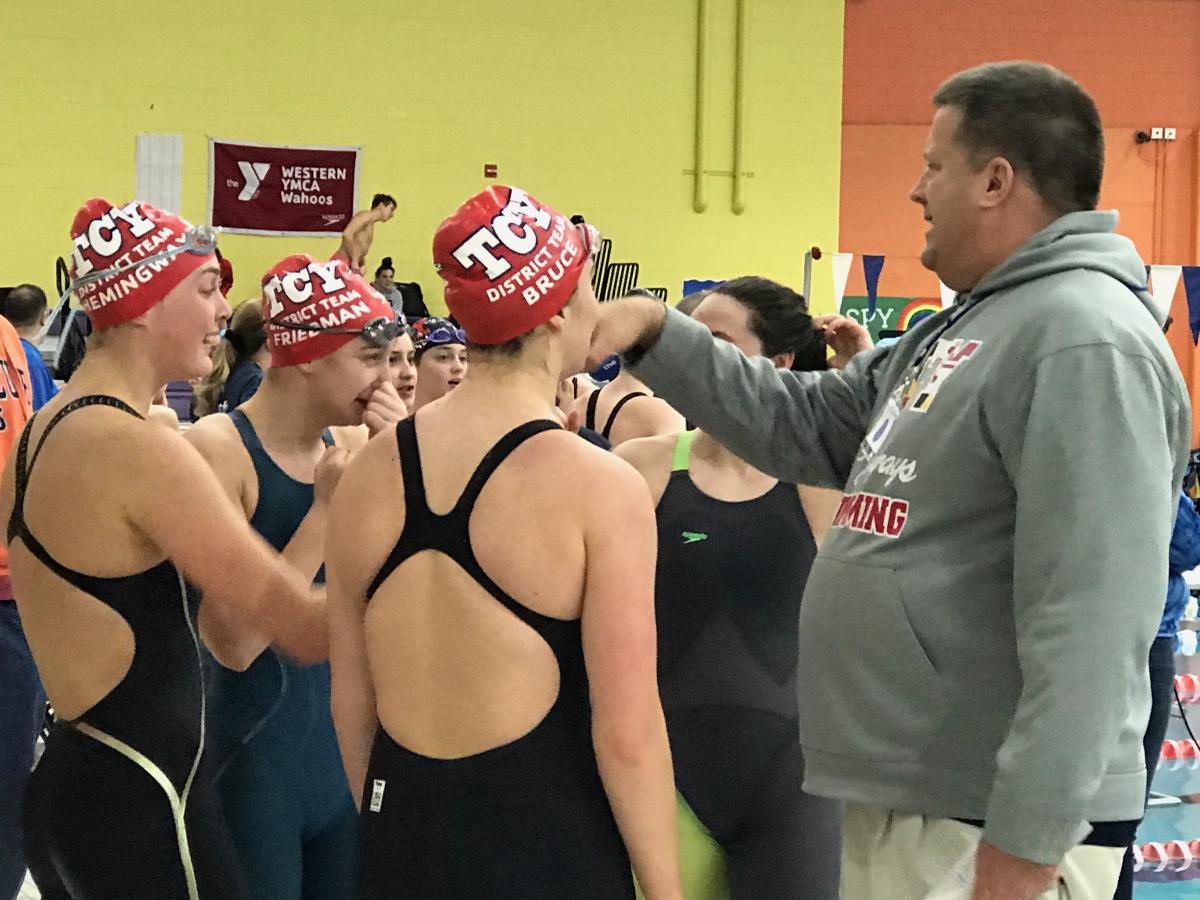
But it all started when his kids were taking swim lessons at the Y, and he got them involved in the sport he loved. He began as an assistant coach and eventually took over the team. Under Higley’s leadership, the group went to their first ever Districts meet, their first Regionals, and finally got to swim in the Nationals. Since then, he says, many swimmers have placed in the top eight at their District meet, and at least one swimmer has been going to the Nationals for the past 20 straight years. Just this past week, a freestyle relay team qualified for the Nationals. Additionally, numerous swimmers he’s coached have gone on to swim competitively in college.

Just how many swimmers have there been, we wondered. In doing some quick calculating, Higley told us that in the first year as head coach, there were 30 kids. After that, it expanded to an average of 90 to 100 per year – multiplied by 34 years. That’s a lot of kids. He speaks proudly about some of those kids — adults now — who have gone on to graduate from the Naval Academy or are submarine officers, others who work in fire departments or are teachers.

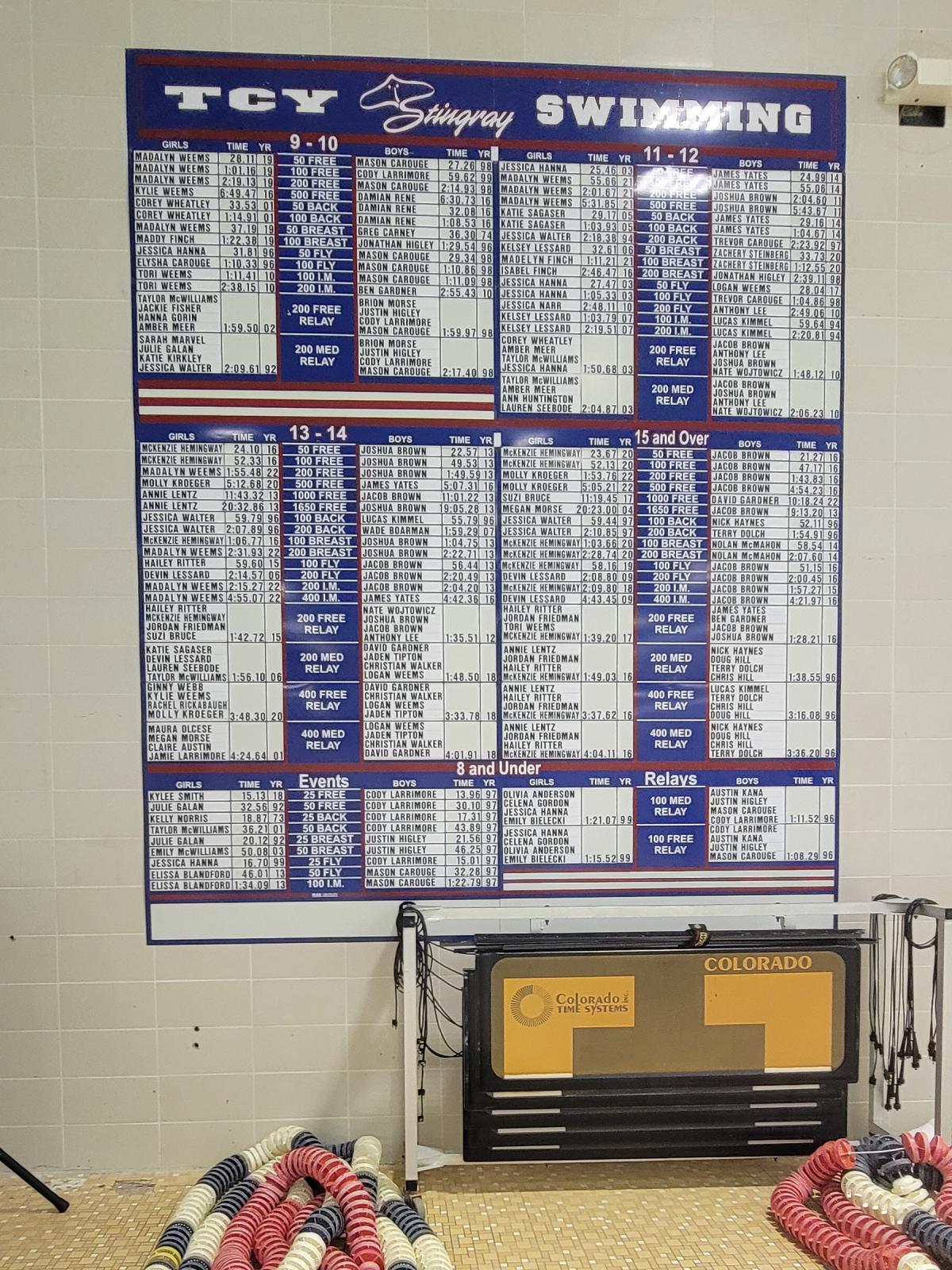
The record board at the Y, Peachblossom pool, is a tribute to all of them and the team Higley nurtures. Even though it’s been updated many times, there are still unbroken records dating back to the late 90s. He credits the YMCA, which he calls the ‘hub of the community,’ its staff, his assistants, and the swim families for their commitment and dedication. But it’s the kids that still surprise him.

Higley chokes up when talking about the resiliency of the swimmers, those that swam and made it even though they were sick or injured. He is particularly proud of the team that stayed together despite the pandemic. “Everything was getting canceled,” he said, “there were no championships or meets being run. These kids could have said, ‘OK, now we’re going to do something else.’ But they didn’t; they all stayed together.”
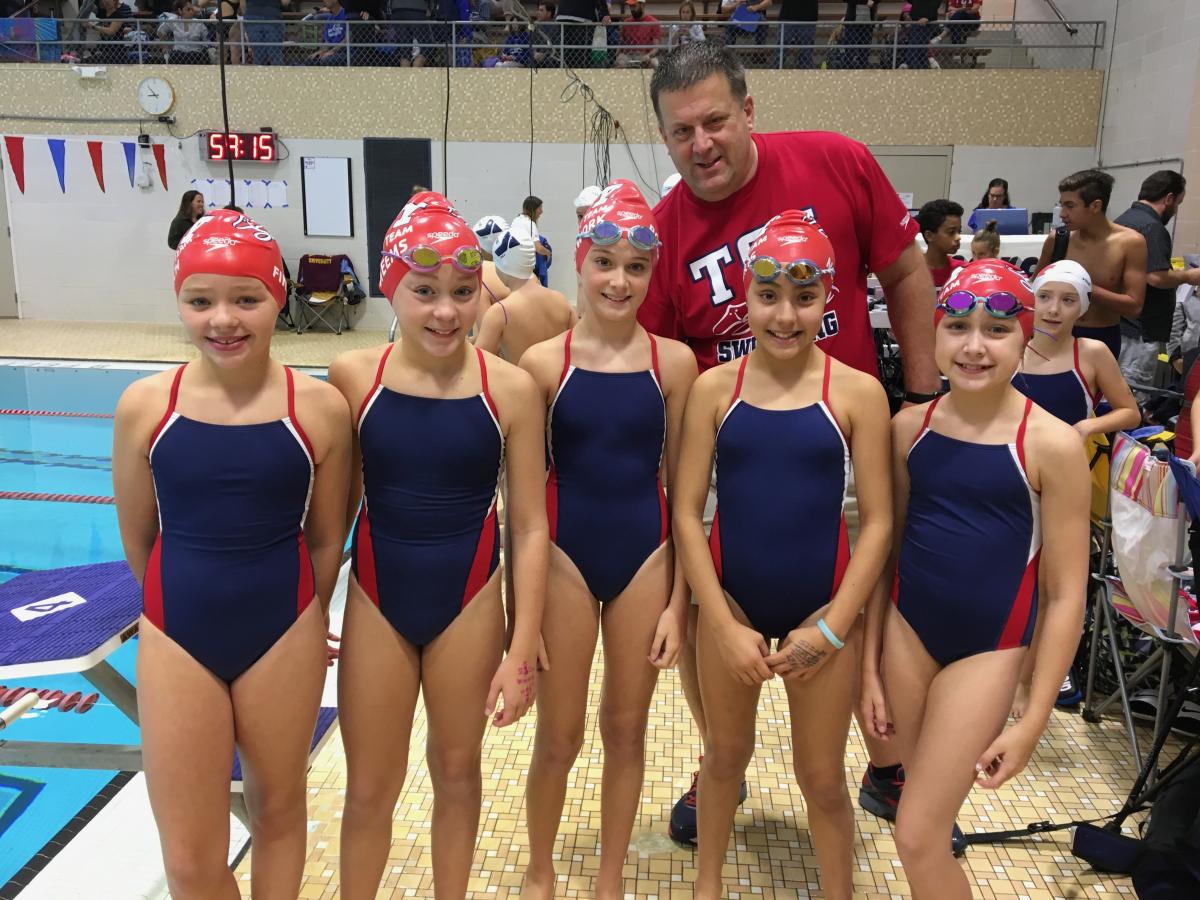

With strict safety parameters and the Y’s approval, the teams kept swimming. “We competed virtually against other USA/YMCA Swimming teams across the country. We did that for a couple of years, and then we finally went to West Virginia for our first in-person meeting.”

The important thing is the memories being created, Higley feels. “They may not remember how fast they swam, but they will remember being with friends. In the end, it’s not about me; it’s about them and the pursuit of their goals.”

Debbie Gardner, Communications Officer for Talbot County Public Schools, is among Higley’s many fans. She’s seen his impact on her children when her family moved to Talbot County and were looking for ways to connect with the community. Her oldest son, then seven, took a swim clinic at the Y from Higley and decided to join the team. Her two other children also joined when they came of age. Gardner became a team mom volunteer, a position she still holds today, even though she no longer has children swimming with the team.

But she’s not the only one still involved. That seven-year-old is grown up now and volunteers as an assistant coach, as does her daughter. Gardner volunteers because she believes in the sport and the spirit of giving back. But most of all, she admires what the Coach has accomplished. “He is a champion of the sport and how it helps kids develop as human beings. He wants kids to succeed and progress in the sport. But more important to him is that they have a good experience and see good examples in terms of character and leadership, and team spirit. For Coach, it’s an important part of his own fulfillment as a person to have this connection with kids and know that he’s impacting lives beyond the times you see on the record board.”

Besides providing a broad and full experience on the team, Higley is also very dedicated to YMCA swimming, specifically because of the character that the YMCA mission brings to the table. “It’s a lot easier to navigate,” he said, “when you have a Y that comes along and says, ‘OK, do what you need to do for these kids.’”

And that’s a commitment that Wendy Palmer, Executive Director of the Easton Family YWCA, is happy to make.

Palmer met Higley 15 years ago when her daughters swam for TCY. She remembers how he always encouraged the kids to do their best and have some fun along the way. “Which is why,” she said, “everybody’s so drawn to him. He’s such an unbelievable coach! Even those who didn’t stick it out with swimming still remember Coach Higley and their relationship with him.”

Palmer also knows that Higley is uncomfortable being acknowledged or credited for the swim team’s success. “I really feel there are heroes in our community that just go unnoticed,” she said. “And you know, all the families that have worked with him and have seen him take such great care of their kids are going to agree, ‘yes, it’s about time others knew about this man.’”

Like Gardner, she attributes Higley’s enthusiasm and love for the sport as a motivating factor for the group’s accomplishments. “I feel the biggest thing is how he inspires the kids to feel joy,” says Palmer. “They don’t dread coming to practice; you can hear the enthusiasm when they enter the doors. When I sit in my office, across the hall from the pool, I hear the music pumping and the happy voices. The kids are glad to be here.”

So, after all this time, how much longer is Higley expecting to stay? “I told my wife I’d stay until our daughter graduated, and that was 12 years ago. So maybe a couple more years, but I don’t know. It’s these kids; they just kind of keep you coming back.”

To learn more about the TCY program, go to: https://ymcachesapeake.org/swim-team

Val Cavalheri is a writer and photographer. She has written for various publications, including The Washington Post.  Previously she served as the editor of several magazines, including Bliss and Virginia Woman. Although her camera is never far from her reach, Val retired her photography studio when she moved from Northern Virginia to the Eastern Shore a few years ago.. She and her husband, Wayne Gaiteri, have two children and one grandchild.
 

The Spy Newspapers may periodically employ the assistance of artificial intelligence (AI) to enhance the clarity and accuracy of our content.

Filed Under: 1 Homepage Slider, Spy Highlights

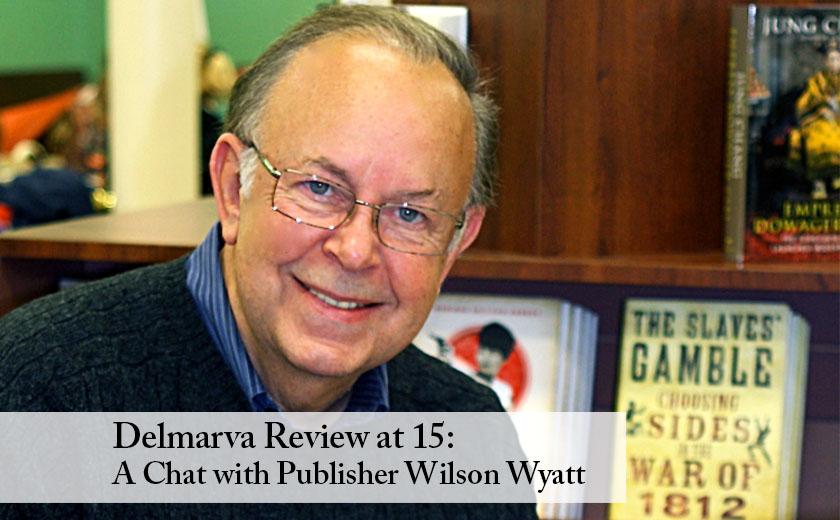
Delmarva Review at 15: A Chat with Publisher Wilson Wyatt

January 21, 2023 by Val Cavalheri

It’s hard to imagine that the nationally recognized literary journal celebrating its 15th year once had trouble getting submissions. Of course, that may be because in 2007, when Delmarva Review first started, it was an Eastern Shore Writer’s Association membership publication. At that time, both the submissions and the audience were the group’s small membership.

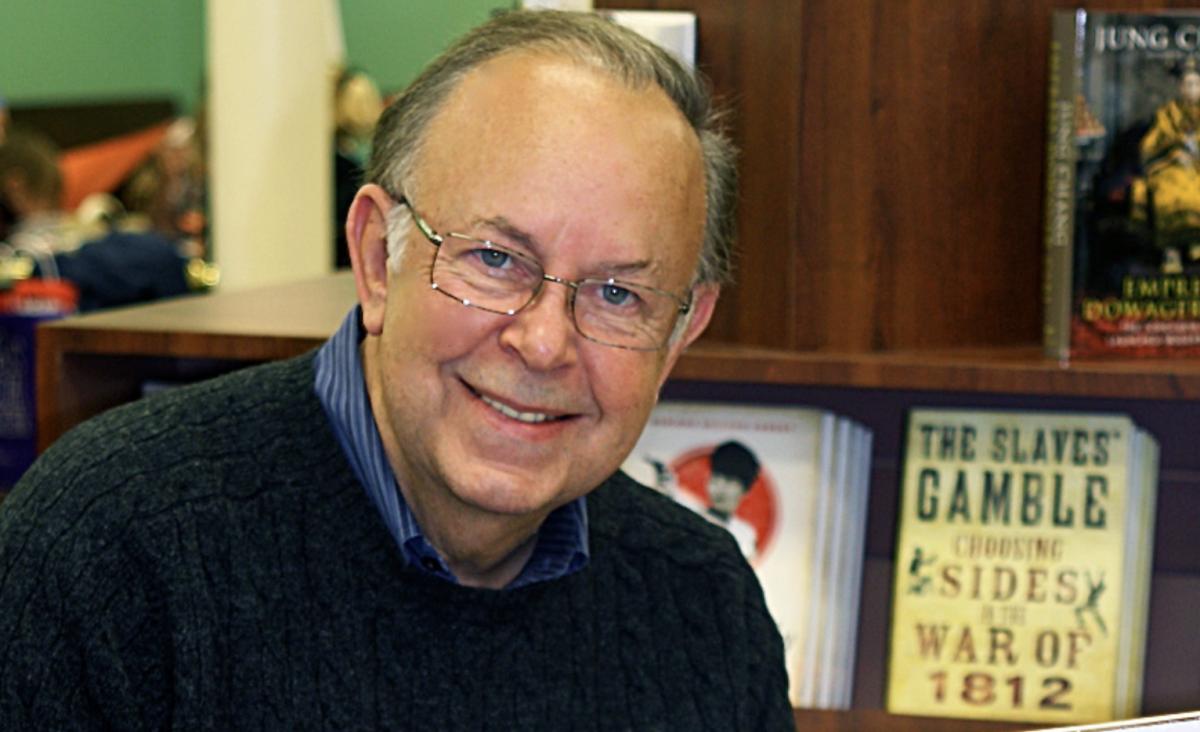
Wilson Wyatt, Jr.

Wilson Wyatt, writer, photographer, and communication specialist, was president of the Association then, and he had an idea. If the purpose of a literary journal was to publish the best writing around, why not open it up to writers beyond the Association and maybe even beyond the region? The membership agreed, and with Wyatt as executive editor, the new Delmarva Review was born. 

Their first order of business was to notify authors that they were taking submissions for an open national review. Although no advertising was done, they received 200 entries that first year. The first issue was thin. Today, with 4,000-6,000 submissions worldwide, the group no longer has to ask or wonder how they will fill the 300 or so pages. “We have published authors from 42 states and 16 foreign countries, including Russia and China,” said Wyatt.” One year, we got about half a dozen submissions from Ukraine, probably from a writing class, and that’s always interesting. But what really comes down to the acceptance is quality. Quality is what we’re after.”

Although the quality they seek has not changed, how it’s been presented has. To ensure the widest readership possible, the Review is available worldwide at major online retailers in print and digital editions to anyone and everyone interested in excellent writing. Besides, the Delmarva Review now has a reputation for discovering and providing a platform for new and emerging voices in the literary community. It is a goal they strive to maintain, issue to issue. The yearly publication features a diverse selection of fiction, creative nonfiction, and poetry. They will even consider art/photography submissions for the cover. The journal has a solid online presence, with a website that features guidelines, information about past issues, and much more. And it’s all done on a budget.

As a 501(c)(3), Delmarva Review is a nonprofit run by a small team of dedicated volunteers, all experts in their field. There is no charge for submission or reading fees. Some of the expenses are covered by the money from sales of the yearly publication, some by individual contributions, and some by grants from the Talbot Arts Council and the Maryland State Arts Council. 

But don’t underestimate what this team is capable of accomplishing. The selection process is extremely tight and competitive. Every entry is read by at least one editor, and by the time something is accepted, it’s been read several times by at least three. 

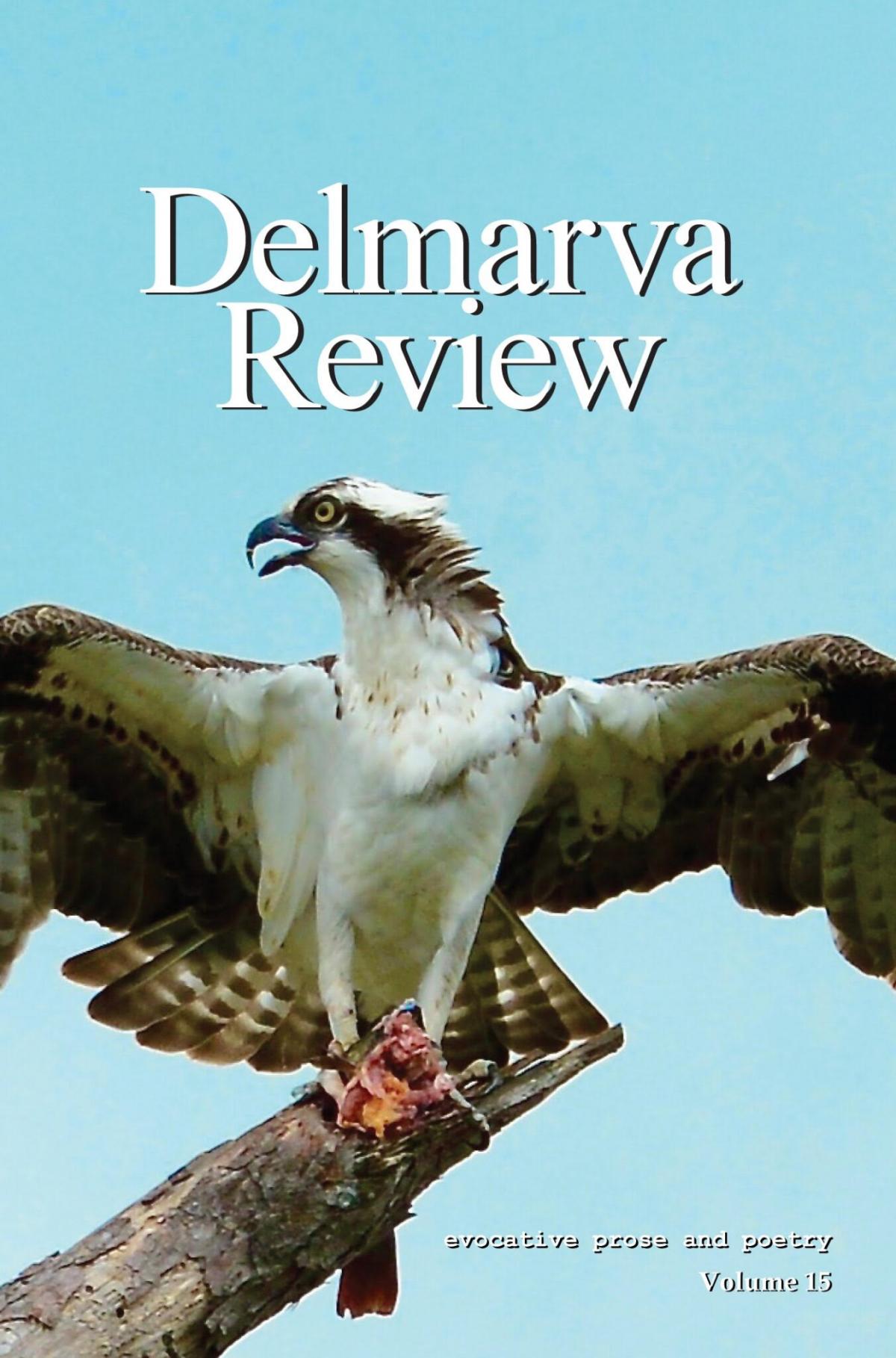
15th Edition. Photo by Wilson Wyatt

While there are no predetermined topics, the submissions seen year to year usually revolve around the same common themes. “Most of the topics have to do with the issues we all share as human beings,” says Wyatt. “If there is one quality in common, it is the challenges of dealing with change: loss, loneliness, love, your place among others, nature, and aging.”

What is discouraged by the Review are overtly religious, sexual, or political topics. “But then again,” says Wyatt, “if something really good comes in that flirts with one of those subjects, if the writing is good, it’s well-crafted and interesting, then it may well have a home in the publication.” Ultimately, what they look for is a universal and relatable message.

The Delmarva Review has received numerous accolades for its commitment to discovering and promoting new voices in literature. It has been recognized and included in the annual list of the best literary magazines in the country. So have their chosen writers gone on to successful careers? “I’m not sure,” said Wyatt. “We don’t track the authors, but we do hear from some after they’ve published books by major editors. It makes it all worthwhile when you receive that kind of communication.”

One measure of satisfaction that is quantifiable for the publication that bears the name of the region is that there has always been a significant number of writers from Delaware, Maryland, and Virginia. Of the 490 authors published since that first issue, 46% have been from the area. 

What’s keeping that percentage high, Wyatt believes, is that the Delmarva region is a growing and thriving writer’s community supported by associations such as the Eastern Shore Writer’s Association, the Maryland Writers Association, and the Rehoboth Beach Writers Guild, to name some of the largest. It also helps that the Review is a literary journal whose home is in Talbot County and is better known by writers in the region. Says Wyatt, “When we became independent, it gave us the strength to become a good home for all writers. And if I’m a serious writer, I want to be in a publication that has some value to me in the future; I want to be in the Delmarva Review.”

An author in the current issue who might find some future value, should she decide to pursue writing, is Maxine Poe-Jensen, a high school senior at St. Michaels High School. Poe-Jensen was the first recipient of the Youth Writing Mentorship and Scholarship Award, a high school scholarship and mentoring initiative encouraging outstanding writing among students in regional schools. “This was funded by a special grant that we received from Talbot Arts,’ said Wyatt, “and it worked so well that we’re going to do it again next year.” 

Being published in a literary magazine can be a valuable experience for young writers. It’s something they will probably never forget. Besides the exposure and encouragement, the experience of submitting a story for publication, collaborating with an editor, and seeing one’s work in print can be a valuable learning experience and a stepping stone to bigger opportunities. Poe-Jensen’s fictional short story, E Duo Unum, is featured in the latest issue.

Wyatt hopes that she also might be the future of the Review as they seek young writers to add to their list of authors. 

It is of note to mention a recent addition to the Review’s business model. It involves the weekly republishing of either a poem or a prose selection in the Spy. The Review gives the Spy publication a reservoir of pre-edited, high-quality literary content while offering Delmarva Review authors a new local audience. To Wyatt, this is a win-win. “It’s a significant advantage for regional authors looking to publish their best work to a growing general readership and helps writers build a presence outside their traditional writers’ circles. Our success has been in fulfilling a need for both writers and readers. So far, technological advances have worked well with our independent, volunteer approach toward publishing, allowing us to offer print, availability worldwide, and digital reading on electronic devices.” 

Delmarva Review’s 15th anniversary edition includes 78 poems, 11 short stories, and 12 nonfiction essays. The 60 featured authors come from 18 states, the District of Columbia, and six foreign countries. The issue is available on Amazon

The submission period for the 16th edition of Delmarva Review will be open through March 31, 2023, for publication in November 2023. For more information, go to the Delmarva Review website. (https://delmarvareview.org)

Interested in volunteering? Delmarva Review welcomes new skilled editors and readers, regardless of geographical borders. 

The Spy Newspapers may periodically employ the assistance of artificial intelligence (AI) to enhance the clarity and accuracy of our content.

Filed Under: 1 Homepage Slider, 3 Top Story

Qlarant Foundation Profiles: Habitat for Humanity Choptank

January 19, 2023 by Val Cavalheri


Powerful things are bound to happen when two giant non-profit organizations come together to address the needs of vulnerable populations. In this case, the collaboration is between Habitat for Humanity Choptank and Qlarant Foundation.

Habitat for Humanity, founded in 1976, is a non-profit organization that aims to build and improve homes for low-income families and individuals. The organization works to address the issue of affordable housing by building homes in partnership with families in need, who are then able to purchase these homes through a no-profit, no-interest mortgage. Habitat for Humanity operates locally, with individual affiliates in communities across the United States and over 70 countries worldwide.

The Qlarant Foundation is a private non-profit organization whose mission is to improve the quality of life for vulnerable populations in Maryland and the District of Columbia by investing in programs and initiatives that have a measurable impact on those lives. The Foundation provides funding and support to a wide range of organizations, such as health care providers, social service agencies, and educational institutions. It also supports research and educational initiatives that promote healthy aging, children’s health, and family stability.

Late last year, the Foundation awarded a $30,000 grant to Habitat’s Helping Hands Revolving Loan Fund. The money will be used for critical home repairs that help low to moderate-income homeowners maintain safe and healthy living conditions and prevent further deterioration of their homes. The program also focuses on accessibility modifications for the elderly and homeowners with disabilities to enable them to live safely and comfortably in their homes. This funding helps Habitat for Humanity purchase materials and hire contractors to complete maintenance.

Started in 2019, the Helping Hands Revolving Loan Fund program provides loans for repairs to homeowners who cannot borrow through traditional banking. These repairs may include fixing a leaking roof, removing mold from crawl spaces, repairing a broken furnace, etc.

John Piposzar, Critical Home Repair Manager

“The program, says John Piposzar, Critical Home Repair Manager for Habitat, is how we fund and are able to do these repairs. The homeowners pay a percentage of the repairs, and they have to put in sweat equity, as well. This can range from actually helping with the repairs, if they’re able to, education, or assisting at other non-profits, such as helping out a soup kitchen, etc.”

One of the key benefits of the Repair program is that it helps families to maintain their independence, allowing them to stay in their homes and avoiding the need for more expensive and disruptive alternatives such as temporary housing or nursing homes. It also alleviates the physical threats and mental stress caused by living in poor conditions. Another advantage of the program is that by hiring local contractors, Habitat for Humanity is able to support the local economy.

Piposzar shared an example of one of their many success stories. “We helped an elderly woman who was below average in stature. We put in handrails at her height and constructed a walk-in shower because she couldn’t even step over the tub. We were able to give her the ability to stay in her home and be mobile and comfortable.”

The Qlarant money has been a welcome addition to the funds Habitat needs to do its work. Said, Piposzar, “We are hoping to do 10 to 15 houses, and so far, we’ve done around five.”

JoAnn Hansen, Habitat’s Executive Director, echoes the sentiment, “Many low and even moderate-income homeowners in our community are living in poorly built, aging homes with very few resources to make needed repairs. The connection between home and health and safety has never been greater. Qlarant’s recognition of this and their support for innovative ways that meet the needs of LMI families is critical to non-profits such as Habitat being able actually to do the work.”

People who are interested in the program are advised to fill out a questionnaire on the website (https://habitatchoptank.org/our-programs/home-repair/). A home visit will be set up to ensure the projects they need are within Habitat’s policy and scope.

For more information about Habitat for Humanity Choptank, to donate or volunteer, call 410-476-3204 or visit www.HabitatChoptank.org.

Val Cavalheri is a writer and photographer. She has written for various publications, including The Washington Post.  Previously she served as the editor of several magazines, including Bliss and Virginia Woman. Although her camera is never far from her reach, Val retired her photography studio when she moved from Northern Virginia to the Eastern Shore a few years ago.. She and her husband, Wayne Gaiteri, have two children and one grandchild.
The Spy Newspapers may periodically employ the assistance of artificial intelligence (AI) to enhance the clarity and accuracy of our content.

Filed Under: Spy Highlights

The Garden Club of the Eastern Shore Success Story of Julia Jester

December 20, 2022 by Val Cavalheri

This story came about as a result of an email from Posey Boicourt to the Spy. It said: “Over twenty years ago, my Garden Club of the Eastern Shore – which has a primary interest in environmental issues – started a merit-based scholarship for a graduating senior in our county. The current scholarship committee wants to encourage high school students to apply and, in so thinking, told me the inspiring story of Julia Jester, who won the award in 2015.  I wonder if you might consider interviewing her.” 

Her request piqued our curiosity, so we contacted Jester and, in hearing her story, understood why she had been selected.

It was 2015, and Jester was in her senior year at St. Michaels. She had recently won the Hannah Prize, an award given to a student for developing a creative solution to an environmental issue. She was chosen unanimously by the panel for having set up a monarch butterfly garden of native plants at the Chesapeake Bay Maritime Museum. Although her main interest had always been the local environment, when she applied for the Garden Club of the Eastern Shore (GCES) Scholarship, she had expanded her focus to include shark research and environmental science.

It was a perfect fit. The scholarship is designed for applicants with outstanding academic accomplishments who are considering careers in botany, horticulture, agriculture, landscape architecture or design, environmental science, or other related fields. 

Virginia Blatchley, the scholarship committee co-chair, remembers being impressed by Jester’s determination and strength of character. Besides, she’d already shown success with her butterfly garden environmental program. This group’s vote also was unanimous.

“That was a huge accomplishment for me,” said Jester. “I’m the first person in my family to go to college. And I was able to get enough scholarships to fund my entire first year. I don’t know how it would have happened otherwise.”

College also allowed Jester to explore and refine her interests. She switched majors to focus on environmental sociology. “The baseline was still there, but I was more interested in the people side of environmental science,” she said, “rather than the actual scientific research part of it. For instance, how environmental issues impact the daily lives of individuals and how people’s lives also impact the environment.”

After graduating, Jester went on to receive a Master’s degree in environmental sociology. A doctorate was her next step until a family crisis put her career on hold. Jester moved back to Easton.

Confronted by new responsibilities, she veered towards a new direction: employment at Mid-Shore Pro Bono as a housing case manager. What happened next was unexpected–she did not predict how much she would love her job. But she did, and that changed her future plans. A couple of weeks ago, Jester was accepted to law school at the University of Baltimore, where she will focus on environmental law relating to housing.

“I’ve taken a lot of different paths that I wasn’t anticipating,” she said. “But I feel like the environmental thing has grounded me in everything I’ve done. It’s been my one constant — my interest in the environment. The particulars of that have changed from shark research to housing stability, but it’s all been there the whole time.”

Behind all of the changes in her life and career tracks, there has been one continuous presence–grandmother, Lori Sutphin, who Jester calls my “best friend.” “She’s a lot of the reason I’m into the environment. In fact, the Hannah Prize was a partnership project. My grandmother was really interested in monarch butterflies and their migration, and I created the garden for her. She’s been a huge part of all this; she’s always been my number one.  I’ve had a lot of great things come my way, but I wouldn’t have any of it without her.”

Encouragement has also come from a surprising source–the connections Jester made through GCES. “When I was in school and feeling overwhelmed by everything,” she said, “it was nice to hear from somebody from home just to catch up—people who have been a great resource for me and have similar passions as I do. Since I graduated, I’ve been invited back to their annual luncheons, where I provide them with an update so that they know how their scholarship money was spent.”

AS GCES starts the 2023 scholarship award process, they look forward to meeting the new batch of applicants.  “Everyone we’ve had through the years has been equally dynamic, intellectually curious in their own way. St. Peter and Paul has sent us some outstanding candidates. We had a girl who was president of her 4-H club and interested in pursuing environmental farming. We’ve also seen several qualified people from Easton High School. Every couple of years, we divide up the names of the people who run, and then we call them and find out what they’ve been up to. It’s interesting because they pursued their dreams, even when sometimes their dreams change.”

Because of what she’s gone through, Blatchley feels that Jester is a perfect spokesperson to go into classrooms and talk about what it means to be interested in the environment, the pleasure she got out of it, and the various avenues that you can take in terms of career decisions. 

As a representative, what message does Jester want to convey? “I think anybody with any remote interest in the environment should apply. I don’t think you have to have solid plans to be a biologist and research something very specific. Because I’ve changed my mind 100 times, and it’s all still there. Environmental law or lobbyists, all those social features are just as important as the scientific aspects. Especially in high school, without knowing their options, as an 18-year-old, it can feel like, Oh, I’m not going to be a biologist, so I shouldn’t apply for the scholarship. And that’s not what it’s about. Go and apply.”

The $5,000 scholarship was started in 2000 and is open to all graduating seniors attending high school or being home-schooled in Talbot County. All applications must be submitted to the student’s guidance office by April 1, 2023.

Val Cavalheri is a writer and photographer. She has written for various publications, including The Washington Post.  Previously she served as the editor of several magazines, including Bliss and Virginia Woman. Although her camera is never far from her reach, Val retired her photography studio when she moved from Northern Virginia to the Eastern Shore a few years ago.. She and her husband, Wayne Gaiteri, have two children and one grandchild.

The Spy Newspapers may periodically employ the assistance of artificial intelligence (AI) to enhance the clarity and accuracy of our content.

Filed Under: 9 Brevities

Qlarant Foundation Profiles: Bay Hundred Community Volunteers

December 15, 2022 by Val Cavalheri

Editor Note: This is the first of three articles that focus on the recipients of the Qlarant Foundation grant awards over the last year. We began with the Bay Hundred Community Volunteers based in Talbot County.

Yes, this group is unique. They’re a nonprofit community service organization with no paid staff. But their work is priceless; ask any of those they helped. They are known as the Bay Hundred Community Volunteers (BHCV), but their scope of work far exceeds the Bay Hundred area.

Started in 1999 by Bill Shrieves and his wife Jean, their mission is to help improve the living conditions of Talbot County residents and raise public awareness of the need for adequate, safe, and affordable housing. Initially, though, it was created to address a specific need for a small community in Sherwood, Maryland. At that time, the fledgling yet motivated group took out 150 tons of trash, redid the roads, cleared brush, and did some minor home repair services. To fund what needed to be done, they held chicken barbecues and solicited donations from individuals and groups

After a couple of years, the group became a nonprofit and began serving low-income Bay Hundred residents. They expanded again in 2009 to provide home repairs to all of Talbot County. Repairs which included replacing windows, installing storm doors, etc.

PHOTO OF BERT’S RAMP

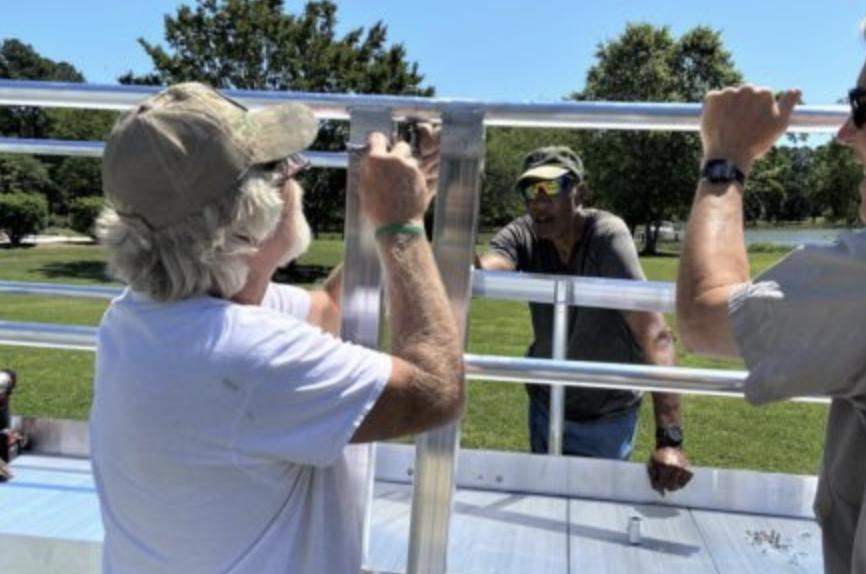
Over time, what BHCV discovered was an ever-growing need for mobility home additions and modifications. Grab bars, handrails, and handicap ramps became another and important part of their mission. But it was the work they did building wheelchair ramps from scratch that gained them notoriety as the only nonprofit organization providing this service to Talbot County’s vulnerable residents who had income limitations. But the group also had constraints. Despite an estimated need for approximately 25 ramps, BHCV only had the resources to build 3-4 ramps per year. The process of using wood in their construction was not only labor-intensive and time-consuming, but the permit procedure was challenging. Additionally, once installed, the ramps were not reusable.

That’s when Easton-based Qlarant Foundation (the charitable arm of Qlarant) stepped in and, in 2020, awarded the group a $15,000 grant. With the money, BHCV were able to purchase and install modular aluminum ramps that were easy to assemble, ADA compliant, and, since they are temporary, usually do not require a permit. “Since we started doing them in March of 2020,” said Shrieves, “we’ve installed 44 ramps to neighbors at no charge for as long as needed. Once they no longer have a need, we recover them and use the parts for other ramps.”

Referrals usually come from the Talbot County Health Department or the Department of Social Services, and BHCV follows HUD guidelines for income limitations. “$34,200 for a single person living alone Is what we look at and the people we’re working with,” says Shrieves.

Qlarant has continued to be their primary contributor, but other grants and support from the community, private foundations, and businesses have allowed this unique program to continue and thrive. These have included Mid-Shore Foundation, Leonard and Helen R. Stulman Charitable Foundation, etc.

There are many stories about how lives have been changed by the efforts of BHCV’s installations of ramps. They range from reducing social isolation to helping people to get to their medical appointments. All important to the health of a community.

Shrieves shared an example.

Bert was a retired radiology technician and Neavitt resident, who loved dogs, photography, the outdoors, and music. in October of last year, he suffered a stroke and spent time in a rehab facility. But he wanted to be home with his dogs. BHCV fulfilled that wish by installing a ramp in May 2022. However, he had another stroke in late August and sadly passed away. BHCV disassembled the ramp.

At about the same time, the Talbot County Health Department contacted BHCV about Tina, a single parent of four who had been diagnosed with ALS (Lou Gehrig’s disease) and whose condition had quickly declined. She started using a wheelchair and moved in with a friend to get the support she needed. Using part of the materials from Bert’s ramp, and with no additional cost to BHCV, a ramp was built and installed for her in September. Tina can now leave home or just sit outside enjoying the sun. Additionally, BHCV will soon install other parts of Bert’s ramp for another client.

Besides the success they’ve experienced with their ramp program, BHCV continues to do their home repair work as well. Although volunteers do most repairs, licensed contractors are sometimes hired for the more complex projects. Said Shrieves, “We did a bathroom that was just the worst; the toilet was being held up with a 2×4. It required complete gutting and rebuilding of the floor joists and turned out to be a $13,000 project–way more than what we could afford. So Choptank Electric Trust came in with $2,500, a family raised about $4,000, and we paid for the rest. We combine these kinds of coalitions to get a big project done.”

What they have accomplished with these impromptu coalitions has been nothing short of amazing. A typical year for the group was an investment of $15-20,000 in home repairs. Shrieves estimates that this year they will have invested around $60,000 and will finish 30-35 projects. But also remarkable is how many volunteers are involved in these tasks.

“We probably have around 20 people on our roll,” said Shrieves. “About 15 do the physical volunteer work, and the rest are involved in other activities.” Surprisingly none of them have had professional careers in home building or repair. They’re just people who are ‘handy,’ mostly neighbors interested in helping their neighbors.”

Enthusiasm and pride are not lacking when speaking to anyone in the group. Still, as they continue to grow, BHCV is experiencing the same challenges as other nonprofits—the need for more volunteers. “We’re looking for people who, when I send out an email to everybody and say, ‘Hey, we got a ramp to install next Tuesday, who’s available?’ can pipe up and help. We also need folks willing to get involved in the administration and leadership of the organization. People who, in the future, would be in a position to succeed me and some of the other folks,” said Shrieves.

Until that time come, and for now, the group will continue to do what they do best, bring hope to those in need.

For more information and see how you can help about Bay Hundred Community Volunteers please go here. For more information about the Qlarant Foundation please go here.

Val Cavalheri is a writer and photographer. She has written for various publications, including The Washington Post.  Previously she served as the editor of several magazines, including Bliss and Virginia Woman. Although her camera is never far from her reach, Val retired her photography studio when she moved from Northern Virginia to the Eastern Shore a few years ago.. She and her husband, Wayne Gaiteri, have two children and one grandchild.
The Spy Newspapers may periodically employ the assistance of artificial intelligence (AI) to enhance the clarity and accuracy of our content.

Filed Under: 3 Top Story

How Oxford Saved its Community School by Val Cavalheri

November 28, 2022 by Val Cavalheri

The little town of Oxford is not necessarily known as a bedrock of activism. But this story about the saving of a building just might change your mind.

To most of us, the Oxford Community Center (OCC) is a place where you can take in a first-rate concert or theater production, listen to an enlightening guest speaker, attend yearly model boat shows and fine arts fairs, join monthly cars and coffee, exercise at daily classes, and so much more. But this place would not be such an indispensable part of the community were it not for the efforts of a group of people who would not allow the building to be torn down. But perhaps activists are not a name they would call themselves. They would more than likely say they were just neighbors. 

To acknowledge this milestone, OCC will hold an all-out celebration at 6 p.m. on Wednesday, November 30. Festivities will include a video documentary premiere of how the building was saved from being torn down, told in the words of those who were there, who cared, and who passed on the torch to a newer generation of… neighbors.

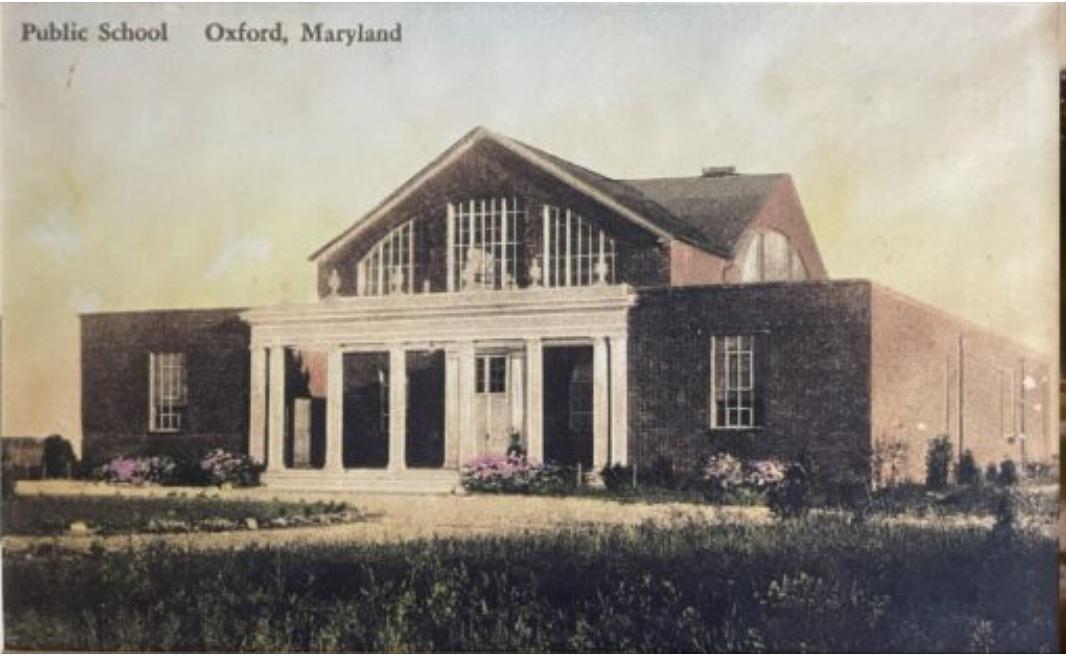
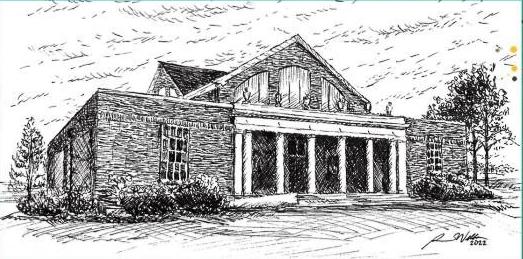
Designed by renowned architect Henry Powell Hopkins, the building opened in 1928 as a high school. Ten years later, when high schoolers were transported to Easton, the Oxford School was converted to an elementary school and, in the late 1950s, became the first integrated school on the Eastern Shore. The school closed in 1971, and ten years of neglect later, a decision about its future was under discussion by the town commissioners.

At around the same time, a sister building by the same architect was torn down at Idlewild Park in Easton, and that action fired up the citizens of Oxford who realized their building was going to be demolished as well. “A lot of people who still live in Oxford today,” said Liza Ledford, OCC’s Executive Director, “have parents or grandparents who went to that school back into the 30s. The heart of the town, the heart of the memories of the generations, was stored up in those walls, and it motivated them to claim that building as theirs and not allow it to become just a historical reference piece.” 

Forming the Save our School (S.O.S.) committee, this group of townspeople went door to door asking for signatures and monetary support. In 1982, less than a year after they started, an agreement was reached with the town and the county. The former schoolhouse became a community center, giving the town a place where townspeople and other local neighbors could meet to socialize, participate in educational or recreational activities, etc. Almost immediately, the Tred Avon Players found a home, as did a kid’s camp and various other groups who were able to make use of what the building could offer. And the Center grew.

In 2012 a new campaign was successfully launched to renovate and modernize the building. Then, a few years ago, as OCC began to plan a celebration of the 40th anniversary, Ledford came across some black foam cork boards containing pictures and the townspeople’s original petitions. It was laid out comparable to a PowerPoint slide presentation, and it told the story of the saving of the building. Ledford speculates it might have been part of a past celebration.

Nevertheless, it gave Ledford an idea. She applied for and won a grant from the Maryland Heritage Area Authority and the Stories of the Chesapeake to tell that story of the 1980s battle to save the building. “This incredible presentation was already laid out. It just needed a timeless format,” she said. And Ledford was the perfect person to make it happen. Before coming to OCC, she was part of the Hollywood film and entertainment business, working for Steven Spielberg’s Amblin Entertainment, Universal Pictures, and Sony Studios. She’s often said how working in the industry was about ‘selling an experience in a positive and moving way.’

To help her sell that experience, Ledford hired W Films, a company she’s worked with previously. “I knew I wanted to do the documentary,” she said, “and we started by interviewing some of the people highlighted in those black panels.” One conversation that stands out for Ledford involves a story about the five founding members of S.O.S. — Sue Jackson, Phillip Conner, Sidney Campen, Norman Harrington, and Doug Hanks, Jr. It was those five people who stood around a hot wood stove in an old boathouse in Oxford on a cold January day and gave birth to the committee that decided to put all of their energy and resources into saving a building slated for the wrecking ball. 

Their efforts are celebrated in the documentary, as are some who had gone to that school, lived in Oxford at the time, or were connected in some way to the nostalgia surrounding the building. People like Ferne Banks who remembers growing up as an African American in Oxford and how she was more aware of racism when attending the Easton school. Even then, she explains, students saw each other as Oxford people first and protected and related to each other as neighbors.


Also interviewed are Fiona Foster and Jennifer Stanley, to whom the torch was passed and who, to this day, make sure the building remains active and, as Ledford says, “full of heart and warmth.” That torch is now in the hands of those associated with the Oxford Community Center of today, and like those before them, they are up to the challenge.

Written into the grant, besides the video, is a physical exhibit that will be displayed for an undetermined time at OCC. It will include a timeline and history of the building, correspondence and appeal letters to the commissioners, school yearbooks, photos, and other memorabilia. Some of the black panels that inspired Ledford to create this memorial will also be included. 

“This exhibit,” she said, “will allow people to see the building as a character in transformation across all these years. And this character, this building, has a heartbeat. And the heartbeat is shown through what we all do now. So it’s a celebration of all these people who have stewarded it and cared for it passionately and made sure it remained as it is today, a welcoming place where people can meet, talk and share ideas.”

Ledford also hopes this celebration will allow OCC to become recognized as one of the landmarks of Oxford. “When you come to Oxford via the ferry or doing a walking tour with the museum, we wanted to put a stake in the ground and have people come to the Community Center. We want them to appreciate it not only as a piece of architecture but as an interesting part of the history of the Chesapeake, where people came together across color lines, across economic lines for a common goal. And how, to this day, the building they fought for continues to unite and bring togetherness and community. I just feel like that needs to be more emphasized these days.”

As robust and historic as this project is, there is still one item on Ledford’s to-do list. “I love those black panels; they’re just amazing. I only wish I could find out who made them. I hope they’ll come to the event.”  Whether she gets her wish or not, the anniversary celebration will be a way to honor the structure’s illustrious past and bright future. It will be yet another gathering of neighbors, another festivity under the roof of this building known as Oxford Community Center.

OCC’s Anniversary Celebration on 11/30/2022 6-8 p.m. is free . For more information, please visit www.oxfordcc.org, or call 410-226-5904.

Val Cavalheri is a writer and photographer. She has written for various publications, including The Washington Post.  Previously she served as the editor of several magazines, including Bliss and Virginia Woman. Although her camera is never far from her reach, Val retired her photography studio when she moved from Northern Virginia to the Eastern Shore a few years ago.. She and her husband, Wayne Gaiteri, have two children and one grandchild.
 

The Spy Newspapers may periodically employ the assistance of artificial intelligence (AI) to enhance the clarity and accuracy of our content.

Filed Under: 1A Arts Lead, Arts Portal Lead

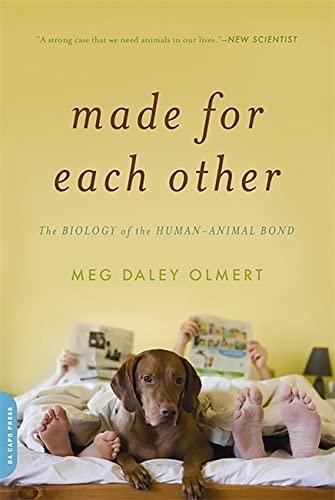
Author Meg Daley Olmert Makes the Case that Man and Dog are Made for Each Other

November 12, 2022 by Val Cavalheri

We live in a society where we celebrate our dogs; we treat them as family members because, in many ways, they are. So imagine a world where almost everyone has a dog to protect and help hunt, but they are given no care nor provided water, food, or shelter. Their already brief lives are shortened because many contract rabies or other diseases. In fact, the greatest insult you can give someone is to call them a dog—useless. 

This is not an imaginary world. It exists in Northern Uganda, a place that author and activist Meg Daley Olmert has taken on as a mission in her life. But to understand her commitment, you need to understand how she got there. 

Olmert’s background was in television, where she worked as a producer for the likes of National Geographic, Discovery Channel, BBC, and the Smithsonian. While producing a series on the history of humans and animals for actors William Holden and Stephanie Powers, Olmert’s curiosity about the onset of a new program of animal-assisted trauma therapy was sparked. During an interview with a psychiatrist, she learned that a study showed that when people were talking to their pets (vs. talking to another person), their heart rates and blood pressure decreased. Why did that happen, she wondered and was told that it was due to the pet’s capacity to show unconditional love. “It just didn’t make sense to me,” she said. “It was not the biological cause I was asking about. There was a physiological effect; what caused that? He couldn’t tell me. No one had ever asked that question.”

Coincidentally, the day after this exchange, an article on the study of oxytocin was published in the New York Times. It discussed the hormone, which among other things, stimulates uterine contractions during childbirth, fosters a connection between a mother and child, and strengthens social and sexual bonding. Olmert was intrigued and wanted to know more. She found that oxytocin affected areas of the brain that control social and emotional behavior, creating a sense of calm instead of nervousness and curiosity instead of paranoia. “And it’s in that state of calm and curiosity,” said Olmert, “that you connect instead of retreat and close off.”

If that was the case for a human, what about other mammals–could oxytocin be a basis for the human/animal bond as well? It was in asking that question that Olmert’s career changed. She realized she had found the best story that was never told and shifted her focus to telling it. What followed were attempts to understand the science behind it, which included interviewing specialists and assembling groups of experts. 

The result was that the TV producer became an expert on the neurobiology of the human-animal bond and its therapeutic effects. The knowledge gained from 15 years of research led her to write the ground-breaking book Made for Each Other: The Biology of the Human-Animal Bond, published in 2009. “What I learned,” said Olmert, “was that when there is friendly interaction between humans and animals, oxytocin is released in both. Certain species with very similar social brain construction to ours, like the dog, allowed us to come into and socially manipulate their fear and flight zones, which is what domestication is. With dogs, a whole social brain network is created where oxytocin interacts with dopamine, serotonin, and cortisol, and all of these things to bring us into the perfect state of connection.”

So, where does a dog’s unconditional love fit in? “It’s a myth,” says Olmert. “For millennia, we relied on dogs to protect us from enemies without—to bark, growl, bite, and alert. Now, their role is to protect us from the enemies within—the greatest enemy to a social mammal, the one that can kill us, is loneliness. And because we have this evolutionary coincidence of the dog, which has the same social brain chemistry as us, we have this best friend who has four legs and will be there when humans can’t or won’t be the social support we need. So when people say: ‘Well, it’s unconditional love.’ It is not. There’s no such thing. Their ‘love’ is wildly generous, but it isn’t unconditional. You treat that dog badly, it will not be your best friend.”

With the book’s publication, Olmert became the subject matter expert in a field she inadvertently created. It was not surprising this generated articles, interviews, and lecture circuits, including two TEDx talks. It also led to a call from Rick Yount, a social worker who was in the midst of designing a program that needed to show how veterans suffering from combat-related stress and PTSD could benefit from interacting with dogs. By 2011 these conversations helped to create the nonprofit Warrior Canine Connection, which uses active-duty military members undergoing PTSD treatment at Walter Reed Medical Center to train service dogs for placement with disabled veterans. 

“Working with dogs lowers symptoms of PTSD better than any other treatments being offered,” says Olmert. “A therapist cannot get in your lap and hug you; yet, touch and physical connection are essential, especially when it’s combat or violence related. Training a dog is basically learning how to communicate with the dog—learning that it requires patience, consistency, timing, and empathy. These traits and skills are damaged when the social brain network is injured. The only way to repair and reboot them is through this type of practice.”

Which brings us halfway around the world to Northern Uganda and the Comfort Dog Project. Olmert’s expertise had been noted by someone else who was at that same time gaining notoriety. Her name was Sarah Schmidt, and in 2012 she founded an animal welfare charity called BIG FIX Uganda after observing that there was no veterinary care in an area where rabies was extensive and hate and fear of dogs as carriers was equally rampant. She also noticed that, even though everyone had dogs, they were left to their own devices. Nevertheless, Schmidt set up a veterinary hospital, offered free spaying and neutering, vaccinated over 90,000 dogs, and began an education program to save them.

Schmidt’s involvement in Northern Uganda also gave her a glimpse into a world where, dire as life was for the animals, the villagers were also going through a grim existence. They had lived through a horrific 20-year civil war where almost 30,000 boys and girls were kidnapped and forced to carry out raids, beat and kill civilians, or were used as domestic servants or sex slaves. Abductees who were able to flee returned to villages where they were shunned and treated as pariahs. It is estimated that 70% of people in Uganda have PTSD and severe trauma. Predictably, many attempt or commit suicide.

So when Schmidt made that call in 2017, Olmert learned that two years prior, there had been a recognition that Uganda’s reviled humans and canines might be able to benefit each other. They expanded their mission to rescue the fractured people through an animal-assisted therapy program similar to the Warrior Canine Connection. Called the Comfort Dog Project, it consisted of a 20-week dog training program that taught war trauma survivors how to create loving bonds with dogs. 

Ten weeks into the program, when measurements were taken on the program’s outcome, it was discovered that these ‘trainers’ (called Guardians) were dancing and playing with their dogs and calling them their sisters, brothers, or even children. The presence of the dogs soothed the survivors and allowed them to talk about their war experiences, leading to a 100% reduction in PTSD symptoms and an improvement in their general health. Graduating Guardians went from being traumatized, rejected people to being employed providing community health services, working in rabies clinics, school programs, etc.

Author Meg Olmert and cat

Olmert was impressed enough to start including these findings in her writings and lectures. BBC even did a short film on one of these connections: the story of Filda Akumu, a young woman abducted when she was 13. After escaping, she was ostracized by her village, suffered trauma and depression, and became suicidal. Through the Comfort Dog Project, Filda was partnered with a dog who was abandoned as a puppy. “This dog saved my life,” she says. “if it wasn’t for him, I would be dead.” The two, who helped each other heal, have gone on to help others.

 “Now, the very interesting part of this whole thing,” says Olmert, “is that the genetic studies of the dogs of Northern Uganda show that they’re the most ancient dogs on the planet and have never been domesticated. They have no modern dog DNA in them. And sociologically, they’ve never been befriended; in fact, quite the opposite. So we have the rare experience of the most ancient, least domesticated dog on the planet coming together with people who have never domesticated dogs. With all of the studies that have been done about how dogs were first domesticated, this is what was left out—dogs did more than protect us and help us hunt. They saved our hearts and minds. That’s their greatest contribution and one we can’t take for granted. When I went to Uganda and saw it for myself, it changed me. I am now a different person.”

The person who Olmert is now writes articles, goes after funding, and collaborates with researchers interested in confirming the importance of canine connection therapy. She is being encouraged to write another book. “All I ever wanted from my first book was that I would have really interesting conversations with really interesting people. And it has delivered in spades.”

She also currently serves as Science Advisor to the Warrior Canine Connection Program in Maryland and as Science Advisor and board member for The Comfort Dog Program of Northern Uganda. Of her association with the two powerhouses in her life, Olmert says: “Both Rick (Yount) and Sarah (Schmidt) are good dogs, which is the highest compliment I can give. They are humans that deserve all the praise any human can have.”

Well then, Meg Olmert, all we can say is you, also, are a really, really good dog.

Val Cavalheri is a recent transplant to the Eastern Shore, having lived in Northern Virginia for the past 20 years. She’s been a writer, editor and professional photographer for various publications, including the Washington Post.


The Spy Newspapers may periodically employ the assistance of artificial intelligence (AI) to enhance the clarity and accuracy of our content.

Filed Under: 1 Homepage Slider

The Ordinary Life of an Extraordinary Man by Val Cavalheri

October 29, 2022 by Val Cavalheri

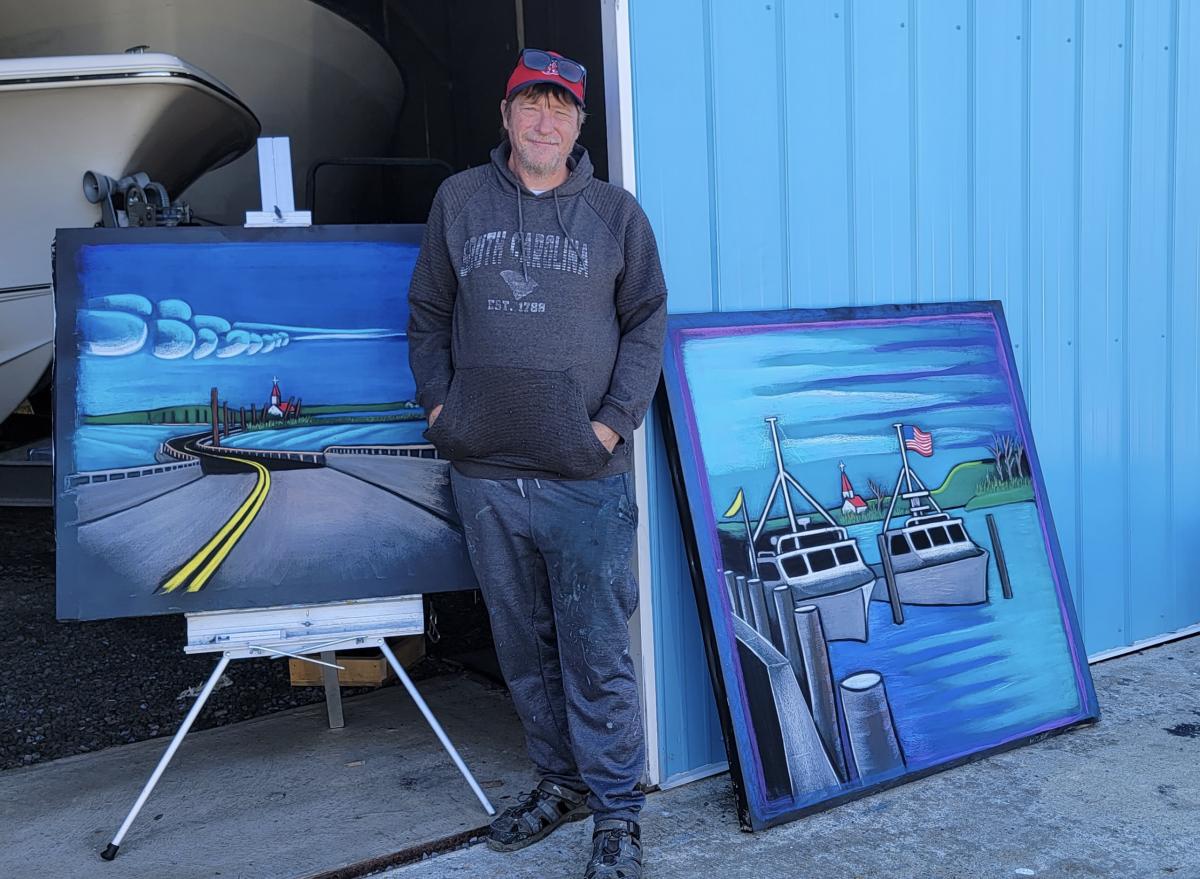
Artist Ed Krell

On Saturday and Sunday, November 5th and 6th, a unique interactive event named Hoopers Island First Chalk Arts Festival will occur. In partnership with the Dorchester Center for the Arts (DCA) and Kelly Ellis-Neal of The Bungalow by the Bay, the event’s purpose is to raise awareness for mental health. To appreciate how this all came together, you have to meet the artist who inspired it.  

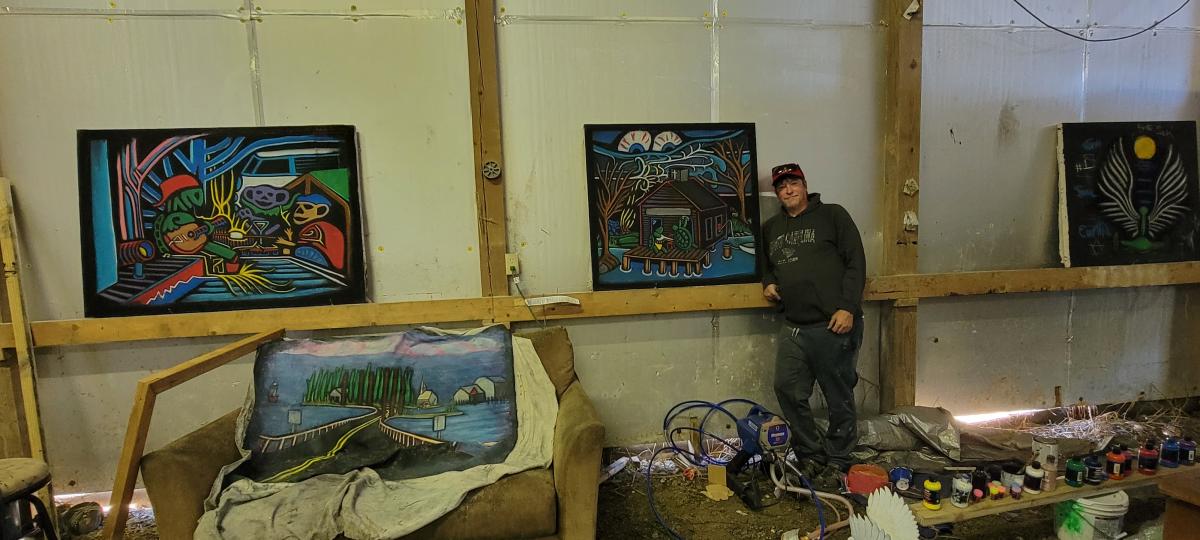
But this is not an ordinary story about an artist because Ed Krell is no ordinary artist. Even his choice of art form is not typical. Krell is a chalk artist. No, not the kind that draws on the sidewalk and whose creation is temporary, erased in less than a week by time and weather. His work is done with chalk on canvas and then sprayed with a fixing spray and lacquer that makes it last. 

Like most stories about the extraordinary, it started unexpectedly, during a chance encounter at the Hoopers Island Fishing Creek post office when he praised a woman wearing ‘crazy bright pants.’ The woman was Kelly Ellis-Neal, who accepted his compliment and gave him her card. This prompted a brief discussion about art – big mural-sized art in particular.

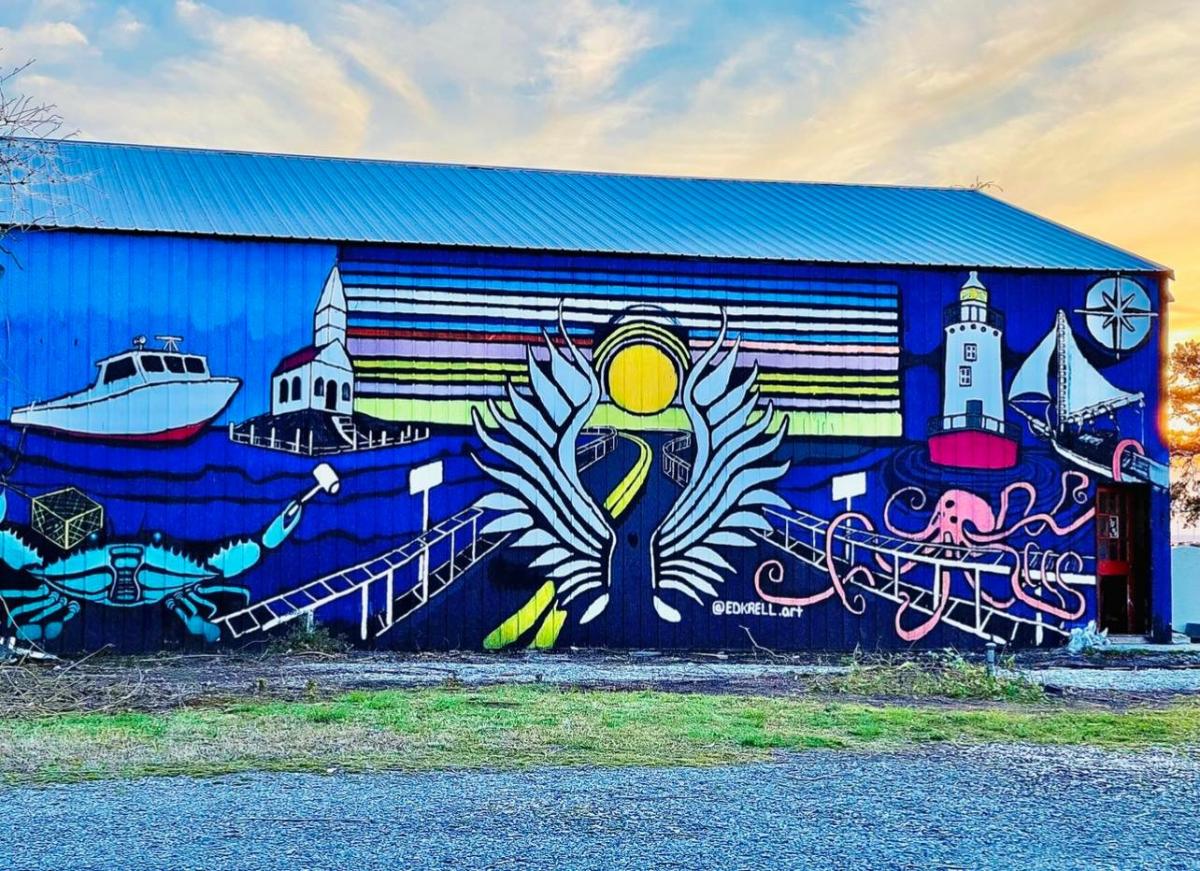
Ellis-Neal, a realtor and entrepreneur, is a recent transplant to Hooper’s Island, where she and her husband bought master shipbuilder Jack McLaughlin’s home, which came with a 100-foot boat shed/pole barn. As an art enthusiast, she dreamed about the possibility of bringing meaningful art to the island. The impromptu meeting led to further discussions, and as Krell observed, their dreams intertwined. The exterior of the pole barn, located behind the post office on Ballpark Rd., became the canvas for the large chalk mural and blended Krell’s visionary, vibrant, psychedelic colors with images of Hoopers Island living. 

The response to the unveiling of the mural surprised everyone. Soon people were stopping to take pictures with and of the mural, and a decision had to be made to have it lit at night. The mural also gained landmark status, and the unexpected notoriety became the impetus and started the ball rolling on the festival, changing the life of a man who was used to life changes and hardships, one of which included homelessness.

If you ask, Krell will say he’s been doing art his whole life; you might even have admired his black-and-white architectural precision drawings. He will also admit he had to take two to three years off due to an injury. What he may not tell you is that the injury led to 11 reconstructive surgeries, including a nerve transplant. 

The injury cost him the use of his right arm, which also had to be fused to his side for a period of time. “I was always the guy with the megaphone in front of the crowd. And then, I had to ask people for help. It was very humbling.” Krell will admit he went into what he describes, as a dark place, emotionally and physically. Whatever he once aspired to be, the former right-handed artist was gone. 

Krell credits a friend–nicknamed ‘81’—who encouraged him to start drawing again. “Draw with chalk on the floor,” ‘81’ told him. And Krell did, and then erased it and started all over again. Until he got bored and started drawing on walls and ceilings, and when he ran out of space, he started working on canvas. Then it became an even greater obsession. He found himself drawing every day, all day. And he got really good. 

Krell calls it his ‘art groove.’ “Once I’m making really good art,” he says, “everything happening around me has that same vibe. It’s like I’m on fire. When I met Kelly that day, I was really on fire.”

That spark continued to grow as the collaboration expanded. “We started meeting more people who were interested. Musician Jon Jacob let Melissa Cooperman (DCA’s Community Arts Coordinator) know about me, and then John Lewis (DCA’s board member) got involved. Then there is Marianne Styles and her husband, Robert. So many doors were opened.” Suddenly the black and white right-handed artist found his art groove in his left hand, making colorful pictures of boats, crabs, and bridges. 

“And then, of course, I burned it,” Krell added. 

That’s correct. He would burn his paintings once he was done. “Not being a taught artist, I learned everything by trial and error. There’s nothing like an epic fail to teach you. Even when people wanted to buy it, it went into a campfire since I needed the wood to make my next one. I did what I needed to learn. So now let’s do it again, but better.”

Nowadays, he’s not allowed to burn his pictures. Krell’s partner Paul Ellwood ensures he doesn’t do that anymore, among other things. Ellis-Neal credits Ellwood for keeping them all organized. “This has become something bigger than one person can handle. If it wasn’t for Paul, keeping us on track, we couldn’t have come this far.”

Where Ellwood is the glue, ‘81’ is the reason why the festival is dedicated to mental health awareness. The last exhibit he did at DCA in July was called the “Story of 81” as a tribute to the friend who helped Krell during his recovery. But ‘81’ had his own difficulties, wrestling with schizophrenia and people’s misconceptions about the disease. He succumbed to mental illness in 2020 at the age of 24. Through his art, Krell wants to give a voice to anyone who is struggling. In that way, he also helps ‘81’s mother keep her son’s memory alive by opening up channels of conversations about her son’s disability.

“We’re keeping a mental health awareness kind of mantra and dedicating this project to helping out the moms and families, the caregivers, and the first responders. Anyone we can get involved to make them aware that some people out there are a little bit different, you know, and that’s OK.”

For the Chalk Art Festival, the mantra has developed into a slogan — Healing waves one chalk line at a time. “I believe that water heals. I believe art heals if we just listen to each other,” says Krell. “So I want everybody just to come and have a great time.”

DAC and all the people involved are dedicated to making this happen. Besides art and food vendors, there will be live music and other forms of entertainment, including a band of chalk artists from California, known as Chalk Mafia (https://www.facebook.com/chalkmafia/), chalk art workshops for all ages, led by Lori Antoinette of LAntArt (https://lantart.wixsite.com/lantart), as well as an opportunity for kids to learn how to draw their own cartoon character. 

The two-day event is free, and Krell is humbled and grateful for the experience and support. But he is more interested in knowing that his art does something good for the world. “I want that, at the very least, it starts a conversation. My art allows us to create a space and openness for an honest dialogue.” He paused then and added. “I’m just getting started in this whole adventure. I wonder what it will be like a year or two down the road?”

Any bets?

Hoopers Island First Chalk Arts Festival will take place on November 5th and 6th from 11 am to 4 pm at 1125 Ballpark Rd, Fishing Creek, MD. For more information about the festival and the artist, go here. (https://edkrell.art/chalk-art-festival).

Val Cavalheri is a recent transplant to the Eastern Shore, having lived in Northern Virginia for the past 20 years. She’s been a writer, editor and professional photographer for various publications, including the Washington Post.


The Spy Newspapers may periodically employ the assistance of artificial intelligence (AI) to enhance the clarity and accuracy of our content.

Filed Under: Spy Highlights

Mid-Shore Arts: The Photography of Edwin Remsberg

September 13, 2022 by Val Cavalheri

A traveling Smithsonian Museum on Main Street (MoMS) show is coming to Oxford in October called Crossroads: Change in Rural America. This exhibit offers towns a chance to look at what happened when America’s rural population became a minority of the country’s population and the ripple effects that occurred.

So what does that mean for the Eastern Shore? Stuart Parnes, president of Oxford Museum, said. “We’re as much an agricultural place as Kansas, but people don’t recognize that. We all spend so much time looking at the water, talking about watermen, watching the log canoes, or sailing. Yet everybody drives by acres and acres of corn and soybeans, and they don’t think about it. So, part of what we wanted to do, was to make sure we all start paying some attention.”

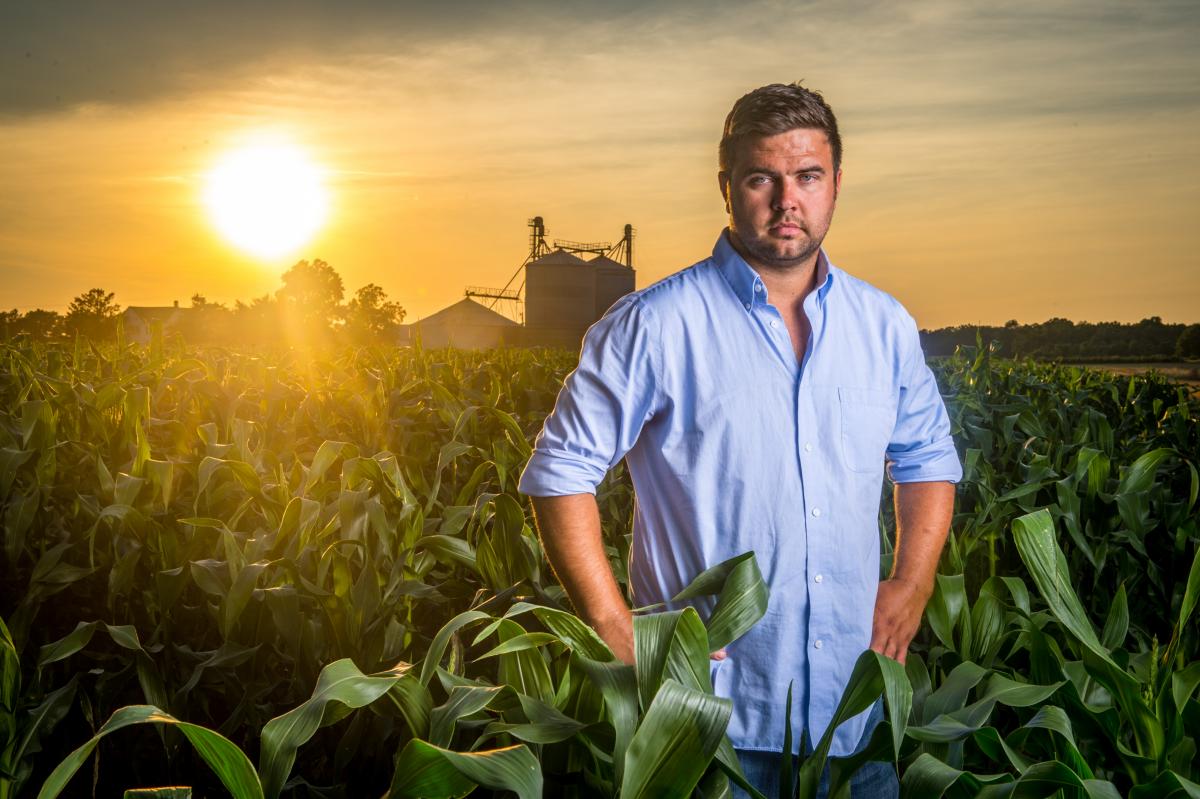
Matt Taylor of Taylor’s Produce

The concept behind MoMS is to send high-quality exhibits to small museums in towns with small populations. Places that usually wouldn’t have the opportunity to participate in a national exhibition program. As part of the program, many events are being organized, including farm tours, retrospectives, and discussions.

It was during one of the planning meetings that Edwin Remsberg’s name came up. Remsberg, an award-winning Maryland photographer, specializes in documenting agriculture and the changing nature of traditional work in a modern economy. Parnes took a look at the photographs and was immediately interested. And here’s the thing. Remsberg is good at what he does because he knows so much about it. He, too, is a farmer raising sheep in Harford County. Working so close also meant that Remsberg has a lot of images of Eastern Shore farmers.

Remsberg said, “I think it’s an important part of being able to relate is that I do it myself, so I can appreciate what everybody’s doing. I see us as a big connected community because everybody’s intertwined with each other, regardless of where they are.”

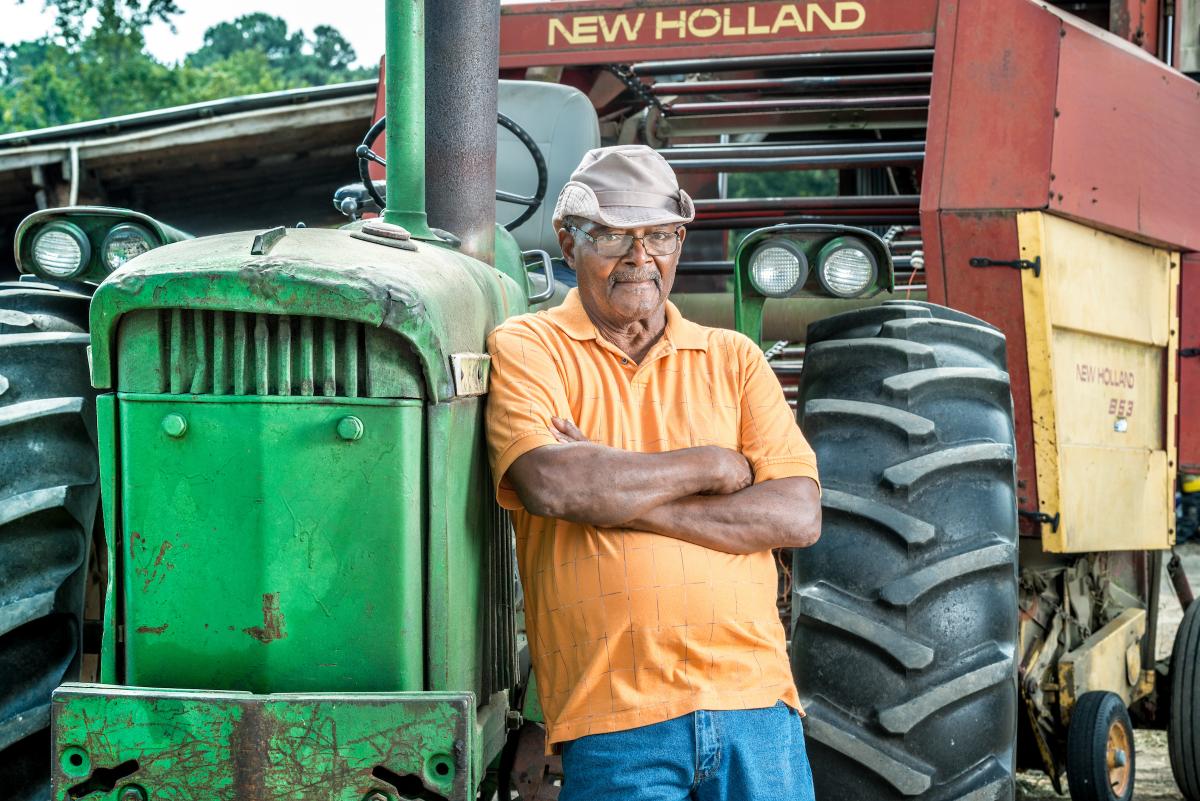
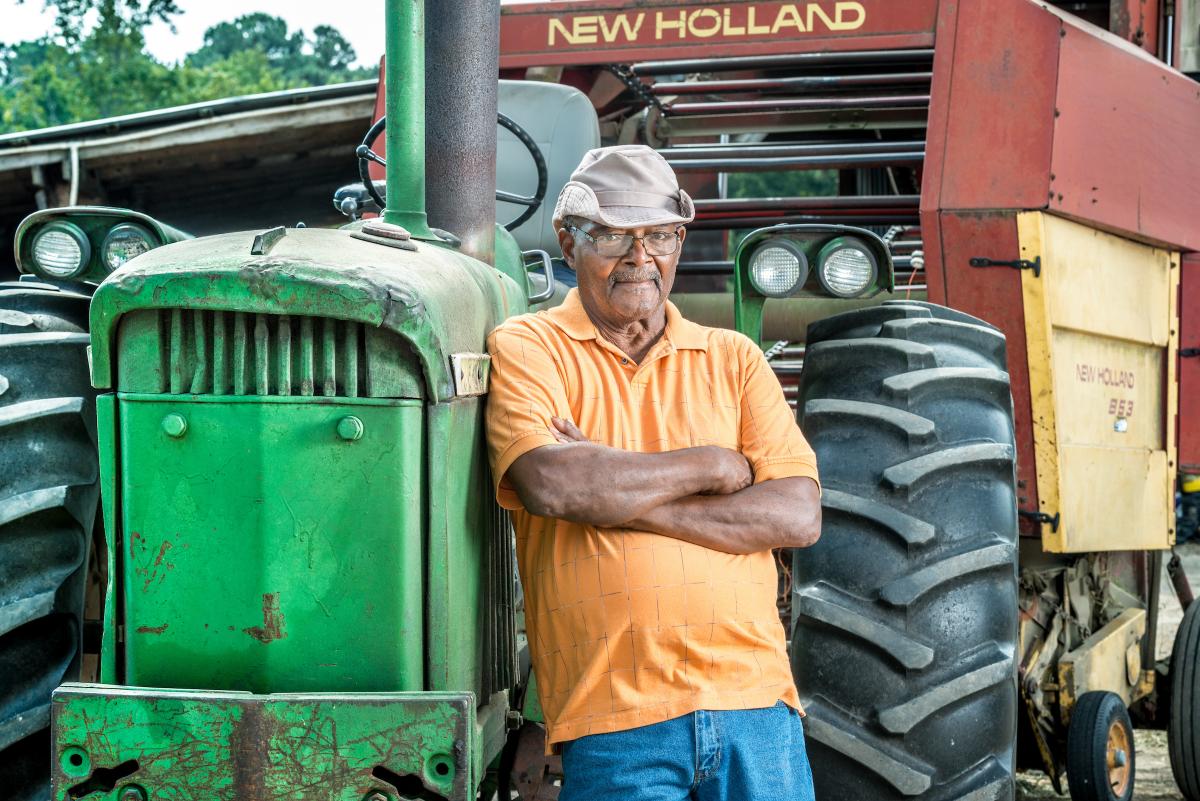
Ken Ballard of Ballard Meats and Seafood

Remsberg’s career started on his family’s Maryland farm, and through the connections he made in the agricultural community. Using his camera allowed Remsberg to tell their stories, an ability that is still a part of his success. As he has said: For me, the photograph is not an end in itself but rather a tool for transmitting information, telling stories, and educating. Photography is a means to bring these incredibly rich and interesting worlds to people who would not otherwise have such an opportunity. The content and the story is what matters. I am passionate about Maryland. The idea of sense of place is very important to me because I have a long history with Maryland. I believe our sense of place comes not only from our geography around us but from this human geography of who we are and the culture we create. I aim to provide Marylanders with the opportunity to gain a sense of their local identity, giving them something to appreciate and love. The visual experience offers individuals the chance to see themselves as unique but also for a larger culture to see itself as unique.”

This attention to detail has solidified his reputation and success as a photojournalist for the Baltimore Sun and Associated Press, a stock photographer for Getty, and a photographer for 11 books. He’s worked with the U.S. Department of Agriculture and the University of Maryland and has traveled worldwide photographing rural areas. He’s also produced essays on such topics as the war in El Salvador, elections in Haiti, and missionary work in Belize. In 1987 Life Magazine chose his photograph of the Amtrak crash in Chase, Maryland, as one of the “Pictures of the Year” and later, “Pictures of the Decade. More recently, Remsberg can be found conducting workshops in England or Africa, authoring new books, or selling his own apparel brand.

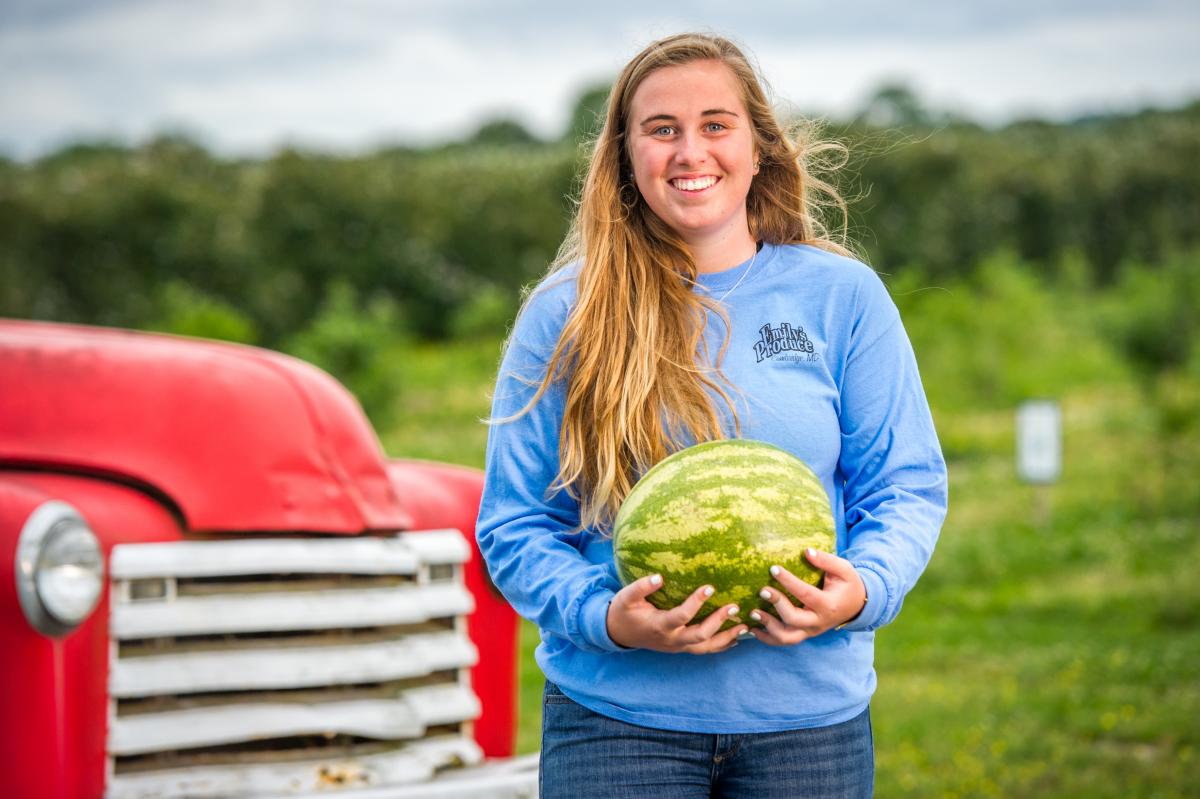
Emily Jackson of Emily’s Produce

Rooted in the Land: A Tribute to Eastern Shore Farmers—Photographs by Edwin Remsberg is now on exhibit at the Oxford Museum. It’s a show well worth seeing as you realize that Remsberg is telling a story about today’s farmer and, more importantly, the Eastern Shore farmer. Here you’ll find people and places you know. Judy Crow from Crow’s Vineyard cuddling a calf, Matt Taylor of Taylor’s Produce standing in his young field of corn silhouetted against the sun, Emily Jackson from Emily’s Produce cradling a watermelon. Remsberg proudly pointed to a photograph of Ken Ballard of Ballard Meats and Seafood. “I have that tractor, too,” he said.

For Parnes, this tribute to farmers is the perfect start to a thought-provoking Smithsonian show. “Edwin is just kicking this off for us because the show doesn’t get here till October. People will look at these images and see that there are farms everywhere, and all these people are still working on them, and they’re second and third generation farmers.”

Besides people, there are also scenes of farmers’ hands holding wheat or supporting a grapevine. Then there are the perspectives you may never see outside this exhibit. That’s because Remsberg is also an aerial photographer, and he has a lot to show you from the sky. Here you’ll find a mesmerizing look at a watermelon harvest (at Worms farm in Preston) and, in an abstract photograph of dark tracks on a white field, a winter cover crop planting in Kent County.

Remsberg is also sharing one of his rare collections with the Museum: Periodicals that Maryland’s farmers read from before the Civil War into the 1930s. These are filled with technical assistance and farming stories and are illustrated by some of the then best-known artists and photographers.

But it will be the farmers themselves that you’ll remember. Yes, they are photographed in their lush and frequently colorful environment, but the intimate focus is on the individual. And there is a reason. “I’m not showing you a window of farmers. What I’m doing is holding up a mirror for them. I want them to be the people who get the most out of the picture, and then the rest of the world can see, but I want them to know that they’re cool and interesting. I want to show how proud and diverse these people are and how their workplace is their identity. I want them to be the stars.”

And that they are.

Rooted in the Land: A Tribute to Eastern Shore Farmers—Photographs by Edwin Remsberg is running now through December 16th at the Oxford Museum

Crossroads: Change in Rural America will open on October 29, 2022, and run through December 16, 2022, at the Oxford Museum at St. Paul’s Church.


The Spy Newspapers may periodically employ the assistance of artificial intelligence (AI) to enhance the clarity and accuracy of our content.

Filed Under: Spy Highlights

« Previous Page
Next Page »

Copyright © 2025

Affiliated News

  • The Chestertown Spy
  • The Talbot Spy

Sections

  • Arts
  • Culture
  • Ecosystem
  • Education
  • Mid-Shore Health
  • Culture and Local Life
  • Shore Recovery
  • Spy Senior Nation

Spy Community Media

  • Subscribe
  • Contact Us
  • Advertising & Underwriting

Copyright © 2025 · Spy Community Media Child Theme on Genesis Framework · WordPress · Log in