MENU

Sections

  • Home
  • About
    • Contact Us
    • Editors and Writers
    • Join our Mailing List
    • Letters to Editor Policy
    • Advertising & Underwriting
    • Code of Ethics
    • Privacy
    • Talbot Spy Terms of Use
  • Art and Design
  • Culture and Local Life
  • Public Affairs
    • Ecosystem
    • Education
    • Health
    • Senior Life
  • Community Opinion
  • Sign up for Free Subscription
  • Donate to the Talbot Spy
  • Cambridge Spy

More

  • Support the Spy
  • About Spy Community Media
  • Advertising with the Spy
  • Subscribe
February 7, 2026

Talbot Spy

Nonpartisan Education-based News for Talbot County Community

  • Home
  • About
    • Contact Us
    • Editors and Writers
    • Join our Mailing List
    • Letters to Editor Policy
    • Advertising & Underwriting
    • Code of Ethics
    • Privacy
    • Talbot Spy Terms of Use
  • Art and Design
  • Culture and Local Life
  • Public Affairs
    • Ecosystem
    • Education
    • Health
    • Senior Life
  • Community Opinion
  • Sign up for Free Subscription
  • Donate to the Talbot Spy
  • Cambridge Spy
2 News Homepage News News Portal Highlights

County Leaders Lash Out at $3.3 Billion in State Transportation Cuts

December 6, 2023 by Maryland Matters

County officials and legislators are lashing out at a plan to cut billions in transportation projects across the state.

State Transportation Secretary Paul Wiedefeld, in an interview Tuesday, said the department is forced to address $3.3 billion in shortfalls. To close the gap over the current six-year spending plan, the agency will impose across the board budget cuts, hiring freezes, fee and parking rate increases as well as defer hundreds of millions in projects across the state.

“This is not a new problem for our state,” Wiedefeld said. “In 2020, the Department of Legislative Services identified that Maryland’s transportation program had a structural issue with operating costs increasing faster than overall revenues. Since 2020, these issues have been exacerbated by historic inflation impacting labor and materials costs, depleted COVID-19 relief funding, and the gradual decline of transportation’s largest revenue source – motor fuel tax revenue.”

To close the gap, the department will cut roughly $1 billion from its operating budget. Another $2 billion will be cut from its capital budget. Local governments will see a $400 million reduction.

In an interview with Maryland Matters, Wiedefeld said his department will look to increase fees at the Motor Vehicle Administration as well as increase parking rates at BWI Thurgood Marshall Airport. The changes could bring in an additional $80 million, a fraction of what is needed.

“Some of it’s nickels and dimes, to be frank,” Wiedefeld said in describing fees the department could increase on its own. “It’s $1 at the port. Some tipping fees and some relatively minor things. The big availability of funds is in MVA and parking at the airport, because that’s where you have the biggest sources”.

Wiedefeld said the fee increases still leave “a very large hole” that needs to be closed.

“So, then you look at the operating budget,” he said. “So, then you say, Okay, well, let’s reduce across all modes 8%. So basically, what we said to each mode — meaning the airport, transit, MVA highways — you all manage your budgets, reduce it by 8%.”

That will include hiring freezes, Wiedefeld said. That move comes at a time when Gov. Wes Moore (D) has vowed to “rebuild state government” by filling an estimated 10,000 state worker vacancies.

Moore has already fallen behind the pace needed to reach his goal of 5,000 new employees hired in his first year.

The agency will also make cuts to transit, according to Wiedefeld, including:

  • Reductions in commuter bus service.
  • A 40% cut in state aid to locally operated transportation systems.
  • State aid for local road projects through Highway User Revenue will be flat-funded at the current level.
  • Reductions in MARC commuter rail service.
  • Reductions in maintenance of roads and guardrails.
  • Reductions in highway litter removal and grass cutting.
  • Cuts to maintenance of buses and commuter rail equipment.

Wiedefeld said current budget constraints limit some transit improvements, particularly in Baltimore, that would improve the quality of service. Those efforts cannot be paid for now. Maintenance to improve safety would be prioritized, he said.

“If there’s an imminent safety issue. We just do it,” he said.

Transportation on the minds of county leaders

Details of the reductions come as officials from the state’s 24 major political subdivisions gather in Cambridge to discuss the upcoming General Assembly session at the Maryland Association of Counties (MACo) winter conference.

Transportation officials and Moore are expected to attend.

“I have been engaged in conversations with the governor, lieutenant governor, and their team regarding the challenges with MDOT Funding. We understand the need to ensure Maryland has an adequate transportation system while also balancing our current fiscal realities,” said Howard County Executive Calvin Ball (D), who is also president of MACo. “As MDOT and the General Assembly consider cuts to our transportation system, I continue to urge them to prioritize and sustain funding for basic system preservation and operations, which includes grant funding to local government and critical state system safety projects that address the increase in injuries and fatalities on our roads.”

Reaction from local and federal elected officials has been mixed, ranging from optimism that deep cuts can be averted to concern about current proposals to close the shortfall.

“It is evident this administration inherited challenges from the previous administration, but we believe funding cuts that shortchange residents in Baltimore County – and across the entire Baltimore region – should not be the solution,” said Baltimore County Executive Johnny Olszewski Jr. (D).

In western Maryland, Frederick County Executive Jessica Fitzwater (D), vowed to fight to retain funding for projects in her county.

“From daily commutes to high-profile incidents like the tanker explosion in March, the US 15 project has a very real and direct impact on the quality of life in Frederick County and all of Western Maryland,” Fitzwater said. “Furthermore, the decision to abandon the expansion of MARC service along the Brunswick line does damage to our shared transit goals.”

Anne Arundel County Executive Steuart Pittman (D) and leaders of some of the state’s larger jurisdictions have excused Moore from blame. Instead, many are content to point the finger at former Hogan, the Republican former governor, and Wiedefeld.

“The person who is delivering the message is not the governor, it has been Secretary Wiedefeld,” said Sen. Cory McCray (D-Baltimore). “He’s got to be able to articulate it. That’s why he gets paid the big bucks.”

Even as Wiedefeld discusses plans to balance the transportation budget, counties still await an updated version of the state’s six-year Consolidated Transportation Plan.

The agency has produced a plan that has a $2.1 billion gap between proposed projects and available funding. It is the first time in the history of the spending plan that an agency has produced one that is unbalanced.

Wiedefeld said it is likely that a balanced proposal will not be available before a deadline to deliver the budget to the General Assembly in January.

“We remain optimistic that we can continue working with the Moore administration and legislative leaders to ensure that Baltimore County and our region are more equitably supported in the final CTP submission to the General Assembly in January and in the years ahead,” Olszewski said.

Legislators take issue with cuts

State lawmakers were also taken aback by the cuts.

McCray said the proposal is potentially devastating for Baltimore and other areas.

“The spending cuts outlined by the Maryland Department of Transportation risk doing more harm to the well-being and livelihood of all Marylanders, especially those in the Baltimore region,” McCray said. “If passed in its current form it would undermine the Baltimore Region’s economic recovery and economic growth for years to come.”

McCray said the proposal “pits region against region and asks Baltimore city to shoulder a disproportionate share of the burden of today’s fiscal realities. This simply must not happen.”

The proposal was also panned by the legislature’s Transit Caucus.

“As leaders of the bipartisan and bicameral Maryland Transit Caucus, we are extremely disappointed in the dramatic cuts made in the updated final draft Consolidated Transportation Plan (CTP) released by the Maryland Department of Transportation (MDOT). In cutting nearly $1 billion from transit, bicycle, and pedestrian investments, MDOT is disproportionately harming those who can least afford any alternatives,” the caucus said in a statement. “These cuts are also shortsighted, making it more difficult for our state to fight climate change and meet our carbon reduction targets. Our state CTP should be a reflection of our values and our goals for the future, and this falls short. We call on MDOT and the Moore Miller Administration to honor their commitments and engage in a serious conversation with communities across the state in raising the necessary resources to move Maryland’s infrastructure into the 21st century.”

‘This is a reality check’

Others, such as Pittman, said the news was not unexpected and held out hopes it could be avoided.

“I do think it’s important to note that the sky is not falling,” Pittman said. “This is a reality check on where things stand. Now, we’ve got to put our minds together and our commitment together and decide whether or not we want to create the revenue to fix it.”

Pittman called for “revenue enhancements” including a tax on high-income earners in the state as a way to ease the cuts.

Senate Minority Leader Stephen S. Hershey Jr. (R-Upper Shore) said the cuts were no more than a manufactured doomsday scenario.

“This is a script of a bad movie that we’ve seen over and over again,” said Hershey, who is a member of the Transportation Revenue and Infrastructure Needs Commission. “They come out and they claim that they don’t have enough money to do something. Then they want to put it back on the legislature and say you’re going to have to be the ones to solve the problems.”

The solution, he said, is inevitable tax or fee increases.

The TRAIN Commission on which Hershey serves is tasked with modernizing how the state replenishes the dedicated fund that pays for road and transit projects. The panel is also expected to recommend changes to how the Department of Transportation prioritizes road and transit projects.

Frank Principe, chair of the commission, is asking the panel to include recommendations setting new fees for owners of electric and hybrid vehicles and raising tolls on out-of-state motorists.

The interim report will be discussed at a meeting next week. The panel is expected to continue its work through 2024.

‘Devastating consequences’ for Marylanders

Rep. David Trone (D-6th), in a letter to Wiedefeld that was obtained by Maryland Matters, expressed concern about cuts to projects, some which directly impact his district and others that were to receive significant federal funding though the federal Infrastructure Investment and Jobs Act.

A spokesperson for Trone was not available for comment.

In the letter, Trone expressed concern that “the direction MDOT is pursuing will have devastating consequences for all Marylanders.”

Maryland is slated to receive $1.3 billion in federal funding for 33 highway projects, eight new transit projects and 15 aviation projects. All of the highway projects were fully funded in the design and engineering and construction phases.

Wiedefeld said the state will continue to provide state matching money for projects that have federal funding.

“You don’t walk away from federal money,” he said.

Trone, in his letter, said he is concerned that Wiedefeld’s plan to close the gap will strip funding from many of those projects.

“Specifically, the plan would reallocate non-discretionary funds from 12 of the 33 approved priority roadway projects, reduce transit services, and cut maintenance projects,” Trone wrote. “This is unacceptable, and inconsistent with the intent of the law as the Biden-Harris administration has clearly stated its goal of rebuilding our country’s ailing infrastructure from the inside out.”

By Bryan P. Sears

The Spy Newspapers may periodically employ the assistance of artificial intelligence (AI) to enhance the clarity and accuracy of our content.

Filed Under: 2 News Homepage, News Portal Highlights

MSCF: All Flags Flying For Mid-Shore Donations and Scholarships

December 1, 2023 by The Spy

One of the most important signs of a healthy economy is local philanthropy. If people aren’t giving, the argument goes, it’s a reasonable indicator that families are tightening their belts. And one important source on local giving every year is Buck Duncan, president of the Mid-Shore Community Foundation.

And to the relief of many, Buck’s annual assessment is surprising positive for 2023.

Over the last fiscal year, MSCF granted $7.4 million in scholarships and aid, supported by $6.4 million in contributions, managing 566 diverse funds. A notable achievement includes $1.7 million in scholarships, categorized as traditional for college-goers and non-traditional for career and workforce development. They received 332 applications, awarding 267 traditional and 65 non-traditional scholarships.

In addition, the crisis in healthcare staffing in the counties led to the creation of a dedicated healthcare scholarship fund, starting with $250,000. This fund addresses the critical need for healthcare professionals. Additionally, MSCF focuses on career and technology education, having missed generations in this area. They offered 47 scholarships across various fields, benefiting 44 students.

In Buck’s update, he notes that the MSCF’s scholarship window for the next school year opens on December 1. They encourage potential applicants to visit their website.

Another initiative, Mid-Shore Gives, was just completed with impressive results in its second year. It helped regional non-profits raise $86,000 through 589 donations, supporting 77 organizations. This program is expected to grow as a vital funding source.

The Spy send a few minutes with Buck yesterday at his office at the Bullitt House in Easton to hear more of the good news.

This video is approximately five minutes in length. For more information about the Mid-Shore Community Foundation please go here. For MSCF scholarship fund support please go here.

The Spy Newspapers may periodically employ the assistance of artificial intelligence (AI) to enhance the clarity and accuracy of our content.

Filed Under: 2 News Homepage, News Portal Highlights

Town Council Highlights: Sharing Perspectives on the Frederick Douglass Mural

November 21, 2023 by The Spy

The most interesting and moving part of the Town of Easton Council meeting last night was the public comments related to the newly installed art mural on Washington Avenue depicting the great American hero Frederick Douglass.

Rising in opposition to the recently installed mural were those who talked movingly about the harm done by having Douglass contextualized with 21st-century cultural references like basketball shoes and watches. One in favor of the work, a student at Washington College, made the case that it would help reach younger Americans with the Douglass story.

At times like this, the Spy recalls that Douglass willingly became the most photographed American in the 19th century. While it is impossible to channel what he would have made of this current debate in the land of his birth, it might be comforting to feel that Fred would be thrilled about a conversation on the importance and power of an image.

Citizen Comments Highlights

Council Member Remarks


The Spy Newspapers may periodically employ the assistance of artificial intelligence (AI) to enhance the clarity and accuracy of our content.

Filed Under: Arts Portal Lead, Maryland News, News Portal Highlights

Settlement Five Years After Anton Black’s Death Includes Reforms To State Medical Examiner’s Office

November 9, 2023 by Maryland Matters

The Board of Public Works unanimously approved a settlement that resolves a lawsuit filed against the Office of the Chief Medical Examiner following the death of Anton Black five years ago.

The family of Black and his estate receive $100,000. Another $135,000 will be paid to lawyers representing the Coalition for Justice for Anton Black.

The settlement also includes landmark changes to the Office of the State Medical Examiner, according to a statement issued by the ACLU of Maryland on behalf of Black’s family and the coalition. Those reforms were announced shortly after the three-member board approved the cash payment.

Included in that settlement are new policies advocates say set explicit guidelines for how in-custody deaths are to be reviewed by the agency.

As part of that, the office is required to adopt national standards for how such deaths are investigated and how a cause of death is determined. The National Association of Medical Examiners requires a death to be ruled a homicide whenever it is determined that the death would not have occurred but for the intentional conduct of another person.

The new policies also require impartial investigations free from improper police influence. No one who is not an employee of the medical examiner’s office can provide input about the autopsy, inspection, or examination.

All completed autopsy results must be presented to the chief or deputy medical examiner for approval prior to release.

Families who receive autopsy reports must be informed of their rights to seek a correction or review findings.

“This settlement is an excellent first step, but as we engage in this new process community members must stay vigilant and engaged to make sure it’s effective,” said Richard Potter, founder of the Coalition for Justice for Anton Black. “The best frontline approach to eliminating harm is increasing accountability within. That is why I hope that with this settlement agencies will begin to recognize their own wrongdoings, catch them and change them before they cause harm. What is needed is a sense of shared ownership that can only come through trust and mutual accountability, with police confronting their own biases about mental illness, committing to de-escalation, and truly serving a diverse community.”

The settlements resolve all open lawsuits filed following Black’s death in police custody.

“This hard-fought settlement is about ensuring that the Maryland Office of the Medical Examiner tells the truth about what happened when people, and particularly Black people, are killed by police or corrections officials,” said Sonia Kumar, senior staff attorney with the ACLU of Maryland. “We can’t prevent such deaths if we aren’t honest about what caused them, and this settlement is a crucial step towards that goal in future cases. We hope this settlement will make a real, positive impact, but it is truly just the beginning of the reckoning needed to address decades of misrepresentations so we can bring justice to families still waiting for the government to tell the truth.”

The panel, which includes Gov. Wes Moore (D), Comptroller Brooke Lierman (D) and Treasurer Dereck Davis (D) approved the financial settlement without discussion or debate.

Following the meeting, Moore declined to take questions on the settlement. In a later statement, his office said he was “pleased to support this recommended settlement agreed upon by the Attorney General’s Office, the Black Family, and the Coalition to satisfactorily resolve their legal claims against the Office of the Chief Medical Examiner.”

Black, then 19, died on Sept. 15, 2018, after being restrained by police officers on a ramp in front of his mother’s home in the Eastern Shore town of Greensboro.

Black was seen on a bridge putting a younger acquaintance in a headlock. He was then chased by three white police officers and a white civilian.

The officers then attempted to subdue Black. They wrestled him to the ground, used a stun gun on him, held him down and, after handcuffing him, sat on top of Black for several minutes.

An autopsy performed by the Office of the Chief Medical Examiner ruled Black’s death the result of cardiac arrest. The report cited no evidence that Black was asphyxiated due to the restraints used by the officers.

In a 2020 federal civil rights lawsuit, Black’s family and the coalition claimed that excessive force and racial bias led to his death. They alleged the cause was “positional asphyxiation.” The family and lawsuit also alleged that the medical examiner and police from Greensboro, Ridgley and Centreville engaged in a cover-up.

That lawsuit was settled a year ago for $5 million.

Two years ago, the Office of the Attorney General began an audit of autopsy findings by the Office of the Chief Medical Examiner.

The review of 100 cases was ordered after former Chief Medical Examiner Dr. David Fowler testified in the trial of Derek Chauvin, a Minnesota police officer accused of killing George Floyd. Fowler, during testimony in that case, refused to classify Floyd’s death as a homicide.

That audit is ongoing.

Black’s death became a pivotal point leading to police reforms.

The legislature passed a package of reforms of law enforcement in Maryland in 2021. Included in that was Anton’s Law. The law provides public transparency on disciplinary records of Maryland police officers. That transparency extends to complaints and investigations of officers both in their current jobs as well as positions in other agencies.

Previously, those records were shielded from the Maryland Public Information Act.

By Bryan P. Sears

The Spy Newspapers may periodically employ the assistance of artificial intelligence (AI) to enhance the clarity and accuracy of our content.

Filed Under: 2 News Homepage, News Portal Highlights

Council Highlights: A Commitment to Civility and Not So Fast on “Middle Housing” Zoning

November 8, 2023 by The Spy

There was an encouraging note of optimism on Monday evening’s Easton Town Council meeting as President Frank Gunsallus began with a statement reaffirming his commitment to civility and respect in conducting council meetings after last month’s rare breakdown of decorum during a procedural discussion. The president’s remarks are included in the highlight reel above.

Much of the agenda was to hear public comments on the somewhat complex subject of zoning amendments slated to be approved by the town council this year. In short, after a review of some 150 pages of proposed changes, some in the community have a growing concern about how and when local zoning will permit middle housing rather than traditional free-standing homes.

The Spy was particularly interested in the comments made by Pamela Reynolds, who summarized the concerns of many in the audience of what seems like a carte blanche use of middle housing, which would seriously impact Easton’s residential communities.

In the end, the Council agreed to seek more information about the proposed middle housing amendments before the discussion continued at their December meeting.

This video is approximately seven minutes in length.


The Spy Newspapers may periodically employ the assistance of artificial intelligence (AI) to enhance the clarity and accuracy of our content.

Filed Under: 2 News Homepage, News Portal Highlights

It’s a Big Deal: The Case for Shopping in Downtown Easton with Deena Kilmon

November 7, 2023 by The Spy

When talking about the importance of shopping locally with Deena Kilmon, the director of strategic initiatives at the Easton Economic Development Corporation (Easton EDC), the first thing she does is ask to imagine a downtown with no shops, no restaurants, no museums, and no performance venues. Her point is clear; without a vibrant downtown commercial district, Easton would lose more than just the convenience of shopping locally. Without those family-run businesses, a big slice of Talbot County’s quality of life would be gone forever.

And that’s why Deena and the Town of Easton think their shopping local campaign is such a big deal. In fact, “It’s a Big Deal” has become the tagline for this year’s program, and for good reason. It’s a call to action for holiday shoppers to remember how important it is to support their favorite merchants but also how important it is to keep those crucial dollars in the community.

The Spy asked Deena to stop by the Spy Studio on Monday to hear more about what she and her team have planned.

This video is approximately three minutes in length. For more information about the “It’s a Big Deal” campaign and schedule please go here. 


The Spy Newspapers may periodically employ the assistance of artificial intelligence (AI) to enhance the clarity and accuracy of our content.

Filed Under: News Portal Highlights, 2 News Homepage

Chesapeake Bay Region on Track for 2-million-acre Land Protection Goal

November 3, 2023 by Bay Journal

The Chesapeake Bay region has permanently protected about 1.64 million acres of land since 2010, putting it roughly on pace to meet its goal of preserving 2 million acres by 2025, according to figures from the Chesapeake Bay Program.

That brings the total amount of protected land in the Bay watershed through 2022 to 9.1 million acres, or about 22% of its 41-million-acre total.

Conserving land is considered one of the best ways to protect water quality and natural habitats from the continued pressure of population growth, and it has been a major objective of the state-federal Bay Program for decades.

The bulk of the protected lands are state and national forests, parks and wildlife areas, but they also include privately owned farms or forests with conservation easements, historically important lands such as battlefields or colonial sites, and local parks.

“Land conservation plays a crucial role in preserving the environmental integrity of the Chesapeake watershed,” said Aurelia Gracia, an outdoor recreation planner with the National Park Service who coordinates the Bay Program’s Protected Lands Workgroup. “By protecting these landscapes, we can ensure that the region’s cultural and natural resources remain preserved, and that habitats for countless species, including aquatic ecosystems, are maintained.”

Achieving the 2025 conservation goal met unexpected headwinds when improvements to federal land data removed more than 300,000 acres from the region’s protected land total. Those acres did not have long-term conservation protections and included water areas such as lakes and reservoirs.

Still, the amount of protected land has increased 19% since 2020, though the region will need to protect about 130,000 additional acres a year through the end of 2025 to meet its goal. Officials say they expect to achieve that goal by continuing the pace of land protection taking place since 2010.

The 2-million-acre goal was established in the 2014 Chesapeake Bay Watershed Agreement, approved by the Chesapeake Executive Council. The council which includes the administrator of the U.S. Environmental Protection Agency; the governors of Maryland, Virginia, Pennsylvania, Delaware, West Virginia and New York; the mayor of the District of Columbia and the chair of the Chesapeake Bay Commission, which represents state legislatures.

While the region is generally on track to meet the 2025 land conservation goal, it needs to dramatically accelerate efforts to meet a subsequent goal, established by the executive council in 2021, to protect 30% of the watershed by 2030, said Joel Dunn, president of the nonprofit Chesapeake Conservancy.

“The world’s leading scientists are calling for dramatic increases to conserve 30% of the Earth’s lands and waters by 2030, which President Biden responded to with an executive order for the United States,” Dunn said. “To achieve that goal here in the Chesapeake, we will need to increase the annual rate of conservation by 350%. It’s a massive, but achievable undertaking and one that is paramount to the future sustainability of our watershed.”

Pennsylvania has the most acreage of protected land in the Bay watershed, with 3.6 million acres. It is followed by Virginia with 2.9 million acres; Maryland with 1.7 million acres, West Virginia with about 440,000 acres, New York with about 332,000 acres, Delaware with about 126,000 acres and the District of Columbia with 8,700 acres.

The Spy Newspapers may periodically employ the assistance of artificial intelligence (AI) to enhance the clarity and accuracy of our content.

Filed Under: 2 News Homepage, Eco Portal Lead, News Portal Highlights

Maryland Counties Weigh Zoning Restrictions In Advance of Cannabis Expansion

October 30, 2023 by Maryland Matters

County leaders are being warned to be reasonable when considering using zoning to restrict cannabis businesses.

The warning comes as the Maryland Cannabis Administration is about to open the application window for a social equity round of licenses that will award more than six dozen new dispensary licenses. Some county officials are frustrated by what they see as a vagary in the state law or a usurpation of local control of land use, the Maryland Association of Counties called for a measured approach when it comes to zoning.

“So, there have been all kinds of proposals that are sort of wacky and out there in terms of how to skirt this law. …Maybe we could put up a bunch of tiny libraries all over the county, and that’s a library so we don’t have to allow,” a dispensary nearby, said Kevin Kinnally, the association’s legislative director. “That’s not going to fly. It’s not going to fly. It’s not going to work. And it actually makes things more difficult dealing with the legislature in my mind, because when they see things like that, they tend to come down with a pretty heavy hand and we don’t want to be in a situation where we’re further preempted. So, I would ask everyone to please try and stay within reason.”

The state is on the cusp of a dramatic expansion of its cannabis industry.

Currently, there are 101 licensed dispensaries in the state. The licenses are distributed relatively equally across 47 legislative districts.

Even so, a handful of counties have “no exposure to cannabis businesses today and that is definitely going to change moving forward,” said Will Tilburg, acting director of the Maryland Cannabis Administration.

“So, we’re talking about a total of 75 dispensaries in this round, which would bring the state total to 176 compared to about 7,000 alcohol outlets in the state,” said Tilburg. “So, it’s not really an apples-to-apples comparison in terms of market access or distribution of these when comparing to alcohol or tobacco outlets in the state.”

The coming round will issue more than 170 licenses to bolster social equity in the industry.

These licenses aim to boost ownership in communities disproportionately affected by historical drug enforcement efforts, primarily impacting Black and Brown individuals.

Nineteen of the state’s 24 major political subdivisions will receive between one and three of those social equity dispensary licenses in the coming round. Montgomery and Prince George’s Counties will receive nine and 11 will go to Baltimore City, according to the Maryland Cannabis Administration.

Another round is expected in May. A third round could bring more licenses based on supply and demand needs in Maryland.

“There are approximately 280 Mickey Ds in the state of Maryland,” said Shad Ewart, a professor who teaches cannabis entrepreneurship at Anne Arundel County Community College. “There are approximately 290 Starbucks in the state of Maryland, there will be 300 dispensaries in the state of Maryland.”

Undue burden ‘pretty clear’

Some jurisdictions, however, are looking to zoning to limit where dispensaries can be located.

State law passed earlier this year and signed by Gov. Wes Moore (D) was meant to limit counties from making it difficult for cannabis businesses to open and operate.

Senate Education, Energy and Environment Committee Chair Sen. Brian Feldman, (D-Montgomery) said the new law was intended to prevent a repeat of what happened at the start of medical cannabis licensing. Counties including Anne Arundel and Prince George’s attempted to limit where businesses could locate.

“From a statewide perspective, we don’t want to have local governments that basically have veto authority over a state policy that … not only did we pass the bill, but it was predated by a 70% approval vote by the voters of Maryland,” said Feldman. “So, if we do need to go back in and do some clarifying and some tightening to basically uphold the intent of the state legislature here, then I think there will be a desire to do that.”

“But … I don’t want to pregame this entirely because I want to see how this all plays out,” he added.

Feldman said the new law offers a guide to the major political subdivisions, prohibiting them setting zoning or other requirements that are an undue burden on a cannabis business. The law also prohibits local governments from imposing “more burdens on cannabis businesses than those imposed on other businesses that have impacts in the area where the cannabis licensee is trying to locate,” said Feldman.

“I think it’s pretty clear language,” said Feldman.

Prince George’s eyes industrial zones for cannabis

In Prince George’s County, the council is again considering legislation prohibiting cannabis dispensaries in commercial zones. Instead, dispensaries would be pushed to industrial areas which include business parks.

But those efforts are conflicting with the goals of increasing the number licensees in communities disproportionately affected by the war on marijuana.

Recreational marijuana for adults was legalized in 2022 by a 2-1 margin statewide. That vote came five years after the state’s first legal sales of medical marijuana.

Black and Latino residents make up 85% of the population in Prince George’s County. Seven in 10 voters supported legalization in the 2022 election.

Nine new dispensary licenses are planned for the county. The amount is second only to Baltimore City where 11 are expected.

Councilmember Krystal Oriadha (D), lead sponsor of the Prince George’s zoning bill, said many are frustrated by the large number of liquor stores in the county. There is a desire to not see the same thing happen with recreational cannabis.

Oriadha said the county needs to pass zoning requirements before new licenses are issued “to ensure there is not a gap that allows for these cannabis dispensary stores to saturate communities like mine.”

Community members who testified this month in opposition to allowing dispensaries in commercial areas cited property values, public health concerns and damage to property values because of “marijuana shops on every corner.”

Prince George’s County Councilman Edward P. Burroughs III (D) said many people in his district do not want dispensaries in commercial areas.

“I am here to represent them, and I believe that placing the cannabis dispensaries in industrial zones is fair,” Burroughs said during a council meeting. “I think it’s important that we raise the aesthetic of our community, that we fight for more quality development. This county should be more than a Royal Farms, a tobacco store, a liquor store, and a cannabis shop in our shopping centers. I do know that a lot of my friends will have no problem with driving to an industrial zone to support these businesses.”

During a recent council meeting, community members compared the proliferation of dispensaries to existing concerns about the number of liquor stores in the county. Others expressed concerns about public health and safety, access to the drug by minors and property values.

In Prince George’s County there are 18.1 liquor stores per 100,000 people, according to the Prince George’s County Health Department.

Currently, there are nine cannabis dispensaries in the county of nearly 1 million residents. Two other approved licensees have yet to find an area to locate their business and are not operational.

Supporters note that the county is already pushing tobacco shops, colloquially known as smoke shops, into the same areas.

Councilmember Jolene Ivey (D) said such efforts are meant to reduce smoke shop business.

“So, I know that with liquor stores and smoke shops that we passed legislation to send them to industrial zones and the reason why we did that is because we do want to smother them,” said Ivey. “We don’t want the proliferation of smoke shops, but this is not the same thing. So, if what we did before with smoke shops was fully intended to stop smoke shops. Then what are we doing here when the intention of the state was to provide equity?”

Other members warned that passage of the legislation will land the county in court.

‘Creative’ legal advice

In August, county leaders attending the annual Maryland Association of Counties summer conference in Ocean City were advised to look to look at how they zone businesses that are like cannabis growing, processing and dispensing operations.

“The way things are right now, many counties have actually already been zoning something similar,” said Roscoe Leslie, county attorney for Worcester County. “We’ve been doing this with medical cannabis already. Many of the counties either already have expressed the zoning in their codes already for businesses that are similar to recreational cannabis, or we have policies interpreting our current laws to fit the medical businesses into zoning categories. So, I think it’s going to be potentially pretty tough to implement ordinances that are more strict than your medical cannabis, things are in place.”

Leslie said there may also be some wiggle room. Some of that could come in the form of tweaks to address parking issues or long lines.

“I don’t think you’re going to be able to push the envelope too much further,” he told the crowd. “There are some opportunities to be creative, I think.”

Maryland’s cannabis law allows local governments to prohibit dispensaries within 500-feet of schools, daycares, libraries, rec centers, parks, and playgrounds.

“Could it be that some creative lawyers could advise you to build a pocket park or a tiny library in a place where you don’t want a dispensary to be located?” Leslie told the crowd. “I encourage you to talk to your lawyers about that. People here in Ocean City have a public beach that runs the whole length of the city. So, I think you could argue that that’s a park and then you can’t have a dispensary within 500 feet of the Ocean City beach. But again, I’m not giving legal advice here.”

William Mackey, planning director in Kent County, said adult-use cannabis businesses will be rolled into existing zoning codes.

“Kent County has a long standing and formal policy for medical uses, that if retail is permitted in the zoning district, then a dispensary could be permitted,” Mackey said last week at the Maryland Association of Counties symposium. “If manufacturing is permitted in the zoning district, then processing could be [permitted in the district]. And if agriculture was permitted in the zoning district, then a grower would be permitted. And we just formalized that as a resolution that same policy rolling forward for what we call non-medical uses.”

In Charles County, officials looked to use laws regarding alcohol licenses as a guide for preventing a cluster of licensed dispensaries.

“We have in our zoning code, you can only have so many licensed alcohol establishments per election district,” Charles County Attorney Wes Adams said during the association symposium. “So, we’ve taken that same approach. It will allow for that equitable distribution.”

Legislature could pre-empt counties

The struggle with zoning for new cannabis businesses, particularly in Prince George’s County, is attracting the attention of state officials who appear poised to step in and limit county authority.

“I’ve heard from the administration that they are not happy with what some counties are doing,” said Kinnally. “And so, they’ve essentially said ‘We’re going to put a bill in to clarify a lot of this stuff. We don’t want to preempt you further, but some of this stuff that we’re seeing is not going to fly.'”

Kinnally later identified Prince George’s County as one being watched by the governor.

A spokesperson for Moore did not respond to a request for comment.

Feldman, the Senate chair, said he and other lawmakers may file legislation further limiting the ability of local governments to use restrictive zoning practices to limit cannabis businesses.

“I could absolutely envision some clarifying language on these provisions that I keep citing to make it clearer and tighter if there is ambiguity and the stakeholders believe there’s ambiguity,” said Feldman. ” We do that on a lot of bills, particularly large bills. We come back the next session, and we tighten up the language.”

By Bryan P. Sears

The Spy Newspapers may periodically employ the assistance of artificial intelligence (AI) to enhance the clarity and accuracy of our content.

Filed Under: 2 News Homepage, News Portal Highlights

Spy Moment: The Community Comes Together at Temple B’nai Israel

October 23, 2023 by The Spy

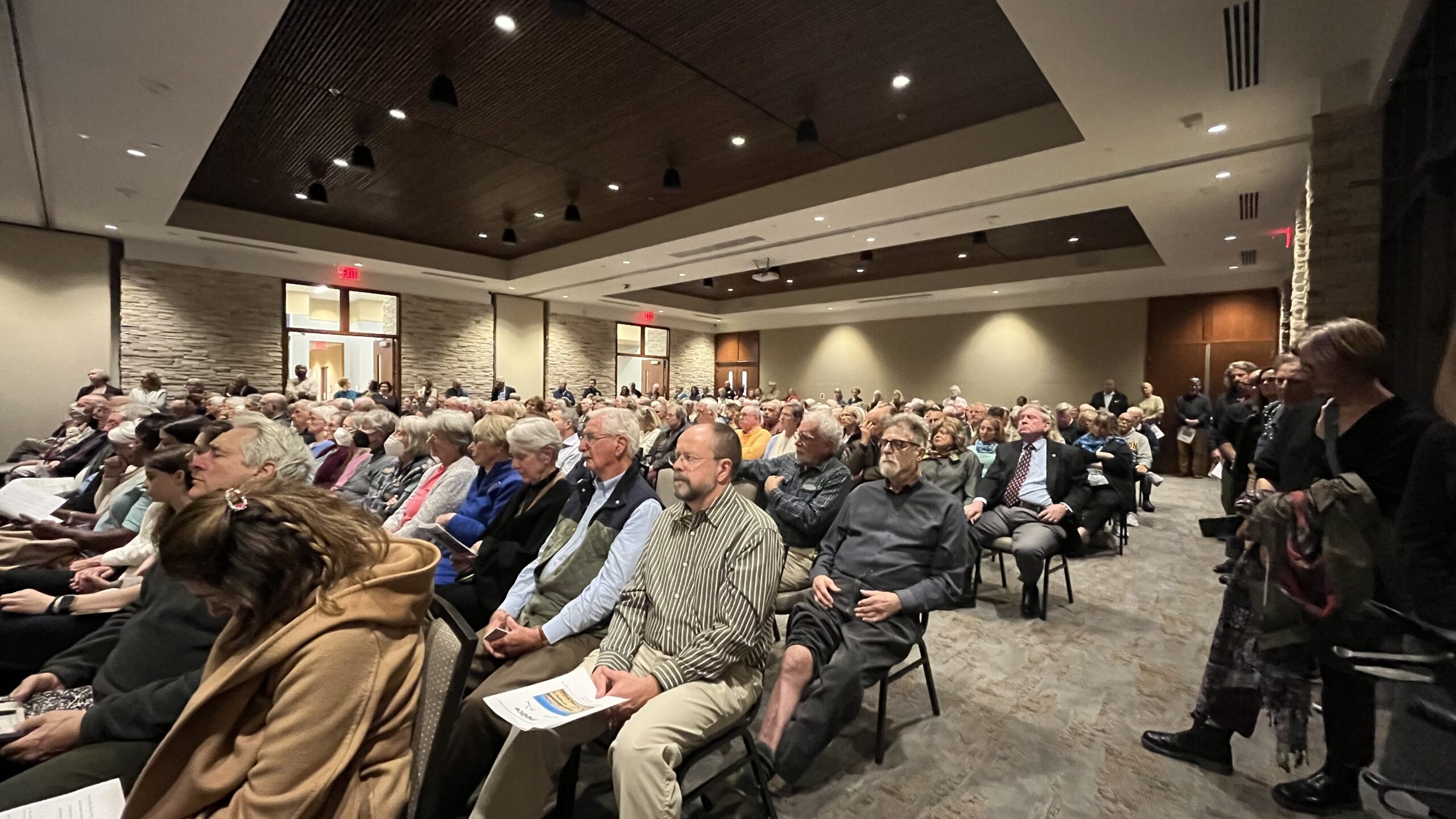
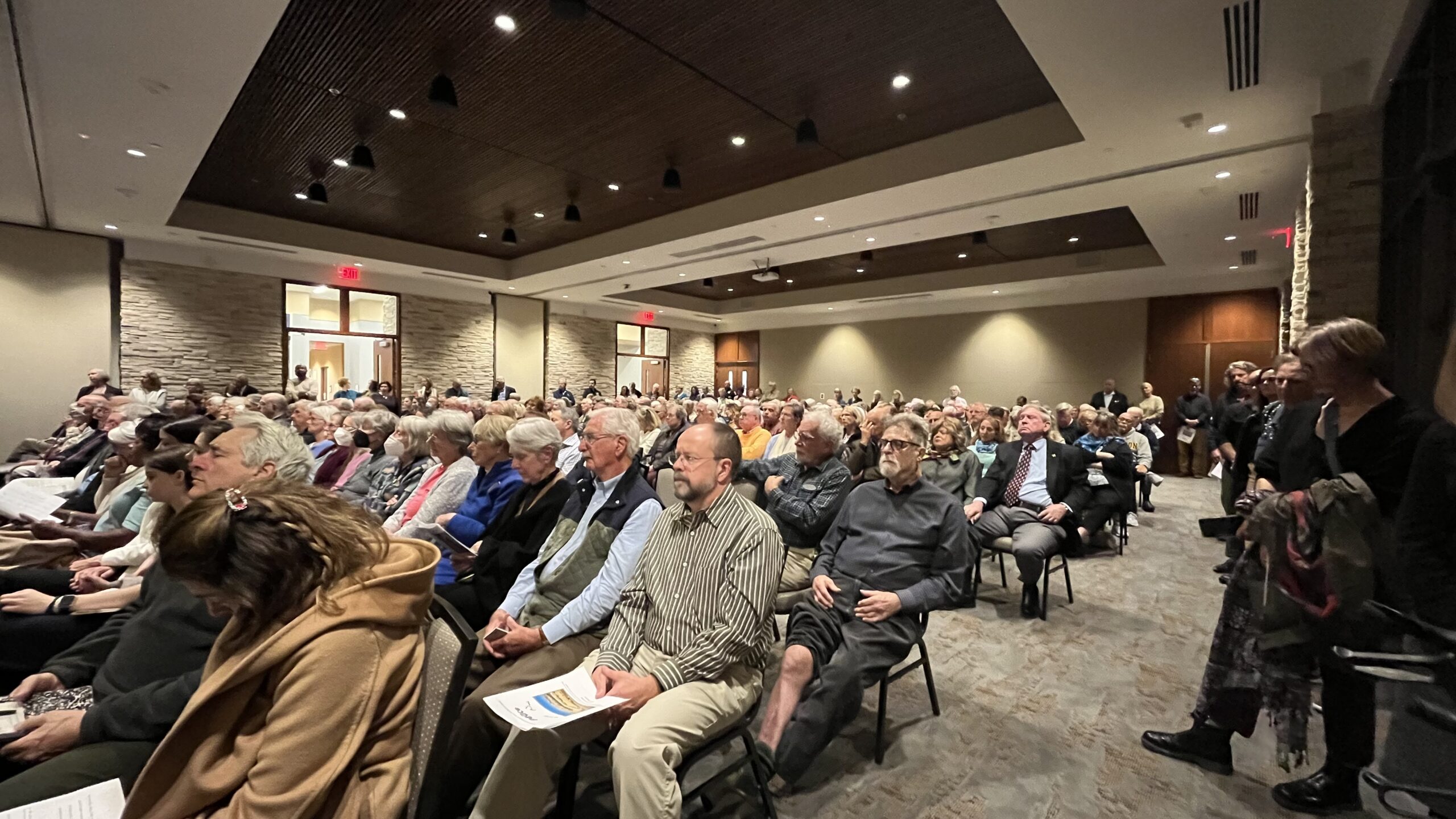
The Spy was part of an overflow crowd of 400 members of our community who attended a prayer vigil supporting Israel and mourning the loss of innocent lives held at Temple B’nai Israel in Easton on Thursday, October 29th.

The event was hosted by Rabbi Peter Hyman and an interfaith coalition of religious faith leaders, including Father James Nash of Saints Peter and Paul Roman Catholic Church, Reverend Sue Browning of the Unitarian Church, Rector Steven Mosher of Christ Church in St. Michaels and Kevin Cross, Rector of the Church of the Holy Trinity in Oxford. 

Together with members of their congregations, they came together to embrace the Jewish community in Talbot County and on the Mid-Shore, which has been reeling from the horrors of last week’s brutal attack on Israel. The standing room only crowd was overwhelmed by the heartfelt and beautiful words of support from the interfaith community.

One of those in attendance, Madeleine Cohen, said: “Each of the faith leaders who spoke was distinctly moving in their messaging and delivery, conveying much appreciated sympathy and compassion during this time of crisis.”

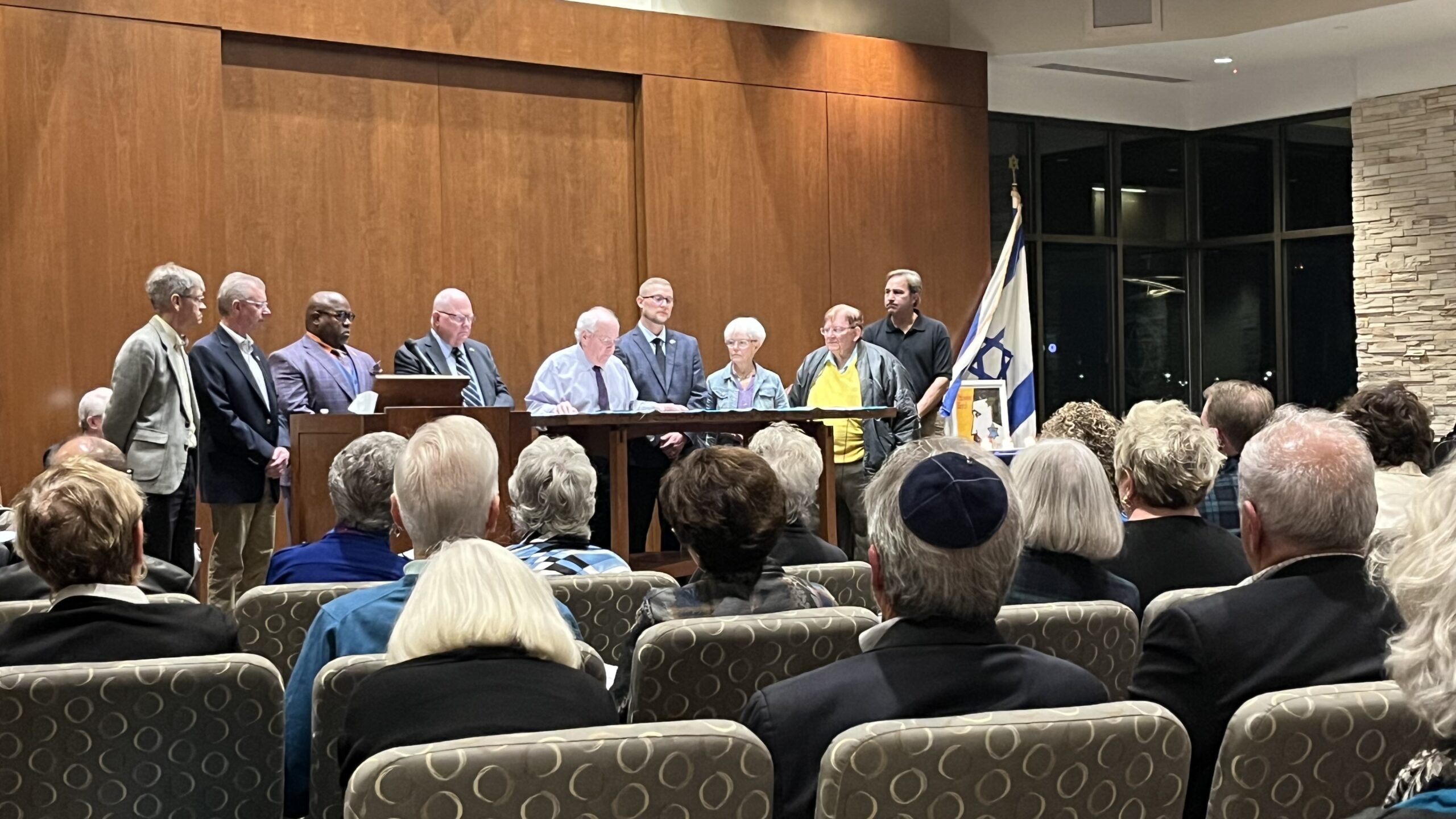
Temple member Sharon Berg, a citizen of Israel with a second home in Talbot County, read aloud a selection of harrowing real-time text messages from her friends and neighbors in Israel, describing the horror of war and the resiliency of the Jewish people. In a stirring show of support, a cadre of local officials, including state senators, town and county council members, and other community representatives, stood shoulder to shoulder on the pulpit with Rabbi Peter Hyman as he read a proclamation from the Town of Easton.

The vigil reminded us that from time to time, it is essential to turn off the news and be with people, light candles, read responsively, bow our heads in prayer, and realize that we are not alone. 


The Spy Newspapers may periodically employ the assistance of artificial intelligence (AI) to enhance the clarity and accuracy of our content.

Filed Under: 2 News Homepage, News Portal Highlights

Meet the 572-megawatt Gorilla of the Chesapeake Bay

October 20, 2023 by Maryland Matters

A view of the Susquehanna River from the Conowingo Dam, looking south. Photo by Bryan P. Sears.

It was early morning on a patio just outside the Conowingo Dam, and Mike Martinek was looking at hundreds of juvenile eels that had been suctioned from the Susquehanna River into a giant freshwater pool. Martinek, a fisheries biologist for an environmental consulting firm, and a couple of colleagues were planning to truck the eels a couple of hours north into Pennsylvania, past Harrisburg, and dump them near spawning grounds upriver.

“We’re the eel Uber,” Martinek laughed.

Many of these eels, who are generally 2 to 4 years old, were hatched in the Sargasso Sea, in the Atlantic, and have been propelled by tides to the Conowingo Dam, almost randomly.

“They could be from Georgia or Norway,” Martinek said. “It’s a mixing bowl. You just don’t know.”

Some 200,000 eels will pass through the dam this year, many using a chute that simulates a creek.

“We’re the only eel collection facility on the Susquehanna, and one of the biggest on the East Coast,” said Andrea Danucalov, manager of regulation and licensing at the dam — in short, the environmental compliance officer.

That this daily activity is the first thing that Constellation Energy officials showed a couple of reporters who had come recently for a tour of the mighty Conowingo Dam may not be a coincidence.

Throughout the three-hour visit, company executives repeated over and over how important environmental stewardship is to Constellation, especially at the dam, a pressure point for myriad marine and animal species. In fact, the tour guides said, environmental considerations go into every decision the company makes about the operation of the dam. And Conowingo, they say boldly, is at the cutting edge of the fight to address climate change in the state: it’s far and away the largest producer of renewable energy in Maryland.

Up and down the corporate food chain, company officials at Constellation and its predecessor entities have made the same assertions for years. It’s almost as if the main purpose of the dam — generating hydropower at Conowingo for the past 95 years — is an afterthought. But maybe that’s to be expected.

In the broad debate over the health of the Chesapeake Bay, Conowingo Dam is in many ways the 800-pound gorilla in the conversation — or to put it more precisely, the 572-megawatt gorilla, the maximum level of electricity the dam can generate on an annual basis, which is enough to power about 165,000 homes. That prevents 867,000 metric tons of carbon emissions from going into the atmosphere every year, the company estimates — the equivalent of taking 186,000 cars off the road.

But recently, Constellation’s environmental performance is back in the news, after the state of Maryland, responding to a court order, reopened the process for issuing a clean water operating permit for the dam, which Constellation needs to be granted a new 50-year operating license from the federal government. After taking public comments over the past several weeks, mainly from the parties involved in prior lawsuits over the dam, but also, more informally, from everyday folks, the Maryland Department of the Environment is poised to issue a decision on the permit fairly soon.

The environmental group that monitors the health of the Susquehanna River in the vicinity of the dam believes the permitting process needed to be reopened, arguing that the administration of former Gov. Larry Hogan (R) cut corners when it reached a settlement with Constellation in 2019 — and that Constellation has to do a better job of protecting the waters that create great profits for the company.

“They have to stop being in denial,” said Ted Evgeniadis, executive director of the Lower Susquehanna Riverkeeper Association. “That’s the first step — admitting you have a problem.”

Constellation executives, however, believe that the settlement that led to the Hogan administration waiving water permits, which in turn prompted the Federal Energy Regulatory Commission to issue a 50-year license, represents a high point of cooperation between the company, government officials, environmentalists and other stakeholders.

“We know what the solutions are,” said Kathleen Barrón, executive vice president and chief of strategy for Constellation. She urged the state to preserve “the intense work” stakeholders did leading up to the 2019 agreement with the state.

Constellation executives also note that the Lower Susquehanna Riverkeeper Association is the only regional environmental group that has vocally called the company’s supervision of the dam into question (leaders of other green groups maintain they largely defer to the riverkeeper organization on matters of the Conowingo Dam).

And Constellation officials are quick to tick off the environmental and financial benefits to the state, to the Chesapeake Bay, and to the Bay watershed. Constellation, they say, does more to protect the Susquehanna, the Bay and the watershed than any other private entity. Extending the company’s license another 50 years will generate more than $700 million in financial and environmental benefits to the state, the company maintains.

When the company isn’t shepherding eels through the dam, it’s operating a fish lift that gets tens of thousands of American chad, river herring and other species through the works — and also stops many invasive species from getting into the Bay. The company also has a bald eagle management plan in place, as the area just south of the dam is one of best spots to see migrating and nesting eagles anywhere in the U.S.

Evgeniadis, at the Riverkeeper Association, predicts that the state’s upcoming decision on the water quality permit will produce one of three results: Incentives for environmentalists and Constellation to return to the bargaining table; a decision that environmentalists like and prompts the company to sue; or a decision that Constellation likes and prompts the riverkeeper association to sue.

But this battle over the water quality permit is just the latest environmental fight involving the Conowingo Dam. Though it’s not universal, there’s a general fear and loathing over the dam in the Upper Bay region, not just among environmentalists, but also watermen, local elected officials, and business and civic leaders.

Every year, the Clean Chesapeake Coalition, a loose confederation of leaders in the Upper Bay area, holds a standing room-only meeting at the Maryland Association of Counties summer conference. Every year, the participants complain about environmental regulations they consider onerous and about pollution that comes from upriver, mainly from agricultural sources, in Pennsylvania — narratives that seem almost contradictory. And they complain about the Conowingo Dam.

“When you try to find out about the integrity of the dam, the safety of the dam, you can’t really tell what’s going on,” Charles “Chip” MacLeod, general counsel for the coalition, said at the most recent meeting.

An architectural wonder 

The Conowingo Dam itself is an architectural and engineering wonder, and the craftsmanship and handiwork of the industrial era are very much in evidence everywhere, even as modern energy generation becomes more automated. Constellation has been careful to keep all of the 1920s architectural infrastructure and flourishes intact, and a visit to the dam, notwithstanding some of the technology used to run it these days, seems very much like a trip to a bygone era.

To start construction of the dam, in the 1920s, a vast concrete wall had to be sunk 40 feet below the riverbed. The dam has 11 gates with massive turbines that impact the river flow and the amount of energy the dam is generating. Only twice have all 11 gates been open — once during a storm in 1934, and again during Hurricane Agnes, considered the most damaging in the region’s history, in 1972.

Inevitably, a tour of the Conowingo Dam takes a visitor to the reservoir on the north side of the hulking structure, across U.S. Route 1, where tons of debris collects and is prevented by the dam from flowing downriver and into the Chesapeake Bay. This is undoubtedly the most controversial aspect of the Conowingo and the flashpoint for the years-long animus between various stakeholders and the company.

On a recent morning, the visible debris mainly consisted of logs, tree limbs and other natural detritus, but also included tires, balls, large plastic bins, diapers, planters, and other refuse. On this windy but pleasant day, the accumulation seemed fairly benign.

But there is a constant fear among communities downriver that violent storms or even higher than average flooding could send much of the waste tumbling down the dam, which was built at a place in the Susquehanna where there is a 200-foot elevation drop, and into the river and the Bay beyond.

“I’m not trying to be alarmist, but a catastrophic failure — there would be all kinds of impacts, including environmental impacts,” MacLeod said.

Here, the more conservative members of the Clean Chesapeake Coalition and the environmentalists who run the riverkeeper organization are basically in accord. Evgeniadis accuses Constellation of “turning a blind eye to the massive problem that’s behind them” at the dam.

The riverkeeper says the reservoir abutting the dam is supposed to be at least 100 feet deep, but now with all the silt and other debris that has accumulated through the decades, they believe it’s more like 12 or 15 feet deep in parts, increasing the threat of dangerous materials spilling over the dam and into the river below. Constellation representatives said the average depth ranges from about 15 feet to about 40 feet, with the deepest point, about 80 feet, immediately upstream of the powerhouse.

Some neighbors of the dam, including many of the leaders of the Clean Chesapeake Coalition, would like to see the reservoir dredged. They note that the silt that’s dragged from the river’s bottom could be used to reinforce coastal areas and other and waterfront communities in the region.

But Constellation executives believe the idea is impractical and expensive, and here they seem like they are in accord with the riverkeeper organization.

“It’s inevitable that the reservoir behind that dam would fill up [with silt and debris] again,” Evgeniadis said.

The debris currently bobbing in the water nestled against the dam will be collected by boom, placed on a barge, to a landfill and recycling area a few miles up the river, in Pennsylvania. Constellation estimates that it removes 600 tons of garbage and debris from the dam area every year and that its debris removal efforts, combined with ongoing research into improving ways to remove refuse from the area, produce benefits valued at $41 million.

‘A public resource for private profit’

The Conowingo Dam does not operate in a vacuum. While it’s the biggest dam on the Susquehanna — indeed it’s the biggest power-generating dam on the entire East Coast — there are three other dams upriver in Pennsylvania, owned by different companies, and what happens at those facilities can impact Conowingo. In a fact sheet on Conowingo, Constellation maintains that the dam operators upriver “have not committed to the same debris removal activities” as Constellation.

What’s more, the dam is susceptible to extreme weather, and other swift changes in natural conditions.

“I never thought when I took this job I’d become a weatherman,” said Amir Hassad, an engineer who is the dam manager.

In its efforts to be a good corporate citizen, Constellation maintains a large riverfront promenade at the base of the dam that’s popular with fishermen, bird watchers, picnickers and nature lovers, and is a gateway to hiking trails maintained by various public, private and nonprofit entities. Just up the road from the dam, the company offers a public pool, a visitors center and a history museum.

Evgeniadis does not discount the company’s good works, but notes that Constellation is “taking a public resource for private profit.”

“They’re not going to be able to operate in the same way they’ve been operating it for the last 100 years,” he said. “Things are going to have to change.”

So the battle lines are drawn, pending a decision from the Maryland Department of the Environment. Jay Apperson, an agency spokesperson, said last week that MDE did not have a timetable for issuing the new water permit.

Environmentalists and other neighbors warn that the dam presents a huge potential threat to communities, public health, the environment, marine life and wildlife. Constellation executives insist that without their environmental stewardship and vigilance, conditions throughout the region could be much worse.

After a visit to the dam and its environs, it’s easy enough to conclude that both assertions can be true at the same time.

By Josh Kurtz

The Spy Newspapers may periodically employ the assistance of artificial intelligence (AI) to enhance the clarity and accuracy of our content.

Filed Under: 2 News Homepage, Eco Portal Lead, News Portal Highlights

« Previous Page
Next Page »

Copyright © 2026

Affiliated News

  • The Chestertown Spy
  • The Talbot Spy

Sections

  • Arts
  • Culture
  • Ecosystem
  • Education
  • Mid-Shore Health
  • Culture and Local Life
  • Shore Recovery
  • Spy Senior Nation

Spy Community Media

  • Subscribe
  • Contact Us
  • Advertising & Underwriting

Copyright © 2026 · Spy Community Media Child Theme on Genesis Framework · WordPress · Log in