

If there were a need for proof that Talbot County Councilmembers do indeed listen to the community before voting on bills before them, last night’s action to kill the controversial short-term rental bill 1622 would be a good example.
The ongoing debate over the short-term rentals proposal took a surprising turn last night when the County Council effectively ended Bill 1622, a major proposal to overhaul the STR system. The bill would have created two classes of rental licenses, imposed new spacing limits on non-owner-occupied rentals, and tightened the review process by changing applications, hearings, renewals, and enforcement. Supporters said the reforms were needed to protect neighborhoods and address workforce housing pressures, while opponents argued the existing system was functioning well.
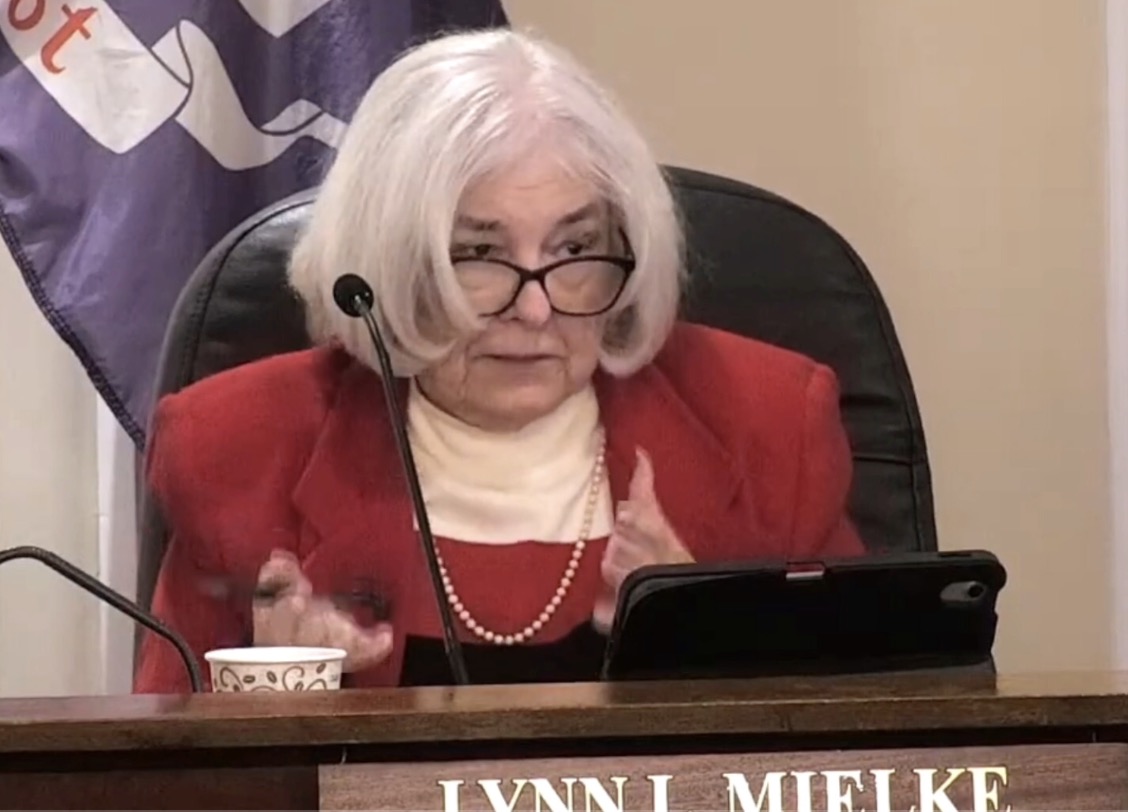
When the bill came up for action, both of its sponsors—Council Members Pete Lesher and Lynne Mielke—announced they were withdrawing their support. With no sponsors remaining, Council President Chuck Callahan confirmed that Bill 1622 would die, either immediately for lack of sponsorship or automatically on January 1 if left inactive. The move came after weeks of sharply divided testimony from residents, STR owners, and community groups.
Lesher said he concluded the bill failed to fully address concerns from either side and needed a deeper rethink. Mielke, while standing by the motivations for reform, argued that the county must go further, especially in the TR and TC zones where residents say STRs are affecting housing availability. She pointed to state-wide efforts to update STR laws. She emphasized the need to balance tourism benefits with the county’s housing needs before bringing any future legislation back through the Planning Commission.
Here are their comments in full.
This video is approximately five minutes in length.

Keith Alan Watts says
The “solution in search of a problem” finally found one:
Itself.
Here’s a fact-based take on what unfolded last night with the withdrawal of Bill 1622:
Why It Was Withdrawn
By the time the bill was ready for a final (as Mitch McConnell was fond of saying) “up or down” vote, there was no third vote — the outcome was already mathematically determined. The wink and a nod subsequent sponsorship withdrawals simply, if painfully, reflected that political reality.
Compounding the problem was the late discovery that TR zoning designations had been excluded from the bill, a personal mission of one proponent, with no legal pathway remaining to correct that glaring omission. At that point, passage was no longer feasible.
These are not judgments of motive, but observable legislative facts.
Political Implications
For now, Bill 1622 is politically dead, though it is widely expected to resurface in another incarnation. Like a zombie. Its future relevance will likely shift into the next election cycle as part of broader policy positioning.
Separately, from a strictly factual standpoint, multiple recent policy efforts related to short-term rentals and development have not resulted in enacted legislation. That is neither an endorsement nor a criticism, but a record of outcomes.
Data Presented at Withdrawal
Several statistics cited from the dais in support of “withdrawal” are/were inconsistent with previously available (and provided from Planning and Zoning) data. At minimum, the information was incomplete. At worst, it created a misleading public impression.
Bottom line: Truth never met that information.
Process and Stakeholder Participation
The bill was developed through a narrow, exclusionary process. If legislation of this scope returns:
• The Short-Term Rental Review Board should be formally included.
• Businesses, shops, restaurants, watermen, tourism operators, the Chamber, Economic Development and working residents whose livelihoods depend on the county’s economy should also have a meaningful voice at the table.
High-impact policy should not be developed as a fait accompli, without broad stakeholder input.
Bottom Line
The bill was not withdrawn due to compromise — it was withdrawn because the votes were not there.
After nearly a year of public process and significant investment of time (thousands of hours) from the County Council, County Attorney, Planning & Zoning, The Planning Commission, County Staff (both in Planning & Zoning and the County Manager’s Office) and STR stakeholders, the outcome ultimately amounted to political, emergency room triage rather than durable policy or good governance.
When legislation collapses under its own weight after nearly a year, the public is entitled to understand the structural reasons why. One possible conclusion is that the proposal never achieved broad public or institutional support in the first place.
As I mentioned at the beginning, at the end of the day, the “solution in search of a problem” finally found one:
Itself . . . .
Mary Smith says
Bill 1622 died because short term rentals were never the real problem. They are a symptom of a larger issue in Talbot County. Families and professionals have very few ways to earn a living here because the county has restricted almost all opportunities for real businesses, trades, and light industry. Investors cannot build anything that produces a return, so short term rentals becomes the only viable use left for capital.
Talbot County created this entire debate by choosing a waterfront brand over a balanced economy. The county exalted scenery while shutting down the commercial base that once supported working families. If Talbot wants less pressure on short term rentals, it needs more places where people can work, invest, and build a future. Allow real commerce and industry, and the demand for rentals will settle itself.
=Hugh M Smith says
Once again, I applaud the author on the exercise of her First Amendment Right. Ms. Smith is certainly entitled to her own opinions.
Lets, however, take a look at the facts:
Until the 1940s and 50s, Talbot County was an agricultural based economy (the number one employer). There really was no manufacturing or primary employment. What was the “commercial base that once supported our working families” that Ms. Smith refers too?
IN the 1950s Talbot was “discovered” by affluent pre-retirees and retirees from the Washington D.C. Metroplex. This demographic was drawn to the County due to its location proximate to the large population centers of the Mid-Atlantic; they were seeking privacy (the most valuable amenity), uncongested roads, good healthcare, and a spectacular natural landscape. There is no active amenity here in Talbot County such as ski mountains or oceans that power similar communities. These urban refugees paid (and to this day pay) dearly for their retirement homes, gave back generously to our community (think Hog Neck, the Talbot Community Center, The Academy of the Arts, Easton Memorial Hospital, and too many more to mention.) and they created large numbers of primary employment. Would all the trades, the landscapers, the restaurants, the retirement homes, and the medical sector exist without this primary employment infrastructure.
Once called “The Hamptons” of the Mid-Atlantic, the amenity of Talbot County is being eroded as our roads system becomes congested, our creeks and rivers die from non-point source pollution, privacy dissapears, historicity is disregarded, and our public infrastructure groans other the weight of “growth ” and “progress”. Is the demand for waterfront real estate inelastic? I suggest its not. What happens when a future generation looks at our fair County and sees another Glen Burnie? That possibility will destroy job growth, primary employment, and progress. I respectfully suggest we are approaching that point.
Be careful what you wish for Ms. Smith. You just might get it. Greed is a powerful force.
P.S. Don’t you think that “short term rentals becomes the only viable use left for capital” is just a tad hyperbolic?
Hugh Smith (no relation)
Mary Smith says
Talbot County was never just agriculture and retirees. It had canneries, marine trades, mills, rail served businesses, shops, and local services embedded in its villages. Zoning eliminated those uses. That is documented history, not nostalgia. An economy where workers exist only to serve retirees is not healthy or just. It is dependency.
What is described as preservation is really the protection of a single amenity economy at the expense of everyone who cannot buy into it. Congestion and pollution are not caused by villages having jobs. They are caused by forcing the entire county to drive to one town for work, care, and services. Short term rentals did not create this pressure. They filled the vacuum left when commerce and industry were zoned out. That is basic land use economics.
People should absolutely enjoy their homes and privacy. But that cannot justify blocking opportunity for everyone else when the consequences show up as child hunger, addiction, workforce flight, isolated seniors, and missing basic services. Allowing villages to grow with modest jobs and services is not sprawl. It restores nearby work, care, and support systems that even retirees rely on.
George Grinnell says
Ms. Smith, you come to these comment sections making assertions that do not hold up to rigorous examination. If you think zoning was the reason why canneries and mills left Talbot County, you should consult any basic economics text of the 20th century. Please do us all a favor and identify one single business in Talbot County that was actively zoned out of business, as your comment directly implies. Forces far beyond zoning decisions, which are endlessly reinterpreted, are shaping the economy of Talbot County and it is reductive to lay all of the things you perceive as society’s ills at the feet of zoning policy.
Mary Smith says
Mr. Grinnell, the issue isn’t that zoning issued eviction notices. It’s that zoning froze almost all land around villages and towns into conservation and agricultural-only use, eliminating any realistic space for commerce, trades, or light industry to exist or grow.
Historically, Talbot’s villages and crossroads had small retail, contractor yards, food processing, warehouses, boat building, mills, and service businesses. Today, those uses are either prohibited outright or confined to tiny cottage-industry categories with strict limits on employees, trucks, and activity, which makes growth impossible. Once a business closes, zoning prevents any modern replacement.
The villages themselves are now largely restricted to single-family housing with very few allowed commercial uses, while everything outside them is locked into conservation. That land-use structure ensured that new jobs, services, and local businesses could not reappear. Anyone who compares historical records with today’s permitted-use tables will see the disconnect immediately.
Robert Haase says
As the proponent for density controls in Talbot County Town Residential and Village zones, Mr. Watts thinks I am a lone soldier, that is far from true. A petition requesting the TR zone from many, along with independent letters from other residents are included in Bill 1622 and are on record. It should be noted that every community in Easton and St. Michaels that has the same type of zoning has far more restrictions than Bill 1622 asked for. Yes, I’m sure a new Bill will be coming forward and yes it will include density controls in the Villages and Town Residential zones and have language that will allow neighbors who may object to an application in their neighborhood be taken seriously by the Short-Term Rental Board. Since the Board has been in place not one STR has been denied in spite of several that had significant opposition from neighbors.
Finally, it should also be noted Mr. Watts is or at least has been a multiple STR owner, and he seems quite confident Bill 1622 would have failed on a 3-2 vote. How does he know this? Only Mr. Stepp was on record as saying he would not vote for the passing.