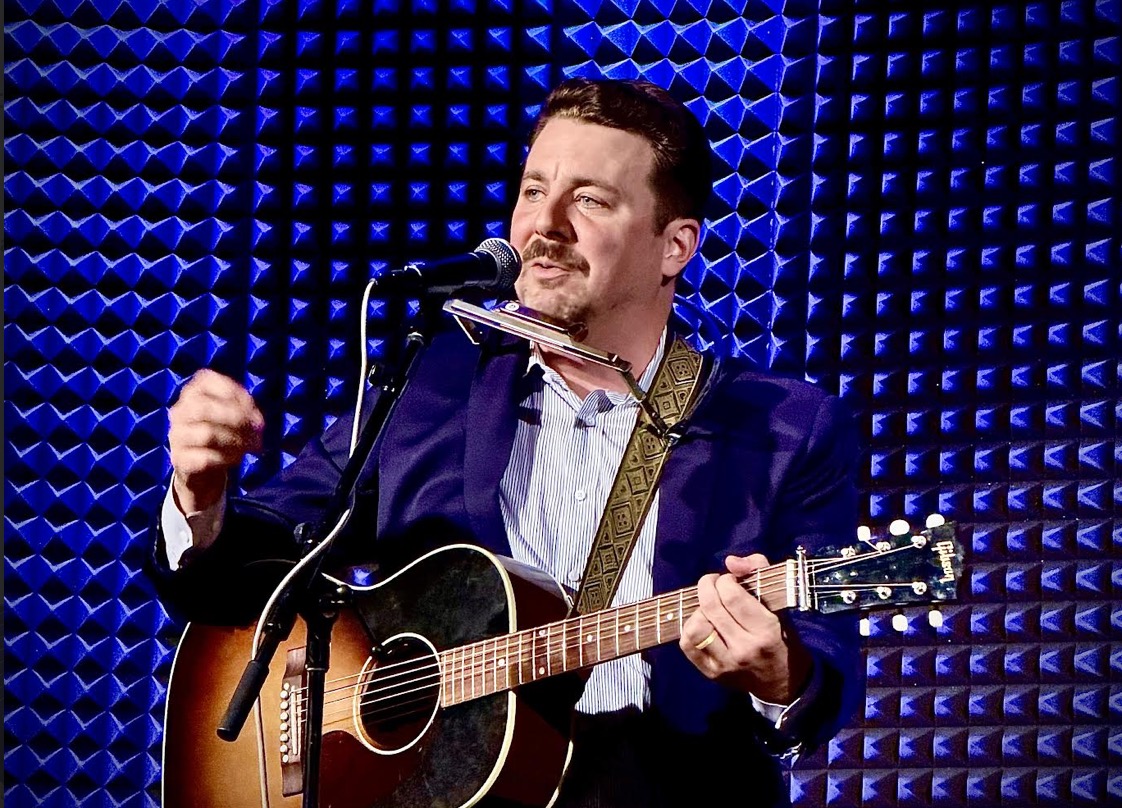


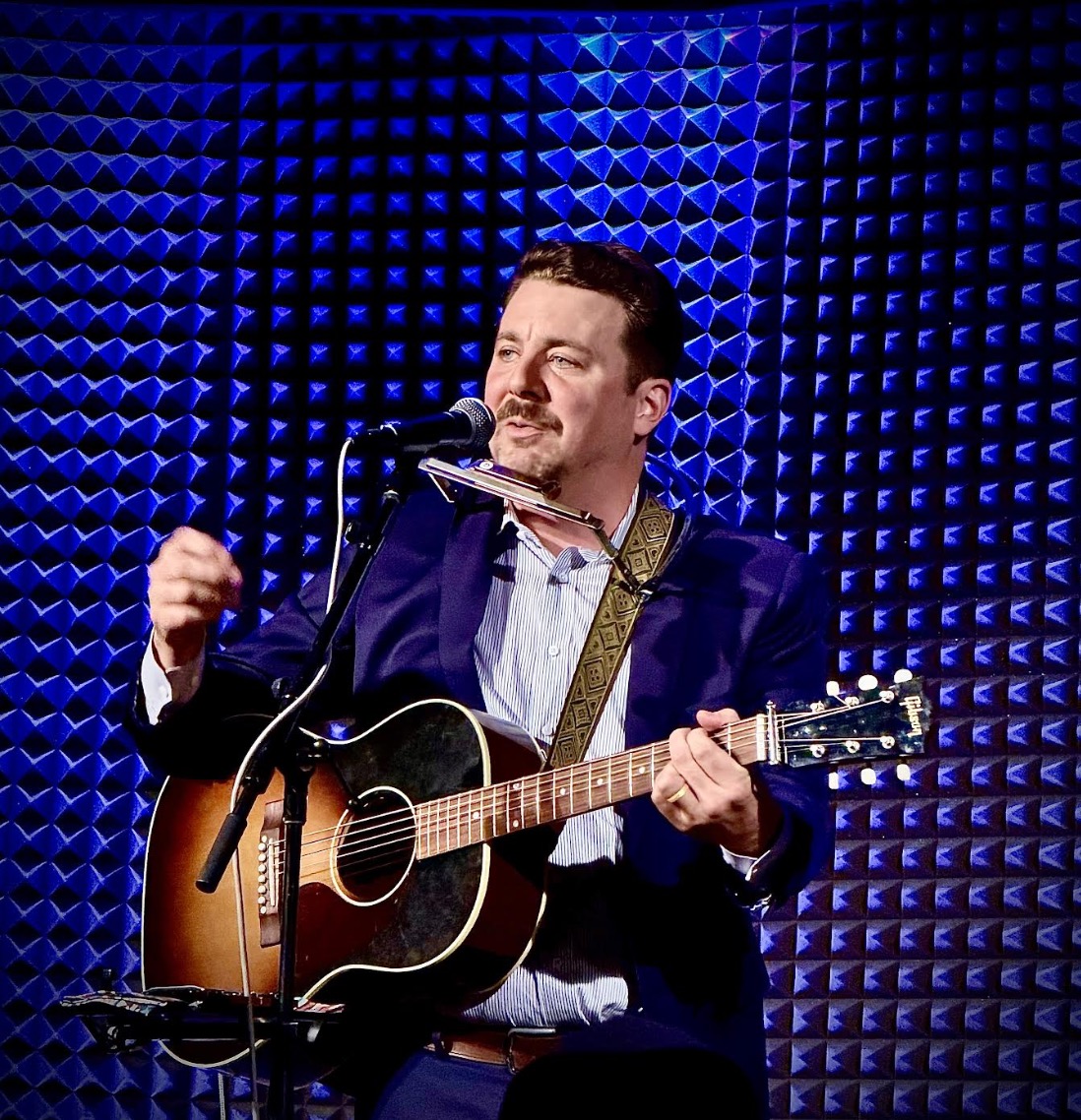
When Joe Pug sang, “I’ve come to test the timber of my heart,” Friday night at the Avalon Theatre’s Stoltz Listening Room, it sounded less like a lyric than a mission statement. His stripped-down set was built on faith, doubt, and passion that demanded — and rewarded — close listening, treating belief less as comfort than as a question to be lived with.
Sc
Since the release of his debut album, Nation of Heat, in 2009, Pug has earned a reputation as a songwriter who wrestles openly with faith, responsibility, and failure. In recent years, that same sensibility has extended beyond the stage through his Working Songwriter podcast and personal newsletter, where he reflects on craft and the realities of making a life in music.
That sensibility was evident from the opening song. Pug began with “Treasury of Prayers,” from his most recent albums, 2024 album Sketch of a Promised Departure. It was an almost devotional choice that immediately set the tone. The song is structured as prayer, but not the reassuring kind — more examination than affirmation. It unfolds as a litany of requests, mixing aspiration with self-knowledge. “That faithful’s not a word that I cannot define,” he sang, before adding, more practically, “And if that’s too much to ask, that my hangovers are brief.” The prayers are earnest but imperfect, grounded in the gap between who the singer wants to be and who he is.
As the song widened, so did its scope. Pug prayed for children who could “recognize beauty” and “recognize a liar,” and who might someday “work to build cathedrals they won’t live to pray inside of” — faith measured in responsibility rather than reward. Near the end, the song turned personal and vivid: “That it feels just like a memory when my father calls me home / Like I’m racing under streetlights back to dinner on the stove.” It felt less like nostalgia than arrival — the sense that a long moral and spiritual search had finally found its shape.
“Hymn #35,” from Nation of Heat (Revisited), followed. Even when he writes songs titled like prayers, Pug refuses easy absolution. “I have done wrong, I will do wrong / There’s nothing wrong with doing wrong,” he sang, before undercutting certainty again: “I am faith, I am belief / Except for when I’m not.” Faith and doubt sat side by side, unresolved and unapologetic.
From the same recent period came “No Place a Good Man Can Hide,” a song Pug has described as his response to the maxim “no good deed goes unpunished.” “When every revolution is sponsored by the state,” he sang, “there’s no bravery in bayonets and tearin’ down the gates.” The line from “I Take My Father’s Drugs” landed even harder: “If you see me with a rifle / Don’t ask me what it’s for / I fight my father’s war.” In a catalog defined by moral reckoning, few moments feel blunt.
Between songs, Pug’s dry humor surfaced — a release valve that kept the evening from mistaking seriousness for sanctimony. He joked about the oddness of making a living singing folk songs in 2026, especially given his upbringing. Raised by hippies, he said, rebellion came with complications — a tension between inheritance and independence that runs quietly through much of his work.
Pug’s songwriting places him in conversation with writers who treat faith not as reassurance but as material. There are echoes here of Josh Ritter, in the willingness to engage biblical language as moral framework, and of Jason Isbell, in the attention paid to consequence and accountability. But where others resolve or dramatize belief, Pug tends to leave it exposed, something to be tested rather than settled.
Older songs drew audible recognition. “How Good Are You” opened with one of Pug’s best lines — “I was born into a circus / But I ran off to join a home” — before offering its quiet warning: “If you shut up with what you’ve chosen / You’ll hear something choosing you.” From 2012’s Deep Dark Wells, he reminded the audience, “As long as you’re not finished, you can start all over again,” a line that sounded both forgiving and demanding.
One of the night’s lighter moments came with “I Don’t Work in a Bank,” a wry, John Prine– or Todd Snider–adjacent song delivered deadpan. “You don’t get to taste the top shelf / When your bottom line is blank,” he sang, before landing the refrain.
“Chesapeake,” an older song he said he rarely plays, felt especially grounded in place. Driving over the Bay Bridge on his way to Easton, he said, the song felt right. “Forget all the things my soul does seek,” he sang. “I guess the moment is best when the moment is brief.”
Late in the set, Pug broke up his own run of solemn originals by covering John Prine’s “Sam Stone,” introducing one of the saddest songs ever written. “There’s a hole in daddy’s arm where all the money goes,” he sang, the line landing with the same quiet devastation it always does.
By the time Pug sang, “I’ve come to test the timber of my heart,” late in the set, the point had already been made. His songs resist easy comfort, insisting instead on attention, reflection, and moral reckoning. In the attentive quiet of the Stoltz Listening Room, that insistence felt like a fair exchange.
Mark Pelavin, the founder of Hambleton Cove Consulting, is a writer, consultant, and music lover living very happily in St. Michaels.

Write a Letter to the Editor on this Article
We encourage readers to offer their point of view on this article by submitting the following form. Editing is sometimes necessary and is done at the discretion of the editorial staff.