MENU

Sections

  • Home
  • About
    • Contact Us
    • Editors and Writers
    • Join our Mailing List
    • Letters to Editor Policy
    • Advertising & Underwriting
    • Code of Ethics
    • Privacy
    • Talbot Spy Terms of Use
  • Art and Design
  • Culture and Local Life
  • Public Affairs
    • Ecosystem
    • Education
    • Health
    • Senior Life
  • Community Opinion
  • Sign up for Free Subscription
  • Donate to the Talbot Spy
  • Cambridge Spy

More

  • Support the Spy
  • About Spy Community Media
  • Advertising with the Spy
  • Subscribe
November 15, 2025

Talbot Spy

Nonpartisan Education-based News for Talbot County Community

  • Home
  • About
    • Contact Us
    • Editors and Writers
    • Join our Mailing List
    • Letters to Editor Policy
    • Advertising & Underwriting
    • Code of Ethics
    • Privacy
    • Talbot Spy Terms of Use
  • Art and Design
  • Culture and Local Life
  • Public Affairs
    • Ecosystem
    • Education
    • Health
    • Senior Life
  • Community Opinion
  • Sign up for Free Subscription
  • Donate to the Talbot Spy
  • Cambridge Spy
News Maryland News

Bill Aims to make Stricter Storage Laws for Firearms

March 1, 2020 by Capital News Service

A bill in the Maryland General Assembly changes the language of existing law in prohibiting an individual from storing a firearm — loaded or unloaded — in a location where an unsupervised minor “could” gain access to it.

Under current law, “a person may not store or leave a loaded firearm in a location where the person knew or should have known that an unsupervised child would gain access to the firearm,” according to a legislative analysis.
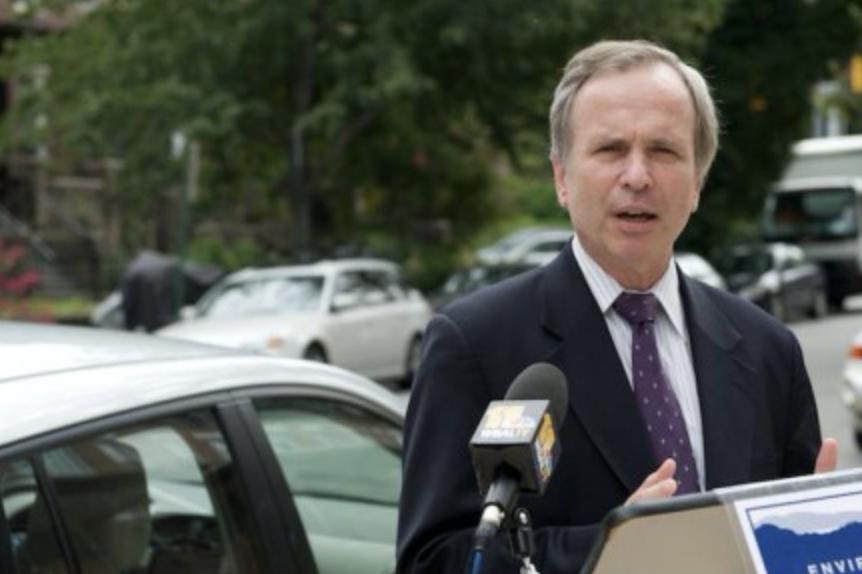
Delegate Dana Stein, D-Baltimore County

The proposal comes as a result of accidents where minors have gained access to a family member’s, friend’s or parent’s firearms and either accidentally shot themselves or others, committed suicide or committed a school shooting, the legislation’s lead sponsor, Delegate Dana Stein, D-Baltimore County, said at the bill’s hearing on Feb. 19.

“We have amendments to ensure youth can participate in all the hunting and shooting activities they can under law now,” Stein said.

A co-sponsor of the bill, House bill 636, Delegate Lesley Lopez, D-Montgomery, told Capital News Service on Feb. 19 that she was a survivor of a school shooting and that “firearm bills are important to me in that regard.”

She said that though the bill had failed to advance last year, with new leaders in the state House and Senate, the legislation is expected to have a better chance this time around.

At the bill hearing, Delegate Robin Grammer Jr., R-Baltimore County, raised the question of what is reasonable storage of a gun.

Stein responded that all law is generally subjective and pointed out that current law may be subjective as well.

The identical Senate bill had a hearing on Feb. 20 with the lead sponsor being Sen. William Smith Jr., D-Montgomery.

“Changing the ‘would’ to ‘could’ is a radical change because it would literally require prescience for (an) owner to know what a child, any child, under the age of 18 ‘could’ do,” Mark Pennak, the president of Maryland Shall Issue, a gun-rights group, said in written testimony in opposition to both the Senate and House bills.

Those in favor of the legislation cited a lesser risk in having access to guns and striving to eliminate youth suicides, accidental killings and school shootings.

“Household guns contribute overwhelmingly to youth suicides and unintentional shootings among children,” Baltimore County Executive John Olszewski Jr. wrote in testimony in support of the bill.

Stein told Capital News Service that there are many ways of keeping a firearm away from a minor, including but not limited to purchasing a gun safety lock.

Melissa Willey, whose daughter, Jaelynn Willey, died in a 2018 shooting at Great Mills High School in Lexington Park, Maryland, testified in support of the bill.

Willey’s daughter was shot by another student who used his father’s gun.

“Safe storage can prevent these horrible events. I am requesting this law be passed in memory of Jaelynn and for Jaelynn. In hope that this never happens to another person again,” Willey said.

By Fatemeh Paryavi

The Spy Newspapers may periodically employ the assistance of artificial intelligence (AI) to enhance the clarity and accuracy of our content.

Filed Under: Maryland News Tagged With: Gun control

Maryland Might Feel Economic Strain of Novel Coronavirus on Mid-March or April

February 29, 2020 by Capital News Service

Marylanders might notice fewer goods in stores by mid-March or April due to the effects of the novel coronavirus on the global supply chain, the acting director of the Port of Baltimore told lawmakers Friday.

An expected shipment to the Port of Baltimore has been cancelled for the first time because of the virus — due to a lack of goods.

Meanwhile, state leaders in Annapolis are urging Marylanders not to panic.

The ship, which typically would contain 1,800-2,000 large shipping containers of household goods, was expected to arrive in late March after stops at Asian ports including China, an official said. Without enough merchandise to ship out, it is no longer scheduled to sail to Baltimore.

Less merchandise from China means fewer goods like food, clothing and “big box” electronic goods will flow into stores, Acting Executive Director David Thomas told Capital News Service. He said Friday morning that the West Coast is getting hit the hardest with 81 cancelled shipments so far.

“That is going to have a significant impact,” Thomas told lawmakers. “When you start going to the store, eventually, you’re going to have an issue where what you want to buy, the right size, the right color — whatever — is not going to be there.”

About 2,000 ships dock at The Port of Baltimore each year. The proportion of ships coming from Asia has risen in the last decade to about 30% of the port’s arrivals, a port spokesman told Capital News Service.

Thomas said U.S. companies don’t have goods to ship here because their Chinese factories haven’t been producing as many goods as that country deals with the outbreak.

The risk of transmission from sailors to dock workers is less of a worry in Baltimore because the virus is thought to have a maximum 14-day incubation period, according to the Maryland Health Department website. That’s far shorter than the 37 days it takes to make it to Baltimore from China by cargo ship. Vessels are also required to notify the U.S. Coast Guard 96 hours before they enter U.S. waters and say whether anyone on board is sick.

The company that operates the Seagirt Marine Terminal, Ports America Chesapeake, is cutting back their hours of operation starting Monday because fewer goods are arriving, a Port of Baltimore spokesperson said Friday. The port has six public terminals.

Still, Thomas could not say how much this could impact the Maryland economy.

“It’s really difficult to say at this point,” Thomas told Capital News Service. “I don’t think my crystal ball is that clear.”

The 95 cruise ships that operate out of the Port of Baltimore are less of a concern because they are a “closed-loop system” that generally sends United States citizens to the Bahamas and other Carribean locations before looping back, Thomas said.

Still, the Port of Baltimore announced Thursday new measures being taken to combat the virus among passengers.

Both Carnival and Royal Caribbean cruise lines have begun screening for anyone who has been to areas impacted by the coronavirus or had contact with someone who has. If the answer is yes to either question, that passenger won’t be allowed on the cruise. The terminal operator, Intercruises, will provide additional medical screening to passengers with passports from impacted areas.

During a press conference Thursday at the state’s Maryland Emergency Management Agency in Reisterstown, Gov. Larry Hogan, R, announced he would submit a $10 million supplemental budget to cover emergency preparedness expenses.

As of Friday, five Maryland patients had been approved for COVID-19 testing, with three cases pending at the Centers for Disease Control, according to the Maryland Department of Health. Two other cases in Maryland have already tested negative for COVID-19.

The virus has been confirmed in six U.S. states, not including cases of people who have returned from overseas via U.S. State Department flights, according to the CDC.

During a press conference Friday, the World Health Organization announced China reported 329 cases in the last 24 hours, the lowest total in more than a month. So far, more than 78,000 cases have been reported in China, with more than 4,300 cases and 67 deaths in 49 other countries, said Tedros Adhanom Ghebreyesus, the WHO Director-General.

Sen. Clarence Lam, D-Howard and Baltimore counties, told Capital News Service Friday “the economic concerns are high” for a potential novel coronavirus outbreak in Maryland.

Lam said the state’s location puts it at the crossroads of many different economic sectors on the East Coast.

He added that the Port of Baltimore, Baltimore/Washington International Thurgood Marshall Airport and the state’s service industry put it at a greater risk of economic harm, but repeatedly urged Marylanders to stay calm.

“Until we have a better sense of the spread of the disease, I think the public should not panic at this point.”

Lam, a physician who also works as an assistant scientist at the Johns Hopkins Bloomberg School of Public Health, said he wouldn’t be surprised if the World Health Organization categorized the outbreak as a pandemic “fairly soon,” given its trajectory.

Senate President Bill Ferguson also urged Marylanders not to panic in remarks he made from the Senate rostrum on Friday. He emphasized that the Senate would work closely with Hogan’s office on “common talking points.”

“The biggest concern that we have right now is the panic,” Ferguson, D-Baltimore, said. “It is really important that we are prepared and so that, in the case there is an issue with the virus, that we are ready to handle it as we would any other issue.”

Lam said the best ways to help prevent the spread of the disease are the same “common sense” precautions used for the common cold and flu, such as washing hands, covering the mouth when coughing or sneezing and staying home if someone begins to show symptoms.

“People can take very basic precautionary practices that prevent them from getting the virus,” he said.

But Lam stressed the importance of remaining calm and emphasized there have been no confirmed cases in Maryland and limited cases nationwide.

He urged people to avoid a run on antiviral medications in case health workers need them but suggested that families should plan how they will communicate with each other if common communication methods don’t work. He said people should have a supply of medication they require for chronic issues and other basic supplies they may need.

Lam said it was important for people to avoid the novel coronavirus “hype” and make sure they are receiving factual information as the situation develops.

“There’s still a lot we don’t know at this point,” Lam said. “People need to be aware of what’s going on and stay informed.”

By Ryan E. Little and Jeff Barnes

The Spy Newspapers may periodically employ the assistance of artificial intelligence (AI) to enhance the clarity and accuracy of our content.

Filed Under: Archives Tagged With: coronavirus

Former Baltimore Mayor Sentenced in Children’s Book Scandal

February 28, 2020 by Capital News Service

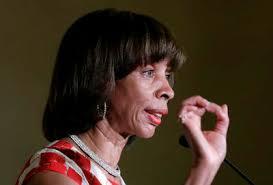
Former Baltimore mayor and “Healthy Holly” author Catherine Pugh, who wrote her own downfall by fraudulently selling children’s books to organizations with which she was politically connected, was sentenced to three years in federal prison on Thursday.

Pugh must also forfeit the Baltimore home she holed-up in last year as the scandal grew. The home is part of a $669,688 forfeiture order imposed on her in addition to the $411,948 restitution she must repay after her release.

The sentence punctuated the spectacular downfall of a major American city mayor whose transgressions made national headlines.

Pugh resigned in disgrace last year after revelations of a scheme that federal prosecutors said began when she was a Maryland senator and continued until agents raided her home and Baltimore City Hall in April.

On Thursday, Pugh apologized to the citizens of Baltimore and her supporters during brief remarks to the media, saying she has “learned a lot of lessons.”

“I will take those lessons with me. I will continue to listen, learn, and I don’t think this is the last chapter for Catherine Pugh,” she said. “I look forward to regaining my strength, my zeal, my love for the people of the city.”

Pugh, a Democrat, pleaded guilty to four charges of tax evasion and fraud in November.

Prosecutors had alleged that she sold thousands of copies of books but never printed enough to actually deliver on the contracts she earned through political connections.

U.S. District Court Judge Deborah K. Chasanow had to weigh two competing sentence recommendations for the nearly 70-year-old former mayor. Prosecutors had recommended a sentence of nearly five years. Her defense attorneys asked for a sentence of one year and one day. The extra day would have made her eligible for early release based on good behavior.

Pugh’s attorneys argued that the public embarrassment and financial ruin she has already endured, her years of service to the community, and her age should outweigh the crimes she committed.

Pugh told the judge before the ruling that she took “full responsibility” for her own shortcomings.

“I am disappointed in myself,” she said. “I did turn a blind eye … because I did that, my life will never be the same.”

At least 77 letters were submitted to the court on Pugh’s behalf. Many asked the judge to consider her “high moral character” and public service while weighing her crimes. Five people spoke on behalf of Pugh, including Kurt Schmoke, a former federal and state prosecutor and Baltimore mayor, now president of the University of Baltimore.

Prominent Baltimore leaders, church and family members, and mentees like a former security guard, who told the court Pugh’s encouragement was the reason he became a Baltimore police officer, wrote letters.

Kweisi Mfume, who won the special Democratic primary to replace the late Rep. Elijah Cummings in Congress in a heavily Democratic district, suggested in his letter to the court that no jail time might be most appropriate.

“I don’t know personally if justice is better served by sending her to jail at age 70, or by mandating instead, that she spend several years under court ordered supervision,” Mfume wrote.

“This option seems to me at least, to have more value. Her skills and the accumulated knowledge she has gained over the years could be of valuable assistance to those community service groups, charities, and organizations in need of experienced assistance.”

Other prominent Baltimoreans who urged the court to show leniency included Quincey Gamble, executive director of the Maryland Democratic Party, and David Wilson, president of Pugh’s alma mater, Morgan State University. Wilson told the court the charges she pleaded guilty to have taken a toll.

“One thing is certain from interactions I have had with Catherine Pugh: She understands the tremendous mistake she made, which has resulted in the loss of the job that she has coveted for years,” Wilson wrote. “Her mistake has taken a toll on her health and her overall well-being.”

In her ruling, Chasanow said she considered Pugh’s past good deeds and age, but saw a disconnect in the positive perception some have of Pugh. She said that she hadn’t heard an explanation for the crimes that made sense.

“I find it ironic that so many people continue to laud her public work,” Chasanow said.

“It’s astonishing to me. I think we are all shocked.”

In Annapolis, where Pugh served in the Maryland Senate and House before being elected Baltimore mayor in 2016, some Democratic legislators have called for leniency, including Sen. Jill Carter, D-Baltimore.

Multiple Republican leaders were unwilling to comment before Thursday’s sentencing, including Gov. Larry Hogan.

Hogan has introduced legislation to increase penalties for public corruption in this legislative session; he declined to comment to Capital News Service through his spokeswoman.

Republican leaders in the General Assembly were also not willing to comment this week to Capital News Service.

Senate Minority Leader J.B. Jennings, R-Baltimore and Harford counties, declined to comment Tuesday, calling Pugh a friend. House Minority Leader Nicholaus Kipke, R-Anne Arundel, also declined to comment, telling the Capital News Service he was worried he would upset other lawmakers.

“It’s too hostile around here,” he said.

House Minority Whip Kathy Szeliga, R-Baltimore and Harford counties, was willing, though. She said Pugh deserved a tough sentence.

“Sending a message that corrupt politicians are not above the law is important,” Szeliga said Tuesday.

”Using children to defraud people from your power of authority, being a senator or mayor, that’s far worse than what (others convicted of corruption) did.”

Pugh ultimately fraudulently resold 132,116 copies of “Healthy Holly “ books to the University of Maryland Medical System and other organizations for a total of $859,960, according to documents filed by federal prosecutors. U.S. Attorney Robert K. Hur said the sentence sends a message to public officials.

“Baltimore City faces many pressing issues, and we need our leaders to place the interests of the citizens above their own,” Hur said in a statement. “Catherine Pugh betrayed the public trust for her personal gain and now faces three years in federal prison, where there is no parole—ever.”

It is unclear when Pugh will have to voluntarily surrender to federal authorities. She must notify the court by April 13 if she has not been notified. After incarceration, she will have to serve three years of supervised release.

It is unclear how Pugh will be able to repay the court-ordered restitution of $411,948 once she is released. Her lawyers said she is financially ruined.

Chasanow set her repayment plan at a standard temporary amount.

If left unchanged, Pugh will have to make monthly payments of $100.

By Ryan E. Little

The Spy Newspapers may periodically employ the assistance of artificial intelligence (AI) to enhance the clarity and accuracy of our content.

Filed Under: Maryland News

Arts Advocates pin Budget Hopes – Again – on Congress

February 27, 2020 by Capital News Service

As they have every year of the Trump presidency, supporters of federal funding for the arts are looking to Congress to reject the administration’s latest proposal to reduce or eliminate spending for a host of high-profile organizations.

President Donald Trump’s proposed $4.8 trillion “Budget for America’s Future” for fiscal 2021 would eliminate federal cultural agencies that fund the arts and humanities, libraries, museums, public television and radio. It’s the fourth consecutive year he has sought the cuts.

Released Feb. 10, the budget plan calls for the elimination of four independent cultural agencies: the National Endowment for the Arts, the National Endowment for the Humanities, the Institute of Museum and Library Services, and the Corporation for Public Broadcasting.

Under a section titled, “Stop Wasteful and Unnecessary Spending,” the Trump budget introduced plans to cut these agencies because they are not considered “core federal responsibilities.”

But Americans for the Arts President and CEO Robert L. Lynch called the budget proposal “misdirected.”

“For more than 50 years, the NEA has expanded access to the arts for all Americans, awarding grants in every congressional district throughout all 50 states and U.S. territories, particularly benefiting communities that have fewer opportunities to experience the arts,” Lynch said in a statement.

AFTA is a nonprofit organization that promotes support for the arts.

Rep. Brian Higgins, D-New York, tweeted that “#TrumpBudget fails to recognize the economic return on investments in the arts.”

“This call to zero out budgeting, again, for the NEA is truly mind boggling,” said Robin Bronk, CEO of the nonprofit, nonpartisan Creative Coalition, which advocates for the arts and entertainment communities.

“The facts speak overwhelmingly to support the outsized contribution the arts make to the economy and society,” she said.

The Creative Coalition’s president, actor and producer Tim Daly, said “eliminating funding for the NEA would be devastating to communities whose only access to the arts comes from projects made possible by NEA grants.”

Despite a divisive congressional climate, bipartisanship has prevailed not only to reject previous Trump proposals to cut the arts, but also to boost funding to NEA and NEH.

The total budget for both agencies was at a 10-year high in 2020, for a total of $162.25 million.

“I expect to see similar action by Congress this year, and hopefully a $7.75 million increase,” Lynch said.

Trump’s budget plan defined core federal government functions as national security, cybersecurity, targeted violence reduction, immigration control, drug enforcement and addressing the opioid epidemic.

The 2021 budget calls for cuts of $30 million to the NEA and $33.4 million to the NEH, which would eradicate both agencies.

The Corporation for Public Broadcasting and the Institute of Museum and Library Services would also be eliminated.

“To meet these challenges (of the 21st century) and seize opportunities, we must shift the government out of its old and outdated ways,” Trump wrote in the budget message.

His budget document asserted that “there are hundreds of programs in the Federal Government that have outlived their mission, duplicate efforts, or operate below peak efficiencies because of fragmented responsibilities between agencies.”

“The wasteful spending has been a contributing factor to the government’s deteriorating fiscal health.” the document said.

Assistant Treasury Secretary Monica Crowley told Fox Business at the time of the budget’s release that “the president understands that Washington’s habit of out of control spending without consequence has to be stopped before it threatens the economic prosperity that we are all enjoying.”

The Trump administration wants to cut budgets for programs such as social welfare, foreign aid and housing. Increased spending would be slated for the military, the border wall and NASA.

Trump’s overall budget landed with a thud in the House, controlled by the Democrats.

“The federal budget is supposed to be a statement of national values,” House Speaker Nancy Pelosi, D-California, said in a statement. “Once again, the president is showing just how little he values the good health, financial security and well-being of hard-working American families. The president’s budget is anti-growth, does not create good-paying jobs and increases the national debt.”

House Budget Committee Chairman John Yarmuth, D-Kentucky, called the spending proposal “destructive and irrational.”

“President Trump’s latest budget fails the American people and takes a wrecking ball to America’s economic future,” he said.

By Charlotte Parker Dulany

The Spy Newspapers may periodically employ the assistance of artificial intelligence (AI) to enhance the clarity and accuracy of our content.

Filed Under: 6 Arts Notes Tagged With: Arts Funding

Bill Looks to Make Single-Occupant Restrooms Gender-Neutral

February 22, 2020 by Capital News Service

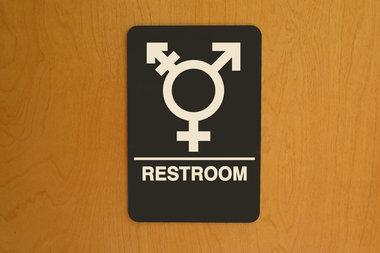
Many public places in Maryland would be required to make their single-occupant bathrooms gender neutral under legislation in the state’s General Assembly.

The proposed law would require public facilities to change their pictorial or gender-exclusive signage for single-toilet bathrooms to gender neutral, according to the bill’s state legislative analysis.

It would apply to places of “public accommodation,” including hotels, theaters, sports venues, restaurants and other similar facilities.

The lead sponsor of Senate bill 401, Sen. Cheryl Kagan, D-Montgomery, told Capital News Service last week that new signs could be purchased online for as little as $15.

The bill would make more restrooms available for women, who tend to wait in lengthier bathroom lines than men, Kagan said at the hearing Wednesday.

She added that it would ensure that people with disabilities wouldn’t need to navigate the building in order to find a gender-specific restroom, as well as making it easier for parents and caretakers to enter the restroom in order to assist their family member or patient.

The bill would also aim to help people who are transgender to feel more comfortable using the single-occupant restrooms, she said at the hearing.

Localities would be allowed to set their own fines, not to exceed $250, under this legislation.

The bill has bipartisan support; Sen. Chris West, R-Baltimore County, is co-sponsoring the legislation.

Silvie Gallardo, the mother of an 8-year-old child from Bethesda, Maryland, said her son is on the autism spectrum, and testified in favor of the bill at its Wednesday hearing.

She said that she’s not asking lawmakers to provide an attendant for her son, she’s asking them to remove a label so that she can more comfortably help her son use the restroom.

The MoCo Pride Center submitted written testimony in support of the bill, writing that it would be more welcoming to “transgender, non-binary or gender nonconforming people.”

The bill also saw support from businesses. The Greener Kitchen in Baltimore submitted testimony in support of the bill, writing that it “prioritizes having gender inclusive restrooms in our space because we believe in making our restaurant accessible to all.”

An identical House bill, 1147, is set to have a hearing on March 3 led by sponsor Delegate Jared Solomon, D-Montgomery.

By Fatemeh Paryavi

The Spy Newspapers may periodically employ the assistance of artificial intelligence (AI) to enhance the clarity and accuracy of our content.

Filed Under: Maryland News

A ‘Life and Death Crisis’: Hogan Redesignates Crime Bills

February 21, 2020 by Capital News Service

Calling it a “life and death crisis,” — particularly in Baltimore — Maryland Gov. Larry Hogan, R, announced Thursday he will redesignate his violent-crime bill package as emergency legislation.

The emergency designation would allow the legislation, a package of bills led by a measure to increase penalties for certain gun crimes, to take effect immediately upon Hogan’s approval. The bills would first need to pass each chamber of the General Assembly with a three-fifths majority.

During a State House press conference, Hogan voiced his frustration with the Democrat-controlled General Assembly for focusing on a proposed multibillion-dollar overhaul of the state’s public schools — known as the Kirwan Commission plan — while failing to advance his violent crime package.

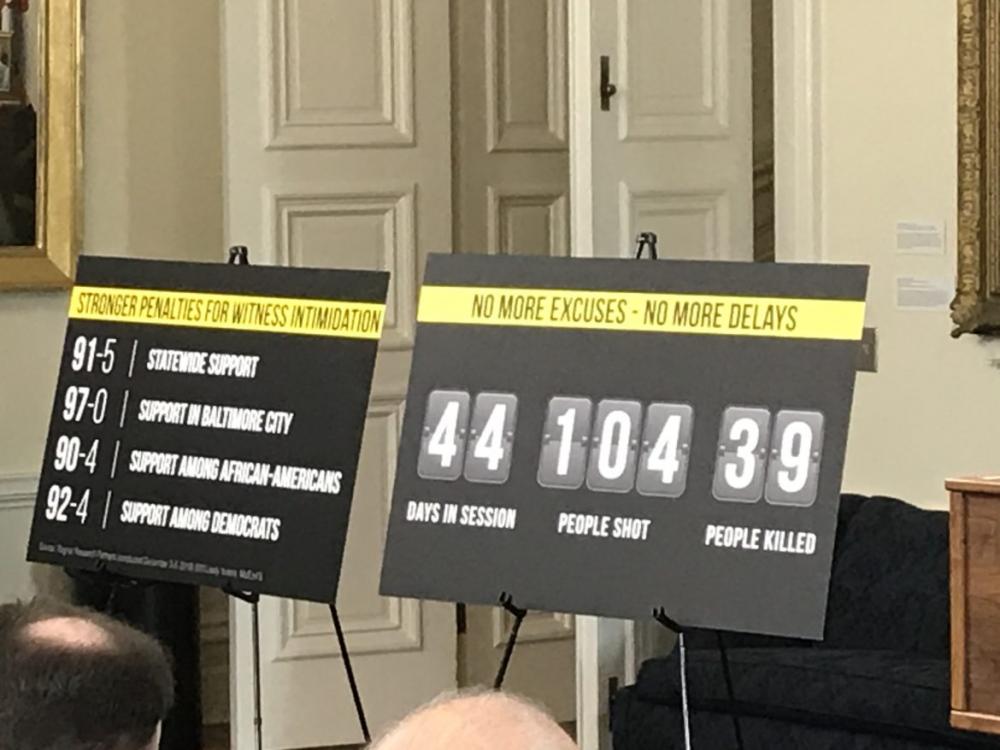
“We don’t want to hear any more excuses. There cannot be any more delays,” Hogan said.

Hogan’s bills — The Violent Firearm Offenders Act, The Judicial Transparency Act, The Witness Intimidation Act of 2020 and The Victims’ Right to Restitution Act of 2020 — have yet to advance out of the Senate’s Judicial Proceedings Committee since being heard on Feb. 6. The cross-filed bills were heard in the House Judiciary Committee on Feb. 4.

Maryland Senate President Bill Ferguson, D-Baltimore, took exception to Hogan’s claim that the legislature was not making crime a top priority.

“The bills have already been heard, I think it’s about making sure that they actually do something,” Ferguson said after the Senate session Thursday. “Not only have they gotten a fair hearing, they are a constant conversation of our leadership.”

During his press conference, the Republican governor scoffed at a comment made Monday by Baltimore Mayor Bernard C. “Jack” Young during testimony for Kirwan-related legislation, in which the Democrat mayor called the schools plan “a matter of life and death.”

Since the 2020 General Assembly session began Jan. 8, Hogan said, 104 people have been shot and 39 people have been killed in Baltimore.

“The actual and the only life and death crisis is the people being shot and killed every single day on the streets of our largest city,” Hogan said.

Hogan’s office has repeatedly cited a January Gonzales Maryland poll, which identified crime as the top issue among 31% of 838 registered voters, compared to 16% who deemed education the top issue. Hogan said during the news conference that the public overwhelmingly supports his proposed crime-prevention legislation.

“I don’t believe there have ever been bills on any subject that have ever had more enthusiastic and nearly unanimous support,” Hogan said. “The public is literally crying out, pleading with the legislature to take these actions.”

The Baltimore Sun reported Thursday that the Democrats were unlikely to pass the Violent Firearms Offender Act — Hogan’s signature crime bill — as they oppose the bill’s mandatory minimum sentences for certain gun crimes. In that article, Hogan suggested that lawmakers who don’t support his legislation are out of touch with voters and should consider stepping down.

During the Senate floor session Thursday morning, Ferguson gave an impassioned defense of Sen. William “Will” Smith Jr., D-Montgomery, the chair of the Senate committee that heard Hogan’s bills. Smith, a lieutenant with the United States Navy Reserve, was deployed to Afghanistan before the conclusion of the 2019 session and was tapped this year to lead the committee. Ferguson said any calls for him to step down are “totally unacceptable.”

“There’s no question no one feels comfortable with where things are when it comes to the status of violence across the state,” Ferguson said. “The only solution will be when we come to the table together and solve it.”

After the session, Smith told Capital News Service he was grateful for Ferguson’s remarks and said Hogan was “engaging in hyperbole.”

“To wield tools of fear-mongering and shift the debate, you’re not helping anyone,” Smith said. “You’re not helping anyone in Baltimore.”

Smith said later Thursday he wanted more evidence that Hogan’s legislation would decrease gun violence and other crimes before he would support it.
Sen. Charles Sydnor, D-Baltimore City and Baltimore County, who also serves on Smith’s committee, told Capital News Service the committee has doubled up on voting sessions this week. He said the committee is considering all ideas to help solve the crime issue.

“I don’t think any one bill is being held up more than any other,” he said.

During the press conference, Hogan also took aim at Democratic legislation introduced Thursday that would expand the state’s sales tax to help fund the Kirwan plan.

Under House bill 1628, the state’s sales tax would be reduced from 6% to 5%, while being expanded to include professional services that currently aren’t taxed.

The addition of professional services, which would include things like legal services, daycare and landscaping, is expected to bring in an additional $2.6 billion a year.

Hogan said the tax increase is “not ever going to happen” during his term as governor.

“This will destroy everything we’ve done for five years,” he said. “It will destroy our economy.”

By Jeff Barnes

The Spy Newspapers may periodically employ the assistance of artificial intelligence (AI) to enhance the clarity and accuracy of our content.

Filed Under: Maryland News Tagged With: Crime

Trump’s Proposed Chesapeake Bay Cleanup Cuts Draw Fire

February 20, 2020 by Capital News Service

Members of Congress, state lawmakers and environmental groups are rallying against President Donald Trump’s 91% funding cut for Chesapeake Bay cleanup and restoration included in his 2021 fiscal budget.
“While the Trump administration continues to turn its back on the bay, we will keep fighting to protect one of our most precious natural assets,” Maryland Gov. Larry Hogan, a Republican, said in a statement.

For the fourth year in a row, Trump has suggested a drastic reduction in funding for the Annapolis-based Chesapeake Bay Program — which is managed by the Environmental Protection Agency and coordinates bay cleanup efforts by the federal government, the watershed’s six surrounding states – Maryland, Virginia, Delaware, West Virginia, Pennsylvania and New York – and the District of Columbia.

The program funnels about two-thirds of its budget to state and local efforts aimed at bay “restoration, protection and monitoring,” according to its website.

This funding drop to $7.3 million came weeks after both chambers of Congress passed a 16% increase in the program’s 2020 federal allowance and Trump signed off on the $85 million allocation. And just days before the budget proposal was unveiled on Feb. 10, the House voted to fund the program with $455 million spread over the next five years.

Trump proposed 90% slashes to the program’s funding in his budgets for the last two years and recommended nixing the program completely in 2017.

Congress has reversed these cuts in final spending bills. Chesapeake Bay supporters are hoping for similar congressional support this year.

“Since President Trump took office, we have worked on a bipartisan basis to prevent these damaging cuts — and last year we were successful in securing an even larger investment in the Bay Program,” Sen. Chris Van Hollen, D-Maryland, said in a statement. “As in years past, I will fight tooth and nail against this administration’s attempts to undermine bay cleanup, so we can preserve and protect this vital treasure for years to come.”

Van Hollen, who serves on the Senate’s budget and appropriations committees, has helped lead the charge to increase federal funding for the bay’s cleanup in recent years.

Hogan said he’ll use his position as chairman of the six-state Chesapeake Executive Council to garner bipartisan support for the restoration of funding.

Trump’s $4.5 trillion budget proposal also puts the bay in danger by cutting funding for the U.S. Geological Survey Bay Program, which received $5.7 million last year, and the National Park Service Chesapeake Gateways Program, which was allocated $3 million for 2020.

The lack of White House support for the program undermines the “trust, collaboration and partnership” between the states and the federal government established in the Chesapeake Bay Agreement, according to the nonprofit protection group the Chesapeake Bay Foundation. The cuts also would threaten clean water for the more than 18 million people who live within the watershed, the foundation said.

William C. Baker, the Chesapeake Bay Foundation’s president, said he looks forward to working with members of Congress on both sides of the aisle to ensure funding for the program is secured. This support is crucial with only five years to finish implementing the Chesapeake Clean Water Blueprint, Baker said.

No state within the watershed is completely on track to meet the water quality goals established by the blueprint, according to a 2019 Chesapeake Bay Foundation assessment, but Maryland is close to meeting its pollution-reduction goals by 2025.

“The administration is already attacking many of the bedrock environmental protections vital to the health of local rivers, streams, and the Chesapeake Bay,” Baker said in a statement. “This drastic cut could be the final nail in the coffin for science-based restoration efforts.”

By Bryan Gallion

The Spy Newspapers may periodically employ the assistance of artificial intelligence (AI) to enhance the clarity and accuracy of our content.

Filed Under: Eco Lead, Eco Portal Lead Tagged With: Bay Clean Up, Trump

Maryland bill would Restrict what Foods may be Labeled ‘Meat’

February 9, 2020 by Capital News Service

Foods made of animal tissues cultured from cells outside of the original animal, plants and insects could not be labeled “meat” in Maryland under a Republican-backed bill in the Maryland General Assembly.

Senate bill 188 is sponsored by Sen. Jason Gallion, R-Harford and Cecil, who called it “truth in advertising.” Eleven other GOP senators are co-sponsoring the legislation.

“Laboratory-grown meat will become more prevalent in the future, and this bill will proactively prevent these franken-meat alternatives from being labeled as meat,” Gallion said at Thursday’s bill hearing.

“We just think it’s unnecessary. Not only are our members in full compliance with all federal regulations on the subject, but we’ve even gone beyond that with our own guidelines,” Dan Colgrove with the Plant Based Foods Association told lawmakers Thursday.

“These products have to be very clearly marked as veggie, vegetarian or plant-based. That’s sort of the point, to offer alternatives to meat products.” Colgrove’s association represents more than 170 companies including Impossible Foods and The Tofurky Co., which make plant-based meat substitutes.

Cell cultured meat can not be purchased from stores yet, according to an email from Cathy Cochran, a spokesperson for the Alliance for Meat, Poultry and Seafood Innovation, an industry coalition representing five companies working on bringing cell-grown meat to the market.

In March, the U.S. Food and Drug Administration and Food Safety Inspection Service announced they would oversee the production of foods made from cells of livestock and poultry to ensure they are “safely and accurately labeled.”

The meat-labeling bill, if passed, would cost the state an estimated $66,500 in the program’s first year to hire one full-time public health worker who would develop regulations, do outreach and look into who would be affected, according to a state legislative analysis.

The analysis estimated the costs would decrease after the first year.

The Maryland Farm Bureau, a nonprofit that advocates for Maryland farmers and rural families, supports the bill.

Parker Welch with the Maryland Farm Bureau told Capital News Service on Tuesday that the bill would provide customers more transparency.

Welch said the bill would “provide a kind of consumer confidence in the product they’re buying, so when they pick up a package (of meat) at the grocery there’s no confusion in what they’re buying.”

Impossible Foods labels their products “plant-based meat,” and last year they worked with Burger King to introduce the Impossible Whopper, a burger that contains no beef, according to an Impossible Foods press release.

In an emailed statement, Impossible Foods told Capital News Service that the company, “stands for truth and transparency. That’s why our products are clearly labeled plant-based meat.”

In December, a federal court blocked Arkansas from enforcing a law that made it illegal for companies to use words like “burger” or “sausage” for non-meat products like veggie burgers, according to an American Civil Liberties Union press release.

The ACLU challenged the law on behalf of The Tofurky Co., which makes “plant-based burgers” and other meatless foods.

The Maryland bill is different from the Arkansas law in that it would not prevent companies from calling their products “burgers;” it only deals with what can be labeled “meat.”

In Thursday’s bill hearing, chair of the Senate Finance Committee, Sen. Delores Kelley, D-Baltimore County, asked Gallion what the harm is in labeling cell-grown meat, meat.

Gallion explained that this bill acts “preemptively” to protect meat industry farmers, while a milk labeling bill passed last year acted “reactively” in response to plant-based industries “piggybacking” off of the dairy industry’s Got Milk? campaign.

“I think it’s important to have some pro-agriculture bills that come out to support these hardworking farmers who are trying to make a living like everyone else,” Gallion told the committee.

Thirteen states, including Arkansas, have passed similar meat labeling restriction laws, according to a state legislative analysis.

Gov. Larry Hogan, R, signed into law Gallion’s legislation on milk labeling, which prohibits plant-based products, like soy or almond beverages, from being labeled milk — but only if 11 of 14 southern states also pass similar laws. Those states include: Alabama, Arkansas, Florida, Georgia, Kentucky, Louisiana, Mississippi, North Carolina, Oklahoma, South Carolina, Tennessee, Texas, Virginia, and West Virginia.

If that law does go into effect, it tasks Maryland’s Department of Health with developing and implementing milk labeling restrictions.

Don’t miss the latest! You can subscribe to The Talbot Spy‘s free Daily Intelligence Report here

The Spy Newspapers may periodically employ the assistance of artificial intelligence (AI) to enhance the clarity and accuracy of our content.

Filed Under: Maryland News Tagged With: Food, local news, The Talbot Spy

Md. bill would make Helmets Optional for most Motorcyclists

February 5, 2020 by Capital News Service

Helmets would no longer be mandatory for most motorcycle riders in Maryland under a bill expected to be heard in a state Senate committee Tuesday.

Senate bill 237 would make motorcyclists and their passengers exempt from wearing a helmet if the motorcycle operator is 21 or older, has at least two years of riding experience and has completed an approved safety course.

The legislation, in its current language, has been introduced in each session of the General Assembly since 2016 but has failed to advance out of committee each session. Last session, the bill failed to advance out of the Senate’s Judicial Proceedings committee.

The bill’s lead sponsor, Sen. Michael Hough, R-Frederick and Carroll counties, told Capital News Service before the hearing that he is hopeful the bill can advance to a vote on the Senate floor. Hough noted the bill is also supported by the chair of the Judicial Proceedings Committee, Sen. William “Will” Smith Jr., D-Montgomery.

Although he said he doesn’t ride a motorcycle, Hough said he agrees with supporters of the legislation who argue that it should be the rider’s choice to wear a helmet, and that helmets do not prevent motorcycle crashes.

“It’s not the role of government to protect you from yourself. The role of government is to protect you from doing harm to others,” Hough said. “As an adult in this country, you should have the freedom to make decisions like this if you want.”

In the past, the legislation has been opposed by AAA Mid-Atlantic, the Maryland Trauma Center Network, the Maryland Institute for Emergency Medical Services Systems and the Maryland Association of County Health Officers, among others.

The American Motorcycle Association, the country’s largest motorcycle rights advocacy group, supports voluntary use of helmets.

“Some view the helmet solely as a mechanical safety device, similar to a seat belt,” according to a position statement on the group’s website. “Many motorcyclists view the helmet as an accessory of personal apparel, and its use or non-use is connected with a chosen lifestyle and their right as adults to make their own decisions.”

Bob Spanburgh, executive director at ABATE of Maryland — the state’s largest motorcycle advocacy group — told Capital News Service before the hearing that his organization isn’t taking a position on wearing a helmet, but he said motorcyclists should get to choose for themselves.

“It’s our guiding principle,” Spanburgh said. “We don’t advocate for not wearing helmets, we advocate for the ability to choose whether we want to wear them or not.”

Spanburgh said his group has also advocated for other motorcycle-related legislation, including bills that would have allowed lane-splitting and would have prohibited residents from blowing yard waste into the street — creating potentially dangerous conditions for riders.

Spanurgh said sometimes motorcyclists’ rights can become an afterthought for some people.

“I don’t think it’s intentional,” he said. “If you don’t ride, I don’t think you really think about it.”

In a statement to Capital News Service, AAA Mid-Atlantic indicated it would once again oppose the legislation, citing state motorcycle crash statistics.

According to data released in April by the state’s Motor Vehicle Administration Highway Safety Office, the state has averaged 1,466 motorcycle-involved crashes a year over the last five years with an average of 69 fatal crashes per year.

“Because serious head injury is common among fatally injured motorcyclists, helmet use is essential,” wrote Ragina C. Ali, public and government affairs manager at AAA Mid-Atlantic, in a statement Monday. “We oppose repealing the helmet law, as it weakens existing traffic safety laws and puts motorcyclists at a greater risk of injury or a traffic fatality.”

Maryland’s current motorcycle helmet requirement — which requires all riders and passengers to wear the protective headgear — became law on Oct. 1, 1992.

According to a legislative analysis of the bill, as of December, 19 states and Washington, D.C., require all motorcyclists to wear helmets, while 28 states require only certain riders to wear helmets.

Michigan, Pennsylvania and Texas have exemptions for riders similar to those proposed in the Maryland legislation, according to the analysis.

If the legislation passes, Spanburgh said, he thinks about half of the state’s riders will continue to wear helmets. Spanburgh, who said he has been riding on the streets since 1983, probably won’t be one of them.

“Honestly, I would more frequently not wear one than wear one,” he said.

By Jeff Barnes

The Spy Newspapers may periodically employ the assistance of artificial intelligence (AI) to enhance the clarity and accuracy of our content.

Filed Under: Maryland News Tagged With: bike helmets

Bill allows Motorists to keep Driving Past Real ID Deadline

January 30, 2020 by Capital News Service

Maryland drivers who have their licenses confiscated due to Real ID non-compliance would be protected under legislation being heard this week in the General Assembly.

In 2005, the federal Real ID Act mandated that all U.S. residents obtain an updated identification card in order to travel on commercial aircraft and access federal facilities. The rule, which goes into full effect on Oct. 1, requires states to verify documentation that proves name, birth date and residence.

Those found driving with a license that expired for failure to comply with Real ID rules can have that license confiscated by police and may not continue to drive, as Maryland law requires drivers to be in possession of a valid license while driving.

But under this bill, drivers who have their license confiscated by police for Real ID non-compliance would have 90 days to submit necessary documents to the Motor Vehicle Administration.

The bills would exempt drivers during this 90-day period from being charged with failing to possess or display a driver’s license if pulled over for another infraction.

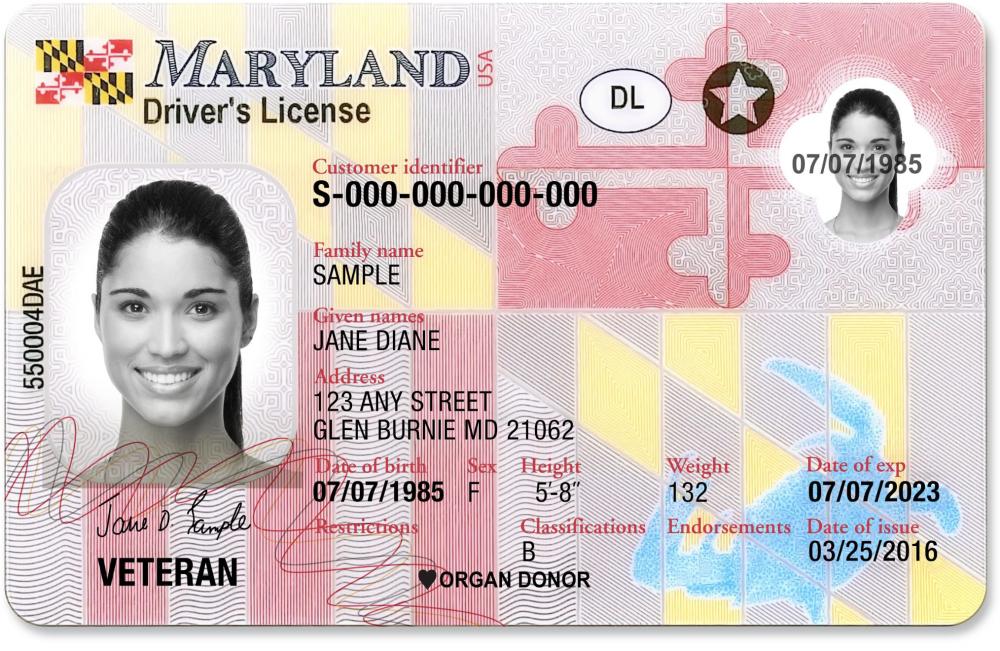
The MVA began issuing the more secure Real ID cards — those with the star in the upper-right corner — in 2016, but did not require the submission of the Department of Homeland Security’s required identification documentation until the beginning of 2018.

About 1.8 million Marylanders — including those who have a license marked with a star but have not yet submitted paperwork — are not yet Real ID compliant, according to data provided to Capital News Service last week by MVA spokesperson Whitney Nichels. Overall, about 61% of Marylanders are compliant, well above the 27% national average, Nichels wrote in an e-mail.

In December 2018, the MVA began notifying drivers in phases that additional documentation was needed to bring their licenses into compliance, issuing recall notices in advance of the Oct. 1 deadline, when a valid Real ID will be necessary to access federal facilities or board commercial aircraft.

The staggered deadlines were designed to ensure the department could provide “outstanding service” to all customers, Nichels wrote in an e-mail.

In July, law enforcement officials in Maryland began confiscation of those licenses that had been recalled due to non-compliance.

Lawmakers expect to hear House bill 28 on Thursday. The cross-filed Senate bill 173 was heard on Tuesday.

The House bill’s lead sponsor, Delegate Eric Ebersole, D-Baltimore and Howard counties, told Capital News Service that the process may be confusing for those drivers who have never had to provide the necessary documentation during previous renewals.

“This is an unusual thing for people to have to do,” Ebersole said. “They may not fully understand the whole situation.”

Ebersole said he spoke with several law enforcement agencies and some indicated they would enforce the confiscation of non-compliant licenses while others indicated they would not, fearing an “adversarial” position.

“When you do a traffic stop, you don’t know exactly who you’ve got there,” he said. “They say officers are very, very nervous when doing traffic stops, because they don’t know what person they’re going to be coming up on.”

In a Maryland State Police bulletin provided to Capital News Service, troopers are instructed on how to handle confiscation of recalled licenses. The bulletin reminds officers that possession of a recalled license is not probable cause for a traffic stop and to use “extreme caution” when charging someone for not possessing a driver’s license if that license was confiscated due to non-compliance.

During testimony on Senate bill 173 on Tuesday, Sen. Katie Fry Hester, D-Carroll and Howard, the lead sponsor, said the legislation would provide clarity for drivers and law enforcement in the coming months.

Sen. Ronald Young, D-Frederick, during Tuesday’s hearing questioned the 90-day grace period for drivers to bring their licenses into compliance after confiscation.

“If I get stopped and they take my license, I’m going to go into a DMV the next day or the next week,” Young said. “I mean, how much do we bend over?”

Sen. Susan Lee, D-Montgomery, said during the Senate hearing she wanted to hear from the MVA to provide clarity on the Real ID process; committee Chair William Smith, D-Montgomery, said they would request information from the agency.

“We need to do something about it, so that some people don’t fall between the cracks,” she said.

In addition to several mailings to affected customers, the MVA has extended hours, opened new annex locations in Columbia and Parkville to help serve customers, and offers more than 28,000 appointments a day, guaranteeing customers will be seen within 15 minutes of their appointment time.

Brian Zimmer, president at Keeping IDentities Safe, a Washington, D.C.-based non-profit that aims to educate the public about the importance of secure identification, said Maryland’s MVA had a “phenomenal” roll-out of the Real ID program, calling the department one of the top five in the country.

Zimmer argued against the idea that Marylanders were still unaware of the new requirements, calling it a “myth.”

“If they don’t know about this, they don’t live where they said they did when they got their Real ID,” he said.

Marylanders can check the status of their Real ID using the MVA’s online look-up tool at https://www.mva.maryland.gov/realid/realidlookup.htm.

By Jeff Barnes

The Spy Newspapers may periodically employ the assistance of artificial intelligence (AI) to enhance the clarity and accuracy of our content.

Filed Under: Maryland News

« Previous Page
Next Page »

Copyright © 2025

Affiliated News

  • The Chestertown Spy
  • The Talbot Spy

Sections

  • Arts
  • Culture
  • Ecosystem
  • Education
  • Mid-Shore Health
  • Culture and Local Life
  • Shore Recovery
  • Spy Senior Nation

Spy Community Media

  • Subscribe
  • Contact Us
  • Advertising & Underwriting

Copyright © 2025 · Spy Community Media Child Theme on Genesis Framework · WordPress · Log in