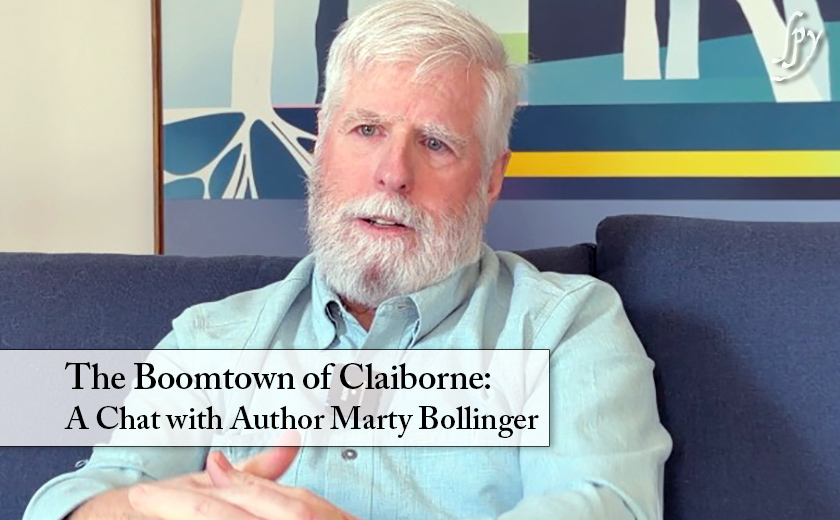


It won’t surprise many Mid-Shore residents that few people know about Claiborne, Maryland, or even know its name. Though it sits just a few miles from the bustle of St. Michaels, the tiny hamlet of roughly 70 homes feels far more remote, known mostly to those who deliberately go looking for it.
That wasn’t always the case.
For decades, Claiborne was one of the most important transportation hubs on the Eastern Shore, a place where Maryland’s leaders repeatedly sought to protect trade, tourism, and political influence as railroads and steamships transformed the region. That little-known history is the subject of When Claiborne Bridged the Chesapeake, by historian Marty Bollinger.
In this Spy interview, Bollinger traces how fear of Philadelphia’s growing power, mixed with political ambition, real estate speculation, mismanagement, and bad luck, turned Claiborne into a hub linking Baltimore, Annapolis, and Ocean City. He also explains how that brief golden age faded, leaving behind repurposed buildings, ghost rail lines, and a legacy that still quietly shapes the village today.
This video is approximately seven minutes in length. To purchase a copy of the book, consult with your local bookstore first or find it on Amazon here.
Marty will be in Claiborne on January 18 for a special presentation focused on the village itself, featuring a rich collection of historic and aerial photographs that show how the community ave changed over time. Additional talks are scheduled for January 20 at the Talbot Historical Society at the Easton Library, January 29 at the Miles River Yacht Club, with events planned in Annapolis and Kent Island in March, and Irvington, Virginia in May.

Write a Letter to the Editor on this Article
We encourage readers to offer their point of view on this article by submitting the following form. Editing is sometimes necessary and is done at the discretion of the editorial staff.