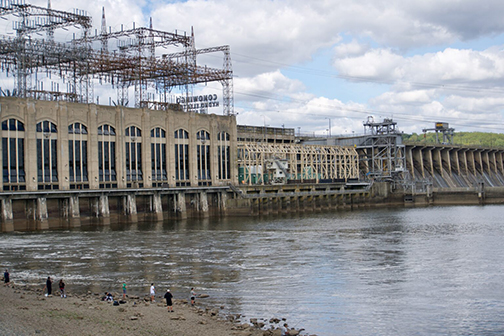


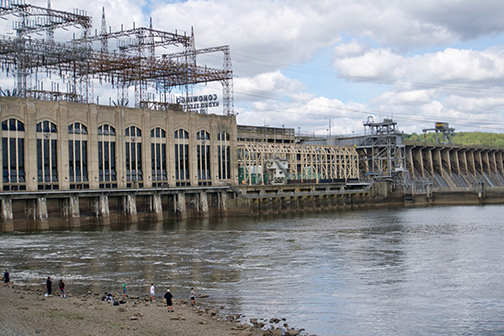
 Maryland’s $340 million settlement with the owner of the Conowingo Dam can now move forward, after a group of Eastern Shore counties dropped their challenge of the deal.
The withdrawal came less than a month after the administrative appeal was originally filed. Officials at the Maryland Department of the Environment, which brokered the key settlement deal, had lobbied hard for the handful of counties to back down.
That’s because the appeal had the potential to derail or delay the funds from dam owner Constellation, which are designated for various environmental projects. The state negotiated to receive the funds in exchange for issuing the hydroelectric dam a crucial water quality certification, which it needs in order to obtain a 50-year license from the Federal Energy Regulatory Commission.
“We are very excited to move out of the courtroom and into action. After nearly a decade of legal challenges we can now put this $340M to work to accelerate progress on the Bay,” wrote Maryland Department of the Environment spokesperson Dave Abrams in a statement. “Thank you to the local governments who worked closely with us to reach this resolution. We are all on the same team and will work closely with them and other stakeholders as we move forward.”
After Maryland officials promised counties they could have input on the rollout of the environmental projects in the settlement, several counties pulled out in late December. Cecil County — which hosts the dam and has complained about the impacts of sediment build-up — was the final hold-out, but dropped out on Friday.
“Over the holidays, MDE and Cecil County Government held productive, transparent discussions that clarified the settlement and secured assurances on Upper Shore project focus, municipal reimbursement for sediment and debris damage, front-loading $18.7 million for dredging studies, and Cecil County’s participation in an advisory council with other Shore counties. As our concerns were addressed, we felt comfortable withdrawing our appeal,” wrote Cecil County spokesperson Robert Royster in a statement.
The counties had expressed frustration that they were not given input on the settlement arrangement until after it was made final. But the negotiations were confidential, because they were also meant to resolve litigation between the state, Constellation and several waterkeepers groups who intervened. The Eastern Shore counties did not intervene in that legal battle.
The appeal was filed by an advocacy group called the Clean Chesapeake Coalition, which includes many Eastern Shore county officials who have long voiced frustration with the dam’s impact on the environment, and specifically the Chesapeake Bay.
The dam, which was built in 1928, once trapped damaging pollutants racing down the Susquehanna River, which contributes about half of the bay’s fresh water, and serves as its largest tributary. But now, the reservoir behind the dam is essentially full, meaning it can no longer trap sediment, and can release large amounts during storm events, with the potential to bury underwater life, and carry harmful nutrient pollution along with it.
Under the settlement, Constellation will put tens of millions of dollars toward tree and underwater grass planting, improvements to fish passage, trash and debris removal and invasive species remediation.
But the agreement also includes provisions about an oft-discussed but controversial strategy for dealing with the dam’s sediment: dredging. Over the next 25 years, Constellation will pay $18.7 million into a fund focused on dredging. But first, all eyes are on an upcoming study from the U.S. Army Corps of Engineers, which will assess whether dredging the Conowingo reservoir is advisable.
If the Army Corps determines dredging is feasible, Maryland can use the funds from Constellation to conduct further study or begin the permitting process for dredging. If the Army Corps deems dredging inadvisable, Maryland can designate the money for other environmental purposes.
For now, though, Constellation will be focused on obtaining its 50-year license from FERC after a federal court reversed the last one. That occurred because Maryland had not issued a water quality certification for Conowingo, instead waiving its right to do so. This time, Maryland has issued the certification, and is aiming for its conditions to be incorporated into the dam’s new federal license to operate.
By Christine Condon – Maryland Matters, January 5, 2026
Maryland Matters is part of States Newsroom, a nonprofit news network supported by grants and a coalition of donors as a 501c(3) public charity. Maryland Matters maintains editorial independence. Contact Editor Steve Crane for questions: [email protected].

Write a Letter to the Editor on this Article
We encourage readers to offer their point of view on this article by submitting the following form. Editing is sometimes necessary and is done at the discretion of the editorial staff.