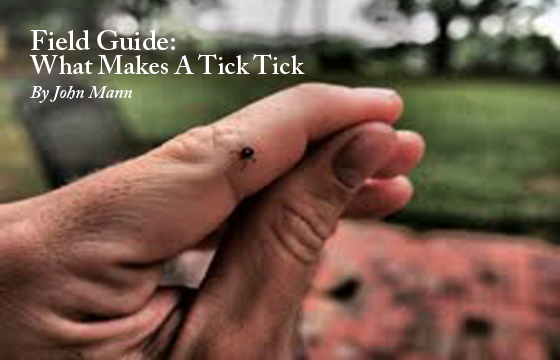


If you spend any appreciable amount of time on the Eastern Shore, you’ve dealt with ticks. They’ve been on you, your pet, or your children. It seems like they’re inescapable; you can bathe in DEET, garden in a Hazmat suit, and douse your lawn in chemicals not found on the periodic table, and still they find you. Why do they exist, other than to annoy (or possibly infect) us? If we could snap our collective fingers and make them disappear, wouldn’t our world be a better place?
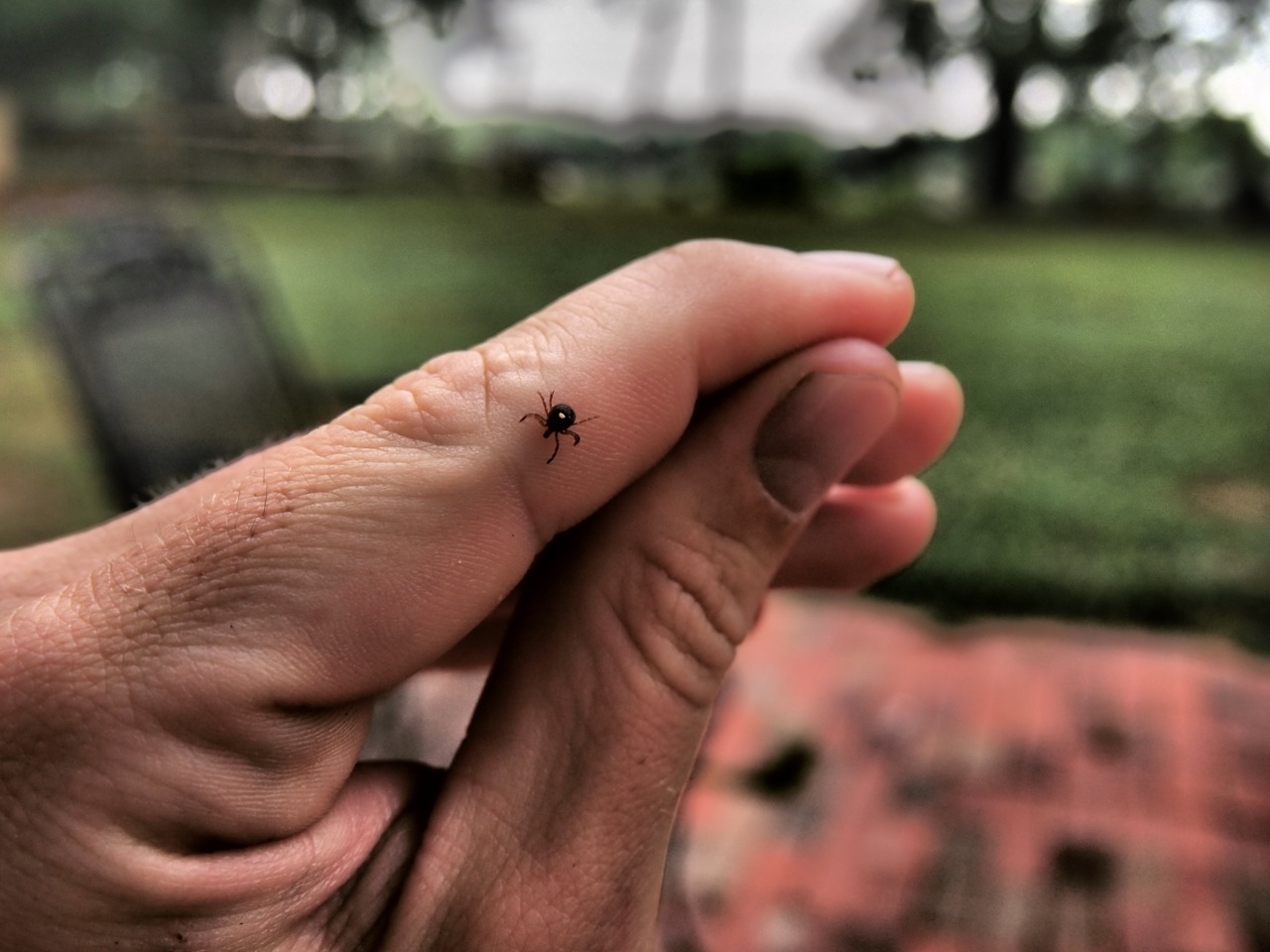 As the Roman poet, Ovid, said, “Right is to be taught even by the enemy.” What can we learn from the tick?
A freshly hatched larva only has six legs, but as they transition into more mature phases of their life cycles ticks will develop another pair of legs, revealing themselves to be arachnids. The young larva will climb a blade of grass and begin “questing.” Ticks cannot fly or jump (or even drop from a tree), so in order to reach a host they find a perch, stretch out their limbs, and wait for a host to brush by so they can hitch a ride. 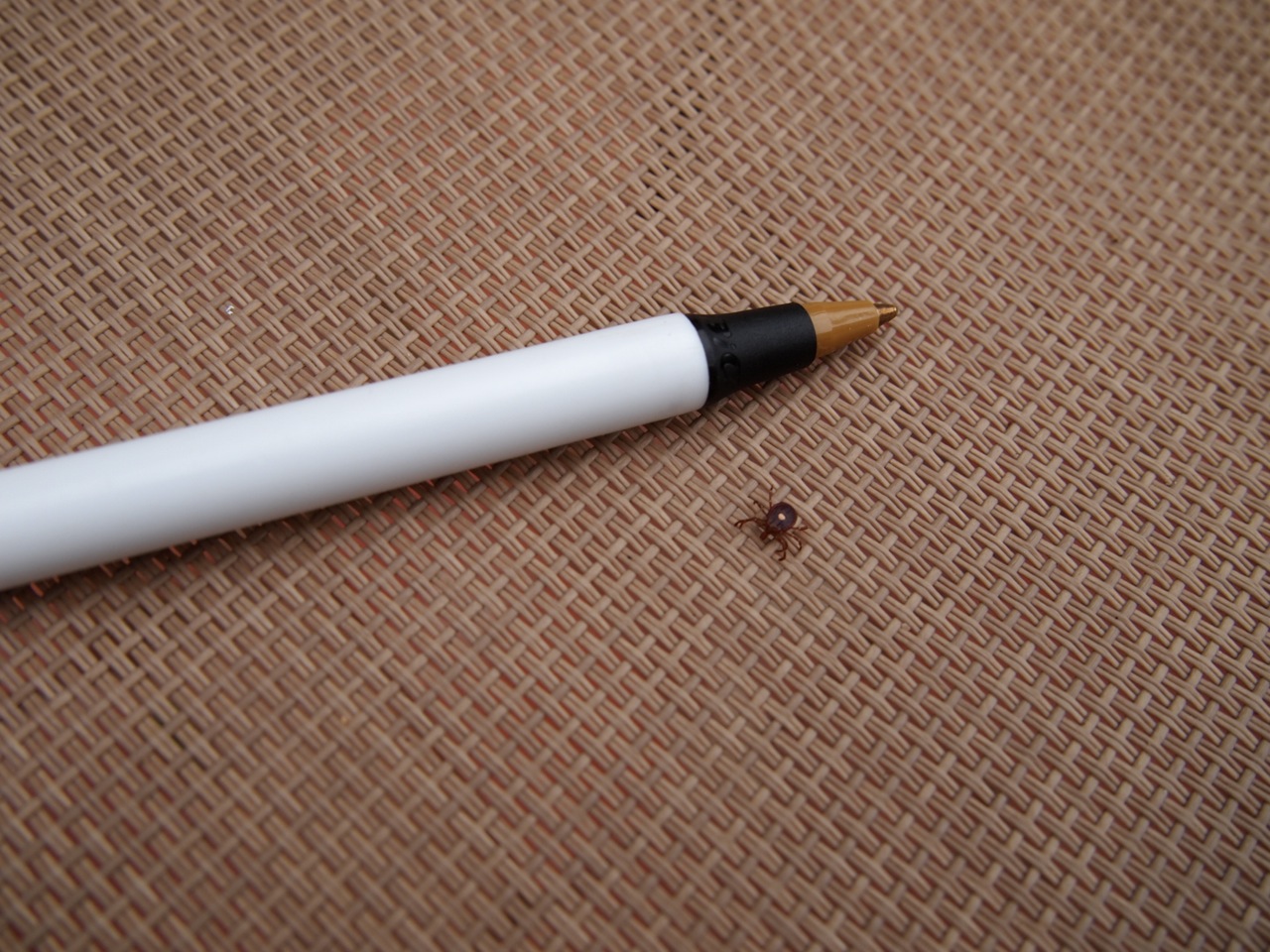
This process of questing is actually quite a bit more sophisticated than might be presumed. Rather than just swaying on a blade of grass, limbs outstretched, and blindly hoping for a host to walk by, ticks have all sorts of adaptations to help them find the right “bus stop”. Their eyes can detect color, movement, and even shadows. They can feel vibrations and changes in temperatures. Perhaps most impressive, they’re able to detect a rise in carbon dioxide levels (which is exhaled by all land animals). In short, they know you’re coming well before you’ve arrived.
Depending on the type of tick, they are 1, 2, or 3 host parasites. In other words, some types will spend their entire lives on one animal, while others will drop off in between each life cycle and find a new host. The first host is usually a small rodent or lizard, since the larva cannot climb very high. Ticks must feed on blood in order to molt and transition into their nymph and eventual adult stages. As the tick matures it can climb higher and seek out larger hosts.
The tick will then crawl around on the host in search of an inconspicuous spot to begin feeding, usually in dark, hidden places. One type of tick that feeds exclusively on komodo dragons has evolved to look nearly identical to that lizard’s scales!
Once the tick is ready to feed a barbed proboscis cuts through the skin, allowing a finer, needlelike instrument to enter. Biochemical changes occur, which will let the tick’s body expand to many times its original size. Ticks secrete saliva to keep the host’s blood from clotting and also to stay attached. This substance forms a bond that will not dissolve until the arachnid is finished feeding.
This explains why an attached tick won’t drop off you even as you’re yanking at it with a pair of tweezers. Between the barbs and the saliva, the tick is stuck and cannot will itself to detach. The key is to secure a tick by its “mouth” area rather than its body. Squeezing the body can cause the tick to regurgitate into its host. This is how diseases are spread.
Once ticks reach adulthood, their only “job” is to reproduce. The female will feed for about 24 hours before giving off scents to attract the males who are usually on the same host. Because she needs enough blood to lay her eggs, the female will often continue to feed while she mates. The male usually dies after mating, while the female will drop off the host to lay between 2,000 and 18,000 eggs in the grass or amongst leaf litter. Like many other species, ticks employ a “better safe than sorry” philosophy when it comes to reproduction.
Like all parasites, ticks feed off their hosts and offer no benefits in return. That’s not to say they won’t give you anything. As disease vectors, ticks can transfer an infection from the blood of one host to the next. If nature is a balance, diseases are on the ugly side of the scale.
When populations exceed the resource base that supports them, they must find new resources, or risk starvation. Diseases are like an invisible forest fire. They are devastating while they rage, but eventually they pave the way for new life.
One unusual thing about humans is that we exist within the natural world, but often operate as if we are apart from it. The problem with a sterile, plastic bubble is that one tiny tick can show up and shatter that illusion. We are not invincible. We are not separate. Ticks can remind us of our own mortality.
Maybe that’s why we hate them.
.

Write a Letter to the Editor on this Article
We encourage readers to offer their point of view on this article by submitting the following form. Editing is sometimes necessary and is done at the discretion of the editorial staff.