
MENU

Sections

  • Home
  • About
    • Contact Us
    • Editors and Writers
    • Join our Mailing List
    • Letters to Editor Policy
    • Advertising & Underwriting
    • Code of Ethics
    • Privacy
    • Talbot Spy Terms of Use
  • Art and Design
  • Culture and Local Life
  • Public Affairs
    • Ecosystem
    • Education
    • Health
    • Senior Life
  • Community Opinion
  • Sign up for Free Subscription
  • Donate to the Talbot Spy
  • Cambridge Spy

More

  • Support the Spy
  • About Spy Community Media
  • Advertising with the Spy
  • Subscribe
November 15, 2025

Talbot Spy

Nonpartisan Education-based News for Talbot County Community

  • Home
  • About
    • Contact Us
    • Editors and Writers
    • Join our Mailing List
    • Letters to Editor Policy
    • Advertising & Underwriting
    • Code of Ethics
    • Privacy
    • Talbot Spy Terms of Use
  • Art and Design
  • Culture and Local Life
  • Public Affairs
    • Ecosystem
    • Education
    • Health
    • Senior Life
  • Community Opinion
  • Sign up for Free Subscription
  • Donate to the Talbot Spy
  • Cambridge Spy
Op-Ed

Op-Ed: Kirwan Blueprint Funding Reform Needed by Laura Price

March 6, 2020 by Laura Price

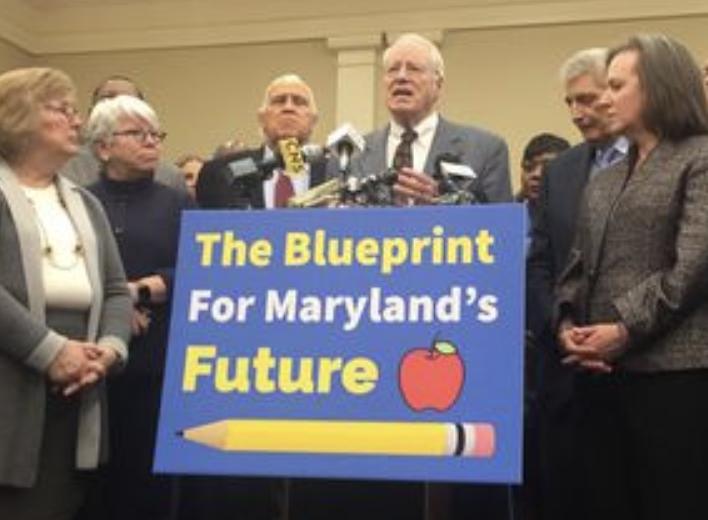
The Kirwan Blueprint bill is currently moving way too fast through the House before it moves next week to the Senate. After the “public-hearing” on February 17, about 65 amendments were offered. Most never saw the light of day as certain committee members made the decisions on which amendments were worthy of consideration. The vast majority were related to one of the five specific policy areas and some were related to funding. I will address the local funding requirement amendments.

I will reiterate what MACo’s position is regarding whether to split the costs of this additional layer of education funding. The total price tag adds an additional $6 billion per year by 2030 and the counties believe these new costs should be borne by the State. MACo’s statement says “The State of Maryland should live up to its constitutional obligation, stand behind its own ambitious recommendations, and provide State resources to implement the full costs of the Kirwan Blueprint plan….The Maryland Constitution’s requirement of ‘thorough and efficient’ public schools properly places this duty on the State…The far-reaching Kirwan plan is a continuation of this State requirement.”

There are two primary reasons for this position. One, if legislators believe that this is a good idea, and they are the ones voting on the plan, they should not pass another unfunded mandate onto the County governments. The second is that the State has more flexibility on raising revenues and/or making adjustments within the State budget to pay for this new level of education costs. Counties only have property and income taxes and most are maxed out at 3.2% on income taxes, leaving only property tax, thereby forcing the local elected officials to raise rates significantly with no local control.

Since there was no amendment offered, it’s obvious that the State still expects the counties to pick up a significant share of these new costs. While most have heard that the split was $2.8 billion for the State and $1.2 billion for the Counties, that is a bit misleading. Fiscal year 2020 funding for all counties is $6.69 billion (51.8%) and state share is $6.23 billion (48.2%), so the locals are already funding $464 million more than the State. The bill as introduced (with an inflation factor of 23% that DLS has used), counties would be funding a total of over $9.2 billion in FY30. That is an actual increase in local spending of $2.5 billion, which is inclusive of the current Maintenance of Effort (MOE) law. It is also why the numbers that keep getting reported of $1.2 billion appear distorted and understated.

The funding amendments that were offered were to accomplish two things. First, the massive local increase on Baltimore City and Prince George’s County has been widely reported and something in the formula had to change in order to offer those jurisdictions relief. As originally drafted, the “Local Share Relief” to 12 counties was $431 million with $375 going to just those two jurisdictions.

The second was a technical fix to the Funding Floors for seven counties. Notwithstanding the wealth formula, each county receives 15% funding on the base per pupil and 40% funding on a Special Education, English Language Learner or Concentration of Poverty. When the bill was initially introduced, this had not been factored in and the local share was overstated. An amendment was needed to adjust the calculation because it had been double counted and ended up with the local + state being greater than the total formula funding required. This amendment was NOT the State granting relief to those seven counties, it was to correct a mathematical ERROR.

The first amendment was to grant relief to 12 counties and the second was to fix the error. Unfortunately, these got combined and the title of the amendment is “Net Local Share Relief.” Why does this concern me and several other counties who are supposedly wealthy? Because, legislators will say that they “fixed” us and granted us a reduction. That really is inaccurate. Our reasoning and that of several legislators is that the “wealth formula” does not accurately reflect the actual demographics and economy of a jurisdiction. One major factor that is not considered in any way is the Median Household Income. The tables below show examples of the education wealth formula versus the median income ranking as compared to the State average:

This illustrates that no funding formula really works. There are many other factors that comprise a county’s “wealth,” not just property value + net taxable income divided by the number of children in the school system. Until you account for many different factors, it would be unfair to classify a county wealthy, poor or somewhere in between. The true wealth of a county has very little to do with how many kids we educate and everything to do with the quality of jobs, incomes, and demographics of who we serve. What we really need is to amend this wealth formula that fits no one and add a factor that accounts for median household income. That would be a good start.

Laura Price is on the Board of Directors of MACo, Chair of Budget and Tax, Talbot’s legislative liaison and member of the Talbot County Council.

The Spy Newspapers may periodically employ the assistance of artificial intelligence (AI) to enhance the clarity and accuracy of our content.

Filed Under: Op-Ed Tagged With: Kirwan

Op-Ed: Report from Annapolis 2020 by Laura Price

March 4, 2020 by Laura Price

Since I spent the past two weeks reporting on all Kirwan, I wanted to catch you up on our long list of bills that MACo did discuss and take positions on.  There really is legislation outside of Education spending and the Sales and Service tax hike, but you will see that many of these bills do tie back in to the big education bill!

Did you think that property tax was a flat rate?  This bill, HB1276, “County Property Tax – Classifications of Real Property and Authority to Set Special Rates” may change that.  This authorizes a county to set special property tax rates on any sub-class of real property. Properties such as agriculture land, marsh land, small and large commercial properties, industrial, residential condos/rentals and residential greater than 5000 square feet.  While counties could theoretically charge a lower rate, a county could also charge a higher property tax rate. This could mean having “progressive” property tax rates. MACo supported the bill because it “authorizes” county control, however, it’s just another way to raise taxes to pay for Kirwan.

A bill that could tax some Marylanders even more is HB1494, “County Income Tax – Maximum Rate and Authority to Impose on an Income Bracket Basis.”  This increases from 3.2% to 3.5% as a maximum a county could impose on an individual’s taxable income. It would also require that a county not charge the lower rate to certain income levels, if they have set this bracket policy by ordinance.  MACo decided to take no position because we don’t know how it might affect disparity grants or the education “effort” of a county. We believe that this type of bill should wait until next year and the State has acted on an amended version of Kirwan.

Then there are bills that continue to limit or reduce County revenues, just when we need them more than ever.  HB1280, “Admissions and Amusement Tax – Small Business Exemption”, would prohibit a county from imposing this tax on businesses with less than $75,000 in gross receipts.  MACo mostly opposes bills that impose State mandates, revenue decreases or spending increases. HB1451, “School Bus Purchasing – Zero Emission Requirement,” would be such a bill, requiring that each school bus be a zero-emission vehicle.  This is unworkable. Electric vehicles are limited as to how far they can travel and most jurisdictions have to cover many miles of roads, not to mention the cost of purchasing such buses.

Then there’s the BRFA.  HB152/SB192 is the annual Budget Reconciliation and Financing Act.  This is the “catch-all” to balance the budget. There are several problematic items in it this year.  It proposes to shift the cost of SDAT (State Dept of Assessments and Taxation) from 50% to 60% onto the locals.  It also reduces the Community College CADE formula and Counties would lose approximately $121 million in funding, which would either have to be added to the tuition or borne by the county taxpayers.  And if you remember the Highway User Revenue issue, this would also pull some of what little bit of local dollars we have left to pay for a State tunnel project in Baltimore City.

Speaking of Highway User Revenues, HB1394/SB982 would repeal the “sunset” provision that counties and towns advocated for a couple years ago.  Municipalities are nearly fully funded but Counties still have a long way to go.  We would like to make permanent the partial restoration we regained.  It also adds a gradual restoration of 1% and includes a CPI adjustment.  It is very important to have some type of bill on the table each year. Funding was cut 90% ten years ago and many legislators don’t remember how much this has harmed the towns and counties.  MACo definitely supports this bill!

A really bad bill, is HB1406, “Land Use Development – Middle Housing.”  This would completely preempt local land use control. The bill states that a local jurisdiction SHALL adopt land use regulations and amend its comprehensive plan.  Counties would be required to allow duplexes, triplex’s cottage clusters, townhomes and similar on single family lots in qualified census tracts. There are stipulations on what constitutes a qualified area, but this is definitely the proverbial “camel’s nose under the tent.”  It would only be a matter of time before most jurisdictions would have this requirement. MACo strongly opposes this bill.

Another bad land use bill is HB1390/SB741, “Public Convenience and Necessity – Electric Study and Procedures.”  This is another preemption bill that removes all semblance of land use planning regarding utility scale solar installations, requiring Public Service Commission approval.  Solar developers should not “freeze out” local jurisdictions, as this bill would certainly do. What is reasonable along a highway in suburban Montgomery County, may be completely unreasonable in a rural setting, with historic homes and landmarks on the Eastern Shore or Western Maryland.  There has already been litigation over this issue and will continue to be a fight. We strongly opposed this bill.

HB991, “Procurement – Transparency and Application to County Contracts” is another bill to eliminate local decision-making authority.  County procurement would have to be altered to match the State, which would make it much more complicated. Counties are transparent. We go out to competitive bid, get a minimum number of quotes, or piggy back off State contracts.  There is no reason to overturn our own procedures. MACo opposed.

A couple good bills that we did support were HB1485 and HB1496, “Maryland Medical Assistance – Emergency Service Transporters Reimbursement.”  Currently, Emergency Service providers are only reimbursed $100 per transport to a hospital. This would increase to $300, transports, not only to hospitals, but also urgent care centers.  It would also enable EMS to charge for the response, even if they don’t ultimately transport the patient to a medical facility. Our EMS units can sometimes bill insurance for these transports if a patient has insurance, but if there is no one to charge, it is a large expense to the counties.  This could be a big help to help offset the high costs of this very critical service.

Finally, we heard from one of our favorite guests, Budget Secretary, David Brinkley.  He gave us an update on the Governors budget and fiscal outlook. A record amount of $7.3 billion is being spent on Education.  Environmental programs are fully funded. $1.3 billion is being retained in the reserve account and Maryland is happy to report that it maintained its AAA bond rating.  General fund spending is growing at about 1%.  The Governors budget is balanced with no tax or fee increases or raiding of funds.  $75 million is in the pension funding, and the state has caught up and is ahead of its 80% funding goal.

Having served for three years on the Kirwan commission, Secretary Brinkley stated that the budget has competing interests and we live in a finite world.  Future deficits will occur and Kirwan will only add to them and a recession will only make it worse. To quote the Secretary “If everything is a priority then nothing is a priority,” which he pushed for during his time on the commission.  He believes we need to get the biggest bang for our buck and allow the locals the opportunity to prioritize their needs.

Secretary Brinkley said that the Kirwan commission was supposed to be a follow up to Thornton, from 18 years ago due to a court order.  To quote, “We’re about to repeat history” and pass policy with no funding source. “We are already spending 22% more per pupil and 28% more in teacher salaries than the national average.” Passing a budget is one of only two Constitutional obligations of the State. He agreed that the proposed sales tax increase will do nothing to fund the County share of Kirwan and the Governor opposes any tax increases to pay for Kirwan.  “The State must maintain its fiscal discipline and hardworking taxpayers live within their means and the State needs to do the same.”

So that’s the long wrap up of the past two weeks, all while the Kirwan discussions are going on, along with the Sales tax expansion that includes almost every service.  It’s a whirlwind of activity, but don’t stop keeping track.  Hold those legislators in Annapolis accountable to do what is in everyone’s best interests, and never just one group.  Until next week….

Laura Price is 2nd Vice President on the Executive Board of Directors of MACo, Chair of Budget and Tax, Talbot’s legislative liaison and member of the Talbot County Council.
The Spy Newspapers may periodically employ the assistance of artificial intelligence (AI) to enhance the clarity and accuracy of our content.

Filed Under: Op-Ed Tagged With: Annapolis, Taxes

Op-Ed: Report from Annapolis 2020 (Part 5) by Laura Price

February 20, 2020 by Laura Price

Well, the moment we’ve all been waiting for arrived a week ago. The Blueprint Education Bill, aka “Kirwan” has finally been introduced. Most of what I predicted last week came true. SB1000/HB1300 did follow the policy recommendations that were made by the commission. It did not change any wealth formulas. It did not change any funding formulas for the split between the State and the Counties. There was no timetable for a County phase in, as recommended by the Kirwan funding workgroup. It does allow for school expenses, that might be paid for in another county budget, such as school health nurses or resource officers to be included. Also, if the economy does take a downturn, it will allow funding to remain flat and not increase for that year. But the biggest problem is it absolutely does not identify any funding source for how to pay for it.

Finding a position that all the Counties could agree to did not prove to be as challenging as we might have thought. There are going to be proponents and opponents for what is in the policy of the bill. We may not agree on what tax rates should be and how it should be spent. But what MACo and all the counties approved was a statement that said the State should be paying for all of this new education expense.

This excerpt from the MACo statement explains why.“The State of Maryland should live up to its Constitutional obligation and stand behind its own ambitious recommendations and provide State resources to implement the full cost of the Kirwan Blueprint plan… the Maryland Constitution’s requirement of ‘thorough and efficient’ public schools properly places this duty onto the State…the Kirwan plan is a continuation of this State requirement.”

“Reliance on local funds for half, or more, of education funding merely promotes and extends the resource gaps that still plague Maryland’s schools…In the Kirwan Commission’s own research into ‘Fair Funding,’ the highest scoring state for equitable funding commits a much higher share of State funding than Maryland to achieve those goals…Taking into account current county funding commitments that have exceeded state standards, a plan that further increases reliance on mandated county funding can never accomplish the most equitable outcomes.”

Many reports have cited the leadership from Annapolis stating that they’ve pledged not to pass an across-the-board increase in the state’s income, sales or property taxes. Unfortunately, property and income tax are the only revenue sources a county has. It seems hypocritical that the State is not willing, nor do they think it appropriate to raise those taxes, yet the counties will be forced to raise exactly those taxes in order to pay for Kirwan, should MACo’s position not prevail (it won’t of course).

One of the goals of the Kirwan commission was to have more progressivity in the tax structure to provide better equity. Most will agree that property tax is one of the most regressive taxes out there. Even if you rent your home, you do pay property tax, because your landlord will absolutely be passing on this expense in your rent. More lower income people pay rent, so everyone pays and they pay at the same rate, no matter whether their house (owned or rented) is valued at $100,000 or $1,000,000. Ask most legislators in Annapolis and they will tell you it is a very regressive tax. So now, half of the cost of Kirwan, if it is to be borne by the counties, will have to be paid for by the second most regressive tax, property tax (next to the sales tax).

As I have written previously, 19 of 24 jurisdictions are either maxed out at 3.2% or above 3% in income tax, so that really only leaves property tax to pay for more than a $2.5 billion increase (Maintenance of Effort mandated increases + Kirwan). The percentage increases range from an average of 26% up to 76%. The statewide average property tax rate a county citizen pays is $1.19 per hundred of assessed value. For a $350,000 home, their bill is $4165. A 26% increase equals an additional 31 cents. That may not sound like much, but it adds another $1085 for a grand total of $5250.

Another big problem is the wealth formula, which only counts the assessable base plus net taxable income and divides it by the number of students in the system. It does not take into account any other factors in the jurisdiction, especially median household income. Many counties may appear “wealthy” by the States math, but when those counties have half of their kids on free and reduced meals (FARMS) and the median household income is far below the state average (Talbot’s is 20% below!), it proves the wealth formula is definitely NOT a one size fits all solution.

The ONE and ONLY public hearing is Monday, February 17th, beginning at 12:00 PM. It will be a joint committee hearing consisting of two Senate and two House committees, Appropriations; Ways & Means; Education, Health & Environmental Affairs; and Budget & Taxation. There are no plans for additional hearings, but ultimately it will be up to each committee chair to decide if future ones are needed.

Our legislative committee, still debated and took positions on 22 other important bills this week. No surprise but they were all overshadowed by Kirwan, the biggest and most expensive bill in Maryland history. It has had only 7 days of vetting and it is being fast tracked to a joint public hearing before people can truly understand its impact. Surely, this is a flawed legislative procedure and the citizens deserve better.

Laura Price is 2nd Vice President on the Executive Board of Directors of MACo, Chair of Budget and Tax, Talbot’s legislative liaison and member of the Talbot County Council.
The Spy Newspapers may periodically employ the assistance of artificial intelligence (AI) to enhance the clarity and accuracy of our content.

Filed Under: Op-Ed, Opinion Tagged With: Annapolis, Laura Price

Report from Annapolis 2020 – Part 4 by Laura Price

February 12, 2020 by Laura Price

We have gotten through the first 30 of 90 days in Annapolis legislative session. MACo reviewed three dozen bills which prompted wide-ranging discussion. The tax committee had our usual assortment of subtraction modification bills that MACo again sent letters to advocate issuing State tax credits instead.

There was a bill, HB565 – “Income Tax – Business and Economic Development Tax Credit Termination,” which is similar to HB223, “End Ineffective Business Subsidies Act,” that I previously wrote about and MACo opposed. Our economic development departments need these tools to attract and retain businesses that help create and add jobs to our economy. It seems the purpose behind some of these bills is to see how much money the State can claw back from the counties to pay for the Kirwan education bill. On the opposite end of the spectrum is HB492/SB493 – “Small Business Development Center Fund,” which MACo supports. This bill would increase the minimum appropriation from $950K to $1.5 million. This helps fund our local offices that work directly with our small businesses which are just getting started, helping them create business plans to become successful business in our communities.

From the education committee, HB665 – “Public School Construction and State Buildings – Use of Geothermal Energy,” was considered. This would prohibit the construction of a new public school unless it had geothermal installed. It would also require a State building to install a geothermal energy system. While there is an interest in more environmentally friendly buildings, this is not a technology that can be utilized everywhere. It might work well for the soils on the Eastern Shore, but would not be cost effective to drill down through rock in Allegany County. It also doesn’t make sense to rip out existing systems and do systemic upgrades. It would be problematic in a building that has a chiller. The decision to use geothermal should be made on a case-by-case basis, by the engineers and architects and by considering what actually makes the most sense and will be efficient.

A bill we did support, SB495 – “Bay Restoration Funds – Municipal Wastewater Facilities (Eckardt), would especially benefit the more rural counties. This would expand the authorized uses of the BRF to include costs associated with connecting a property to an existing municipal wastewater facility with enhanced nutrient removal. Here in Talbot, we have been particularly focused on getting people off of septic and onto a sewer line. If we can expand the use of funds to help offset some of the capital costs, we can really make progress on removing more nitrogen and phosphorous from reaching the Bay waters.

HB586 – “Public Safety – Criminal History Check – Fire Departments and Ambulance Services” would prohibit our public safety departments from conducting a criminal history check or requiring an applicant to disclose those records before an initial interview. This is an add-on to the “Ban the Box” bill that passed last year. The question asks whether the job applicant has a criminal history and is now prohibited on employment applications. We can debate if this is a good idea or not, however, when it comes to our emergency and public safety positions, it is vitally important that the employer know this information. These employees are our front-line defense, often going into individuals’ homes. It would also require these departments to establish a peer review committee and they would have some input in the hiring process. Our department heads should not have to abdicate any of their authority to decide who is the best candidate to employ.

SB388 – “Circuit Court Employees – Collective Bargaining” would establish collective bargaining rights to employees of the circuit and district courts. These are state-mandated positions that the counties have to fund completely. The local jurisdictions ought to be able to control the wages of our local employees without a State labor relations board also mandating how much a county must pay. This is another example of the State mandating the position and the pay, when the county taxpayers are footing the bill, hence MACo opposes this bill. We do like HB498 which would appropriate $1 million in the State budget to be used to make grants to area agencies to expand aging in place programs for seniors. It is so much more cost-effective than having our senior citizens have to go to nursing homes and have a much better quality of life if they can stay in their own familiar homes.

All that and the Kirwan bill had not been officially introduced as of this writing. By the time you read this, Education bill SB1000/HB1300 most likely will have been made available for all to read. (https://mgaleg.maryland.gov ) I’m sure by next week, this entire column will cover what is in the bill. Word is that it will follow pretty true to the actual recommendations that were made by the Kirwan commission and also maintain the funding formulas and the split between the State and the Counties.

My fear is that it still may not identify any actual funding source for how to pay for it. That would be almost exactly like “Thornton” from almost 20 years ago. Big policy ideas for improving education, but no specific way to pay for it. In reality, at least for the county share, it will require large tax increases, because we can’t possibly cut enough in current spending to be able to afford it.

The final report from November left some questions unanswered. Such as, what is the County timetable phase in? What will count toward the mandate (school nurses from health department, school resource offices in our law enforcement, for example)? Will there be any triggers to not increase for a time period, if there is a downturn in the economy? And will there be any changes to wealth formulas? For example, in Caroline county, One penny only raises about $250k, to fully fund Kirwan, they may have to come up with $10m, which would be an increase of 40 cents on their property tax rate. That is unaffordable for the citizens and there are many, if not most counties in similar situations.

Once again, stay tuned and stay informed.

Laura Price is 2nd Vice President on the Executive Board of Directors of MACo, Chair of Budget and Tax, Talbot’s legislative liaison and member of the Talbot County Council.

The Spy Newspapers may periodically employ the assistance of artificial intelligence (AI) to enhance the clarity and accuracy of our content.

Filed Under: Op-Ed Tagged With: Annapolis, Kirwan

Op-Ed: Report from Annapolis 2020 – Part 3

February 5, 2020 by Laura Price

Week three is wrapped up in Annapolis and things are just really getting started. As Senate President Bill Ferguson noted that the rapidly-growing bill lists and committee workloads “kicks off the real first day of the 2020 session.” We reviewed twice as many bills as last week, 32 in all. There will be hundreds more to come! 

I believe we dodged a bullet on HB292/SB229 “Toll Roads, Highways, and Bridges, County Government Consent Required – Expansion.” This bill came up last year and was written to expand the authority to all 24 jurisdictions. It would prohibit the State from constructing a toll road without the consent of the majority of “affected” counties. This was interesting, because the original bill was written about 1978, soon after the completion of the second Bay Bridge. It was written to protect the nine Eastern Shore Counties. There is an AG letter of opinion that interprets “affected” to mean the county where the project lands. Well in 1978, there were only two toll roads in the State. The Harbor tunnel and the Chesapeake Bay bridge. To try to piggyback on an old bill and expand this to all 24 counties to a toll road, such as the I-270/495 corridor is inappropriate. A separate piece of legislation should be drafted and introduced and leave this existing law to stand alone. 

I attended the Senate committee hearing to listen to the testimony. Talbot, Queen Anne’s and Kent did not feel we needed to testify since MACo submitted technical amendments to leave us out instead of taking a position. This is especially important right now, since the NEPA study is ongoing and currently lists these three counties as potential “landing” counties for a third Bay Bridge span. Chairwoman Delores Kelly seemed to have several problems with the bill and there were tough questions asked at the hearing. I do not expect it will pass the Senate. There is still a House hearing in a couple weeks, but hopefully it will die and then a separate bill could be drafted for next year if appropriate. 

An update on HB223, “End Ineffective Business Subsidies Act” that MACo held open. I wrote in detail the problems last week. I am happy to report that MACo is officially opposing the bill. There is much opposition, but we will have to wait and see if it gets enough traction to pass. 

There are a couple bills related to taxing authority on both vaping and tobacco products. HB400 “Vaping Product Tax” would impose a 30% tax from the wholesaler to the distributor on vaping products and require the revenue be used for the State Reinsurance Program. It would also authorize a county to impose a local tax. This is noteworthy, because counties have never had the authority to have a local tax on cigarettes/tobacco in the past. SB3, “Electronic Smoking Devices, Other Tobacco Products and Cigarettes – Taxation and Regulation,” would also expand taxing authority to local governments. MACo supported both of these bills, although the local taxing pieces do not have much chance of passage. It would be helpful for locals to have more taxing authority, especially in the face of “Kirwan” – the massive mandated increase in education spending, otherwise we will be faced with huge increases in property and income taxes. (We are still awaiting introduction of the Kirwan bill) 

HB582/SB232 “Procurement – Prevailing Wage” would be an extremely harmful bill on local budgets. Typically, this affects us because prevailing wage must be used when a school construction project has more than 25% funded by the state and even that was lowered several years ago from a 

50% funding level. This bill would repeal that and apply prevailing wage to any project funding in whole or in part with State funds. Meaning if you take $1 from the state, you must pay the prevailing wage. To give an example of the increase in the cost of a project, I will use our new Easton elementary school as an example, even with current law. It is a $50 million project, if we had been able to use a normal wage, more appropriate to a rural Eastern Shore county (and not based on an inflated Montgomery or PG county wage rate), the project could have been about $10 million less. I can’t even imagine the cost increases if HB582 were to pass. 

There were more than a half dozen “subtraction modification” bills we opposed with our general statement this week. MACo believes that if the state wants to give a tax break to a person or group, that it should be done through a state tax credit and not through a “sub-mod” that reduces our income tax revenue. Again, especially in light of the education bill that will be forthcoming. Even worse for local budgets is HB411 “Homestead Property Tax Credit Calculation.” This is a repeat from 2019 that MACo strongly opposed again. I wrote last year “This would open up and require that any first- time homebuyer in the State of Maryland be transferred the existing tax savings of the previous owner. This might seem like a good incentive to make property taxes more affordable, but totally ignores and undermines the purpose of existing law. This tax credit was created so that as a home appreciates in value, as long as the homeowner lives in the home, the homeowner will not be priced out of retaining that home because of an increased assessment, which ensures stability in their future tax bills.” 

We heard an overview of the State budget from Vicki Gruber of DLS (Department of Legislative Services). Basically, the General Fund budget starts with -$579 million. The Governor submitted a budget with various transfers and revenue sources and the General Fund would end with a balance of $108.5 million if everything goes through successfully. More concerning is the structural deficit over the next 5 years. Ms. Gruber gave us two charts that showed the forecast both in an expanded growth scenario and with a fiscal slowdown. She also included projections including the cost of “Kirwan.” In the expanded growth scenario, the structural deficit is -$37 million in FY21, which grows to -$1.07 billion in FY25. When adding Kirwan costs, it grows to -$1.644 billion dollars. If our economy does slow down, the projections get worse. In FY21, the deficit is -$251 million. By FY25, the total structural deficit, including Kirwan is -$2.242 billion. These are staggering numbers. 

We also got updates from staff on ongoing issues. The big win we all cheered is on Small Cell (5G) legislation that was introduced last year. What is 5G? Let’s start with what is 3G, which means connecting your computer to the internet. 4G means connecting your smartphone to the internet. 5G means connecting everything to the internet. Estimates project that we will grow from 2 or 3 connected devices per person to 40-100 connected devices per person. There were two competing bills in 2019 and the Industry bill would have allowed them to deploy these refrigerator size cells anywhere with no local zoning oversight or appropriate fees. We beat the bill last year and there has been no bill introduced this year. We are the first state in the Union to have beaten the industry on this issue! That’s how powerful MACo can be and how important it is for us as local elected officials to stay engaged in what happens in Annapolis and to fight for what is in the best interests of our citizens. 

Laura Price is 2nd Vice President on the Executive Board of Directors of MACo, Chair of Budget and Tax, Talbot’s legislative liaison and member of the Talbot County Council. 

The Spy Newspapers may periodically employ the assistance of artificial intelligence (AI) to enhance the clarity and accuracy of our content.

Filed Under: Archives, Op-Ed, Opinion Tagged With: Annapolis

« Previous Page

Copyright © 2025

Affiliated News

  • The Chestertown Spy
  • The Talbot Spy

Sections

  • Arts
  • Culture
  • Ecosystem
  • Education
  • Mid-Shore Health
  • Culture and Local Life
  • Shore Recovery
  • Spy Senior Nation

Spy Community Media

  • Subscribe
  • Contact Us
  • Advertising & Underwriting

Copyright © 2025 · Spy Community Media Child Theme on Genesis Framework · WordPress · Log in