MENU

Sections

  • Home
  • About
    • Contact Us
    • Editors and Writers
    • Join our Mailing List
    • Letters to Editor Policy
    • Advertising & Underwriting
    • Code of Ethics
    • Privacy
    • Talbot Spy Terms of Use
  • Art and Design
  • Culture and Local Life
  • Public Affairs
    • Ecosystem
    • Education
    • Health
    • Senior Life
  • Community Opinion
  • Sign up for Free Subscription
  • Donate to the Talbot Spy
  • Cambridge Spy

More

  • Support the Spy
  • About Spy Community Media
  • Advertising with the Spy
  • Subscribe
December 6, 2025

Talbot Spy

Nonpartisan Education-based News for Talbot County Community

  • Home
  • About
    • Contact Us
    • Editors and Writers
    • Join our Mailing List
    • Letters to Editor Policy
    • Advertising & Underwriting
    • Code of Ethics
    • Privacy
    • Talbot Spy Terms of Use
  • Art and Design
  • Culture and Local Life
  • Public Affairs
    • Ecosystem
    • Education
    • Health
    • Senior Life
  • Community Opinion
  • Sign up for Free Subscription
  • Donate to the Talbot Spy
  • Cambridge Spy
3 Top Story Point of View Jamie

Great Beginnings by Jamie Kirkpatrick

May 19, 2020 by Jamie Kirkpatrick

Maybe in another time and place, we would have been gathered ‘round a campfire, talking quietly late into the night. There might have been a bottle of whisky or wine to pass, or maybe someone would have been smoking a cigar. The fire would be crackling, sending sparks up into the cool night sky, the stars bright above. Maybe we could hear the river moving gently by.

But not in this time and place. We were each at home, working (as the new lingo goes) remotely. Instead of a campfire, we were each lit by a computer screen. There may or may not have been a bottle somewhere to hand; each to his own. Instead of the sound of our own voices or the wind in the trees, there was only the quiet tapping of the keyboard, but nevertheless, I could distinctly hear each friend’s familiar voice, the tone and content of the ‘conversation’ rising and falling like the tide.

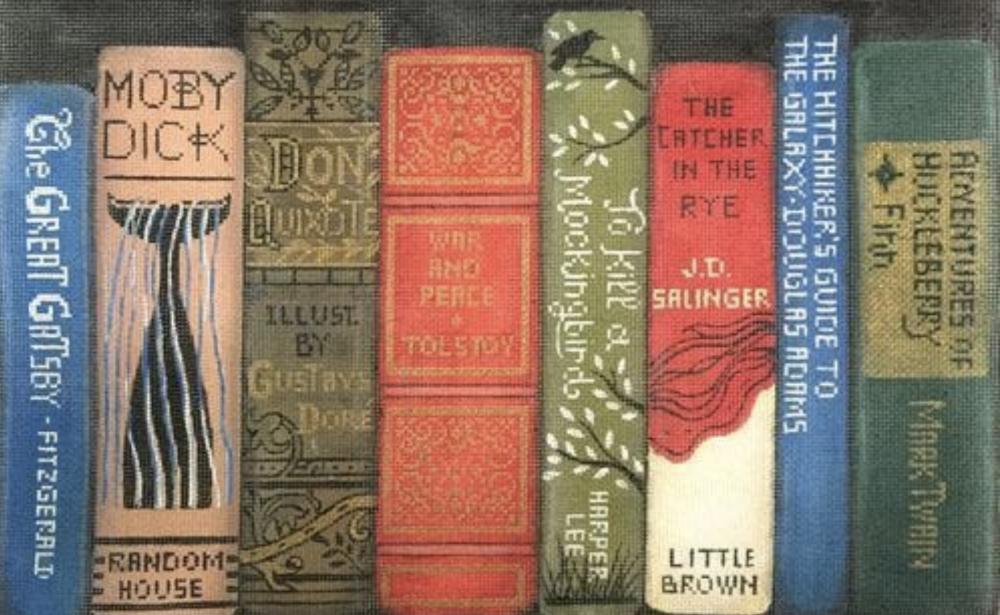
It all started with an innocent question, provoked, I think, by an article Bootsie had read in the The Washington Post earlier in the day. The article made the case that in times like these, reading was not only good, but could also be soothing, instructive. It lobbied for rereading classic novels, particularly one by Ernest Hemingway, “The Sun Also Rises.” Much of the action in that book takes places in the crowded cafés and nightclubs in Paris or amid great arenas in Spain surrounded by throngs of cheering men who had come to watch a bull die. Such venues might recall happier times, happier places. But our socially distant book club opted for another perspective: which classic novel had the greatest opening paragraph, immortal words to draw the reader into the story and keep him or her glued to the page?

Dan went first. He has some pretty impressive credentials—a couple of Pulitzer Prizes to be specific—so I sat up straight at my computer and paid attention. Dan’s vote for Best Opening Paragraph (hereafter BOP) went to another novel by Papa Hemingway, “A Farewell to Arms.” It goes like this:

“In the late summer of that year we lived in a house in a village that looked across the river and the plain to the mountains. In the bed of the river there were pebbles and boulders, dry and white in the sun, and the water was clear and swiftly moving and blue in the channels. Troops went by the house and down the road and the dust they raised powdered the leaves of the trees. The trunks of the trees too were dusty and leaves fell early that year and we saw the troops marching along the road and the dust rising and leaves, stirred by the breeze, falling and the soldiers marching and afterward the road bare and white except for the leaves.”

I had to admit that was a pretty powerful opening. But then Bootsie nominated another BOP, the one penned by Charles Dickens that begins his “A Tale of Two Cities.” It’s familiar but if you need to refresh your memory, it goes like this:

“It was the best of times, it was the worst of times, it was the age of wisdom, it was the age of foolishness, it was the epoch of belief, it was the epoch of incredulity, it was the season of Light, it was the season of Darkness, it was the spring of hope, it was the winter of despair, we had everything before us, we had nothing before us, we were all going direct to Heaven, we were all going direct the other way—in short, the period was so far like the present period, that some of its noisiest authorities insisted on its being received, for good or for evil, in the superlative degree of comparison only.”

Wow; we were two-for-two. Then Dan upped his own bet with the opening of Leo Tolstoy’s “Anna Karenina.” It’s short, but oh-so-sweet:

“Happy families are all alike; every unhappy family is unhappy in its own way.”

Crumpets, over in London, nominated an even shorter BOP; I’m sure you know it; it’s the one that begins Herman Melville’s “Moby Dick:”

“Call Me Ishmael.”

Suddenly it was my turn. I considered the opening paragraph of a short story by Hemingway, “The Snows of Kilimanjaro,” when the narrator finds the frozen carcass of a leopard at an unusually high altitude and wonders what it was doing there but discarded the idea; Hemingway already had two nominations. My next thought was the one-sentence opening paragraph of Walter Van Tilburg Clark’s 1940 novella “The Oxbow Incident”: “They crossed the Continental Divide about two by the sun,” but as good as that is, it doesn’t quite reach the heights of Hemingway, Dickens, Tolstoy, or Melville. So I dug a little deeper and came up with the flowing first lines that begin Alan Paton’s novel about apartheid in South Africa,“Cry The Beloved Country.” I read the book many years ago but still find its opening paragraph especially lyrical. It goes like this:

“There is a lovely road that runs from Ixopo into the hills. These hills are grass-covered and rolling, and they are lovely beyond any singing of it. The road climbs seven miles into them, to Carisbrooke; and from there, if there is no mist, you look down on one of the fairest valleys of Africa. About you there is grass and bracken and you may hear the forlorn crying of the titihoya, one of the birds of the veld. Below you is the valley of the Umzimkulu, on its journey from the Drakensberg to the sea; and beyond and behind the river, great hill after great hill; and beyond and behind them, the mountains of Ingeli and East Griqualand.”

Well, you get the picture. The fire—or its virtual electronic counterpart—was getting low. Time for bed. But I invite you, dear reader, to give the idea some thought. Maybe you have a BOP to nominate. Have at it! Lord knows we have the time to read a good book!

I’ll be right back.

Jamie Kirkpatrick is a writer and photographer with a home in Chestertown. His work has appeared in the Washington Post, the Baltimore Sun, the Philadelphia Inquirer, the Pittsburgh Post-Gazette, the Washington College Alumni Magazine, and American Cowboy Magazine.
Two collections of his essays (“Musing Right Along” and “I’ll Be Right Back”) are available on Amazon. Jamie’s website is www.musingjamie.com


The Spy Newspapers may periodically employ the assistance of artificial intelligence (AI) to enhance the clarity and accuracy of our content.

Filed Under: 3 Top Story, Jamie Tagged With: Jaime Kirkpatrick

Good Ideas by Jamie Kirkpatrick

February 4, 2020 by Jamie Kirkpatrick

Who doesn’t like a good idea? Good ideas break the logjam, move us forward, put us in a better place. So I thought it would be a good idea (see what I did there?) to share some good ideas with you today.

Last week, my wife and I, along with two good friends, hosted a Burns Supper in celebration of Robert Burns, Scotland’s national bard. It was a smashing success, so smashing, in fact, that many people have already marked their calendars for a second annual Burns Supper on January 25 next year. Then out of the blue came the suggestion that we make next year’s Burns Supper the signature fundraising event for some worthy cause. Whisky and haggis in support of a good cause: what a great idea!

Or how about this idea: fancy ice cubes. Round ones, square ones, ones sized to fit perfectly in a whisky glass. Good idea? Not so much. Sorry; I like my whisky neat.

History is full of good ideas. I think the wheel was a great idea but I don’t believe as some people do—well one, anyway—that it was invented in America. The light bulb was another good idea because apparently you can’t have a good idea without a light bulb. But there are some clunkers in history, too. War, for example: bad idea. The Edsel: bad idea. Coke Zero: bad idea. There are lots of ideas that are still under deliberation by a jury of our peers. Self-parking cars; delivery drones; bacon-flavored vodka. Time and focus groups will let us know which new ideas are good and which are not-so-good. This much I know: as much as I like bacon, I’m betting
against bacon-flavored vodka.

There’s also the flagpole test: you have an idea, you think it might be a good one, so you run it up the flagpole and see who salutes. The problem with that, of course, is that some people in the crowd beneath the flagpole are saluting, but others are using a different hand gesture. No idea has universal appeal, unless maybe it’s universal healthcare, but even that doesn’t qualify because there are at least a million ideas—some good, some bad—about how to implement it. Except in Canada, of course. There are very few bad ideas in Canada.

I think term limits are a good idea. I doubt Congress would be as gridlocked as it is today if people were busy getting to know each other. Entrenchment brings contempt, let alone the never-ending pursuit of the almighty campaign contribution. Term limits would take money out of politics and that’s a really good idea.

My friend Eggman thinks the “impossible burger” is a good idea. I’m sure cows would agree if they could. Personally, I think impossible burgers are ok, but as far as ideas go, they’re hardly on a par with the wheel or the light bulb. That doesn’t necessarily make impossible burgers a bad idea, however; the jury is still out on that one, or at least the jury with carnivores on it. Recycling is a good idea; so are right turns on red. Taking one’s own bag to the grocery store is another good idea, but I always forget to do it. The United Nations is a good idea—in theory, anyway. Good ideas have to be practical, too.

I asked the wee wife if she could think of any good ideas. (Mind you, I did not say, “Do you have any good ideas?”) She thought for a moment, then said, “ATMs and vacations.” That struck me as an odd combination until I saw the connection: one giveth and one taketh away. Her mind doth work in mysterious ways.

A few days ago, I went to dinner with three good friends, each of whose intellects I admire greatly. I posed this question: what’s the best idea to have come down the proverbial pike in your lifetime? (We’re all more or less boomers.) To my surprise, the question seemed to stump them for a moment; they had a difficult time separating ideas from inventions. I tried to explain it this way: an idea is pregnancy; an invention is the baby born.

That seemed to help. Still, my friends had a hard time coming up with examples of good ideas. I promised them it wasn’t a trick question; there were no right answers. Then one of my mates raised his hand and drew a circle around the table. “This,” he said. He was absolutely right. Getting together with friends is a good idea. A very good idea. We should all do it more often. I’ll be right back.

Jamie Kirkpatrick is a writer and photographer with a home in Chestertown. His work has appeared in the Washington Post, the Baltimore Sun, the Philadelphia Inquirer, the Pittsburgh Post-Gazette, the Washington College Alumni Magazine, and American Cowboy Magazine. Two collections of his essays (“Musing Right Along” and “I’ll Be Right Back”) are available on Amazon. Jamie’s website is www.musingjamie.com.

The Spy Newspapers may periodically employ the assistance of artificial intelligence (AI) to enhance the clarity and accuracy of our content.

Filed Under: 3 Top Story, Archives Tagged With: Jaime Kirkpatrick

The Year in the Rearview Mirror by Jamie Kirkpatrick

December 31, 2019 by Jamie Kirkpatrick

Today—technically, tonight—is New Year’s Eve. That was always beside the point in my boyhood home because December 31 was my father’s birthday and that celebration always took pride of place. Friends stopped by, usually on their way to or from some other celebration, and the living room was always filled with happy, loud adults. I sat on the stairs with my arm around Tango (our French poodle) and gaped at the scene below. I didn’t understand how all these people could be having such a good time. Now I know.

But father died in 1988 and so now I remember him on this day without the well-oiled crowd downstairs. New Year’s Eve still comes and goes, but for me, it’s an evening for reflection more than merriment. And as for midnight, that’s way past my bedtime. Still, to honor the tradition, I thought I’d take this moment to reflect back on the past 365 days. Here goes…

Just this month, Time Magazine made Greta Thunberg, the cherub of climate change, its Person of the Year, a most well-deserved honor if there ever was one. Would that more of us had her commitment and her fierce determination to see our planet survive!

In November, Israeli Prime Minister Benjamin Netanyahu was indicted on charges of fraud, bribery, and breach of trust. Venice was flooded. Up in the heavens, there was a transit of Mercury. Coincidence? I think not.

In October, two women—Jessica Meir and Christina Koch—made history by simply taking a walk…in space! It was the first time for an all-female spacewalk: no dogs, no shopping, just really expensive outfits. Meanwhile, back down here, on the next-to-last day of the month, the Washington Nationals crowned themselves World Champions. It was a thrilling World Series, one that saw the home team lose every home game. That’s against all the odds in baseball and in life, too. Think about it: maybe home isn’t where the heart is after all.

In September, Hurricane Dorian came knocking on the door of the Bahamas with winds exceeding 180mph. In the UK, Parliament was prorogued, while over in Afghanistan, there was a Presidential election. (The winner was announced only a few days ago.)

August was quiet—except for more violent protests in Hong Kong, cataclysmic wildfires in the Amazon rainforest, and the Dow plunging 500 points due to concerns over the yield curve inversion. Don’t ask; I have no idea.

In July, Boris Johnson became the Prime Minister of the United Kingdom chasing Brexit-stained Theresa May from office. “El Chapo” was sentenced to life-plus-thirty years imprisonment raising again the age-old question of whether there is still life after death. Oh: and Mr. Trump asked President Zelensky of Ukraine for a favor.

June? Mr. Trump stepped over the line into North Korea. Problem solved.

In May, England won the World Cup in Cricket shocking absolutely no one. There was nautical mayhem in the Straits of Hormuz and the King of Thailand married his personal bodyguard (a commoner); sure beats finding someone on Match, Zoosk, or e-Harmony.

We’re on a roll!

In April, Emperor Hirohito abdicated the Chrysanthemum Throne, the first abdication by a Japanese Emperor in over two centuries. The Cathedral of Notre Dame, pride of France and a world icon, was severely damaged by fire. Last but not least. a comedian, someone named Volodymyr Zelensky, was elected President of Ukraine. That name does sound vaguely familiar…

March was quiet until Robert Mueller sent his report to Mr. Trump and William Barr concluded there was no Russian meddling in the 2016 election. None whatsoever.

Nothing happened in February. It was too cold.

And, finally, way back in January, Venezuela had its own constitutional crisis, the Justice Department charged Chinese tech firm Huawei with multiple counts of fraud, and China landed a probe on the far side of the moon, the first human-made object to go over to the dark side.

So it was quite a year. Did I forget anything? Oh yeah, just this: for only the third time in our nation’s history, the President has been impeached.

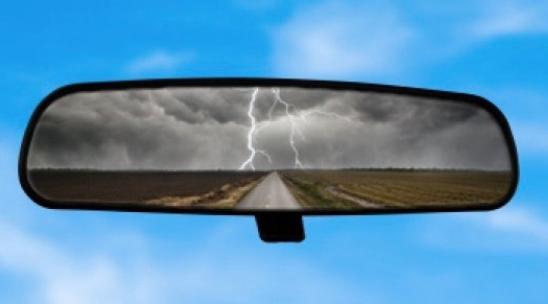
So stay tuned. There’s an election in the road up ahead. Maybe by this time next year, objects in your rearview mirror may be closer than they appear.

I’ll be right back.

PS: Happy birthday, Pappy!

Jamie Kirkpatrick is a writer and photographer with homes in Chestertown and Bethesda. His work has appeared in the Washington Post, the Baltimore Sun, the Pittsburgh Post-Gazette, the Philadelphia Inquirer, the Washington College Alumni Magazine, and American Cowboy magazine. “A Place to Stand,” a book of photographs and essays about Landon School, was published by the Chester River Press in 2015.  A collection of his essays titled “Musing Right Along” was published in May 2017; a second volume of Musings entitled “I’ll Be Right Back” was released in June 2018.  Jamie’s website is www.musingjamie.com
Don’t miss the latest! You can subscribe to The Talbot Spy‘s free Daily Intelligence Report here. 

The Spy Newspapers may periodically employ the assistance of artificial intelligence (AI) to enhance the clarity and accuracy of our content.

Filed Under: 3 Top Story, Jamie, Point of View Tagged With: Jaime Kirkpatrick, The Talbot Spy

The Angel’s Share by Jamie Kirkpatrick

December 10, 2019 by Jamie Kirkpatrick

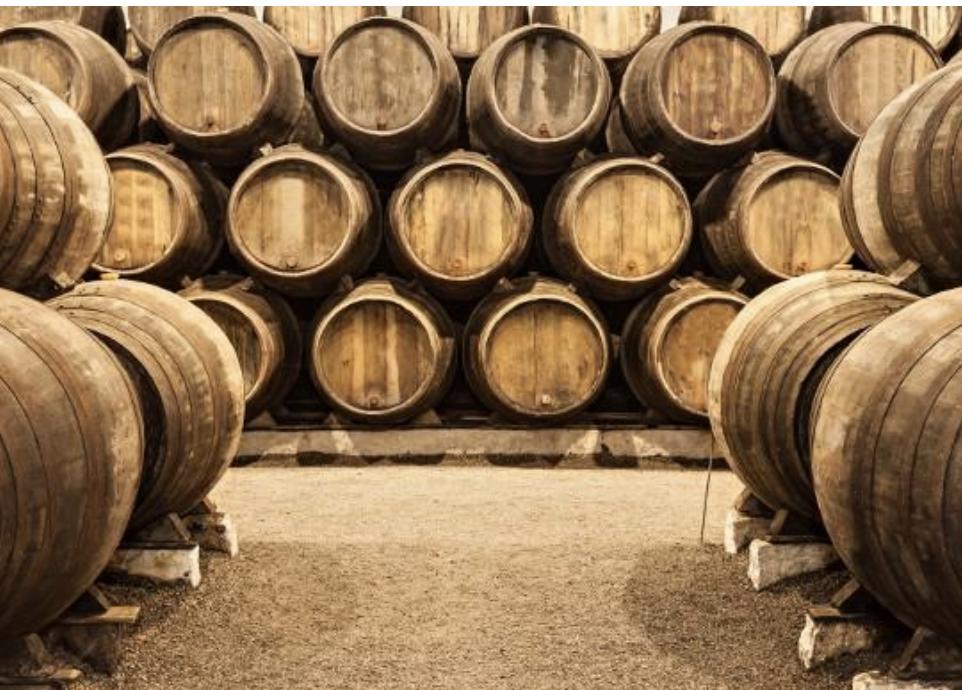
barrels

Iffy, Crumpets, and I had just ordered dinner and somehow—I don’t remember how or why—I said something about the angel’s share. “Wait,” said Iffy. “What’s that?” said Crumpets. And so I began to explain…

When a distilled spirit—whisky, brandy, cognac, for example—is put into a cask to age, a small amount of the liquid seeps through the porous membrane of the barrel and evaporates into thin air. It’s not much—about 1% of the volume of the liquid per year of aging—but enough to satisfy the angels who (like the rest of us!) surely appreciate a wee dram or two when the weather turns cold as it usually does about this time of year. “You mean there’s whisky in the air?” said Crumpets. “Is there bourbon, too?” asked Iffy. “Well, yes,” I said, “but it’s for the angels, not us.” I didn’t have the heart to tell them about the devil’s cut.

The devil’s cut is different. Distilled spirits are often aged in casks that originally held bourbon (or port or sherry) and a fraction of that original spirit remains trapped in the wooden staves of a whisky barrel. That iota of residue is the devil’s cut and it provides the aromatic essence that can give certain whiskies their slightly sweet finish. The tiny loss of liquid volume is the price we gladly pay to the angels and the devil. Just imagine the party they must be having!

There’s metaphoric gold to be mined here. Nothing good comes without a price. The pleasures of our lives may be few and far between—niceties, necessities, even luxuries—but they’re rarely, if ever, free. Clean air, clean water? Just think how much these essentials are worth to us and if you doubt me, ask the good people of Chernobyl or Flint, Michigan how much they would be willing to pay for a lungful of fresh air or a glass of clean water.

Or consider this: if the angels and old Dr. Evil are taking their share and cut out of what is intended for our palettes, is that a tax we pay or a hidden cost of doing business that is quietly passed along to the consumer? Either way, it’s hardly a transparent transaction; in fact, it’s just the opposite. Talk about a cloak of invisibility!

But you know what? I’m ok with sharing with the angels—after all, they do us a world of good. Just ask George Bailey. And as for the devil, I’ll give him his due, too, if only to keep him otherwise engaged and out of my hair. After all, I’d hate to think of the mischief that rascal would make if he were out and about and sober. He would probably be the wise guy that’s rolling back environmental regulations, or denying climate change, or appointing nincompoops to the federal bench, or shaking down Ukrainians, or generally fomenting hate while running water in our sinks and flushing our toilets all day long.

I’m willing to pay my fair share for a safe infrastructure, good public schools, healthy food, and a strong national defense—within reason, of course. If death and taxes are what Daniel Defoe identified as life’s only true certainties in his “Political History of the Devil” way back in 1726, then I’ll gladly pay the latter to avoid the former. And if in the bargain, the angels get their fair share, then I’m all the more for it.

I’ll be right back.

Jamie Kirkpatrick is a writer and photographer with homes in Chestertown and Bethesda. His work has appeared in the Washington Post, the Baltimore Sun, the Pittsburgh Post-Gazette, the Philadelphia Inquirer, the Washington College Alumni Magazine, and American Cowboy magazine. “A Place to Stand,” a book of photographs and essays about Landon School, was published by the Chester River Press in 2015.  A collection of his essays titled “Musing Right Along” was published in May 2017; a second volume of Musings entitled “I’ll Be Right Back” was released in June 2018.  Jamie’s website is musingjamie.com

Don’t miss the latest! You can subscribe to The Talbot Spy‘s free Daily Intelligence Report here. 

The Spy Newspapers may periodically employ the assistance of artificial intelligence (AI) to enhance the clarity and accuracy of our content.

Filed Under: 3 Top Story, Jamie Tagged With: Jaime Kirkpatrick, local news, The Talbot Spy

A Dickens of a Story by Jamie Kirkpatrick

December 3, 2019 by Jamie Kirkpatrick

Talbot Spy

I suppose you could say that a quiet and rainy Sunday morning really began with a not-so-quiet impromptu dinner party on Saturday evening. Mr. and Mrs. Iffleby had fully intended to attend an annual Christmas gala out in Betterton Bluff but unseen events had transpired in such a way that they thought it wiser to give the coachman and four-in-hand the night off and remain in town.

At the same time the Ifflebys were pondering their evening dining options, Mistress McBetts suddenly found herself unexpectedly alone and in need of a bit of good company on a cold Saturday evening in late November. Somewhat to her own surprise, she knocked on the door of her cheerful neighbors who lived down the street and spontaneously invited them—the Kirkbrites—to supper in her cozy apartments. It was just as she was proffering her kind invitation that a messenger boy also appeared on the Kirkbrites’ doorstep with a note from the Ifflebys inquiring whether they might dine together at the local inn.

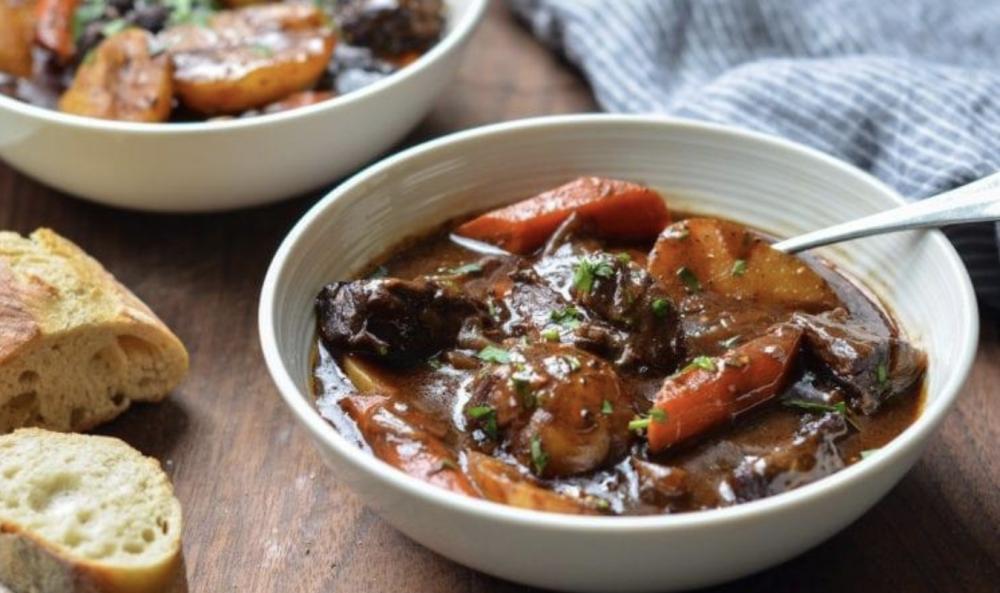
In a flash, everything came together: it just so happened that good Mrs. Kirkbrite had spent that very afternoon concocting a savory beef stew that could easily be stretched to accommodate three more so it was readily apparent to her that everyone—the Kirkbrites, the Ifflebys, and Mistress McBetts—should all convene in an hour around the Kirkbrite’s dinner table. When Mrs. Kirkbrite proposed her plan, Mistress McBetts agreed on the spot and the messenger boy was dispatched back to the Ifflebys inviting them to join in an impromptu dinner party. The ifflebys thought it a splendid solution to their dining dilemma, Mistress McBetts went off to fetch a bottle of wine and a dish of Brussels sprouts she had left simmering on the stove which she insisted on contributing to the fare, and Mrs. Kirkbrite reset the table for five while her husband refreshed the fire in the grate and opened a bottle of a modest Bordeaux that would pair well with his wife’s aromatic beef stew.

To no one’s surprise, the impromptu dinner party was a rousing success due, in part, to the stew, the sprouts, a seasonal salad, a fresh baguette just out of the baker’s oven, and some decadent chocolate truffles for dessert. Or perhaps it was due in even larger part to several additional bottles of wine procured from the local Wine and Cheese Shop at the very last minute, as well as a wee dram or two of Mr. Kirkbrite’s favorite Highland malt whisky which he proudly served after dinner. As the candles on the dinner table burned low, everyone heartily agreed that spontaneity, not honesty, was indeed the very best policy.

And so it certainly seemed that evening. If a passerby had looked through the Kirkbrite’s frosted front window pane and seen the happy friends gathered around the table, he (or she) might have felt a stab of regret that she (or he) was not included in such a merry gathering. But what the passerby would not see or know is that a very merry Saturday evening is inevitably followed by a dreich Sunday morning when one wishes that he and she had not consumed quite so copiously of such hearty food and quaffable drink.

Ah well, such is life and as we all know, life does go on. And so it did: Iffleby—good churchman that he was—went off to services with just a touch or regret and a slight headache. Mrs. Iffleby remained at home in her dressing gown and poured herself a second cup of tea which she took to her fainting couch. For her part, Mistress McBetts slept until almost noon. As for the Kirkbrites, wife spent the day recovering with a good book while husband retired to his study with a large pot of black coffee and a plate of bacon and eggs which he felt was the good and necessary soakage he would need if he were to write a Dickens of a story about a spontaneous dinner party with good and true friends. He worked for an hour or two, finishing his story just in time for Sunday lunch with these words:

“I’ll be right back.”

Jamie Kirkpatrick is a writer and photographer with homes in Chestertown and Bethesda. His work has appeared in the Washington Post, the Baltimore Sun, the Pittsburgh Post-Gazette, the Philadelphia Inquirer, the Washington College Alumni Magazine, and American Cowboy magazine. “A Place to Stand,” a book of photographs and essays about Landon School, was published by the Chester River Press in 2015.  A collection of his essays titled “Musing Right Along” was published in May 2017; a second volume of Musings entitled “I’ll Be Right Back” was released in June 2018.  Jamie’s website is www.musingjamie.com
Don’t miss the latest! You can subscribe to The Talbot Spy‘s free Daily Intelligence Report here. 

The Spy Newspapers may periodically employ the assistance of artificial intelligence (AI) to enhance the clarity and accuracy of our content.

Filed Under: 3 Top Story, Jamie Tagged With: Betterton, Jaime Kirkpatrick, local news, The Talbot Spy

Gratitude by Jamie Kirkpatrick

November 26, 2019 by Jamie Kirkpatrick

Artwork

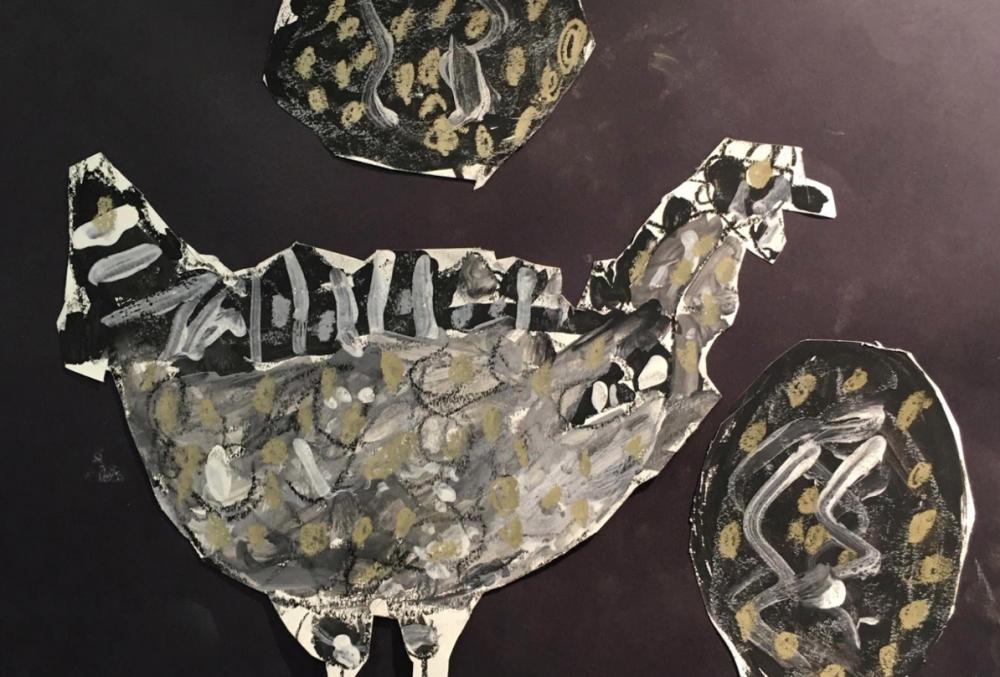
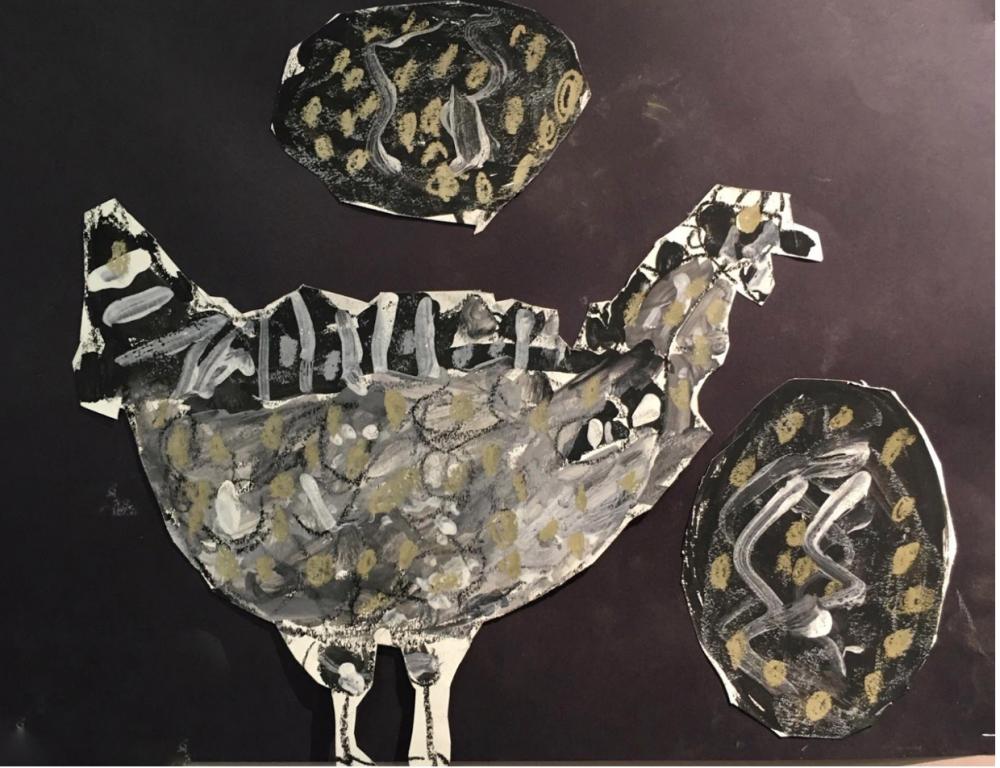
Artwork by Gavin Aschenbach, the author’s grandson

I’ve been musing a lot about gratitude. That seems reasonable given that Thanksgiving and its rowdy holiday cousins have come knocking on the door with armfuls of fun things to eat, drink, and do. So to get myself in the spirit of the season, I decided to make a gratitude list. I began: someone with a whistle to blow; brave civil servants speaking truth to power; ibuprofen; naps; socks (once they’re on); a good book; that first sip of morning coffee; seat warmers in the car. And that’s when it hit me: I was compiling a senior citizen’s gratitude list. I’m getting old. Sigh.

Fortunately, the next day was Grandparents Day at the elementary school where two of our five munchkins (another is on the way, thank you) attend. It gets a little complicated in our family, especially when we take the annual family photo with three grandfathers and one grandmother, but that’s just us. When it came time to go to the kids’ classrooms, we divided and conquered: two grandfathers went off to kindergarten while my wife and I headed to first grade. 

A lot of first grade takes place on the floor these days—my wife handled the descent with ease but that’s a long way down and a long way back up for me. There were math problems, word puzzles, and coloring projects—gently supervised chaos. We met our grandkids’ teachers and classmates, and the grandparents of our grandkids’ friends. There we all were, proudly sitting in this boat together, just like the kids. 

We watched our grandson solve math problems by counting on his fingers in a manner that resembled a Mandarin using an abacus. We admired his porto-cubist artwork and suddenly I remembered something Picasso once said, “Every child is an artist. The problem is how to remain an artist once he has grown up.” On another wall, there was his Newberry Prize-worthy illustrated story about designing and building a hamster cage although, as far as I know, there was not then—nor ever will be—a hamster in his house. We thought maybe the story was his way of processing the new crib that had just been assembled at home, the one that will soon cradle a new baby sister.

The chairs in the classroom were small; really small. My knees were becoming locked to my chest. Just when I was about to faint, the teacher rang a bell and said it was time to go to the gym for assembly. I found a seat—a real seat!—between my wife and the two other grandfathers in our clan who had just graduated from kindergarten. My limbs tingled as blood started to recirculate through my extremities. When the kids came marching in, cell phones popped up like weeds after a thunderstorm, recording every precious wave and shy smile as well as the heads of every other doting grandparent in the room who was doing exactly the same thing. Then we recited the Pledge of Allegiance and sang “My Country ’Tis of Thee” before sitting back to watch a variety show of cute poems and songs, including “Shoo Fly Don’t Bother Me” (now an ear worm stuck in my head) and the “Turkey Trot Blues,” rhythmically banged out gamelan-style on a combination of xylophones and glockenspiels. I turned to my wife and mouthed, “Wow!”

The day’s duty done, we all headed off to a nearby restaurant for lunch, joined there by two great grand-parents. Suddenly, I didn’t feel quite so old. I’d pinched an outline drawing of a turkey from school and some cut-out paper feathers on which the kids were to write the names of things for which they were grateful. I was supposed to then glue the feathers onto the turkey but that seemed like a lot of work so I decided to veer a little off course. Instead, I asked the kids to just tell me their gratitudes, the feathers, as it were, on their Thanksgiving turkey. Here’s the list they came up with:

The beach, the ocean, waves, sand, sun. Mommy and Daddy, my brother, my sister, our baby brother, the new baby sister in Mommy’s tummy; our dog; hockey and ice-skating; Christmas; my bike; our bunkbeds; the moon; friends; candy; food; climbing trees; playing tag; a tire-swing; Halloween; lights in the night. Love.

You heard me: a six-year-old and a four-year-old actually said, “Love.” From the mouths of babes…

So what’s on your list?

I’ll be right back.

Jamie Kirkpatrick is a writer and photographer with homes in Chestertown and Bethesda. His work has appeared in the Washington Post, the Baltimore Sun, the Pittsburgh Post-Gazette, the Philadelphia Inquirer, the Washington College Alumni Magazine, and American Cowboy magazine. “A Place to Stand,” a book of photographs and essays about Landon School, was published by the Chester River Press in 2015.  A collection of his essays titled “Musing Right Along” was published in May 2017; a second volume of Musings entitled “I’ll Be Right Back” was released in June 2018.  Jamie’s website is www.musingjamie.com

Don’t miss the latest! You can subscribe to The Talbot Spy‘s free Daily Intelligence Report here. 

The Spy Newspapers may periodically employ the assistance of artificial intelligence (AI) to enhance the clarity and accuracy of our content.

Filed Under: 3 Top Story, Jamie Tagged With: Jaime Kirkpatrick, local news, The Talbot Spy

Copyright © 2025

Affiliated News

  • The Chestertown Spy
  • The Talbot Spy

Sections

  • Arts
  • Culture
  • Ecosystem
  • Education
  • Mid-Shore Health
  • Culture and Local Life
  • Shore Recovery
  • Spy Senior Nation

Spy Community Media

  • Subscribe
  • Contact Us
  • Advertising & Underwriting

Copyright © 2025 · Spy Community Media Child Theme on Genesis Framework · WordPress · Log in