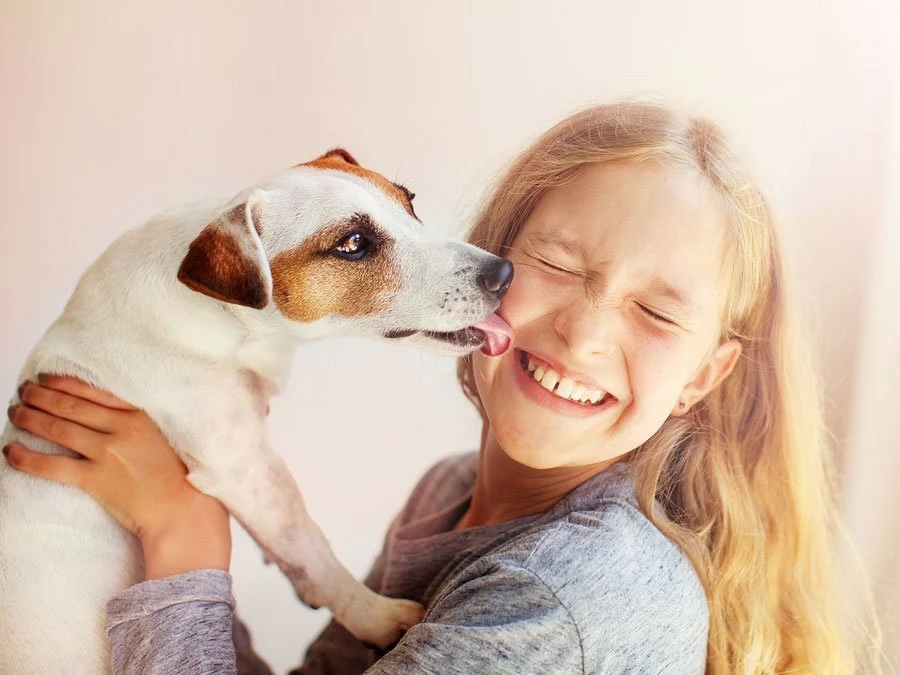


It was a whispered comment, a quiet exchange of pleasantries…but they heard my voice anyway. Immediately, squealing and excited barks echoed throughout the large room. The rock star had arrived.
When the groomer let them out to the pen, one leaped over her and the other crawled underneath, too quickly for her to put on their collars and leashes. My cute, fluffy dogs galloped across the room, howling in excitement. When they reached the gate, they tried to climb over it, or jump over it…anything to get to their rock star.
That improbable rock star was me.
I had left them to be groomed for a full 2 ½ hours and they were desperate to touch me, snuggle with me, lick me, and go back home to the best place in the world.
I didn’t need to bother with leashes or collars; they weren’t leaving my side.
Despite their opinion, I am not a rock star, pretty ordinary actually. A senior citizen just picking up my dogs from the groomers.
But to them, I am the best person in the world. I am amazing. If they are sick, I can heal them. If they are scared, I can reassure them. If they are hurting, I can comfort them. If they are uncertain, I can lead them. If they are hungry, I can feed them. I am their rock star.
In that moment I wondered, do they love me? Or do they just love that I feed them, pet them, walk them, and adore them?
I certainly love them. But do they love me?
Dogs are a unique species that can connect and communicate with a human on the human’s level. But do they love us? Most scientists believe that they do. The dog-human bond is so strong that modern training approaches recommend using praise instead of treats to reinforce behavior.
Researchers are evaluating the ability of dogs to communicate in our language. Using large push buttons placed on the floor (usually on a mat with many labeled buttons), dogs can communicate with their humans by pressing a button with their paw. Their humans label the buttons by speaking the word for each button label (e.g., “outside”). Then their dogs can press a button to communicate their need. For example, dogs can press the “potty” or an “outside” button when they need to go out. Many of these owners have also included the button that expresses “love” and dogs click that as well.
Why do scientists think that dogs love us?
The most obvious is their behavior.
- Dogs are happy to see us. Their expressions can range from a simple tail wag to a full throttle welcome, filled with snuggles, barks, whines, and touch.
- Dogs prefer their humans to anything, including food (although some food-oriented dogs do prefer food; full disclosure: one of my dogs would push me in the street for a hot dog, but regret it later).
- Dogs like to stay close to us as much as they can. Dogs follow us everywhere; they want to be with us.
- They look to us for comfort, affection, protection, security, and assurance. In fact, dogs rely on humans more than they do other dogs.
There are also clinical indicators that dogs love us.
There is chemical evidence. Dog-human eye contact produces oxytocin. It is called the “Oxytocin-gaze positive loop.” Oxytocin is a hormone that works as a neurotransmitter in the brain to produce a feeling of “love” or “euphoria.” A 2015 study in Japan demonstrated that Oxytocin is released when humans and dogs gaze at each other.
There is MRI imagery. In 2014, Emory University researchers using an fMRI scan, found that the section of dogs’ brains associated with positive expectations reacted most strongly to the scent of their specific humans. A similar study in Budapest, Hungary, demonstrated results with the voice of their human.
Findings suggest dogs can interpret emotion in our voices. My dogs are really skilled at appearing apologetic when they make a mistake.
What about cats? I write mostly about dogs because I am allergic to cats, but I still love them and would love to have another orange tabby like my previous cat, Jesse.
Scientists believe that cats also love their owners. While cats may be more subtle than dogs, cats see their owners as sources of comfort and safety. A 2019 study at Oregon State University revealed that cats experience less stress when their owner is present. Unlike dogs, cats show love in quieter ways, such as sitting next to us, following us, purring, head butting (which is marking us with their scent), and slow blinking. Cats meow to communicate with us and soft, gentle meows are interpreted signs of affection.
So, I choose to believe that my dogs love me almost as much as I love them. And I guess that I am a rock star after all. I just have a very small fan base.
Angela Rieck, a Caroline County native, received her PhD in Mathematical Psychology from the University of Maryland and worked as a scientist at Bell Labs, and other high-tech companies in New Jersey before retiring as a corporate executive. Angela and her dogs divide their time between St Michaels and Key West Florida. Her daughter lives and works in New York City.

Write a Letter to the Editor on this Article
We encourage readers to offer their point of view on this article by submitting the following form. Editing is sometimes necessary and is done at the discretion of the editorial staff.