MENU

Sections

  • Home
  • About
    • Contact Us
    • Editors and Writers
    • Join our Mailing List
    • Letters to Editor Policy
    • Advertising & Underwriting
    • Code of Ethics
    • Privacy
    • Talbot Spy Terms of Use
  • Art and Design
  • Culture and Local Life
  • Public Affairs
    • Ecosystem
    • Education
    • Health
    • Senior Life
  • Community Opinion
  • Sign up for Free Subscription
  • Donate to the Talbot Spy
  • Cambridge Spy

More

  • Support the Spy
  • About Spy Community Media
  • Advertising with the Spy
  • Subscribe
February 20, 2026

Talbot Spy

Nonpartisan Education-based News for Talbot County Community

  • Home
  • About
    • Contact Us
    • Editors and Writers
    • Join our Mailing List
    • Letters to Editor Policy
    • Advertising & Underwriting
    • Code of Ethics
    • Privacy
    • Talbot Spy Terms of Use
  • Art and Design
  • Culture and Local Life
  • Public Affairs
    • Ecosystem
    • Education
    • Health
    • Senior Life
  • Community Opinion
  • Sign up for Free Subscription
  • Donate to the Talbot Spy
  • Cambridge Spy
Education Ed Homepage Education Ed Portal Lead

Maryland’s School Superintendent Announces Accountability Task Force

April 30, 2024 by Maryland Matters

Maryland State Interim Superintendent Carey Wright, center, speaks with reporters April 29, 2024, several days after the state Board of Education unanimously approved Wright to become the permanent public schools leader. Beside Wright is sitting beside Clarence Crawford, left, president of the board, and board Vice President Joshua Michael. Photo by William J. Ford.

Five days after the Maryland State Board of Education unanimously voted to appoint Carey Wright as the state’s permanent superintendent of schools, she held a news conference on Monday to announce the creation of a task force to assess academic achievement.

Wright said members of this group will include local superintendents, principals and higher education representatives to provide recommendations on how to better assess how students are doing in the classroom. The group will be led by the Center for Assessment, a national education nonprofit that designs, implements and evaluates accountability systems to see how students are learning.

Part of this initiative stems from the Maryland Comprehensive Assessment Program (MCAP), which measures a student’s proficiency in math, English and science.

The Maryland Report Card uses a rating system from one to five stars to measure overall school performance such as graduation rates, attendance and academic performance.

MCAP results are among the factors that determine the state’s report card and school star rating system.

Although 76% of Maryland schools received at least three out of five stars on the state’s report card released in December, only 47% of all students in third to eighth grades scored on a proficient level in English language arts. The percentage was even lower in math, at nearly 25% proficiency.

“That’s doesn’t ring true,” Wright said. “You can’t have three quarters of your schools being rated as excellent, if you will, and then not seeing student achievement, almost commensurate with that.”

The task force, which will meet about twice a month, will begin its work Thursday and provide recommendations by December to the state Board of Education. Because this accountability system to assess student achievement is in state statute, any proposed changes would need to be done before the Maryland General Assembly convenes for its 90-day legislative session in January.

There’s also a plan to update the online report card to make it easier for parents, guardians and students to comprehend.

“The report card website needs to be a lot more accessible for folks to understand and be able to access data for their schools in their districts,” said Joshua Michael, vice president of the school board. “So delighted that Dr. Wright will be leading that portion of the accountability [measure].”

Wright, who will begin her tenure without the interim title July 1, said conversations “have to start now” on trying to diversify the state’s teacher workforce.

That’s part of the priorities in the Blueprint for Maryland’s Future education reform plan, but some local school leaders have documented challenges in hiring and retaining qualified teachers, and even recruiting teachers of color.

Although Maryland is one of the most diverse states in the nation, a September 2023 report from The Century Foundation noted that 70% of the teachers in the state were white in 2022. In comparison, about 19% were Black and 4% were Latino.

The percentages of the student population at the time: About 40% white, 33% Black and 21% Latino.

Wright recalled a program in place while she was schools superintendent in Mississippi that she would like to replicate in Maryland.

During her nine-year tenure in Mississippi, which ended with her retirement in 2022, the state became the first in the nation to launch a state-run residency teacher program to fill teaching positions and lack of diverse teachers.

“I think we need to do a better job of campaigning and outreach,” Wright said Monday about boosting Maryland’s teacher workforce. “It’s looking to see how we are helping districts recruit at specific areas. Children need to see somebody that looks like them standing in front of the classroom.”

By William J. Ford

The Spy Newspapers may periodically employ the assistance of artificial intelligence (AI) to enhance the clarity and accuracy of our content.

Filed Under: Ed Homepage, Ed Portal Lead

“No Child Left Indoors” at Radcliffe Creek School

April 24, 2024 by James Dissette

One critical lesson from the pandemic’s dire years of isolating and monotonous shutdowns was the positive mental health results of reconnecting to the natural world beyond cell phones and computer screens.

This did not go unnoticed by educators, who are already aware of social media’s addictive nature and seeing it compounded by the pandemic. According to Annie E. Casey Foundation research, 95% of teens 13-17 use social media, with 1 in 3 reporting “almost constantly.”

Noticing these trends, Radcliffe Creek School in Chestertown, known for its commitment to environmental education and working with students from kindergarten through 8th grade who have been diagnosed with learning differences, such as dyslexia, ADHD, and other language-based learning difficulties, has announced the launch of a new outdoor education project titled “No Child Left Indoors.” 

Inspired by Richard Louv’s concept of nature-deficit disorder, the “No Child Left Indoors” project aims to ensure every child has meaningful experiences in nature each year. Louv’s book The Last Child in the Woods points out that today’s digital native generation lacks exposure to nature, which he calls “nature-deficit disorder.” He advocates that direct exposure to nature is crucial for healthy childhood development and for the physical and emotional well-being of both children and adults.

“Our purpose is to ensure that every child has a series of meaningful experiences in nature each year at RCS that will help them be better citizens in their communities and better stewards of their environment,” says Head of School Peter Thayer.

With a generous grant from the Robert F. Schumann Foundation, the project aligns with the Foundation’s mission to improve the planet through environmental education. Radcliffe Creek School has a long-standing commitment to educating children about nature and the importance of environmental stewardship.

To implement the project, Radcliffe Creek School has designated Outdoor Education Coordinators for different grade levels. These coordinators work with teachers to plan educational field trips that tie directly to the academic experience. They also ensure that every excursion is safe, engaging, and educational.

Students are encouraged to reflect on their experiences in nature and document them in their Nature Portfolio. This work is cross-curricular, engaging students’ skills in reading, writing, math, science, and social studies.

The spy recently interviewed Head of School Peter Thayer, Discovery Department Head Simone Vagnoni, and Discovery Teacher Amanda Stubbs.


This video is approximately thirteen minutes in length. For more about Radcliffe Creek School, go here. 

The Spy Newspapers may periodically employ the assistance of artificial intelligence (AI) to enhance the clarity and accuracy of our content.

Filed Under: Ed Portal Lead, 1 Homepage Slider

Maryland Blueprint: Implementation in Dorchester County

April 1, 2024 by P. Ryan Anthony

“Transforming our public schools will require nothing less than rethinking and redesigning the policies in place now to create something that works much better for all students.”

That statement comes from the initial implementation plan for the Blueprint for Maryland’s Future, a set of policies and funding intended to transform Maryland’s education system from early childhood through elementary and secondary schooling. The Blueprint bill, which was passed by the state’s General Assembly in March 2020, was based on recommendations made by the Commission on Innovation and Excellence in Education. Also known as the Kirwan Commission, it recognized that Maryland students will be competing for jobs against students from across the U.S. and around the world.

Dr. Donald Boyd, Jr

The Accountability and Implementation Board was created to supervise the application of the Blueprint as well as ensure that the goals and expected outcomes are achieved. At the center of that supervision is Dr. Donald Boyd, Jr., the head of Strategic Initiatives. The Mississippi native, who has experience as a teacher and a principal, came to Dorchester County in October 2023 from the Office of the State Superintendent of Education in Washington.

Boyd sees the Blueprint as a “roadmap” guiding students to the resources and tools that will provide them with equitable opportunities so they can be competitive. “It levels the playing field for everybody across the board so that everybody will receive what they need. I may need a bowlful, you may need a spoonful, but essentially you receive what you need in order to be successful.”

“My role as it relates to the Blueprint,” he continued, “I do not necessarily serve as the nuts and bolts, but I serve as that conduit of information. I serve as this central hub that each of the pillars, they come to me.”

The pillars are the five areas in which the Blueprint policies are grouped.

  1. Early Childhood Education
  2. High-Quality & Diverse Teachers and Leaders
  3. College and Career Readiness
  4. More Resources for Students to be Successful
  5. Governance & Accountability

“And then each of the pillar leads serves as the how, the processes, the methodology,” said Boyd. “So, they come to me for information, and then after that, I help them to strategize, organize their thoughts, organize their thinking so that we can actualize the plan, we can materialize that, and we can see it in action.”

With the resources they have, Boyd and his cohort are doing their best to implement the Blueprint to scale as it relates to developing Pre-K, hiring a highly diversified staff, and ensuring all students are college and career-ready. If they find that the plan is not working, they will go back to the drawing board and decide on a pathway for students to succeed.

“So, we have implemented those parts of the Blueprint which the legislation has told us to,” Boyd said. “But when we’re looking at the Blueprint, there’s a timeline, right? To 2032, I believe. So, not all parts of the Blueprint have been implemented. We’re doing it in scales. So, as we receive information, we will implement it as best to the extent that we have the resources and tools.”

Since the blueprint did come out of legislation, it is funded primarily through the state government. But the counties are involved, as well, and Boyd believes that level has a huge responsibility to ensure all children are well educated.

He also believes the Blueprint will work, ultimately, though it will require collaborative input and tweaking. “Now, will we have some pushback? Absolutely. We have some pushback right now.”

Boyd was referring to the Blueprint Accountability and Flexibility Act of 2024, a part of the Republican legislative agenda that had a hearing in its assigned Senate and House committees on March 6. The act “provides stronger accountability for how nearly $4 billion in taxpayer funds are spent each year on public education, and also gives local school districts more time and flexibility to implement new Pre-Kindergarten programs.” The sponsors of the bill claim to have received multiple reports of misspending and concerns from school districts about the implementation timeline.

“It’s easy to sit back and make laws,” said Boyd. “But then someone has to carry those things out. What happens when there is a lack of funds? What happens when there is a lack of resources and teacher certification, the career ladder, Pre-K, the mixed delivery system, all things considered? So, we must look at everything in its granular level. How will it impact student achievement? Theory is wonderful, the theory behind the Blueprint.”

Still, he believes everyone has the same goal, which is student achievement. “And, if we have a common goal, if we have a common theme, I think the Blueprint will be successful.”

The Spy Newspapers may periodically employ the assistance of artificial intelligence (AI) to enhance the clarity and accuracy of our content.

Filed Under: Ed Homepage, Ed Portal Lead

Blueprint Implementation Continues: New Plans Reveal Ongoing Challenges For Schools

March 29, 2024 by Maryland Matters

When Maryland’s public school leaders submitted their first Blueprint for Maryland’s Future documents to state officials last year, part of the requirements were to identify any challenges they’d face meeting the mission of the education reform plan. These included hiring and retaining qualified teachers, expansion of prekindergarten to include 3- and 4-year-old children and incorporating college and career readiness programs.

In a second set of Blueprint documents submitted this month, officials of each school system provide an overview of the challenges they face in carrying out the education reform plan for the next year.

This reporting period comes as leaders in the Maryland General Assembly continue work on the $63 billion state budget. Legislative budget analysts have warned a budget deficit is looming starting in fiscal year 2026 at $1 billion and that, two years after that, it could increase to $3 billion.

Part of the reason for the anticipated deficit is fulfilling the requirements in the 10-year, $3.8 billion Blueprint plan.

“I don’t quite understand what’s the rush. It’s like they’re trying to pump money through the [education] system so fast,” Senate Minority Whip Justin Ready (R-Carroll and Frederick) said in an interview. “If we would just slow down the implementation some, it would be more sustainable financially for all of our counties and for the state.”

Ready said the overall Blueprint plan should incorporate accountability measures if certain requirements, such as making sure money is properly spent, aren’t met .

“It’s accountability for making sure you spend the money in the right places, but it’s not accountability for the results you’re getting,” he said. “It’d be great if we could sort of repurpose a little bit and say, ‘We’re still going to make a major investment every year,’ but let’s get it to where we can be sustainable with that…to make sure we get the right results for all this money.”

Cheryl Bost, president of the Maryland State Education Association, said public education has been historically underfunded. Bost had a message for some county government officials and school superintendents.

“Stop doing some of the things that you’re doing just because you’ve always done them and look at these, new innovative ways to deliver instruction,” she said in an interview. “So, it’s really evaluating what you’ll spend your money on, prioritizing and aligning with the Blueprint and making the investment. They can do it, but some of them don’t have the political will to do it.”

The Blueprint’s Accountability and Implementation Board (AIB) was created by the legislature to oversee the Blueprint plan implementation and approve all local school system plans.

A third set of documents due by May 1 requires local school officials to provide data on the Blueprint’s five priorities: early childhood education, hiring and retaining high-quality and diverse teachers, preparing students for college and technical careers, providing additional resources for students in need and governance and accountability.

A “Criteria of Success” checklist will be used to evaluate responses for each plan to receive approval.

In the Blueprint plans submitted this month on the AIB website, local school officials responded to at least five questions and prompts including this one: “Your district’s three greatest challenges to Blueprint implementation, including the rationale for selecting them, the specific initiatives/programs/strategies the district will implement to address them, and how your district will transform to implement these strategies effectively.”

From plans submitted by Maryland’s 24 local school districts, here are the top challenges identified by local school officials and some responses:

Allegany

— Designing school schedules and staffing to leverage the career ladder requirements.

— Developing strong core instruction and a MTSS (multi-tiered system of support) that provides support for all students.

— Recruiting and retaining teachers and leaders.

“Sustaining district-level initiatives across all schools is difficult because of staff retirements and turnover rates. The district must provide and sustain the Science of Reading training for teachers at both the elementary and secondary levels. Job embedded professional development and teacher collaboration is crucial so that up-front training is to be sustained. In addition, implementation of the new comprehensive literacy and math plans will be challenging as we consider the training needs, supports, and models of effective strategies necessary to effectively improve instructional practices.”

Anne Arundel

— Expansion of pre-kindergarten.

— Adequate and appropriate space needed for programs.

— Recruiting, training, and retaining high-quality and diverse educators to support full implementation.

“Anne Arundel County has yet to be able to partner with many private providers [for providing prekindergarten education]. Private providers routinely identify why they are not currently interested in partnering with AACPS for a mixed delivery system. [One reason includes] the current public-private partnership is not a profitable business model. Most Anne Arundel County childcare providers are at capacity with families paying full tuition that often exceeds the amount under Blueprint. With receiving less funding per child and having to meet the salary, benefits, and expenses to achieve [Maryland] EXCELS certification, private providers would make less money than they currently do.”

Baltimore City

— Structural inequities

— Insufficient funding

— Mismatch between expectations and incentives for partnerships.

“Implementing a law as comprehensive as the Blueprint for Maryland’s Future is going to be a herculean effort under the best of circumstances, but combined with the added complexities of pandemic recovery, delays that resulted in extremely limited pre-implementation planning time for districts, and the slow pace of regulations and guidance pertaining to the Blueprint, the challenges are amplified. The challenges…are primarily ones that emerge from structural problems or unintended consequences arising from the Blueprint Act itself.”

Baltimore County

— Expanding early childhood access for 3-year-old students.

— Implementing college and career readiness criteria for students who may not be on track to meet those standards.

— Recruiting and hiring teachers in critical need areas such as special education, mathematics and science.

“BCPS has identified the following factors impacting kindergarten readiness: 1) capacity building with private providers to expand early childhood programming for eligible students, 2) designing a more comprehensive public-private facility utilization plan to serve all eligible students in a mixed-delivery model of programming, and 3) expand[ing] opportunities for parents and child care providers to receive developmentally appropriate tools and resources aligned with kindergarten readiness in their community, prior to enrolling their student with BCPS.”

Calvert

— Strategically and meaningfully changing the structure of the school day to leverage the career ladder.

— Shifting mindsets and providing teachers with skills and resources to meet all students’ needs.

— Financial challenges

“The Blueprint calls upon districts to develop a career ladder that supports the reorganization of schools so that educators may engage in professional learning and peer collaboration and provide student-specific support to all students. The reorganization incorporates new roles for leaders and teachers, and a new system of professional development. The challenge is how to design this system, given multiple challenges (e.g., fiscal concerns, shifting mindsets that value traditional school structures and ways of working). Pragmatically, addressing this challenge involves multiple issues such as: instructional time requirements; course requirements; collective bargaining agreements, staffing and human resource capacity and availability.”

Caroline

— Funding

— Guidance

— Staffing

“In this context, it becomes imperative to identify these challenges, develop targeted strategies, and foster a culture of adaptability and collaboration to overcome hurdles and advance the Blueprint’s objectives. These three challenges were selected as the greatest challenges because they directly impact our progress towards reaching the goals of the Blueprint. Philosophically, we are excited about the promise of the Blueprint and are well-aligned with the priorities, but our biggest challenges are significant risks for us being able to achieve our goals.”

Carroll

— Professional learning

— Staffing

— System-wide continuous improvement

“Professional learning was identified as the primary challenge in our efforts at systemic transformation. Far too often professional learning in CCPS occurs as isolated events rather than ongoing, continuous training for improvement. All pillars are affected by the lack of professional learning opportunities for staff, and the lack of time devoted to training has become a significant hurdle in developing our workforce. The ongoing development of our staff is essential given the increased difficulty in hiring high-quality staff and the increase in students who are entering school with needs for educational supports (i.e., language supports and supports to address trauma).”

Cecil

— Funding and resource allocation

— Staffing and hiring

— Academics and instruction

“CCPS has been facing funding challenges for the past three years due to local government funding of education at the minimum maintenance of effort while also implementing the required statutes of the Blueprint for Maryland’s Future. CCPS was able to leverage COVID-19 relief funds to offset staffing and resource cuts from 2020-2024 in order to maintain staffing to meet the needs of all students. For [Fiscal Year 2025], the school system faces a funding cliff due to the sunsetting of federal relief funds and a lack of local funding to support all CCPS programs.”

Charles

— Workforce shortage

— 75/25 budget allocation for Blueprint reforms [which requires 75% of state and local contributions to follow the student and 25% of state and local contributions to go toward administrative functions]

— Making systematic changes

“The workforce shortage is a state and national trend. This impacts the district’s ability to fill openings in all schools, but specifically impacts our lowest performing schools. The scarcity of certified staff in Maryland has hindered the ability of CCPS to fill all certificated positions. The teacher shortage poses a significant challenge to implementing the Blueprint because it requires a well-trained and adequately staffed workforce to execute the pillars. With the shortage of staff to implement the work, providing the necessary supports to students, including individualized instruction, expanding learning opportunities, and other evidence-based measures can become difficult.”

Dorchester

— Professional development

— Certification

— Funding

“Professional development, the lifeblood of the any organization, has the potential to move the needle for student success. In the past, there has not been consistent professional learning across the board. Factors such as staffing, funding, the availability of resources and other structures have hampered efforts to provide professional learning for faculty and staff. As is the case, student achievement has been impacted on all levels especially in ELA (English Language Arts) and math. Because the district is keenly aware of professional development and its impact, school leaders have become more intentional in providing professional development particularly for the upcoming school year.”

Frederick

— PAR (Peer Assistance and Review) program for new teachers

— NBC (National Board Certified) expansion

— Dual enrollment

“These expenses, most of which rely on the local share, require us to make difficult decisions on how we meet the Blueprint requirements. This is coupled with managing real and pressing interests from our employees and community members in other areas such as funding for employee raises, special education program offerings, class size, bell times, and other key topics that fall outside of the Blueprint. Our strategy remains building the budget with prioritization for Blueprint-related items.”

Garrett

— Establishing a mixed delivery system for early childhood.

— Incentivizing teachers to opt into the career ladder.

— Meaningfully engaging stakeholders

“GCPS has made great progress with public early childhood programming by providing universal Pre-K 4 opportunities and adding three 3-year-old GCPS/Head Start collaborative classrooms. However, Garrett County still has zero eligible private providers offering Pre-K slots. In order to attain Blueprint outcomes, a mixed delivery system is required. Following a parent focus group, an increased need was identified for additional enrollment slots within the local school area. Identifying or expanding private/public enrollment slots through a mixed delivery system will meet this need.”

Harford

— Resource allocation

— Meaningful stakeholder engagement

— Realizing equitable outcomes

“One of the primary concerns expressed by stakeholders was whether HCPS would have adequate resources to carry out all aspects of the plan and hold staff and leaders accountable for the proposed changes. The ambitious scope of the Blueprint raised doubts among respondents about the sufficiency of funding, staffing, and physical space to support various initiatives, such as the introduction of new Early Childhood Education (ECE) programming. Furthermore, stakeholders expressed apprehension about teacher compensation, emphasizing its importance in recruiting and retaining high-quality educators. This concern underscored the broader issue of resource allocation within the HCPS.”

Howard

— Reallocation of funding

— Expanding prekindergarten

— Career ladder

“State law defines the funding formulas, which provide more than 95% of operating revenues for HCPSS. Increases from state aid are directly linked to required initiatives, but do not account for post pandemic cost increases and overall inflation. Local revenue streams from the formulas do not grow proportionately with forecasted expenses because they are primarily responsive to changes in enrollment and not linked to the cost of services. These factors have caused the superintendent’s proposed budget to include cuts to existing services to fund mandates and system priorities.”

Kent

— Funding and resource allocation

— Appropriate staffing

— Managing community and stakeholder perceptions and partnerships

“KCPS is committed to creating Blueprint programs that align to the needs of students, staff, and the community. Community engagement and partnerships are critical to the success of Blueprint implementation. Unfortunately, efforts to engage the community about Blueprint programs have not always been productive. KCPS hosted information sessions on pre-K expansion, post-CCR pathways, and the Blueprint, and low community engagement was noted at these events. Upon publishing its Blueprint implementation plan in 2023, there was also a low level of community feedback on the plan.”

Montgomery

— Sustainable funding

— Space for prekindergarten and other program expansion

— Providing information, support, resources engagement with all internal and external stakeholders

“Sustainable funding was identified as a challenge across all pillars. MCPS implements the Blueprint using a local and state share to fund initiatives. Due to wealth equalization formulas, the local Montgomery County share is increased. The increasing fixed costs of services and goods along with meeting employee compensation and program implementation costs, is very impactful to the Operating Budget.  Additional Blueprint implementation costs such as the requirement for schools to conduct a behavioral health screening for students at a significant cost to purchase the instrument, staffing to score the instrument and make referrals.”

Prince George’s

— Using resources strategically to support the Blueprint plan.

— Communicating with employees the ways in which their work already aligns with the Blueprint.

— Hiring and retaining qualified and diverse teachers and leaders.

“In terms of retaining teachers and leaders, the district is reimagining opportunities for additional mentorships, coaching relationships and professional development during the school day, which has been a challenge due to the shortage of substitute teachers. PGCPS will continue to explore alternative professional development solutions, such as live virtual training modules and/or asynchronous online modules that can be completed via after-school workshops or weekend sessions, to offer flexibility for teachers to participate in professional development activities without disrupting instructional time. This also includes continued professional learning for educators working with multilingual learners and children receiving special education services.”

Queen Anne’s

— Funding

— Prekindergarten expansion

— High-quality and diverse teachers and leaders

“Our reality is that QACPS could have less money in our overall, unrestricted operating budget in [Fiscal Year] 2025. Our leadership is collaborating and strategically planning our financial well-being with our county administration to request above MOE (maintenance of effort) funding. Addressing the funding challenge often requires assessing the feasibility of the new initiative, as well as a clear understanding of organizational priorities and constraints. Additionally, seeking alternative funding sources, such as grants, partnerships, or cost-sharing arrangements, may help overcome funding limitations.”

St. Mary’s

— Funding

— Implementation of the career ladder

— Overall education services and programs

“The ubiquitous challenge inherent in meeting Blueprint goals is in the fact that the Blueprint is silent on supporting all else, i.e., the arts, athletics, enrichment and after-school programming, transportation, facilities, health care, etc. These elements of school are necessary and imperative in supporting the whole child. With specific allocations of foundational funding and directive elements to Blueprint goals, the system must determine which elements of the whole educational experience must be redesigned, rethought, or cut to meet the mandates of Blueprint statutes.”

Somerset

— Staffing

— College and career readiness

— Social emotional learning

“Staffing is by far [the] largest issue with approximately 30% of staff non-tenured and/or non-licensed. While content is generally less intense at the early elementary level, middle school and high school content becomes very specialized and technical. The teacher shortage, and shortage of teachers with higher level mathematics and science knowledge is one of the largest contributing factors to our high non-tenured and non-certified numbers. Teacher turnover rates have led to an extremely young teacher workforce in SCPS. This means that many of them are having children and going on maternity leave, often at the same time.”

Talbot

— Mixed delivery and expansion of prekindergarten

— Recruiting highly qualified staff and building leadership capacity

— Resource reallocation and funding Blueprint mandates

“As we explore partnerships with private providers, we continuously face challenges with securing facility space for 3-year-old classrooms and assisting private providers with staffing and accreditation requirements. In our rural district, there are very few private childcare providers, with most having extensive waiting lists for entry. Private providers have also indicated that the funding for a mixed-delivery system does not coincide with their current business model and space availability. While TCPS is currently reviewing district infrastructure to support Pre-K expansion in our own facilities, we are also challenged with space and staffing.”

Washington

— Funding

— Staffing

— Academics/instruction

“Despite changes to the budgeting process and diligent cost-cutting measures at the district and school levels, additional financial support and funding are needed to meet the goals of the Blueprint and the evolving needs of staff and students. Resources earmarked for schools at their current allocation levels will not support the current or ongoing strategies needed to be successful in the post-pandemic environment. Exacerbated by our local funding context, WCPS will not be able to maintain services at pre-pandemic levels, which is made more difficult by the impact of inflation on prices for goods and services and employee compensation.”

Wicomico

— High-quality, skilled, licensed and diverse staff needed.

— Capacity to serve more prekindergarten students and expand Judy Center sites.

— Apprenticeship opportunities

“Identifying the need for high-quality, skilled, licensed, and diverse staff presents a significant challenge within our school system, compounded by the existing teacher shortage and various interconnected factors. Despite our active participation in Grow Your Own (GYO) programs, progress toward cultivating a diverse staff has been slower than desired. The decreasing number of diverse graduates from nearby university programs exacerbates this delay. Also, our ability to address the growing demands of our ESOL (English for Speakers of Other Languages) student population is hampered by limited funding, impeding our capacity to recruit and retain sufficient personnel.”

Worcester

— Expand publicly funded full-day prekindergarten.

— Establish a new educator career ladder and professional development system.

— Enhance student health services

“Worcester childcare providers have communicated receiving a lower amount than what it regularly charges is a nonstarter. Furthermore, childcare centers were required to have received a Maryland EXCELS Level 5 endorsement and private-religious childcare centers were deemed ineligible to apply for Expansion Grant and Blueprint monies. Rural communities like Worcester County have a shortage of childcare sites; therefore, it’s imperative to advocate to [the Maryland State Department of Education] for it to modify the amount of work or make the work more manageable to allow smaller childcare centers with less staffing to earn the proper EXCELS endorsement, making them eligible for these funding opportunities.”

By William J. Ford

The Spy Newspapers may periodically employ the assistance of artificial intelligence (AI) to enhance the clarity and accuracy of our content.

Filed Under: Ed Homepage, Ed Portal Lead

Chesapeake Forum’s New Era of Lifelong Learning with James Adams and Claudia Dziobek

March 14, 2024 by The Spy

In 2019, when the Chesapeake Forum (then the Academy for Lifelong Learning) left its home base of 15 years, Chesapeake Bay Maritime Museum, to chart a new future, it was reasonable for the leadership team at the time to worry about its prospects.

While for many years, the ALL has proven to be successful in many ways, including the number of courses offered and robust student enrollment, the volunteer organization had to rebrand itself, find convenient meeting space, and then navigate the unprecedented changes that the COVID pandemic caused in 2020.

But as Chesapeake Forum’s long-serving treasurer, James Adams, and newly elected board president, Claudia Dziobek, note in their Spy interview from a few weeks ago, the lifetime learning organization’s future has never looked brighter.  Starting with the selection of Lynn Randle as CF’s first executive director and then adding that enrollment has returned to pre-COVID levels, a permanent classroom is now operational with a special partnership with the YMCA, and the challenge for the board is managing this growth. 

This video is approximately five minutes in length. For more information about the Chesapeake Forum and program please go here. 


The Spy Newspapers may periodically employ the assistance of artificial intelligence (AI) to enhance the clarity and accuracy of our content.

Filed Under: Ed Homepage, Ed Portal Lead

Building a Pathway to Serve with MD’s Service and Civic Innovation Secretary Paul Monteiro

March 8, 2024 by Dave Wheelan

A few weeks ago, Paul Monteiro, Maryland’s new and first Secretary of Service and Civic Innovation, stopped by the Spy studio to discuss his department’s new efforts to coordinate and fully encourage volunteerism and civil engagement.

That’s a pretty tall order these days.

Year after year, the state of Maryland, like the rest of the country, has seen a serious decline in volunteer service and opportunities. Due to a number of complex socio-economic and demographic factors, some can’t find a way to serve or have simply decided not to engage at all with their community.  In other cases, young people who don’t engage lose internship and mentoring opportunities that put them on a pathway to a decent job.

Governor Wes Moore wants to change this grim outlook. On his first full day in office, Moore signed his second executive order creating the Department of Service and Civic Innovation. The goal is to consolidate and elevate the agencies of state government that support service opportunities in Maryland.

One of the first people he recruited to lead that effort was Paul Monteiro, who had a significant background. That has included being on the Obama White House staff as an associate director in the Office of Public Engagement.

In our interview, Secretary Monteiro highlights two of the primary initiatives being rolled out this year. The first, which came with the introduction of the Serve Act, which stands for Serving Every Region Through Vocational Education, is designed to leverage and enhance existing resources in Maryland, aiming to facilitate a smoother transition for young adults into their subsequent phases of life. The second, called the Maryland Corps, is aimed at all ages.

Both organizations and companies interested in participating in these pilot programs are requested to apply here by April 1.

This video is approximately seven minutes in length. 


The Spy Newspapers may periodically employ the assistance of artificial intelligence (AI) to enhance the clarity and accuracy of our content.

Filed Under: Ed Homepage, Ed Portal Lead

Washington College’s Remarkable Turnaround Story: A Chat with President Mike Sosulski by Craig Fuller

January 3, 2024 by Craig Fuller

Three years ago, Washington College, like almost every other liberal arts institution in the country, faced some real and perhaps even existential threats. Beyond the overwhelming challenge that the COVID pandemic brought to these schools, Washington College was also facing significant budget shortages, enrollment drops, and the after-effects of almost ten years of troubling leadership turnovers. The pressure on its board of trustees was acute as its members and the school’s faculty set about appointing a new college president in late 2021.

With the appointment of Mike Sosulski as the 31st president of the 10th oldest college in America, Washington College put its faith in a scholar and proven administrator whose lifelong devotion to the value of higher education is evident in his vision for honoring the liberal arts while driving the necessary improvements and innovations needed for a small college in the 21st century.

Beyond the immediate task of surviving the pandemic, Sosulski had to build a new leadership team, end an enrollment slump, and improve town-gown relations.

By all accounts, Sosulski has not only accomplished those objectives but has also done so by strengthening trust and culture. Washington College now has a $350 million endowment, a dramatically improved enrollment forecast, a well-seasoned leadership team, and a sophisticated long-term plan for remaining relevant and sustainable for decades.

Given the uniqueness of this kind of success story, the Spy turned to commentator Craig Fuller, an expert on presidential leadership, having worked for Presidents Ronald Reagan and George W.H. Bush in the White House, to use our long-form interview format to chat with President Sosulski about this dramatic shift for Washington College and his vision for the school as higher education enters perhaps its most challenging era.

This video is approximately 20 minutes in length. For more information about Washington College please go here. For a more in depth profile of Mike Sosulski please go here.


The Spy Newspapers may periodically employ the assistance of artificial intelligence (AI) to enhance the clarity and accuracy of our content.

Filed Under: 1 Homepage Slider, Ed Homepage, Ed Portal Lead, Spy Chats

Mid-Shore Education: A Tribute to Dr. Theresa Stafford

December 22, 2023 by P. Ryan Anthony

In her final days, Dr. Theresa Stafford was still thinking of the children. When Cambridge Police Captain Antoine Patton visited her at the hospital on December 9, she was worried about whether he had gotten receipts taken care of for the Christmas program for the kids at New Beginnings Youth and Family Services, where Stafford was executive director. On the 12th, she had her sister get a message to Dr. Susan Morgan, who served on the Dorchester County Board of Education with her, because she was still thinking of the Board’s responsibilities to the schools.

“I trusted her and her knowledge of our community and the kind of help children in the community needed,” said Cambridge Mayor Steve Rideout. “That is who she was.”

“Dr. Theresa Stafford was a phenomenal woman and dedicated education advocate for accountability in educating all children, especially children of color,” said Omeaka Jackson, CEO of Harvesting Hope Youth and Family Wellness, Inc.

But she was much more than that. She was a spouse, a mother, a foster mom, a sister, and a friend to so many. The city of Cambridge was in her blood, because it’s where she began her journey and where it ended.

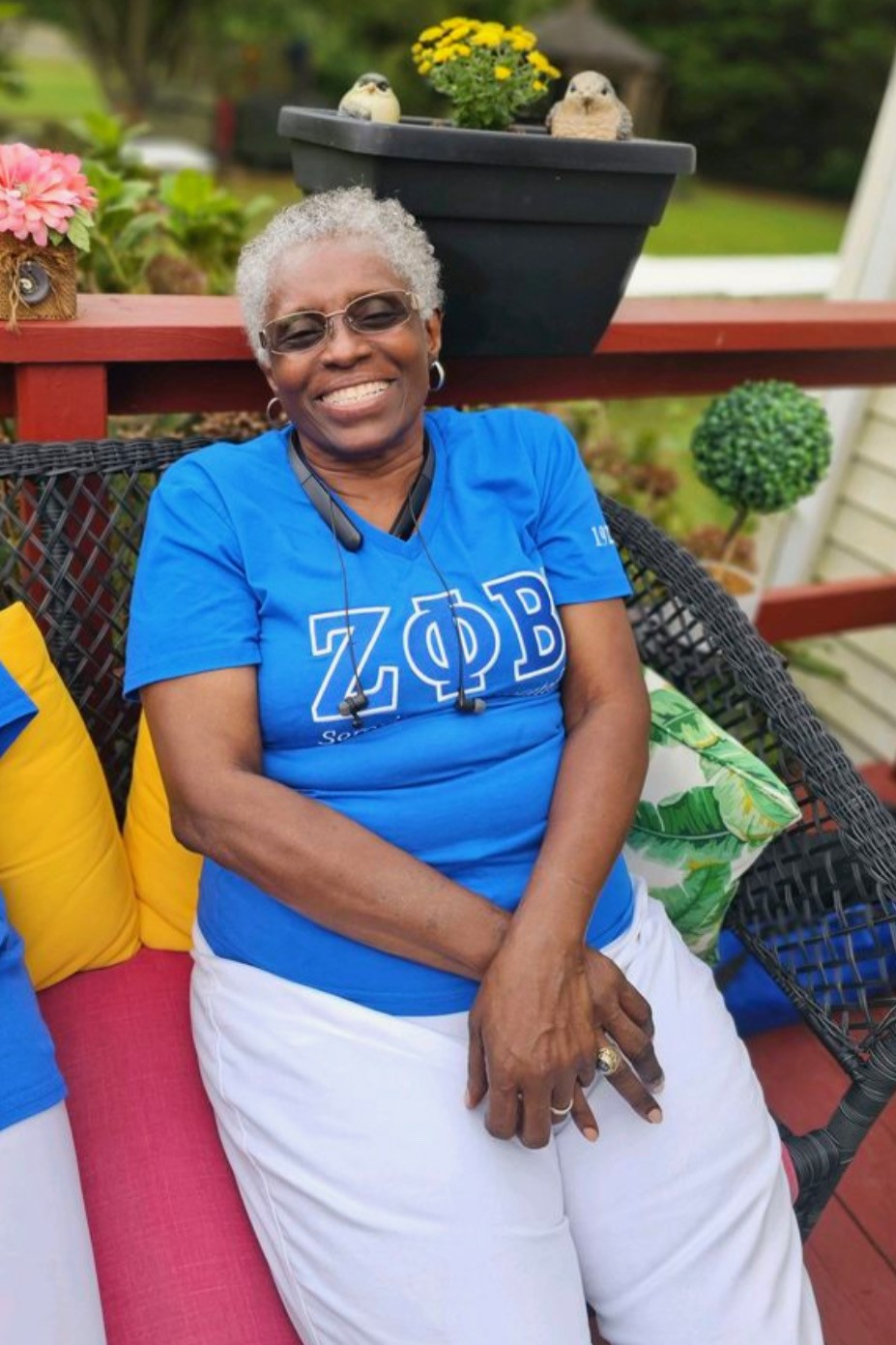
Theresa Diane Molock was born in Cambridge on November 30, 1953, to Thomas and Rose Lee Molock. She graduated from Cambridge High School and then earned her Bachelor’s Degree from the University of Maryland Eastern Shore, where she joined Zeta Phi Beta sorority. Along the way she got her Master’s at Salisbury University and her Doctorate at Wilmington University. Education, of course, was her focus. She married Lewis H. Stafford, Sr., at Waugh United Methodist Church on October 8, 1983.

“She was kind of tough on me like she was on the kids, but she also had a gentle side,” recalled Mr. Stafford. “She was my best friend.”

Likely Dr. Stafford acquired, or at least honed, her discipline during her 22 years in the Maryland Army National Guard, from which she retired as a Sergeant First Class. At the same time, she was an educator in the public school systems. And she continued being a mom, taking the principal responsibility for her children while Lewis was on the road as a truck driver.

“She was the doctor to the kids, she ran them to different activities and stuff,” he explained. “I don’t really know how she did it all. I always said she would wear out the Energizer Bunny if they were in a contest together. My bet would be on Theresa Stafford.”

As Dr. Morgan put it, “Talking about Theresa is like talking about a whirlwind.”

Dr. Stafford’s mothering didn’t stop when her kids grew up. According to daughter Ashley. “If I was wronged at work, she would just always encourage me to stand up for myself, get everything in writing in case I ever had to prove something. Just making sure we were good financially, emotionally.”

She also carried her maternal instincts into the schools. Even before becoming an official foster mom in the early 2000s, Dr. Stafford would take a child home with her if the kid was having trouble at his or her own home.

After retiring from the school system following 37 years of service, Dr. Stafford refused to slow down. The kids still needed her. Besides running programs like New Beginnings, she was ubiquitous at community functions such as City Council meetings or police town halls, where she made herself heard.

“She was vocal and very direct,” said Charlene Jones, director of programs for the John and Janice Wyatt Foundation.

“I loved the conversations that we had about the children of this community,” remembered Mayor Rideout. “When we talked and listened to one another, we very often wound up in complete agreement. When there appeared to be disagreement, such as with the curfew ordinance, we only disagreed on how to solve the problem but not that the problem did not exist or did not need to be solved.”

Eventually, Dr. Stafford decided to take an even more active hand in things. She ran for the Board of Education because she felt she could lend her expertise to help get the county schools where they needed to be. She won and became the representative for District 2 last December.

“Working with her on the Board was great,” said Dr. Morgan, “even though she would call or text me as late as 1:30 at night or as early as 6:30 in the morning. It seemed like she never slept. Her mind worked 24 hours a day.”

And that mind constantly worked for the children, thinking of more ways to help them.

“I remember Dr. Stafford sponsored a basketball team with Recreation and Parks so more children had an opportunity to play,” said Jones.

Even as she was losing her long battle with cancer, she didn’t give up on the kids. For Thanksgiving, she had made plans to take a bunch of children to Great Wolf Lodge in Perryville. When she got noticeably ill, her spouse tried to make her face the reality of the situation.

“I said, ‘I think you’re gonna have to cancel that because you’re not gonna be able to do that,’” recalled Lewis Stafford. “And she said, ‘No way. I will not disappoint them children.’” Fortunately, Ashley agreed to take the kids, and several of the Stafford grandchildren went along as chaperones.

But finally the force of Theresa Stafford’s will had to give way, and she died on December 14. Scores of people have expressed their grief while also remembering her strength and how she influenced and inspired those around her.

“She set the standard, but she also left the blueprint,” said Jones. “Dr. Stafford has impacted a lot of lives, mine personally and professionally, and I am ever so grateful.”

“I’ve never met anyone like her,” said Dr. Morgan, “and I doubt I will in the future.”

“The ladies of Iota Chi Zeta Chapter of Zeta Phi Beta Sorority, Inc., will work diligently to ensure her legacy lives on in Cambridge,” wrote Tonya Lewis, president of the sorority chapter Dr. Stafford helped to begin. “Her memory will live on in the hearts and lives she touched.”

The Spy Newspapers may periodically employ the assistance of artificial intelligence (AI) to enhance the clarity and accuracy of our content.

Filed Under: Ed Homepage, Ed Portal Lead

The State of Chesapeake College: A Chat with President Cliff Coppersmith

December 19, 2023 by The Spy

Over the years, one of the most enjoyable interviews the Spy has every year around this time is our check-in with the president of Chesapeake College, Cliff Coppersmith.

There are several reasons for that. As the community college for the Mid-Shore, Chesapeake is one of those notable local institutions that genuinely change lives every day. Over the years, the college has been our most significant provider of a well-trained, professional workforce for the counties of Caroline, Dorchester, Kent, Queen Anne’s, and Talbot since it opened its doors. Still, it has grown into so much more than that mission.

With its increasingly broad scope of educational opportunities, Chesapeake has opened the door to affordable higher education to literally thousands of young adults in Mid-Shore since the college was founded in 1965.

In our interview, President Coppersmith discusses the college navigating through two significant developments: its reaccreditation process and formulating a new strategic plan. The reaccreditation is a critical process that ensures the college meets specific quality standards, a requirement for receiving federal aid.

Simultaneously, the college is shaping its strategic plan, initiated five years ago, as it nears its conclusion. This plan addresses the college’s financial stability, enrollment numbers, and overall sustainability. The focus on these areas is particularly vital in light of the nationwide challenges higher education institutions face, such as demographic shifts leading to reduced high school graduate numbers.

Highlighting the college’s recent achievements, Coppersmith proudly mentions the construction of the Health Professions and Allied Programs (HPAP) facility, a significant contribution to both the campus and the region. This facility underscores the college’s commitment to healthcare and skilled trades education.

Looking ahead, there is a healthy optimism on Cliff’s part with an 8% projected enrollment increase this fall. The college has also seen improvements in student retention and successful transfers to four-year institutions. Furthermore, the college is undergoing a branding refresh, including a new logo and website, to represent its identity and values better.

This video is approximately 12 minutes in length. For more information about Chesapeake College please go here.

The Spy Newspapers may periodically employ the assistance of artificial intelligence (AI) to enhance the clarity and accuracy of our content.

Filed Under: 2 News Homepage, Ed Portal Lead, News Portal Highlights

TCPS One of Few in MD with 3-plus Stars for All Its Schools in Latest Report

December 18, 2023 by Talbot County Public Schools

The Maryland State Department of Education (MSDE) has released the 2023 Maryland School Report Card. The report card contains data for every school in the state, including, the eight schools in Talbot County.

Schools earn between one and five stars based on the total percentage of points earned across several indicators. For elementary and middle schools, the indicators are: Academic Achievement, Academic Progress, Progress in Achieving English Language Proficiency, and School Quality and Student Success. For high schools, the indicators are Academic Achievement, Graduation Rate, Progress in Achieving English Language Proficiency, Readiness for Postsecondary Success, and School Quality and Student Success. 

Talbot County Public Schools presented an overview of this year’s reports to the Board of Education at the December meeting, following MSDE’s release of the ratings earlier that day.  Dr. Helga Einhorn, Assistant Superintendent for Teaching, Learning & Leading, shared that there were three changes from the prior year that have impacted this year’s report cards. “In addition to the new eighth-grade social studies assessment in the Academic Progress indicator for middle schools, the elementary and middle school Academic Growth measure and Chronic Absenteeism at all school levels returned to pre-pandemic methods of calculation,” she explained. 

“This has had an impact on TCPS and all school systems across the state,” she added. “I want to reiterate the caution that we should not be looking at a direct comparison to the last star ratings; this is a baseline for moving forward in monitoring our progress.”  Dr. Einhorn explained that the report cards “provide valuable measures for identifying areas for school improvement” and attributed the successes in some indicators to “the dedicated efforts of TCPS teachers and school administration.”  Dr. Einhorn also noted that Talbot County Public Schools (TCPS) is one of only eight districts out of the 24 in Maryland that earned star ratings of three or higher for all schools.

The School Report Card is designed to give students, families, educators, and community members a better understanding of school performance, just as report cards help parents understand how children are performing. The goal of the school report card is to provide easy-to-understand and concise information for each school. Parents and community members can explore the Maryland Report Card website https://reportcard.msde.maryland.gov/ for more information and data. The School Report Card for each school can be found there, as well as more information and data about schools and districts.

The Spy Newspapers may periodically employ the assistance of artificial intelligence (AI) to enhance the clarity and accuracy of our content.

Filed Under: Ed Homepage, Ed Portal Lead

« Previous Page
Next Page »

Copyright © 2026

Affiliated News

  • The Chestertown Spy
  • The Talbot Spy

Sections

  • Arts
  • Culture
  • Ecosystem
  • Education
  • Mid-Shore Health
  • Culture and Local Life
  • Shore Recovery
  • Spy Senior Nation

Spy Community Media

  • Subscribe
  • Contact Us
  • Advertising & Underwriting

Copyright © 2026 · Spy Community Media Child Theme on Genesis Framework · WordPress · Log in