
MENU

Sections

  • Home
  • About
    • Contact Us
    • Editors and Writers
    • Join our Mailing List
    • Letters to Editor Policy
    • Advertising & Underwriting
    • Code of Ethics
    • Privacy
    • Talbot Spy Terms of Use
  • Art and Design
  • Culture and Local Life
  • Public Affairs
    • Ecosystem
    • Education
    • Health
    • Senior Life
  • Community Opinion
  • Sign up for Free Subscription
  • Donate to the Talbot Spy
  • Cambridge Spy

More

  • Support the Spy
  • About Spy Community Media
  • Advertising with the Spy
  • Subscribe
December 15, 2025

Talbot Spy

Nonpartisan Education-based News for Talbot County Community

  • Home
  • About
    • Contact Us
    • Editors and Writers
    • Join our Mailing List
    • Letters to Editor Policy
    • Advertising & Underwriting
    • Code of Ethics
    • Privacy
    • Talbot Spy Terms of Use
  • Art and Design
  • Culture and Local Life
  • Public Affairs
    • Ecosystem
    • Education
    • Health
    • Senior Life
  • Community Opinion
  • Sign up for Free Subscription
  • Donate to the Talbot Spy
  • Cambridge Spy
Point of View Editorial Point of View Opinion

“Fail First” is a Failure Always Ali Asghar Kassamali

December 13, 2025 by Spy Daybook 4 Comments

Imagine walking into a health care clinic only to find that our loved one cannot receive the medication their doctor recommends, not because it is unsafe or unproven, but because their insurance requires them to “fail first.” This practice, known as step therapy, forces patients to try cheaper medications before gaining access to the treatments their physicians know are most effective. In theory, it is meant to control costs. In reality, it delays care, worsens disease outcomes, and undermines medical judgment. 

Step therapy places bureaucracy above medicine. It compels patients to take medications that may be ineffective or even harmful, prolonging suffering and increasing the risk of irreversible complications. Worse still, protections against this practice are inconsistent across states and insurance types. As a result, many of us face uncertainty each time we switch jobs, plans, or providers, never knowing whether we will be forced to “fail first” again. 

The solution lies in passing the Safe Step Act, a bipartisan bill currently pending in both the United States Senate and the House of Representatives. The act would create a standardized process for step therapy exceptions nationwide, allowing physicians to override fail-first requirements when medically appropriate. Through this reform, patients would gain faster access to the treatments they need, doctors would face fewer administrative burdens, and insurers would ultimately save money by treating illnesses correctly the first time. 

This reform is not just practical; it is urgent. According to the Patient Access Network Foundation (2024), one in six adults in the United States reports being forced by insurance to try and fail on a cheaper medication before obtaining an effective one. Even more troubling, one in five of these patients ends up in the emergency room or hospitalized as a direct result. The American Medical Association (2024) has found that prior authorization and step therapy delay necessary care 94 percent of the time, lead to hospitalization in 19 percent of cases, cause serious adverse events in 13 percent, and even result in permanent disability, birth defects, or death in 7 percent. These are not abstract statistics. They represent real people whose lives are endangered by policies that prioritize savings over safety. 

Consider Sofia, a woman living with severe psoriasis, psoriatic arthritis, and a rare form of blood cancer. After years of pain, her doctors found a medication that controlled her skin and joint disease without worsening her cancer. She finally returned to work and regained her quality of life. 

But when she changed insurance plans, her new insurer refused to cover the medication that had restored her health. Instead, they forced her to retry a drug that had already failed. For six months, Sofia endured excruciating pain, sleepless nights, and social isolation. The damage she experienced could have been entirely prevented. Her story is one of many that show why reform cannot wait. 

If we do nothing, the consequences will deepen. More patients will suffer unnecessary harm, healthcare costs will continue to rise due to preventable hospitalizations, and trust in our healthcare system will erode further. Patients should never be collateral damage in a cost-saving experiment. 

But if we act now and pass the Safe Step Act, the outcome will be transformative. Patients will gain consistent protections across all states and insurance plans, ensuring they receive the treatments their doctors prescribe without unnecessary obstacles. Physicians will regain autonomy to make decisions in the best interests of their patients, reducing moral distress and burnout. Employers and insurers will benefit as well. When patients receive effective treatment early, they stay healthier, miss fewer workdays, and require fewer hospital visits. Preventing disease progression is not only humane; it is economically wise. 

The path forward requires unity. We, as physicians, patients, advocates, and citizens, must raise our voices together and send a clear message that every patient deserves timely, effective care, free from arbitrary barriers. This is more than a policy debate; it is a moral imperative. Passing the Safe Step Act will protect people like Sofia, ensure that future generations receive the care they need, and reaffirm that compassion, not cost-cutting, belongs at the heart of American medicine. 

We cannot allow suffering to continue when the solution is already within reach. It is time for us to act, to speak, and to demand that Congress pass the Safe Step Act so that no one has to endure preventable pain while waiting to “fail first.”

Ali Asghar Kassamali is a senior at Johns Hopkins University, where he majors in Natural Sciences. His research has been featured in scientific and medical publications across the United States. He writes from Baltimore. 


The Spy Newspapers may periodically employ the assistance of artificial intelligence (AI) to enhance the clarity and accuracy of our content.

Filed Under: Editorial, Opinion

Spies In Search of a Proper Breakfast: Three Mid-Shore Favorites

September 30, 2025 by Spy Daybook

For the serious breakfast crowd—those who see the first meal as a bit of a sacred ritual—there’s nothing quite like a café that opens its doors promptly at 7 am, or even earlier, to earn street cred. You’ll find these faithful in rural Vermont and coastal Maine, where the natives line up for pancakes and eggs even in the dark mornings of winter. And they endure in the summer months as tourists disrupt their morning routine with long lines and children.

The country is also living in a time when the breakfast sandwich can give any old coffee shop the right to call itself a breakfast spot, but in the Spy’s rule book, that’s deceptive. The breakfast sandwich has always been the compromise breakfast created for college students and commuters, not for those who understand that offering egg platters is a sign of actual devotion.

For the record, the Mid-Shore has had in the past those kinds of legendary venues, with perhaps Holly’s on Kent Island the best known of the lot on Route 50/300. However, over the last few decades, the American breakfast has become increasingly rare, even as it finds increasing culinary significance in Maryland.

That doesn’t mean there are still no options, and the Spy asked two of its agents to conduct a quick assessment of where one can get a proper breakfast off Route 50. As they continue their research in the upcoming months, we hope our readers will suggest their own favorites, and we’ll add them to the list for surveillance.

But for the moment, these are the Spy favorites:

1. Blackwater Bakery — Cambridge

Address: 429 Race St, Cambridge, MD 21613
Website: blackwaterbakerycambridge.com

If there were a Hall of Fame for breakfast on the Mid-Shore, Blackwater Bakery would be an early inductee. It hits every note just right: consistent food, friendly service, early opening hours, and a menu that treats breakfast like the main event—not an afterthought.

From the three-egg trio platter and bacon to creative daily specials, Blackwater makes it clear they take the first meal seriously, and that certainly shows on their menu, where their lunch offerings make up less than a 1/4 of the page.

It was also the only place we’ve tried where scrapple is proudly served and, just as importantly, prepared the right way. One doesn’t want to fool around with how to cook the Delmarva’s favorite breakfast meat, and Blackwater does it crispy and thin.

The most crucial advantage that Blackwater has is that it’s an authentic bakery. Every day, fresh muffins, croissants, biscuits, and cinnamon rolls are on display, providing almost aromatic therapy to diners.

The other thing to know about Blackwater is that it’s popular. So popular in fact that it added a new wing to handle the morning crowd. They gratefully take reservations, or you can be the first in the door at 7 am, and join the pros.

2. Breakfast in Easton – Easton

Address: 317 N Washington St, Easton, MD 21601
Website: bineaston.com

Breakfast in Easton

Stephen Mangasarian, the owner and chef of Breakfast in Easton, is a breakfast hero in the area. A one-man band, Stephen has upheld his New England heritage by offering a classic, delicious breakfast spot that takes its role seriously.

Opening the door at 6:45 am most mornings, Stephen assumes his position in the open kitchen to welcome guests and log orders in a space that comfortably seats less than 20 during the winter and twice that in good weather with the patio open.

Like many places in New England, the menu is short and simple. Eggs, solid pancakes, and good coffee.  Nothing more, nothing less. If you’re in the mood for granola or a double cappuccino, you’ll be out of luck. And that, in keeping with those small diners up north, it’s cash only.

Open from 7:00 a.m. on weekdays, it’s the kind of joint where the coffee is always fresh and refilled without asking.

3. Bonheur – Easton

Address: 5 Goldsborough St, Easton, MD 21601
Website: eatbonheur.com

Now for something a bit different. There is a new kid on the block.

Bonheur doesn’t open early (doors open at 8:00 a.m.), and it doesn’t have the breakfast-in-a-hurry vibe of the other two spots. It’s more like a place you’d find on the Upper East Side of New York. Quiet, comfortable, and with an understated elegance, it feels surprisingly welcoming.

Some of that has to do with the fact that BonJour began on Goldsbrough Street as an ice cream and pie enterprise, which has proved to be successful in its own right. However, decision-makers at Bluepoint Hospitality must have recognized the need in Easton for a reliable downtown breakfast option, and they have recently added morning hours and a new menu.

The results are exceptional.  The menu includes a full range of traditional breakfast favorites, as well as a wide variety of crepes and, of course, avocado toast. But sometimes you can tell a lot about a place by how serious it takes even the plainest of choices, like oatmeal, for example. It can safely be said that Bonheur’s steel-cut oaks are some of the best our spies have had properly served with the freshest of fruit berries and real maple syrup.

The one notable omission from the menu was the absence of Bluepoint’s renowned bakery items, which are available at the nearby Weather Gage coffee shop. Considering that those croissants are some of the very best in the Mid-Atlantic, it’s a bit odd and disappointing that one only has the option of toast.  The agents hope that this policy will change soon.

The Spy Newspapers may periodically employ the assistance of artificial intelligence (AI) to enhance the clarity and accuracy of our content.

Filed Under: Spy Highlights

‘With Valor and Honor’ Commemorates Talbot’s Black Civil War Troops by Eric Mills

August 4, 2025 by Spy Daybook

Maryland has long been touted as “America in Miniature,” and while that venerable tourism-boosting label refers to geographical diversity, the Maryland-as-microcosm description perfectly encapsulates the Old Line State during the Civil War. Perched on the faultline of a nation ripped in two, Maryland was home to North America’s largest free Black population, but it also was home to a vociferous secessionist element and had a slaveholding governor (pro-Union but pro-slavery Thomas Holliday Hicks of Dorchester County) at the war’s outset.

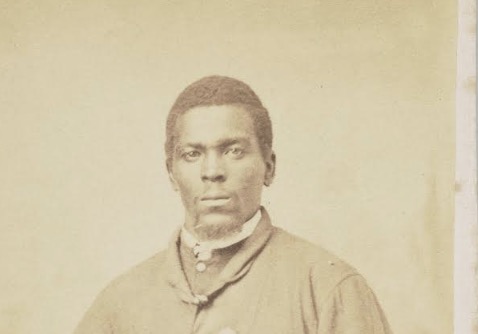
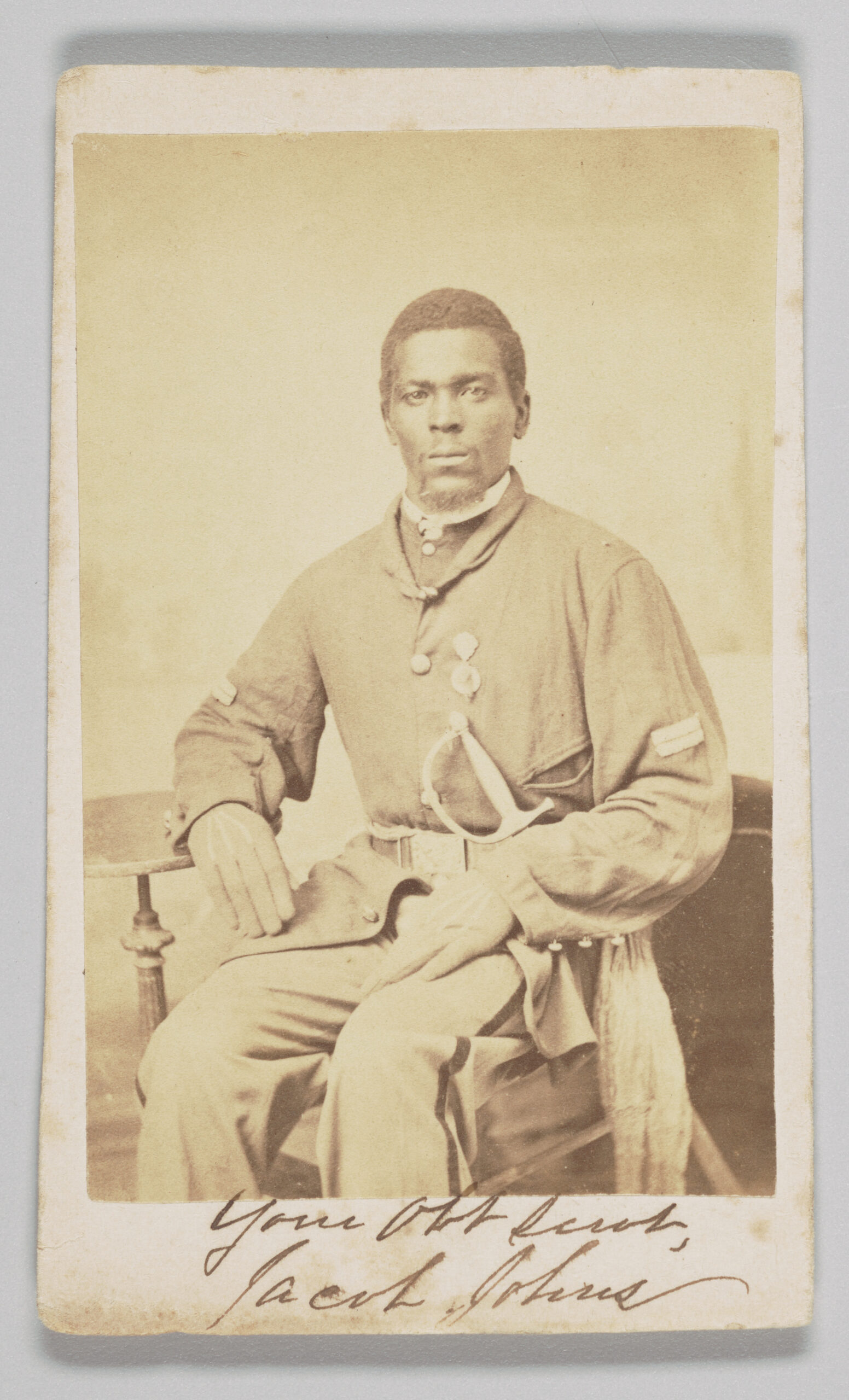
Jacob Johns of the 19th U.S. Colored Infantry Regiment, Company B—a rare photograph of one of Talbot County’s African American Civil War soldiers in uniform. COURTESY TALBOT HISTORICAL SOCIETY

Maryland’s schizophrenic duality manifested on the local level as well. In Easton, rival pro-Union and pro-secessionist newspapers put their opposing spins on every development from the front. Cousins from Trappe fought against each other at Culp’s Hill during the Battle of Gettysburg. Few, if any, other chapters in Talbot County’s history are as rich with such fascinating complexities.

And now, a new exhibit at the Talbot Historical Society is shedding light on a compelling aspect of that story—the role of Black troops in the war. “With Valor and Honor: Talbot County’s United States Colored Troops (USCT) During the Civil War” recently opened at the Society’s museum at 25 South Washington Street in Easton and will be on view through next April.

The product of six months’ worth of exhaustive research by Historical Society staffers and volunteers, the exhibit has begun to enjoy a turnout that’s “been incredible,” said Operations Manager Kayla Weber. “A lot of people from Talbot County are coming out, which is great to see. I think word-of-mouth is definitely helping it.”

Through exhibit panels, video clips, maps, touch-screens, artifacts, family memorabilia, and historical documents, “With Valor and Honor” captures the inspiring story of how African American troops from Talbot joined the cause in impressive numbers and donned the Union blue during the latter phase of the war.

By 1863, a profound war weariness was settling in for both North and South. Food riots broke out in the Confederate capital of Richmond, and an unpopular draft that exempted wealthy plantationers based on how much human chattel they owned (the “Twenty Negro Law”) was leading to outcries that the whole bloody tragedy was “a Rich Man’s War and a Poor Man’s Fight.” In the North, the New York City Draft Riots in the summer of 1863 raged for days in a roiling outburst of class and racial tensions. For both the Union and the Confederacy, as the war dragged on and enthusiasm faded, voluntary enlistments had fallen sharply, and conscription was merely adding to the general discontent.

But President Abraham Lincoln had a powerful resource to tap into that the Confederacy lacked—a resource for whom this war had more profound significance and relevance than it possibly could have for any other group of potential enlistees. And so was born War Department General Order 143, establishing the United States Colored Troops (USCT) in May 1863.

Secretary of War Edwin Stanton appointed Colonel William Birney, son of the abolitionist James G. Birney, as Maryland’s mustering officer for the USCT. Ostensibly, Birney was to recruit only from Maryland’s sizable free Black population; since Maryland was in the Union, it was exempt from the Confederacy-targeting, slavery-eradicating dictates of the Emancipation Proclamation, putting the state’s enslaved populace in an ironic and paradoxical limbo.

But in the practical realities of the moment, the abolitionist’s son found it was better to be blissfully indiscriminate in his recruitment efforts, whether the enlistee was free or enslaved. Throughout the summer and fall of 1863, Birney’s recruitment steamboats, often replete with a rousing Black marching band and smartly turned-out Black troops, plied the rivers of the Eastern Shore, and hundreds of enslaved men left the plantations to fight. Two hundred left Easton that September on the steamer Champion, and more soon followed on the steamer Cecil. Elsewhere on the Shore, the Chestertown News reported that, when a steamer hove to in Kent County that September, it appeared that “the negroes had previous notice of the coming of the boat and flocked to the shores in such crowds that many had to be left behind. The number carried off is estimated at from 150 to 200, including nearly every able-bodied slave in Eastern Neck.”

Down on the Lower Shore, hundreds more were flocking to the steamers John Tracy and Meigs, while the Balloon and Cecil culled some 130 additional recruits from the Chesapeake oyster fleet working from the mouth of the Patuxent to Tangier Sound. Among Maryland’s slaveholders who were loyal to the Union, indignation was rising.

Then, that October, with the War Department’s issuing of General Order 329, the regulations for USCT recruitment were more specifically delineated: Men bound in slavery could enlist if the slaveholder consented—and by so doing, he would get up to $300 as manumission compensation. Further, if a county’s recruitment quota was not filled within 30 days, the Bureau of Colored Troops had the power to recruit from the enslaved population without the slaveholder’s consent. (Even then, the slaveholder would be compensated—if he avowed his loyalty to the Union.)

By late October of 1863, there were Bureau of Colored Troops recruitment stations from Havre de Grace to Princess Anne, at Oxford, Queenstown, Chestertown, and other locations throughout the state. Ultimately, more than 8,700 Maryland Blacks rallied to the flag.

And more than 600 of those troops hailed from Talbot. They ranged in age from 16 to 46. About 56 percent of them had left slavery behind to enlist, while about 44 percent of them were free men already when they put their lives on the line to fight for the Union.

Forty-eight of them would be killed in battle. One hundred of them died from disease. Seven of the 17 who ended up as prisoners of war died in captivity in hellish prison camps. Fifty-four were wounded but survived and were discharged. A fortunate 180 of them completed full terms of enlistment. And there were 168 of them whose fates remain unknown.

As the “With Honor and Valor” exhibit elucidates, their numbers were spread out across five infantry regiments. Some saw action during General Ulysses S. Grant’s May 1864 Bermuda Hundred Campaign, or at the horrific July 1864 Battle of the Crater (described by Grant as “the saddest affair I have witnessed in this war”), or at the September 1864 Battle of Chaffin’s Farm. (Talbot Countian Gilbert Adams of the 7th U.S. Colored Infantry Regiment, Company D, was captured at Chaffin’s Farm. After enduring seven months as a prisoner of war, he escaped and reported back for duty.)

After the war, they came home to a different world, one where slavery no longer existed alongside freedom, and they founded new Talbot County communities such as Unionville, Copperville, and Eastfield. “With Valor and Honor” does a consummate job of chronicling this postwar phase of the story, and such legendary local-historical figures as Nathaniel “Nace” Hopkins, John Copper, and the Unionville 18 are now presented together in the broader historical context, many of the displays augmented by relics preserved by the families of these men. In viewing all this, one feels a growing awareness of continuity, of the past as prologue, of individual family histories and a region’s larger history all bound together as a collective whole. 

“Being able to provide this information to the community” has been rewarding, observed Weber, “because we have so many descendants of these troops who still live in the area. And when some of these descendants visit the exhibit, it’s very special.”

“With Valor and Honor” is open to the public Wednesdays through Saturdays from 10 a.m. to 3 p.m. For more information, call 410/822-0773.

Eric Mills is the author of Chesapeake Bay in the Civil War 


The Spy Newspapers may periodically employ the assistance of artificial intelligence (AI) to enhance the clarity and accuracy of our content.

Filed Under: Spy Highlights

Spy Daybook: Just Because You Can; Does Not Mean You Should by Calvin Yowell

July 27, 2025 by Spy Daybook

There are multiple significant issues to be addressed regarding Artificial Intelligence. 

Is the term Artificial Intelligence an oxymoron? One normally considers intelligence to be acquired, and (to a certain extent) an inherited attribute of a living entity, not something invented that replaces the cognitive and industrious abilities of mankind.

The impacts vs. the values of AI need to be recognized, evaluated and acknowledged by everybody, including all levels of government, industry, large as well as small businesses, and the public-at-large.  The potential impacts and value of AI are having unprecedented effects upon all elements of society. Some good and some not-so-good.

The value of AI appears to best serve the Titans of industry and government.

  • Natural energy companies shovel more coal, pump more oil, and extract more gas: more product sold equals an increase to the bottom-line
  • Construction companies build more large-scale power plants, data centers, and iClouds: facilitates skilled employment until a point of saturation.
  • Digital firms supporting the application of AI create increased revenues from software sales and services, AI applications, and storage solutions
  • Information intensive business (e.g., insurance, banking, contracting, education, and customer services) will benefit from AI by replacing the cost of workers performing routine, standardized functions. Significant bottom-line improvements may be realized.    

The flip-side of the value of AI is the impacts upon Society, Natural Resources, Conservation, and the Environment. It is important that one consider the value of AI to the whole of Society. – This is the point at which one should be asking themselves: to what extend should one embrace AI and/or moderate its potential (or exponential) impact on one’s life? – It is now obvious that AI can accomplish many technical objectives; but should one embrace it unconditionally? – Not just “No”, but “Hell No”!!!

Electricity demands necessitate the increased use of natural resources (and to some extent renewables such as wind and solar).  Electricity generation is highly dependent on coal, oil and natural gas.  Use of these carbon-based fuels contributes to higher levels of carbon monoxide/dioxide.  In turn, these pollutants contribute to environmental issues and to climate warming.  

AI’s electricity consumption is beginning to stress the capacity of the country’s power plants. For example: in Maryland, many home owner’s electric bills are increasing by up to 25 percent. It not so much an increase in homeowner consumption or population growth as it is the need for the capacity to support AI solutions. – Like it or not, using it or not (now or in the future), it seems everyone is funding AI’s rapid growth. 

Another example: in northern Virginia (a D.C. suburban area) there has been an unanticipated growth of humongous data management and processing centers.  The size and locations have resulted in strong objections from the residential communities.  Enough is enough, in fact it is too much. The public is seeking legislation to stop further growth.

And lastly, a third example: In a rural area of the foothills of the Ozark mountains (Kentucky or Tennessee), a large processing ‘farm” for Bitcoin produced a constant humming and annoying sound adversely affecting the local residents as well as live stock. – Some choosing to relocate.

The need for increased electricity is explicitly tied to the use of coal, oil, and gas. All being natural resources, carbon based, and of limited (not infinitesimal) availability. At some point one must consider the conservation of these resources that can be extracted and refined at acceptable expense and without causing secondary damage to the planet or its residents. Consider the impacts of fracking and the pollution of water aquifers. 

Reliance on carbon-based energy sources, while not the advancement of solar and wind, implies the continuation of increasingly severe air pollution with commensurate impacts on Global Warming and Air Quality. – What’s a few degrees temperature rise? What’s a few inches, or feet, in sea-level rise? What difference does it make if the sky is not crystal clear and the air is foul tasting and loaded with particulates? 

As if the cell phone has not had significant impacts on society, the impacts of AI may be exponentially greater and detrimental. The cell phone has changed the way people interact with one another, are entertained, and receive/send information.  Sound-bites dominate and thoughtful discourse has gone by the wayside.

AI will be the cell phone on steroids!  In the future it will not be what one learns and retains, but how good one is at asking questions to get a quality response to an inquiry. Then, one might consider whether or not the answer is acceptable: being correct, adequate, and comprehensive. — Predictably, one will accept the answer and move on to whatever.

A recent article (from a print newspaper!) indicated that society may experience “cognitive decline”.  (Personally, I will bet money on it!).  Dependency on AI will have a dehumanizing effect on a worldwide basis.  

Comprehensive action needs to be taken to manage AI in the interest of society as a whole, not just a few.  If AI continues uncontrolled, it will devastate society – most profoundly in employment on one end of the spectrum and in international politics and peace on the other end.  Between these polar extremes, one may speculate a will. If AI solutions replace employment opportunities, there will be increases in welfare spending and at the other extreme earth-shaking decisions might be taken based on faulty information rather than experience, competence, and knowledge.  — Personally, the first thing I want is the elimination of the AI “Help” with competent English-speaking humans, preferably located in the U.S.

The overall sociological impact on humanity is incalculable. People will no longer engage with one another; they will not learn and retain factual information or do background research; they become mentally and socially lazy or even isolated.

Using AI, when beneficial to mankind, is important, but when applied in lieu of knowledge and intellect, it is detrimental.  AI inherently leads to the acceptance of “forms and functions” while being “content-free”.  If one does not recognize and understand the content, one cannot render sound decisions. 

This opinion piece was written without the benefit of AI by Calvin Yowell. He is retired from IBM and now lives in Easton. 


The Spy Newspapers may periodically employ the assistance of artificial intelligence (AI) to enhance the clarity and accuracy of our content.

Filed Under: Opinion

Reflections on the YMCA Legacy of Ellen Rajacich by Robbie Gill

July 2, 2025 by Spy Daybook

Having called Talbot County home for over 20 years now, I’ve had the blessing of hearing the stories of past leaders who transformed Talbot County into the loving community we enjoy today. The list of those who built this place we call home reads as a “who’s who “of servant leaders: Nettie Jones, Shirley Gooch, Maggie Farree, Tom Hill, Mike Menzies, Bill Ryan, Richard Marks, Eric Lowery, Dick Bodorff, Blenda Armistead, Bette Kenzie, Delia Denny and so many more.

Today, I want to honor the life of one of those incredible people—Ellen Rajacich—a true legend in every sense of the word.

Ellen was a YMCA volunteer for more than 50 years. She touched the lives of thousands through her group exercise classes, her time in the pool, on the water at the Tred Avon Yacht Club, and her tireless service throughout our community. Her energy, warmth, and passion made a lasting impact wherever she went.

Personally, Ellen had a profound impact on my life. Twenty years ago, as the new CEO of the YMCA of Talbot County, I was only 34—new to the job and still learning. Ellen welcomed me with open arms and quickly showed me the importance of the work the Y, to always be ready for company and work tirelessly to improve the quality of the life of those we’re fortunate enough to serve. 

As the Y grew and I found myself in the Easton Y a little less, she always took time for me. With a warm smile and kind hug her favorite question for me was always, “And what are we doing to take care of ourselves?”—a gentle nudge from someone who truly cared.

Ellen embodied love, service, strength, and joy. Her legacy will live on through Talbot County for generations to come. Fair winds and following seas, Mrs. Rajacich. We’ll see each other again down the road.”

Robbie Gill is the CEO of the YMCA of the Chesapeake

The Spy Newspapers may periodically employ the assistance of artificial intelligence (AI) to enhance the clarity and accuracy of our content.

Filed Under: Opinion

The Imprisonment of Judge Carmichael and the Suspension of Habeas Corpus by Paul Callahan

May 31, 2025 by Spy Daybook

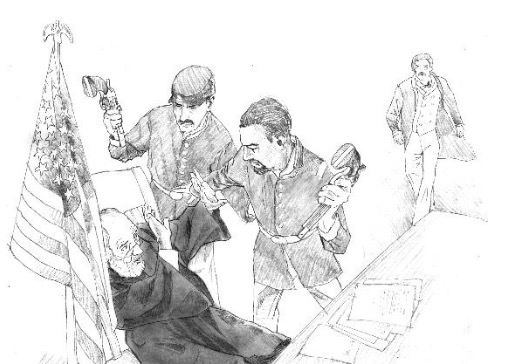
163 years ago o,n May 27, 1862, the Talbot County courthouse was surrounded by Union troops to support federal Provost Marshals in the arrest of Judge Richard Bennett Carmichael.   Four Provost Marshals barged into the Judge’s courtroom and bloodily bludgeoned him with the butt of a pistol in front of his jury and civilian spectators.  Prosecuting attorney J.C.W. Powell rushed to the judge’s aid, and the crier of the court ran to the window to call for the Sheriff, but both were physically subdued.  All three were sent to Fort McHenry for imprisonment.   

The next day, the federal War Department issued a press release stating that the Judge had been imprisoned for treason.  The press release was published in every major Northern newspaper and in Europe as soon as the news crossed the Atlantic.  Judge Carmichael and attorney Powell were imprisoned for over 9 months under the harshest conditions without trial or charges ever placed against them.  

These men were imprisoned and denied their basic constitutional rights to have legal counsel challenge the validity of their imprisonment, to be presented with charges, to have the government’s charges reviewed by a civilian court, to confront their accusers or to provide a defense in a civilian court of law.  All these constitutional rights were denied because the President had suspended the sacred right of habeas corpus, an act that the Constitution had granted solely to Congress and not the Executive. 

The Judge’s imprisonment for treason, as professed by the federal government, became established history for over 160 years touted by follow-on historians who simply relied upon the statements issued by the government.  This was indicative of how history recorded the imprisonment of so many other Maryland political leaders, newspaper editors and other citizens imprisoned under the suspension of habeas which denied their right to present a defense or to even publicly proclaim their side of the story.  The free press was grossly impacted by the suspension of habeas with numerous newspapers who presented dissenting views shut down or had their editors imprisoned and where the threat of such retaliation caused many others to remain compliant and not question the Executive.  

With today’s technology to digitally search thousands of official records along with historical newspapers across the globe, the actual history of Judge Carmichael’s arrest can now be told – and it had nothing to do with secession or traitorous activity. 

Judge Carmichael got the attention of Secretary William Seward in June of 1861 by sending a petition along with 48 others, to the Maryland Legislature detailing how Union soldiers had entered Queene Anne’s County and had placed themselves as a military police superior to civilian authority and were conducting unlawful searches, arrests and imprisonments and had unilaterally suspended habeas corpus to those they detained.  This document recorded in the Maryland Archives is hugely important in understanding President Lincoln’s early suspension of habeas enacted just weeks prior.  The President’s first suspension was touted as a military necessity to protect a narrow supply corridor between Philadelphia and Washington.  With Carmichael’s communication to the Legislature, we find it was also suspended in places in Maryland far removed from this supply route and for totally different reasons as well.  

Secretary Seward in learning of the Judge’s communication, issued a directive to General John Adams Dix to have the Judge imprisoned in Fort Lafayette for “treason”  and to have the arrest conducted in the Judge’s courtroom to maximize the public impact.  General Dix, however, did not act upon this directive at this time but continued to monitor the Judge.   As a circuit court Judge, Carmichael was also a Judge in Queen Anne’s County and shortly before the state elections in November 1861 the clerk of Queen Anne’s Court, Madison Brown, was arrested and temporarily imprisoned by Union troops.  Brown was running on the “Peace Party” ticket as a candidate for the Maryland Appellate Court during the upcoming state election and was just one of many Maryland political candidates that had been harassed and even imprisoned by the occupying Union troops prior to the election. Judge Carmichael had the offending military officers charged by the grand jury for the unlawful imprisonment of Brown and others, but the Union military simply relocated the charged officers outside of the Judge’s jurisdiction to prevent their trial.

Similar incidents also happened in Talbot County where dissenters were imprisoned by the occupying military command.  In Talbot County however, something very different occurred. Prosecuting attorney J.C.W. Powell learned that a Maryland politician, State Senator Henry Holiday Goldsborough, had embroiled himself in directing the Union troops on the arrest of Talbot civilians.   Goldsborough was the leader of the Maryland Senate and a strong Lincoln ally.  Attorney Powell was successful in having Talbot’s Grand Jury issue indictments against Goldsborough, along with the associated Union officers responsible for the arrests.   

The military officers were removed from Talbot’s legal jurisdiction, but Senator Goldsborough lived in Talbot County and could not avoid prosecution.  Shortly before Goldsborough’s trial General Dix issued a written communication to him stating that he was sending the military officers subpoenaed for his trial but was also sending four Provost Marshals “well armed.”  In this communication, Gen. Dix left it to Goldsborough to authorize the Provost Marshals to arrest Judge Carmichael.  In Dix’s after-action report to Secretary Seward, he noted that the Judge had been arrested in his courtroom for the maximum public impact per the stated desire of Seward.  The imprisonment of Judge Carmichael and prosecuting attorney Powell had nothing to do with treason but was simply to protect a political ally of the President and to display the power of the federal government.  The false report of “treason” was simply cover to make such a drastic measure publicly acceptable.

Some of those who read this will attempt to immediately defend President Lincoln’s actions.  Human nature has not changed in 163 years and there are many who will blindly trust and defend their chosen political leader regardless of evidence.  These events are our history which cannot be changed but which provide us with important insights and lessons that we should apply to the issues of our day.

For more on this important history to include the uncovering of the details regarding the imprisonment of the Maryland Legislature and other important Maryland leaders, please refer to my book “When Democracy Fell, The Subjugation of Maryland During the U.S. Civil War,” available on Amazon or locally at Vintage Books in Easton and Unicorn Books in Trappe.  

Paul Callahan is a native of Talbot County Maryland, a graduate of the Catholic University of America and a former Marine Corps officer. When Democracy Fell is due for release on October 3, at all major retailers to include Amazon. Image of prisoners courtesy of “The Local History Channel.”

The Spy Newspapers may periodically employ the assistance of artificial intelligence (AI) to enhance the clarity and accuracy of our content.

Filed Under: Opinion

Leopold and Loeb Come to Easton: The Factory Presents “Never the Sinner”

March 12, 2025 by Spy Daybook

The Factory Arts Project will present Never the Sinner, a gripping drama by Tony Award-winning playwright John Logan. The play tells the true story of Nathan Leopold and Richard Loeb, two wealthy and intelligent young men who murdered a fourteen-year-old boy in 1924, believing they could commit the perfect crime.

Director Talley Wilford, known for his work with Groove Theatre, was drawn to this play for its connection to the modern fascination with true crime.

“What interests me about this show is what I think interests most millennials who were raised with the suburban panic of the ’80s, ’90s, and early 2000s: true crime fascinates us,” said Wilford. “Our generation was raised with a fear of child abduction, satanic panic, and overall threats to the comfy lifestyles of suburban America. Much of that hysteria was overblown, but the few real cases that did occur left a lasting impact. That’s why we gravitate toward the rare and sensational true crime stories that actually happened.”

The story of Leopold and Loeb is particularly striking because the two men, described as intellectual prodigies, did not commit murder out of passion or necessity but simply to prove their own superiority. Their crime shocked the nation, and the trial that followed was one of the most highly publicized of its time. Wilford states, “The story of Leopold and Loeb is made all the more unique in that they only had a single victim, they planned it out, they had no motivation for the crime other than to prove they could do it. Not to mention, they were, in a sense, lovers at a time men could not publicly be with another man.”

The production features cast members Max Brennan, Tyler Henry, Roegan Bell, Alex Greenlee, Ray Nissen, Erik Fair, and Clay Owens, a mix of experienced performers who have worked with Wilford on past projects and new faces who bring fresh energy to the show.

Wilford shares, “Within this cast of familiars, there’s a fabulous amount of trust and community amongst us all, knowing what each other brings to the table and the level of quality expected from The Factory. It is odd to say, but the cast is having a ball bringing a show of such dark and serious subject matter to life, and we hope that the audience has as much fun as we’ve had.” While Never the Sinner deals with disturbing themes, the rehearsal process has been filled with collaboration and a deep respect for the material.

For this production, The Factory Arts Project is transforming the Waterfowl Festival Building into an intimate theatrical space. Though the venue has hosted concerts, art exhibitions, and even wrestling matches, this will be the first time a play has been performed there (that they know of). Wilford is embracing the challenge of using the space, stripping back the set and costume design to create a minimalist, immersive experience.

Never the Sinner is recommended for true crime enthusiasts, history buffs, and theater lovers who appreciate complex narratives and thought-provoking themes. John Logan, who would later go on to write Red, Gladiator, The Aviator, and Skyfall, crafted a script that is both gripping and poetic. The play does not sensationalize the crime but instead asks its audience to consider the nature of justice, morality, and human psychology. While the material is intense, it is also an opportunity to reflect on the ways society responds to acts of violence and the ethical dilemmas surrounding punishment.

Wilford reflects, “I think this is the first play I’ve done in which the protagonists are not necessarily meant to be likable. To ask an audience to empathize with two unlikable, uncharismatic sociopaths is almost as difficult as taking two young and charming actors and turning them into socially repugnant people that you actively root against. Even as the play asks you to resist the urge to wish death upon two murderers, it also challenges us to consider what justice truly means. It is a reminder of one of society’s oldest mantras: ‘two wrongs do not make a right.'”

Performances of Never the Sinner will take place March 13-16, 2025, at the Waterfowl Festival Building in Easton, Maryland. Tickets and additional information can be found at The Factory Arts Project’s website.

For press inquiries, please contact Maddie Megahan, Marketing Director of The Factory Arts Project, at hello@thefactoryartsproject.org or (410) 7

The Spy Newspapers may periodically employ the assistance of artificial intelligence (AI) to enhance the clarity and accuracy of our content.

Filed Under: 1 Homepage Slider

Listen to the Music by Roger Vaughan

February 12, 2025 by Spy Daybook

“Music is a mistress of order and good manners [who] makes the people milder and gentler, more moral and more reasonable.”

Martin Luther King, Jr.

There seems to be a controversy over the suspicion that Nero fiddled while Rome burned. Some say it was propaganda released by his enemies. Others say it’s true, representing Nero’s cruel disregard for his people. 

That catchphrase about fiddling while Rome burned might be the earliest one I remember. In either case, lie or truth, it has a nice ring to it. Whoever came up with it deserves an Oscar or whatever it is they award to advertising copywriters for catchy slogans like “you’ll wonder where the yellow went when you brush your teeth with Pepsodent.” Or “Brylcreem, a little dab will do ya, Brylcreem, the girls will all pursue ya.” Or “Just Do It.” Fiddling while Rome burns is right up there.

That phrase came ringing into my ears recently when a person who was very disturbed by the Constitutional crisis being perpetrated by the current Administration’s apparent blatant disregard for the rule of law called asking for help. She was very disturbed, not always successfully fighting off tears, and said she was dealing with serious depression. 

After reminding her it only raises havoc with one’s sensibilities to become frantic over things one can’t control — a logical but not very useful suggestion to a disturbed person — I had to think about how I was dealing with the daily shovels full of manure that were being carelessly heaved into the giant fan that has been installed in the White House garden where roses once bloomed. And there it was: fiddling.  

Music has been a vital part of my life since I started taking piano lessons at age 8. I remember liking a song on the radio called Tonight We Love, and asking my father if he could find the record. He knew the fellow who ran the music store. Dad came home with a recording of a piece by some Russian guy with the unpronounceable name of Pyotr Ilyich Tchaikovsky. It was called the 1st Piano Concerto in B-flat minor, Opus 23, whatever that meant. I figured my father had blown it. Fathers aren’t cool when you are ten years old. 

I decided to play it anyway, what the heck and it changed my life. I still believe it’s one of the greatest pieces ever written. I must have listened to it 50 times since then, and it never gets old, never ceases to be emotionally stirring. And sure enough, Tonight We Love is in there, the songwriter having borrowed one of the 1st Piano’s most powerful themes and written lyrics to it. Some nerve. But that’s how I found it.

Tchaikovsky’s 1st Piano led me to his Swan Lake masterpiece and all the rest. It also generated a more intense application to the piano. I never got very good, but it is still marginally satisfying. I took music courses in college, developing a great affection for Brahms, Wagner, Chopin, Beethoven, Rachmaninov, Bruch, and Richard Stauss, among others. That helped when I interviewed the late conductors Seiji Ozawa (Boston Symphony) and Herbert von Karajan (Berlin Philharmonic). It was on the Ozawa project when I sat before the Boston Symphony’s powerful Director of Artistic Planning, a man with exhaustive knowledge of the repertoire who had a lot to say about the programs the orchestra played. His question of who my favorite composer was hung in the air while I summoned my courage to say Tchaikovsky. I hesitated, then apologized for my “top 40” response. This learned gentleman just produced a thin smile and said that Tchaikovsky is top 40 for good reason.

But I digress. Back to my friend asking for help. I shared with her how I was planning to get through this dark period in our history. I read a certain amount of news each day, keeping up with the depredation of the government – the unmitigated dismantling of departments and agencies created by Congress — because it feels like a responsible thing to do. But in this time when I find the new music unhummable, more like digitized noise accompanied by a sweaty presentation that looks more like an athletic workout than dancing, my pleasure – my life, my attitude – are gratefully enriched by revisiting the great music of the past. 

It’s a very deep well, widely varied for all tastes. It’s not just classical. 

Little Richard, Fats Domino, Chuck Berry, Bo Diddly, and a few others got rock ‘n roll started. Elvis made it personal. The Beatles and the Stones took it mass market, and The Eagles, Linda Ronstadt, Harry Nilsson, Leon Russell, Creedence Clearwater, Aretha Franklin, Ray Charles, Otis Redding, Bob Dylan, The Band, Mick Jagger, Elton John, Joe Cocker, Jimmy Hendrix, Count Basie, Jackson Browne, Randy Newman are just part of a very long list of incredibly talented musicians and their bands who elegantly hybridized it. And there’s Gospel, R&B, Country and Western, musicals, etc. Not to mention the array of inspired composers and artists from the 1940s, when romance – “Falling in love with love” — was a popular theme. Take your pick. 

Just browsing Facebook one can encounter a bursting cornucopia of accomplished players (like Tuba Skinny), and a score of stunning, very young prodigies. And singers Kelli O’Hara and Lady Gaga. MacCartney 3-2-1 is an uplifting video series. On the beyond-brilliant side, we’re lucky to have rare videos (YouTube) available of the late pianist Erroll Garner and brand new ones of Joscho Stephan from the Gypsy Guitar Academy, both of them playing music at a level that’s hard to believe is possible. 

Fiddling. Maybe Nero just needed a break. 

Music from the past provides a welcome distraction from the dissonance currently coming out of our nation’s capital. While it won’t quite override the racket, the great music is a reminder that our species can be impressively and beautifully creative as well as mean-spirited and greedy. 

That’s a useful thing to remember. 

Roger Vaughan, a Massachusetts native, began writing, photographing, playing music, and sailing at a young age, pursuits that shaped his lifelong career. After earning a BA in English from Brown University, he worked as an editor and writer for Saturday Evening Post and Life magazines, covering major cultural events of the 1960s and 70s. His first book, The Grand Gesture (1973), launched a prolific freelance writing career. He’s written more than 20 books, including numerous biographies, films, and many videos. Since 1980, Vaughan has lived on Maryland’s Eastern Shore, where he continues his work documenting remarkable individuals and events.


The Spy Newspapers may periodically employ the assistance of artificial intelligence (AI) to enhance the clarity and accuracy of our content.

Filed Under: 3 Top Story, Spy Journal

A Work of Heart: How Museums Can Strengthen Your Relationship by Daedelus Hoffman

February 7, 2025 by Spy Daybook

It’s a Tuesday night in February. The dinner plates have been cleared, the glow of the TV remote feels uninspiring, and the winter chill outside makes staying in seem like the easy choice. You and your partner sit on the couch, scrolling through your phones, each lost in your own little world. Another quiet evening, another missed opportunity to connect.

Now, imagine this instead: The two of you wander into a softly lit gallery at the Academy Art Museum. A striking painting catches your eye—bold, unfamiliar, something about it stirs you. You turn to your partner and ask, “What do you see?” They hesitate, then offer an answer that surprises you. You hadn’t thought of it that way. The conversation unfolds, ideas are exchanged, and suddenly, you’re learning something new—not just about the art, but about each other.

The idea that museums can strengthen relationships isn’t just anecdotal—it’s backed by science. Engaging with art in a shared space has been shown to increase intimacy, communication, and even attraction between partners. A study published in Museum Management and Curatorship found that couples who participated in cultural activities together, such as visiting a museum, reported a greater sense of closeness and relationship satisfaction than those who did not. Another report in The Journal of Positive Psychology revealed that engaging in novel and intellectually stimulating experiences with a partner enhances overall relationship quality by promoting shared meaning and increasing emotional bonds.

There’s a well-documented psychological phenomenon known as the “novelty effect”—when couples engage in new and stimulating activities, their brains release dopamine, the same neurotransmitter responsible for feelings of love and attraction. Studies have found that couples who experience novelty together—whether through travel, trying new activities, or engaging in cultural events—report higher levels of relationship satisfaction than those who fall into predictable routines.

Research from the University of California, Berkeley, suggests that shared aesthetic experiences, such as looking at art together, enhance emotional synchrony. This means that when couples observe and discuss artwork, their emotional responses align, deepening their sense of connection. Another study, published in Social and Personality Psychology Compass, found that mutual engagement with artistic and cultural activities fosters a sense of unity, reducing stress and promoting feelings of well-being.

Moreover, art has been shown to activate areas of the brain linked to pleasure and reward. A 2011 study in Brain and Cognition demonstrated that viewing art stimulates the same neural pathways as love and desire, making a museum visit a surprisingly potent tool for rekindling passion.

If you’re looking for a way to break free from the monotony of daily life and bring fresh energy into your relationship, here are a few ways to make the Academy Art Museum part of your next date night:

Walk Through an Exhibition Together

Museums provide a perfect environment for slow, thoughtful conversation—an antidote to the digital distractions that often interrupt our daily interactions. Unlike watching a film, where the experience is passive, engaging with an art exhibition encourages discussion. A study in Psychology of Aesthetics, Creativity, and the Arts found that sharing interpretations of artwork fosters intellectual intimacy and helps couples appreciate each other’s perspectives. Next time you visit an exhibition, challenge yourselves to find a piece you both love—or one you completely disagree on—and talk about why.

Experience Live Music at the Museum

Live music is uniquely powerful in creating emotional bonds. A 2017 study published in Frontiers in Psychology found that shared musical experiences enhance empathy and social bonding. The recent Roaring Rhythms jazz concert at the museum was a perfect example—couples swayed to the music, exchanged knowing smiles, and found themselves caught up in the shared experience of melody and rhythm. Attending a live performance together creates lasting sensory memories that become part of a couple’s shared history.

Catch a Film at the Museum’s New Film Series

Film screenings at the museum offer more than just a night out—they provide a structured yet intimate way to engage with storytelling together. A study in The Journal of Social and Personal Relationships found that couples who watch and discuss films that explore relationship dynamics report better conflict resolution skills and deeper emotional understanding of their partners. Whether it’s an art-house film, a classic, or a contemporary drama, watching and discussing a movie together allows couples to reflect on themes that resonate with their own experiences.

Share a Love for Literature at a ShoreLit Book Talk

Books open up entire worlds, and discussing them with a partner can reveal surprising insights about each other. The Journal of Applied Social Psychology reports that engaging in literary discussions strengthens cognitive empathy—the ability to understand and share another’s emotions. The museum’s ShoreLit book talks introduce fresh voices in literature, giving you the chance to discover new ideas together. Whether you agree or disagree on an author’s perspective, the conversation will bring depth to your interactions

Get Creative Together in a Studio Class

Creative collaboration is one of the most effective ways to strengthen a relationship. A landmark study in The Creativity Research Journal found that couples who engage in artistic activities together report higher levels of relationship satisfaction, largely due to the cooperative problem-solving and emotional expression required in creative tasks. Taking an art class at the museum—whether it’s painting, pottery, or printmaking—provides a fun, low-pressure environment to experiment, make mistakes, and support each other. It’s about the process, not the product—and about creating something together, both literally and metaphorically.

Flowers wilt, chocolates disappear, but a shared experience at the Academy Art Museum? That’s something you’ll carry with you. This February, instead of the usual dinner-and-a-movie routine, consider a date night that deepens your connection in ways both scientifically proven and emotionally felt. Whether it’s standing side by side in front of a breathtaking painting, hearing live music together, or getting your hands messy in a ceramics class, museums provide an unparalleled setting for meaningful interaction.

After all, love is an art. And like any masterpiece, it needs time, attention, and the right environment to flourish.

Daedelus Hoffman is the director of education and interpretation at the Academy Art Museum. 

Looking for a creative way to spend time with your partner this month? Visit the Academy Art Museum and explore our exhibitions, events, and studio classes at academyartmuseum.org.

The Spy Newspapers may periodically employ the assistance of artificial intelligence (AI) to enhance the clarity and accuracy of our content.

Filed Under: 1A Arts Lead

Home-grown Entrepreneurs: Eat Sprout Grows Up! By Mary Beth Durkin

February 5, 2025 by Spy Daybook

Eat Sprout, the farm-to-table, grab-and-go food retail store that fuses health with deliciousness, has lots of big news for 2025!!!  Sprout is opening a new café in the heart of Easton at 22 North Harrison St. The new location will have indoor and outdoor seating. Co-owner Emily Groll says the new café will have a “warm, inviting coffee shop vibe” and offer the popular Sprout grab-and-go entrees, baked goods, and more.  The husband and wife duo plan to open the new cafe sometime in the early Spring of this year.

Watch the video above, titled, Eat Sprout Grows Up and take a touthrough Sprout’s kitchen, meet the owners, Emily and Ryan Groll, along with the chefs who make all that delicious food and learn about Sprout’s back story.  

Sprout is also upping its game and venturing far beyond the eastern shore. This summer Sprout plans to open a new café in downtown Bethesda, Maryland. Since 2019, the amount of product coming out of Sprout’s kitchen has multiplied exponentially. The addition of 3 new cafes in St. Michaels and two in Annapolis since 2019 has meant big growth for Sprout.

In addition to more cafes, the Meals on Wheels program, which serves three counties, has awarded Sprout a contract to supply 2,000 meals a week to seniors on the eastern shore. Ryan Groll says, “When we opened our kitchen in 2018, we were excited to be producing 1,000 items a week, now fast forward to today and we’re producing over 15,000 items a week.” 

This video is approximately seven minutes in length.

Mary Beth Durkin is a documentary filmmaker and award-winning journalist who focuses on food reporting for the PBS NewsHour. For more information about Sprout please go here. 


The Spy Newspapers may periodically employ the assistance of artificial intelligence (AI) to enhance the clarity and accuracy of our content.

Filed Under: 1 Homepage Slider

Next Page »

Copyright © 2025

Affiliated News

  • The Chestertown Spy
  • The Talbot Spy

Sections

  • Arts
  • Culture
  • Ecosystem
  • Education
  • Mid-Shore Health
  • Culture and Local Life
  • Shore Recovery
  • Spy Senior Nation

Spy Community Media

  • Subscribe
  • Contact Us
  • Advertising & Underwriting

Copyright © 2025 · Spy Community Media Child Theme on Genesis Framework · WordPress · Log in