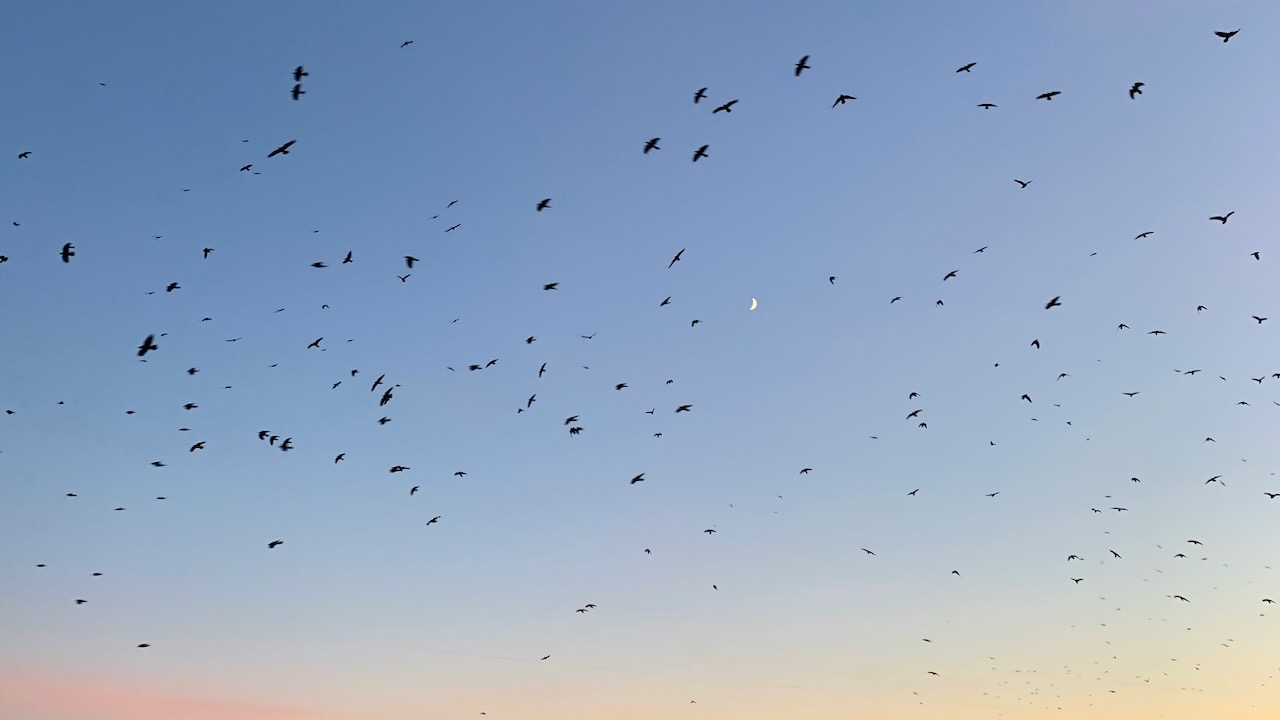



So many ripe decisions. Photo by VIRUL
After weeks of letting the decision ripen, like stinky cheese, I decided it was time to show them I really meant business, or more precisely, that I really meant no business.
Out here, where the retail landscape is limited, several of our few options land on the conscientious shopper’s shit list. I dislike crowds, distrust consumer excess, and I have never possessed the stamina required to drive from store to store in search of one specific lightbulb. So I justified my occasional use of Amazon Prime the way people justify little lapses in judgment: as a temporary deviation from the path that did not disqualify me from the journey. You will stray, I told myself, but you are still headed in the right direction.
Recently, though, the company’s relationship with ICE and the broader surveillance apparatus tipped me from discomfort into something closer to indignation. I would cancel Prime. I would withdraw my dollars, make a small stand of conscience.
When I logged in, I was greeted with a full-page invitation to join Prime for a free 30-day trial. Assuming it was a generic ad, I navigated to the cancellation page, where I was informed that no subscription could be found. After more clicking, I located the record of a past membership that had expired in 2015.
2015. That was right around the time we thought hoverboards were a good idea and before a global pandemic turned breathing into a tribunal. According to Amazon, I had not been a Prime member for eleven years.
For the next hour I conducted an investigation worthy of a true crime podcast. I texted my kids, reviewed past orders, scoured bank statements. Nothing. No annual renewals, no shared household accounts. The most plausible explanation, courtesy of a Reddit thread, was a glitch. Somewhere along the line I had slipped through a digital crack and continued receiving Prime benefits long after the billing had stopped. The system, eventually, corrected itself and the mirage evaporated in a puff of irony.
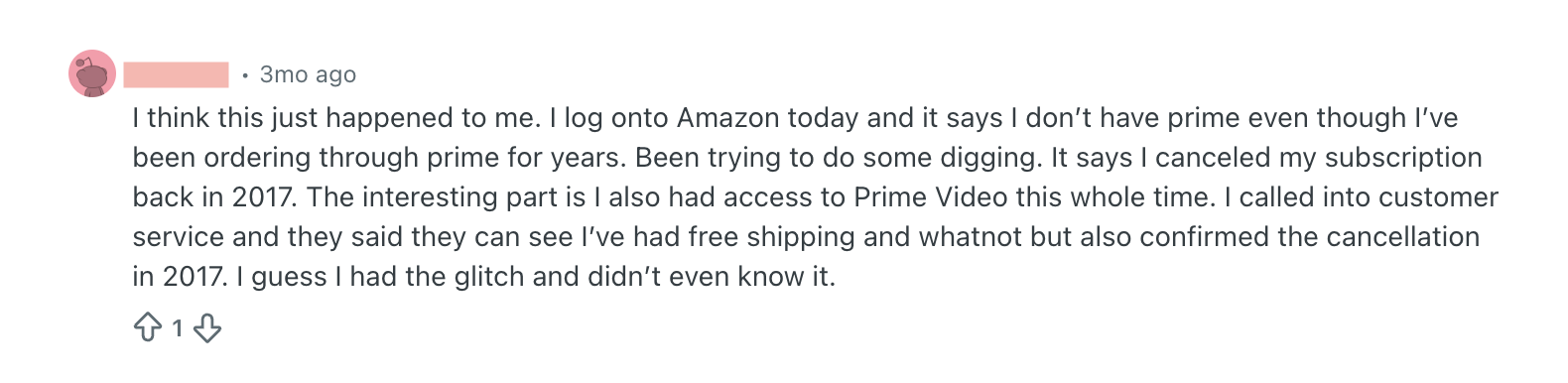
“I guess I had the glitch.”
I’d been gearing up for a clean act of resistance, only to discover there was nothing to push against. The moral arc of my universe had fallen asleep on the couch.
It would be satisfying to end the story there, triumphant or chastened. But what struck me most wasn’t that I’d accidentally gamed the system. It was how ready I’d been for the pleasure of contempt. I was primed for the easy glow of righteousness, prepared to declare myself separate from the machine. Instead, I was confronted with how symbolic the gesture would have been and how little it would have required of me.
It’s easier to tear something down than to build it, easier to narrate myself as the last ethical shopper in Babylon than to ask what my participation actually creates. We are living in a moment that offers daily invitations to feel superior and vindicated in our disdain. I don’t want to confuse that posture with the harder work of staying engaged.
There is real damage being done in this country by elected officials, tech billionaires, and media empires that thrive on division. Policies are crippling vulnerable communities, and power is being wielded with breathtaking indifference. None of that is abstract. But I can oppose policies without pretending I stand outside the systems that produce them. If my fight is fueled by the same scorn I claim to despise, I shouldn’t be surprised when it reproduces the very atmosphere I want to resist.
The residents of Minneapolis continue to fill the streets, organize, attend meetings, and demand accountability long after the cameras are switched off. The Texas monks walked daily for nearly four months in every kind of weather. Friends are rallying behind level-headed candidates for the local school board, taking pre-dawn shifts to make sure kids can get to school safely, launching new groups to inspire collective action.
After months of denial and despondence, I sense a quickening in the wider body of us. I’m reluctant to give it the enthusiasm of hope, and I hesitate to call it defiance, which carries an oppositional energy that can burn itself out. It is a renewed recognition that democracy, like any living system, thrives in repeated acts of engagement rather than periodic bursts of reaction.
We are in the most intense stretch of labor, when everything presses in and the path forward feels titanic, but the shape of what we are working toward is moving into position.
Whether or not I’m spending money with a corporation whose values trouble me, the dollars still go somewhere. Money, like attention, is rarely neutral; it either concentrates power or distributes it. Redirecting even a modest portion toward local businesses, independent journalism, mutual aid networks, or candidates committed to shared governance won’t topple entrenched power structures, but it does align my participation with the world I claim to want. Maybe instead of just pricking the skin of a giant I can also nourish something emergent and alive.
I’m steeped in doubt and keenly aware that evidence runs counter to optimism. Still, when we confront uncertainty head-on rather than suppress it, our commitment can deepen. Questioning the narrative that says “this is futile” may anchor us more firmly to the work at hand, a reminder that persistence matters more than clarity.
The tomorrow of my imagination is defined by more than the absence of villains. It includes reciprocal joy, collaboration, and care. That kind of future will not materialize through one-click cancellations or perfectly worded condemnations. It will take participation, sustained though often unspectacular. To refuse the pleasure of contempt is not to excuse injury—it is to decline the addictive clarity of hatred. To participate in what we want to exist is to invest time, money, attention, and labor in the institutions, communities, and alliances that embody our values, even when the returns are slow.
When the Walk for Peace monks finally reached Washington D.C., they wrote about the beauty of seeing strangers gathered together across differences, of recognizing in one another a shared longing for peace. Their pilgrimage didn’t promote division, it embodied an alternative to it.
I do not know how long this political chapter will last or how much further damage will be done before it closes. I do know that I would rather expend my energy helping construct the world I hope for than rehearsing my disgust at the one I oppose.
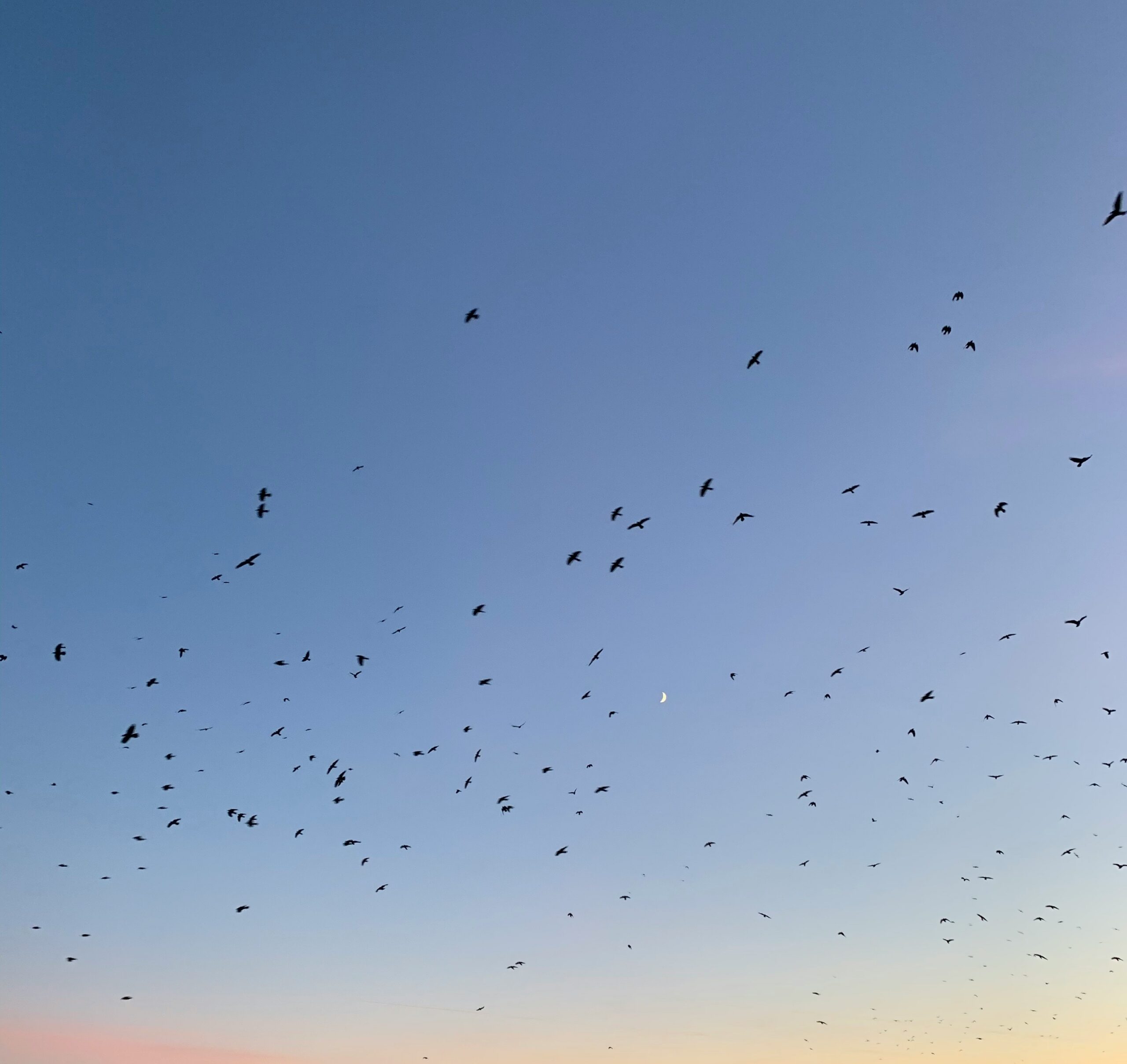
Photo by Anna Voss
Driving home from the grocery store this week, I watched a current of birds moving toward their communal roost. For more than a mile they stippled the cool, crystalline sky, each singular, black shape part of a coordinated whole. Soon enough they will break into breeding pairs, competing for resources and nesting sites, settling into the urgencies of spring. But for now they gather in these dense winter flocks, where they are less vulnerable to predators, more efficient in finding food, quicker to learn, warmer through the night.
May our lives always flourish with peace, and may we spread it gently to everyone around us and to the world. May you and all beings be well, happy and at peace.
— Buddhist monks of the Hương Đạo Vipassana Bhavana Center, Walk for Peace
An audio version of this essay, read by the author, is available here.
Elizabeth Beggins is a communications and outreach specialist focused on regional agriculture. She is a former farmer, recovering sailor, and committed over-thinker who appreciates opportunities to kindle conversation and invite connection. On “Chicken Scratch,” a reader-supported publication hosted by Substack, she writes non-fiction essays rooted in realistic optimism. To receive her weekly posts and support her work, become a free or paid subscriber here.

Write a Letter to the Editor on this Article
We encourage readers to offer their point of view on this article by submitting the following form. Editing is sometimes necessary and is done at the discretion of the editorial staff.