MENU

Sections

  • Home
  • About
    • Contact Us
    • Editors and Writers
    • Join our Mailing List
    • Letters to Editor Policy
    • Advertising & Underwriting
    • Code of Ethics
    • Privacy
    • Talbot Spy Terms of Use
  • Art and Design
  • Culture and Local Life
  • Public Affairs
    • Ecosystem
    • Education
    • Health
    • Senior Life
  • Community Opinion
  • Sign up for Free Subscription
  • Donate to the Talbot Spy
  • Cambridge Spy

More

  • Support the Spy
  • About Spy Community Media
  • Advertising with the Spy
  • Subscribe
January 5, 2026

Talbot Spy

Nonpartisan Education-based News for Talbot County Community

  • Home
  • About
    • Contact Us
    • Editors and Writers
    • Join our Mailing List
    • Letters to Editor Policy
    • Advertising & Underwriting
    • Code of Ethics
    • Privacy
    • Talbot Spy Terms of Use
  • Art and Design
  • Culture and Local Life
  • Public Affairs
    • Ecosystem
    • Education
    • Health
    • Senior Life
  • Community Opinion
  • Sign up for Free Subscription
  • Donate to the Talbot Spy
  • Cambridge Spy
00 Post to Chestertown Spy 1 Homepage Slider Point of View Laura

The Final Blue By Laura J. Oliver

January 4, 2026 by Laura J. Oliver 12 Comments

It takes Earth 365 days to complete one circle around the Sun, while it takes Uranus 84 years to make that trip. Even that isn’t a lot of time compared to Neptune’s orbit. Just one revolution around our parent star takes her 165 years. How lucky are you to get a new start, to celebrate a new beginning every twelve months?

When I was in my twenties and thirties, the Eve of the New Year required planning. It might be a reservation for the set dinner menu and dancing at a popular restaurant, complete with noisemakers and a party hat you were not going to see me wear. I was never that drunk, except perhaps, on the first New Year’s Eve of my married life—at the Hotel Oriente in Barcelona, Spain.

My new husband’s ship had finally docked after days of delay chasing a Russian sub, and overnight leave had been granted. That evening, we opted to join the hotel’s celebration, which, in Spanish tradition, included eating 12 grapes, one at a time, in the final minute before midnight, as the old year took its last breath. Then, (you can only do this in a foreign country with a round-trip ticket), joining a conga line of celebratory Spaniards doing the bunny hop. (Stop picturing this.)

In my thirties, the New Year arrived in the company of beloved friends, as we prepared and enjoyed a gourmet dinner together, celebrating the well-being that is the gift of deep familiarity—friends whose presence felt as intimate as family. 

More recent celebrations have included dinner at home with friends, where we each wrote down our wish for the new year on a tiny scroll, rolled it up, and tossed it into the crackling fire in the fireplace. The Chinese have a similar tradition of writing down all you want and hope for in the coming year on a beautiful sheet of embossed paper, then setting it aflame. All your prayers are sent skyward, up and up, to disappear into the cosmos, where it feels as if there is a place they might be answered.

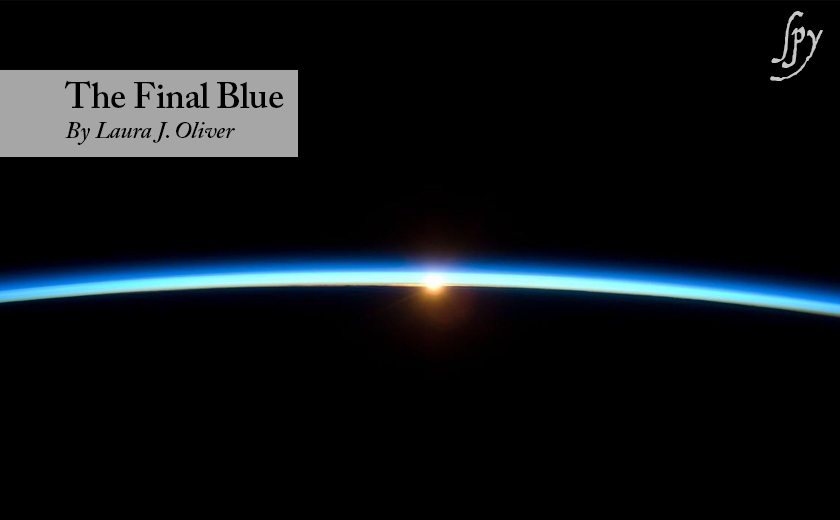
Maybe those atoms rise to the tropopause–not a fixed boundary but a fluid one–where weather becomes atmosphere. All turmoil ends, and chaos yields to order. The upper boundary where air forgets itself. 

Or the Karman Line, 62 miles up —the leaving line– the place where the atmosphere of earth becomes space. Where the air is too thin to fly, so flight becomes orbit, and orbit becomes falling, falling, falling. 

I wonder if, as you enter the New Year, your wishes are new, or whether you pray the same prayers every year, and what tradition enfolds them. 

Mr. Oliver’s parents were from the South, so New Year’s Day dinner featured Hoppin’ John, a mix of black-eyed peas, rice, and pork, symbolizing wealth, luck, and prosperity. My mother and a few close friends jumped off a low step on the stairs into the family room to symbolize leaping into the New Year together. They did this until it was no longer prudent to stick a landing in high heels.  

Then came the years when I asked myself whether finding something pretty to wear, securing a babysitter, braving drunk drivers, and 29-degree weather was fun or simply stress. I suspected this wasn’t me; it was me acting out society’s idea of a good time. That’s when lobster by the fire and Netflix started looking pretty good, and the New Year blessed the world with its appearance while I slept.

I did not have a plan for this New Year’s Eve. My idea was for you to come over, bring the champagne, and I’d build the fire. As the New Year takes her first steps, let’s write down our wishes for ourselves, for those we love, for the healing of the world, knowing the line between wishes and prayers is as thin as the seam between air and elsewhere.  

Perhaps they will rise to the tropopause, where movement turns to stillness, where storms flatten out, not gone, but no longer rising. 

May the New Year bring peace on earth, and may it begin in me; may it begin in you. May love prevail at the leaving line, the hem of heaven, the final blue. 

Happy New Year, beloveds, Happy New Year!


Laura J. Oliver is an award-winning developmental book editor and writing coach, who has taught writing at the University of Maryland and St. John’s College. She is the author of The Story Within (Penguin Random House). Co-creator of The Writing Intensive at St. John’s College, she is the recipient of a Maryland State Arts Council Individual Artist Award in Fiction, an Anne Arundel County Arts Council Literary Arts Award winner, a two-time Glimmer Train Short Fiction finalist, and her work has been nominated for a Pushcart Prize. Her website can be found here.

The Spy Newspapers may periodically employ the assistance of artificial intelligence (AI) to enhance the clarity and accuracy of our content.

Filed Under: 00 Post to Chestertown Spy, 1 Homepage Slider, Laura

Horn Point Cuts Put Chesapeake Oyster Recovery at Risk by Sarah Gavian

January 2, 2026 by Opinion 5 Comments

Everybody on the Eastern Shore knows oysters matter. They clean the waters of the Chesapeake Bay, support watermen and oyster farmers, and sustain working waterfronts. After decades of effort, oyster populations in Maryland waters have roughly tripled since 2005, and Bay states recently met long-term goals for restoring reefs in key tributaries. That progress did not happen by accident — and it will not continue by accident.

Recent reporting in The Baltimore Banner detailed how the Trump administration, through the National Oceanic and Atmospheric Administration (NOAA), is cutting federal funding to the Horn Point Laboratory. Horn Point, on the Choptank River just outside Cambridge, operates the largest oyster hatchery on the East Coast and is part of the University of Maryland Center for Environmental Science. Over the past two decades, it has produced more than 18 billion juvenile oyster seed used to rebuild reefs across the Chesapeake and to support both sanctuary restoration and commercial oyster farming, with roughly a quarter of its production going to farms.

This is not a niche operation serving one county. Horn Point’s work has been studied and emulated by restoration efforts from Virginia to New York Harbor and beyond. It is applied science infrastructure, built here in Dorchester County, that supports a regional ecosystem and economy.

I have seen this work up close. In past seasons, I partnered with ShoreRivers and the Chesapeake Bay Foundation to grow oysters at my dock for sanctuary reefs, using spat set at Horn Point on recycled shell. The baby oysters were raised through their most vulnerable stage and returned in spring for planting on protected reefs. Like many volunteers, I spent cold winter weeks hauling cages out of the water and cleaning them so the juveniles could survive. It was hard, repetitive work — and a point of pride to support the Bay’s recovery in a tangible way.

NOAA has now reduced Horn Point’s annual federal support by about $340,000 — nearly a 45 percent cut from the roughly $740,000 it has received in recent years. Those dollars largely pay for the skilled staff who spawn oysters, run larval tanks, culture algae, and move spat onto reefs. The reduction hits in the final year of a four-year grant, and Horn Point scientists worry deeper cuts could follow. The hatchery now operates with what staff describe as a skeleton crew of eight full-time employees, and managers have warned that without replacement funding, layoffs may be unavoidable.

Some argue Maryland should simply replace the money, or that waterman fees should cover more of the cost. That misunderstands what Horn Point is. Oyster restoration in the Chesapeake has long been designed as a federal–state partnership because the Bay is a multi-state waterbody with national ecological and economic importance. NOAA’s Chesapeake Bay program funds work that benefits Maryland watermen, Virginia fisheries, upriver communities that depend on cleaner water, and downstream economies across the region. Treating Horn Point as a purely local subsidy ignores the broader public value it creates.

That is why this cut cannot be dismissed as “Maryland’s problem.” When Washington pulls back from shared investment in science and restoration, it leaves a few rural counties to absorb costs for work that benefits many. The result is not efficiency — it is erosion of a system that has taken decades to build.

That brings us to our congressional representative. Rep. Andy Harris supports an administration whose budget priorities include deep cuts to environmental and science agencies. When those priorities land on the Eastern Shore, he has chosen not to meet them with visible public opposition. Reporting indicates his office helped arrange a meeting between NOAA officials and Horn Point leadership after the cut became known, but there has been no public statement opposing the reduction, no announced effort to restore funding in Congress, and no clear plan to mitigate the harm locally. When asked for comment, his office did not respond.

Members of Congress do not sign every grant, but they do shape budgets and decide when to defend critical institutions in their districts. Fewer staff at Horn Point means fewer oysters produced, fewer sanctuary reefs rebuilt, and fewer opportunities for commercial growers who rely on hatchery seed — undercutting the work of volunteers, watermen, nonprofits, and state partners alike. At a moment when scientists believe the Bay’s oysters may be approaching a tipping point toward self-sustaining recovery, federal support is being pulled back from one of the institutions that made that possibility real.

Eastern Shore residents have invested too much — in tax dollars, time, and hard work — to watch that progress quietly erode. Silence, in the face of cuts like these, is not neutrality. It is a governing choice. And it carries real consequences for the Bay we are trying to restore.

Sarah Gavian lives in Dorchester County and has participated in oyster restoration efforts with ShoreRivers and the Chesapeake Bay Foundation.

The Spy Newspapers may periodically employ the assistance of artificial intelligence (AI) to enhance the clarity and accuracy of our content.

Filed Under: 00 Post to Chestertown Spy, Opinion

Fire By Angela Rieck

January 1, 2026 by Angela Rieck Leave a Comment

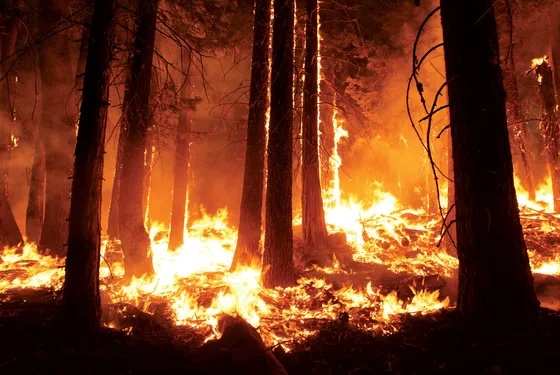
The new Avatar movie uses fire as its theme. Fire is a transcendent part of our culture. Without fire we wouldn’t have had light, heat, create technological advantages (e.g., chemical reactions, tools), or be able to cook foods. It was especially important to early humans who probably used fire to protect them from dangerous animals. So, I got to wondering, how long has fire been a part of the human culture?

A long time, it turns out.

Scientists unearthed sediment that indicated fire might have been used in Kenya about 1.5 million years ago. Researchers suggested a red sediment could hint at early fire use. There are two sites in Israel dated approximately 800,000 years ago that had burnt animal bones and stone tools. 

Archaeologists found evidence of burning at cave sites in France, Portugal, Spain, Ukraine and the U.K., and then more widespread use of fire in Europe, Africa and the Levant (the region around the east Mediterranean) 200,000 years ago.

But it is one thing to use fire and another to create it. For example, it is believed that the earliest humans may have gathered fire from natural sources (e.g., lightning strikes or forest fires). They may have stored it using certain fungi which can smolder and are portable, thereby keeping a fire going for a period of time.

Some scientists are convinced that Neanderthals were the world’s first innovators of using stone strikes to create fire, based on tiny specks of pyrite found at a more than 400,000-year-old archaeological site in Suffolk, England. (Of course, evidence of another method of creating fire, rubbing two sticks together, would not survive.) 

The Barnham dig site in England yielded stone tools, burnt sediment and charcoal from 400,000 years ago. In a study published in the journal Nature, the researchers revealed that the site contained the world’s earliest direct evidence of fire-making by Neanderthals.

Barnham was first recognized as a Paleolithic human site in the early 1900s after ancient stone tools were discovered. But recent excavations uncovered evidence of ancient human groups occupying the area more than 415,000 years ago. In one corner of the site, archaeologists found a concentration of heat-shattered hand axes as well as a zone of reddened clay. Through a series of scientific analyses, the researchers discovered that the reddened clay had been subjected to repeated, localized burning, which suggested the area may have been an ancient hearth.

The key discovery of a fire starter came when flecks of iron pyrite were found. Pyrite, also known as fool’s gold, is a naturally occurring mineral that can produce sparks when struck against flint. (While it is commonly believed that striking two pieces of flint together can create a spark, in fact that spark is too cool to produce a flame.) A metal such as pyrite is needed. Pyrite is rare in the Barnham area, suggesting that pyrite was brought to the site, most likely to build a fire.

While this was an important discovery, questions remain about the nature of early fire use: When did fire use become a regular part of the human behavioral repertoire? Was it ubiquitous or was usage scattered in a few groups? Were Neanderthals the first to discover it? Did they share it with Homo Sapiens? There are more questions than answers, but it makes you think more about the history of fire, something that we take for granted.


Angela Rieck, a Caroline County native, received her PhD in Mathematical Psychology from the University of Maryland and worked as a scientist at Bell Labs, and other high-tech companies in New Jersey before retiring as a corporate executive. Angela and her dogs divide their time between St Michaels and Key West Florida. Her daughter lives and works in New York City.

The Spy Newspapers may periodically employ the assistance of artificial intelligence (AI) to enhance the clarity and accuracy of our content.

Filed Under: 3 Top Story, 00 Post to Chestertown Spy, Angela

What Will Trump’s Legacy Be? By J.E. Dean

December 31, 2025 by J.E. Dean 13 Comments

President Trump is obsessed about his legacy. He told one reporter, in an offhand comment, that he was building the White House ballroom as a memorial to himself “because nobody else will.”  Construction on a huge arch, located in front of Arlington National Cemetery and modeled after Paris’ Arc de Triomphe, already is being referred to as the “Arc de Trump,” just as I suspect the President intends. And let’s not talk more about the Trump-Kennedy Center and the self-described “Peace President” adding his name to the building that once housed the U.S. Institute for Peace, an agency DOGE pretty much destroyed.

The President has a problem. His words and actions will be more important to his place in history than whatever buildings he names after himself. Adolf Hitler named all kinds of things after himself, including one of the main streets in Berlin (Adolf Hitler Strasse). Once Germany was defeated, Hitler disappeared from streets, postage stamps, coins, buildings, and much more. There is a lesson here for Trump—you will be judged by what you did and said more than on the size of your ballroom or phony peace prizes.

In particular, future historians will dive deeper into the events of January 6, 2021, despite the President’s aggressive attempts to recast that insurrection as a protest of peaceful protesters who were upset that Trump lost the 2020 election. Historians also will study the criminal prosecutions brought against Trump, including his convictions in New York. And biographers will study how Trump made billions as President, allegedly by manipulating federal policy to enrich himself, his family, and his friends and political supporters.

Let’s not forget the issue of civility—or should we say complete absence of civility. The compendium of Trump’s offensive social media posts is perhaps the best evidence of the state of American politics in 2025. Our civil discourse is in the gutter, which is why our democracy is in danger. 

Finally, historians will ask themselves why voters chose a 78-year-old man as President, especially after that same man brutally attacked his predecessor as senile and too old to serve. With more than three years left in his second term, Trump regularly falls asleep in meetings, forgets names and facts, and appears ready to start using a wheelchair.

Some believe that Trump’s “decoration” of the White House with gold is the product of a deranged man—think what historians will say about the “Presidential Walk of Fame” and Trump’s holding a military parade to honor his own birthday—June 14th, currently Flag day, but likely to be recast as “Trump’s birthday” within the next 36 months.

I could go on and write about abuses of the pardon power, the appointments of misfits like Pam Bondi, Kristi “ICE Barbie” Noem, Ka$h Patel (yes, that is how he sometimes writes his own name), and the sinister-looking nut case, Stephen Miller.   These personalities will be remembered in the future as aberrations—ridiculous appointments that would never have been made by a sane president. 

In a word, the prospects for Trump’s future are “bleak.”  Is he the worst President in American history? Yes. And even if almost-as-bad J.D. Vance succeeds him, Trump’s place in history is secure.

Happy New Year.


J.E. Dean writes on politics, government, goldendoodles, and other subjects. A former counsel on Capitol Hill and public affairs consultant, Dean is an advocate for democracy, sanity, and the rule of law.

Special Note to Spy Readers: This is my last regular weekly column. My pieces will now appear occasionally—and hopefully will comment on good things happening in 2026 and focus more on how to make things better than on what I see as the mess we are in. Thank you to those of you who have regularly read my pieces. And I wish everyone, including my detractors, a happy and safe new year.


The Spy Newspapers may periodically employ the assistance of artificial intelligence (AI) to enhance the clarity and accuracy of our content.

Filed Under: 00 Post to Chestertown Spy, 3 Top Story, J.E. Dean

Let’s Resolve to Solve Our Nation’s Woes By Maria Grant

December 30, 2025 by Maria Grant 10 Comments

The end of the year is a good time to take stock and identify what’s working and what’s not. This year such an exercise is especially important as, in my opinion, there is much that is not working. We cannot afford to repeat 2025. Here are some actions to consider as we enter 2026.

Get out the Vote! We need many more Americans to vote in 2026 than voted in 2024. Several initiatives are underway to do just that. Also, a detailed analysis of swing districts on which to focus is important. Get involved in supporting these efforts. Become a poll watcher or join forces with constituents who are taking steps to ensure election integrity. 

On Maryland’s Eastern Shore, hopes are high that the First District will be much more competitive if a Blue Wave occurs. Andy “Handgun” Harris, who pledged to serve no more than six terms in the House and has now served eight, could be defeated once and for all.  

Embrace diversity, equity, and inclusion. The Administration’s efforts to dismantle the progress we have made in these areas undermine democracy and rob America of the contributions made from large swaths of our population. Such divisive efforts promote racism and discrimination. One of the things that makes America great is its diversity–its melting pot roots. Returning to White male supremacy or embracing oligarchy is a huge mistake. Let’s celebrate and embrace our differences and reject efforts to return to a white-bread world order. 

Preserve our environment. The damage this Administration has done to the environment is downright unconscionable. Trump has withdrawn the U.S. from the Paris Agreement. He has rolled back or weakened numerous regulations on greenhouse gas emissions, replacing them with less stringent rules. He has championed coal, oil, and gas production, opening tracts of public lands and ocean waters to new drilling. He has discouraged renewable energy projects. He has rolled back the Clean Water Act and protections for wetlands and streams. He has weakened the Endangered Species Act. He has undermined science and research by cutting critical research funding, firing government scientists, and removing climate change information from federal websites. 

Specifically on the Eastern Shore, because of Trump’s policies, the city of Crisfield has lost $36 million in federal funding from the FEMA program aimed at flood mitigation and managing rising sea levels. The Administration has actively sought to block the development of Maryland’s first offshore wind farm near Ocean City. It has also proposed drastic cuts to the Chesapeake Bay Cleanup Program and weakened federal clean water regulations which could eliminate protections for thousands of acres of wetlands and headwater streams vital to the Bay’s health. The Administration’s regulatory rollbacks have weakened limits on mercury and other toxic emissions from power plants and coal ash disposal, posing risks to air and water quality in our region. Plus, the removal of climate and research data is hindering access to information vital to plan for specific impacts of climate change. 

Fighting these environmental rollbacks involves a multi-pronged approach including legal actions, state level initiatives, public advocacy, and civic engagement. Do your research and get involved. It’s important.

Support the Arts. We on the Eastern Shore are the lucky ones to have top-tier music and art at our fingertips. These nonprofit organizations need your support to thrive and continue to bring culture at its best to the public at large. Do what you can to contribute to their funding drives. Also encourage your friends and neighbors to attend concerts and gallery openings. It’s vital to keep the momentum going. 

This year the options are plentiful. Check out Chesapeake Music’s website for information on its many concerts next year, including concerts in February and March, a Competition in April, June Festival concerts, Interlude concerts throughout the year and more; Gabriela Montero’s concert series at the Ebenezer Theater; Mid-Atlantic Symphony performances; the Avalon Theater’s bountiful programming; the Art Academy’s many exhibits; and the numerous galleries and shops open on Easton’s First Friday Gallery Walks. 

If the past year has taught us anything, it’s the importance of community engagement to address issues and promote workable solutions. Freedom is not free. We must work to preserve democracy, civility, empathy, and justice. 

Mahatma Gandhi once said, “The future depends on what you do today.”  

Peter Drucker, the revolutionary Austrian American management consultant, educator, and author, once wrote, “The best way to predict the future is to create it.”

And perhaps most importantly, Plato told us, “The price good men pay for indifference to public affairs is to be ruled by evil men.” 

Amen. 


Maria Grant, formerly principal-in-charge of the federal human capital practice of an international consulting firm, now focuses on writing, reading, music, bicycling, and nature.

The Spy Newspapers may periodically employ the assistance of artificial intelligence (AI) to enhance the clarity and accuracy of our content.

Filed Under: 00 Post to Chestertown Spy, 3 Top Story, Maria

Postcard From Whitefish By Jamie Kirkpatrick

December 30, 2025 by Jamie Kirkpatrick 3 Comments


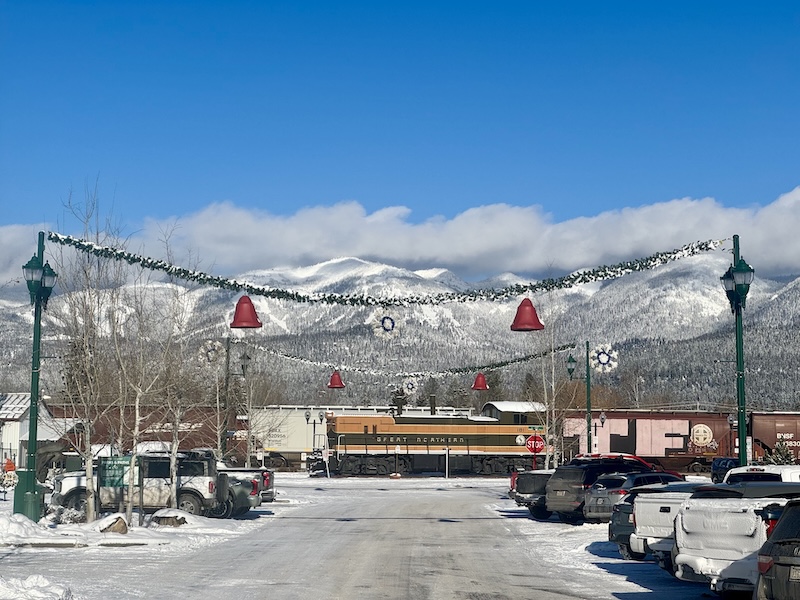
Deep in the northwest corner of Montana, Whitefish is the gateway to the jagged peaks, lakes, and glacier-carved valleys of one of America’s most pristine treasures: Glacier National Park. The town of Whitefish and its eponymous ski resort lie just west of the Continental Divide on what was once the shared ancestral hunting grounds of three Native American tribes: the Kutenai, the Bitterroot Salish, and the Pend d’Oreilles. Trappers and traders crisscrossed this remote wilderness beginning in the middle of the 19th Century, but it was the logging industry that made the country literally go BOOM in the the 1890s. And when the Great Northern Railway found a gentler route through the mountains in 1904, Whitefish—then known as Stumptown—became a new dot on the map of the American West.

This is our clan’s second visit to Whitefish. We came last year, liked it, and so now here we are, back again, “only” twenty-four of us this time, scattered among two rented houses and the local ski lodge. Twenty-three of us are out on the slopes today despite a thermometer that reported the local temperature was -2. (Insert freezing emoji here.) Me? I’m in front of the crackling fire in the great room of the lodge with my computer, a book, and my cup of black coffee. Couldn’t be happier!

It wasn’t easy getting here. In our parcel of the party, there were seven sleepy adults and seven excited kids (age range four-to-twelve) on a 4am flight to Minneapolis, a two-hour lay over there, then another three hour flight to Kalispell, Montana. You can imagine all the ski bags, checked luggage, carry-ons with stuffed animals and all manner of winter weather gear, but we made it without losing anyone or anything. I think. And by the way, a great big shoutout to all those kind and hard-working Somali folk in the MSP Airport; that place could not function without you!

Two days ago, when we arrived in Whitefish, postcard snow was gently falling, but today, the sun is shining although it’s still bitterly cold. The skiers don’t seem to care; they’re up and out as early as the chaos allows. All bundled up, it’s difficult to tell who belongs to whom, but some innate parental instinct kicks in and off they all go. I pour myself another cup of coffee and throw another log on the fire. I’ll admit that up here in the lodge, I’m once-removed from all that chaos of skis and boots, helmets and googles, but, as I’ve said before, I’m an excellent vicarious skier and prefer to listen to everyone’s adventures over our evening meal. Plus, it’s warmer here and I’m not likely to hurt myself or anyone else, for that matter.

So, here we are, three generations, separate branches on a boisterous family tree: wild and free on the mountain, cozy and close around the dinner table. There is an ebb and flow to life here, a few tears but plenty of joy and memories that will last lifetimes. Yes, I may be once-removed from the maelstrom, but then someone has to write this postcard.

Wish you were here.

I’ll be right back.


Jamie Kirkpatrick is a writer and photographer who lives on both sides of the Chesapeake Bay. His editorials and reviews have appeared in the Washington Post, the Baltimore Sun, the Philadelphia Inquirer, the Pittsburgh Post-Gazette, the Washington College Alumni Magazine, and American Cowboy Magazine. His most recent novel, “The Tales of Bismuth; Dispatches from Palestine, 1945-1948” explores the origins of the Arab-Israeli conflict. It is available on Amazon and in local bookstores. His newest novel, “The People Game,” is scheduled for publication in February, 2026. (It’s available for pre-order now on Amazon.) His website is musingjamie.net.


The Spy Newspapers may periodically employ the assistance of artificial intelligence (AI) to enhance the clarity and accuracy of our content.

Filed Under: 00 Post to Chestertown Spy, 3 Top Story, Jamie

How Much will Appearance Matter in the Next Presidential Elections? By David Reel

December 29, 2025 by David Reel 4 Comments

In 1960, then-U.S. Senator John F. Kennedy and then-U.S. Vice President Richard M. Nixon were opponents in the Presidential election. It was hard fought contest that led to Kennedy being declared the winner with a winning popular vote margin of 0.17%.

Then and still today, political observers suggest an event that was pivotal in that outcome was the first televised presidential debate featuring the candidates rather than surrogates debating on their behalf.

The first of three-hour-long debates held in 1960 was watched by an estimated seventy million viewers at a time when almost the same number (68,638) of the U.S. population actually voted in the subsequent presidential general election.

As presidential candidates, Nixon and Kennedy had much in common. Both were intensely ambitious, close in age — Kennedy was forty-three, and Nixon was forty-seven, World War II veterans, elected to serve as members of the U.S. House of Representatives and U.S. Senate, and both were seasoned campaigners.

Polling done after the first debate had starkly different results on who won and who lost.

Many of those who watched the first debate thought Nixon did poorly and “lost” the debate. They thought Nixon appeared old, haggard, and even menacing due in part to a five o’clock shadow beard made worse by his refusal to wear makeup.

Many of those who watched the first debate thought Kennedy did well and “won” the debate. They thought Kennedy appeared young, vigorous, and tanned due to pre-debate tanning sessions.

Conversely, many who listened to the first debate on the radio thought Nixon did well and “won” the debate and many who listened thought Kennedy did poorly and “lost” the debate.

Only years after the debate did it become well known that appearances can be deceiving.

John F. Kennedy had numerous, lifelong, chronic, and serious medical conditions, all of which were carefully hidden by himself and his campaign advisors.

Among other things, he had Addison’s disease, colitis, ulcers, autoimmune issues, back issues requiring several operations, and depression, all treated with regular and copious amounts of painkiller pills and injections.

Some medical professionals have suggested his Addison’s Disease alone could have led to an early death had he not been assassinated.

As often happens with public opinions, first impressions are lasting impressions.

That reality was duly noted by Richard Nixon, who, despite his ethical lapses, was an astute and shrewd politician.
In 1968, Nixon ran for president again and narrowly defeated then-Vice President Hubert Humphrey, winning the popular vote by 0.7%.

In the 1968 election, Nixon effectively rebranded himself using a television commercial blitz that is discussed in detail by Joe McGinnis in his bestselling book, “The Selling of the President.”

Despite Nixon’s landslide re-election in 1972, in which he won with a 23.2% popular-vote margin, he could not overcome the fallout from Watergate, which ended his presidency.

Fast forward to today.

Campaigning for the next cycle of presidential primaries and the 2028 presidential election is well underway.

A recent article by Holly Otterbein and Alex Thompson, published on the Axios website, featured the following headline: “Makeovers are part of the prep for Dems eyeing 2028.”

The article offers observations on several potential Democratic presidential candidates for 2028 with respect to their appearance in three areas: weight, fashion, and facial hair.

With regard to weight, they mention Illinois Governor J.B. Pritzker and United States Senator Elissa Slotkin, both of whom have lost substantial weight.

With regard to fashion, they include observations by Derek Guy, the editor of “Put This On” and a writer on men’s fashion.

Guy had this to say about Pennsylvania Governor Josh Shapiro — “When Shapiro was elected governor in 2022, his clothes looked like clothes that you bought in the ’90s. Shapiro’s suits [now] are more tailored and modern, but not flashy. Shapiro sometimes ditches a tie, has swapped out his old glasses for a trendier, rectangular pair, and often wears sneakers.”

Guy also had this to say about California Governor Gavin Newsom — “He dresses pretty well. I particularly like his ties but wonder if that look might be too stylish for some voters.”

Otterbein and Thompson wrote that United States Senator from Connecticut Chris Murphy and former United States Secretary of Transportation Pete Buttigieg are now sporting beards.

The Axios article also includes this cogent observation from veteran Democratic campaign consultant and political pundit James Carville: “No one’s going to say, ‘I’m not going to vote for someone because they’re not attractive’… but it certainly matters.”

Yes indeed, it does matter.

After the next cycle of presidential primary elections and the 2028 presidential general election it will be interesting to review and analyze exactly how much candidate appearances and exactly how much candidate issue positions mattered on voter thinking and behavior.

David Reel is a public affairs and public relations consultant. He is also a consultant for not for- profit organizations on governance, leadership, and management matters. He lives in Easton.

The Spy Newspapers may periodically employ the assistance of artificial intelligence (AI) to enhance the clarity and accuracy of our content.

Filed Under: 00 Post to Chestertown Spy, 3 Top Story, David

This Bears My Love to You Pooh by David Wheelan

December 26, 2025 by Spy Daybook 11 Comments

One of the great, little-known crimes against humanity in 2025 was the BBC’s decision to block access to its radio broadcasts outside the United Kingdom. The stated reason was copyright concerns and the threat of litigation, which effectively shut down the BBC Sounds app for international listeners. Whatever the legal rationale, the result has been the loss of access to some of the most enriching and engaging programming in radio—particularly the documentaries and series produced by BBC Radio 3 and Radio 4.

There is, however, a simple workaround. By using a VPN to make your computer or phone appear as though it is located in England rather than, say, the Eastern Shore of Maryland, full access is restored. I encourage Spy readers to do just that and hear for themselves some of the best moments of our shared Western culture. I’ve included a brief “how-to” link below for anyone with a bit of holiday time and curiosity to spare.

There are countless programs to recommend, but the one I have been listening to over the past two days, which has given me so much personal joy, is BBC Radio 4’s series celebrating the 100th anniversary of the publication of A. A. Milne’s Winnie-the-Pooh, entitled Who Are You in Winnie-the-Pooh?

Illustration by Albertine Randall Wheelan

It includes interviews with well-known British children’s writers who spoke about why A. A. Milne’s stories still matter and why every human being should love this bear.

While I can’t recall any parental readings of the classic during my childhood, my family had a well-established love of bears, starting with one of our most cherished family objects: my great-grandmother’s illustration in St. Nicholas magazine in February 1909, long before Pooh ever existed.

I’ve had a soft spot for bears ever since.

In the early 1980s, during long drives through rural New England with my then-wife’s friend Karen, we often found ourselves without radio reception. To pass the time, we took turns reading aloud to each other and quickly agreed that humor was important. It was Karen who suggested we read Winnie-the-Pooh. Upon revisiting it as an adult, I discovered that it contains some of the sharpest, kindest, and most enduring humor imaginable, regardless of age.

Like many readers of the stories and guests on the show, I aspire (but rarely succeed) in being a bit like Pooh. Humble in intellectual capacity (“I am a Bear of Very Little Brain”), devoted to his friends (“We’ll be friends forever, won’t we, Pooh?” said Piglet. “Even longer,” Pooh answered), ready for revelry (“Nobody can be uncheered with a balloon”), and yes, always finding time for a “little something” to eat (“I wasn’t going to eat it; I was just going to taste it.”)

The ideal Pooh moves through the world without edge or pretense. He doesn’t judge, doesn’t scheme, and rarely rushes.

And Pooh gives us advice as we grow older and friends depart.

“Pooh, promise you won’t forget about me, ever. Not even when I’m a hundred.”

Pooh thought for a little.

“How old shall I be then?”

“Ninety-nine.”

Pooh nodded.

“I promise,” he said.

Still with his eyes on the world, Christopher Robin put out a hand and felt for Pooh’s paw.

“Pooh,” said Christopher Robin earnestly, “if I—if I’m not quite——” he stopped and tried again—“Pooh, whatever happens, you will understand, won’t you?”

“Understand what?”

“Oh, nothing.” He laughed and jumped to his feet. “Come on!”

“Where?” said Pooh.

“Anywhere,” said Christopher Robin.

So they went off together. But wherever they go, and whatever happens to them on the way, in that enchanted place on the top of the Forest, a little boy and his Bear will always be playing.

In the end, Winnie-the-Pooh endures not because it is clever, but because it is kind. It reminds us that friendship matters, that joy can be found in small rituals, and that being present for one another is its own form of wisdom. As the world grows louder, faster, and more certain of itself, Pooh offers a quieter example—one rooted in patience, affection, and the simple grace of showing up. Returning, even briefly, to the Hundred Acre Wood is not an escape from adulthood, but a way of remembering what makes it bearable.

You can learn how to get BBC radio in the United States by watching this video. 

The Spy Newspapers may periodically employ the assistance of artificial intelligence (AI) to enhance the clarity and accuracy of our content.

Filed Under: Opinion, 00 Post to Chestertown Spy

The World I Live In by Al Sikes

December 25, 2025 by Al Sikes 2 Comments

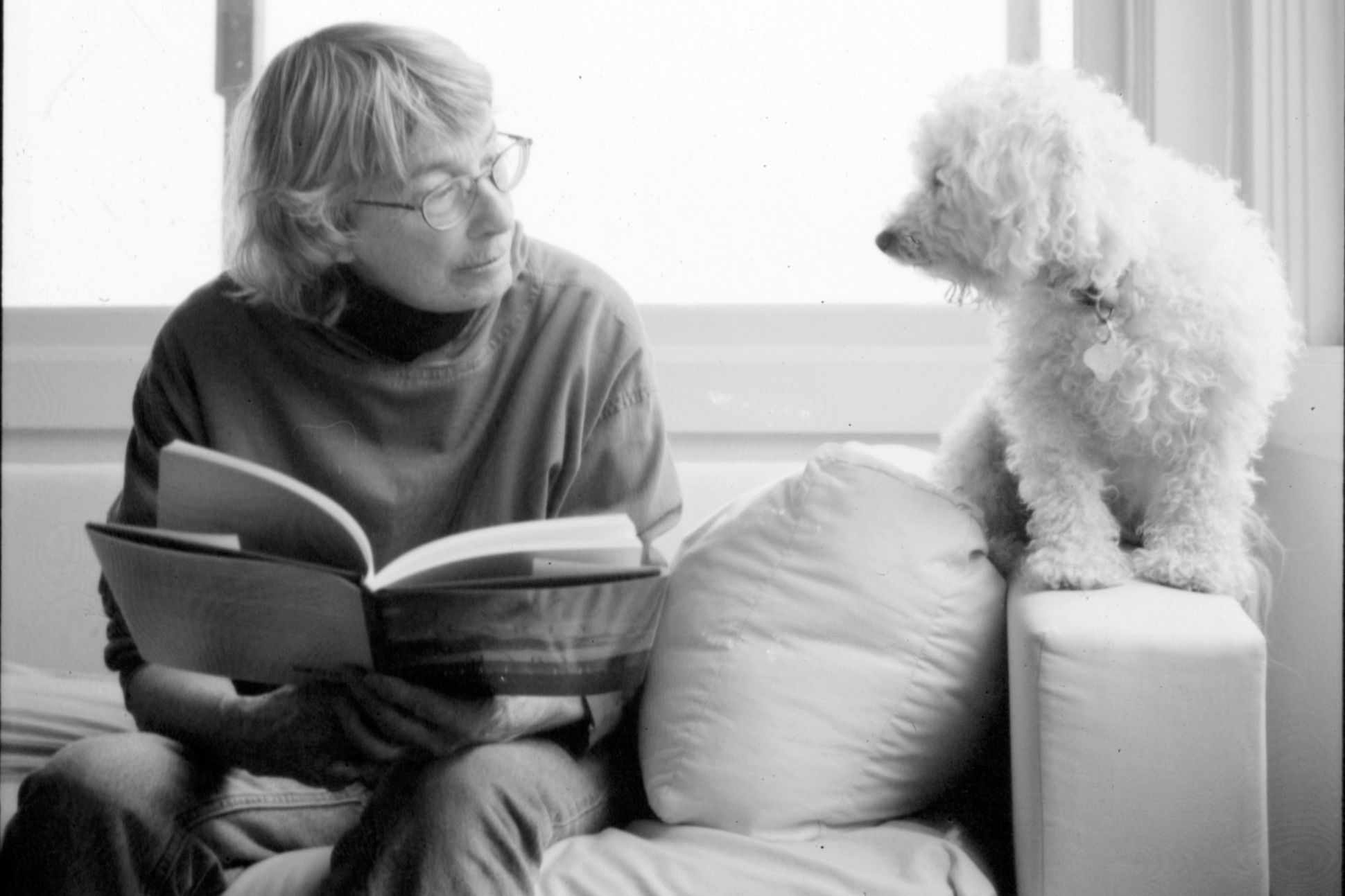
Each year I have written a Christmas reflection; this year it is somebody else’s turn. Mary Oliver by name. But first, a brief prelude.

Sometimes thoughts turn into words quickly—this year quick was missing. Blessedly, a friend sent me The World I Live In. Marvelous, was my thought, as I turned the pages to find out more about Mary Oliver.

Mary Oliver, a Pulitzer Prize winner, died in 2019. She left us many gifts. I hope this one lingers with you, as it did with me.

THE WORLD I LIVE IN

I have refused to live
locked in the orderly house of
reasons and proofs.

The world I live in and believe in
is wider than that. And anyway,
what’s wrong with Maybe?

You wouldn’t believe what once or
twice I have seen. I’ll just
tell you this:

only if there are angels in your head will you
ever, possibly, see one.

— Mary Oliver

And, for those of you who want more:

THE PONDS

Every year
the lilies
are so perfect
I can hardly believe

their lapped light crowding
the black,
mid-summer ponds.
Nobody could count all of them—

the muskrats swimming
among the pads and the grasses
can reach out
their muscular arms and touch

only so many; they are that
rife and wild.
But what in this world
is perfect?

I bend closer and see
how this one is clearly lopsided—
and that one wears an orange blight—
and this one is a glossy cheek

half nibbled away—
and that one is a slumped purse
full of its own
unstoppable decay.

Still, what I want in my life
is to be willing
to be dazzled—
to cast aside the weight of facts

and maybe even
to float a little
above this difficult world.
I want to believe I am looking

into the white fire of a great mystery.
I want to believe that the imperfections are nothing—
that the light is everything—that it is more than the sum
of each flawed blossom rising and fading. And I do.

— Mary Oliver

Merry Chirstmas

Al Sikes is the former Chair of the Federal Communications Commission under George H.W. Bush. Al writes on themes from his book, Culture Leads Leaders Follow published by Koehler Books. 

The Spy Newspapers may periodically employ the assistance of artificial intelligence (AI) to enhance the clarity and accuracy of our content.

Filed Under: 3 Top Story, Al

Trump Has Killed the Kennedy Center, So Let’s Build a New One By J.E. Dean

December 24, 2025 by J.E. Dean 26 Comments

Disclaimer: This image has been generated using AI technology.

We might as well admit it:  Donald Trump will never revitalize The Kennedy Center in Washington. It is dead, a victim of the President’s narcissism. Trump hijacked America’s living memorial to JFK. By adding his name to the center, Trump destroyed it. 

And the Trump-Kennedy Center won’t be fit to serve as a living memorial to Kennedy (or anyone other than Donald J. Trump) after Trump “renovates” the building with gaudy gold decorations and other design details better suited for a house of ill-repute. 

John F. Kennedy was a President who loved and listened to classical music, opera, and other fine arts. The national center for the performing arts was an exceptionally appropriate memorial. That makes all of us who have attended concerts, opera, and theater at the Kennedy Center, pausing during our visits to reflect on Kennedy’s memory, sad—and angry. 

Throughout my years in Washington, I regularly attended concerts and other programming at the Kennedy Center. I recall the building opening in 1971 and experiencing joy that the National Symphony Orchestra (NSO) finally had a proper home, one with great acoustics, good seating, and a design that shouted out dignity. JFK, I imagine, was in heaven looking down on the memorial dedicated to his memory with a smile on his face.

I hate to think what JFK might have been thinking last Friday as workers installed Trump’s name on the side of the building. Let’s not go there.

Because the Trump-appointed Trump-Kennedy Center board of directors likely did not have legal authority to rename the Kennedy Center, a future Democratic President (yes, there will be one) will remove Trump’s name.  Also going will be what is likely to be a huge bust of Trump’s head, or of Trump raising his fist in the air after the assassination attempt in Butler, Pennsylvania, in the Grand Foyer. The large portraits of Trump and J.D. Vance also would go, preferably on Inauguration Day. 

Unfortunately, removing the desecration Trump is wrecking on the Center will never reverse the fact that, courtesy of Trump, there is no longer a memorial dedicated to John F. Kennedy in Washington. Some crimes cannot be undone. 

 Trump killed the Kennedy Center. It almost would have been better had he simply razed it, just like he did with the East Wing of the White House. I don’t expect to ever attend another concert or play at the Center. Period.

But what should I do if I am in Washington and want to hear the NSO perform? Unfortunately, unless something is done, the NSO will have nowhere for its concerts, at least nowhere appropriate. 

One idea, one I would love to see, would be for donors, large and small, to build a new home for the performing arts in Washington, one that would not be funded, operated, or controlled by the federal government. It would be private, immune from the destructive impulses of a future Trump. 

Americans that want to see JFK honored again should fund the construction of a new Kennedy cultural center and create a sizable endowment to guarantee its independence from future Presidents like Trump. 

Ideally, the new Kennedy Center would, like the former one, include a world-class concert hall, a home for the Washington Opera, and a theater. It could also include high quality restaurants (no McDonald’s, please) and a small museum dedicated to JFK’s presidency. I would call the museum “The Camelot” museum and love to see “Camelot” performed in the new theater as the first production after opening.

What should happen to the “Trump Kennedy Center?” I would suggest Congress turn it over the Trump family with the stipulation that Kennedy’s name be permanently removed. Then the Trump family could take full responsibility for the facility. If the family wants to turn it into a venue for UFC cage matches or offer screenings of the upcoming Melania Trump biopic, titled “Melania,” of course, good luck to them.

President John F. Kennedy deserves to be honored with a cultural center that reminds all of America that Presidents can and should be role models that inspire Americans to ask not what the country can do for them, but what they can do for their country.

Happy Holidays! 


J.E. Dean writes on politics, government, goldendoodles, and other subjects. A former counsel on Capitol Hill and public affairs consultant, Dean is an advocate for democracy, sanity, and the rule of law.

The Spy Newspapers may periodically employ the assistance of artificial intelligence (AI) to enhance the clarity and accuracy of our content.

Filed Under: 00 Post to Chestertown Spy, 3 Top Story, J.E. Dean

Next Page »

Copyright © 2026

Affiliated News

  • The Chestertown Spy
  • The Talbot Spy

Sections

  • Arts
  • Culture
  • Ecosystem
  • Education
  • Mid-Shore Health
  • Culture and Local Life
  • Shore Recovery
  • Spy Senior Nation

Spy Community Media

  • Subscribe
  • Contact Us
  • Advertising & Underwriting

Copyright © 2026 · Spy Community Media Child Theme on Genesis Framework · WordPress · Log in